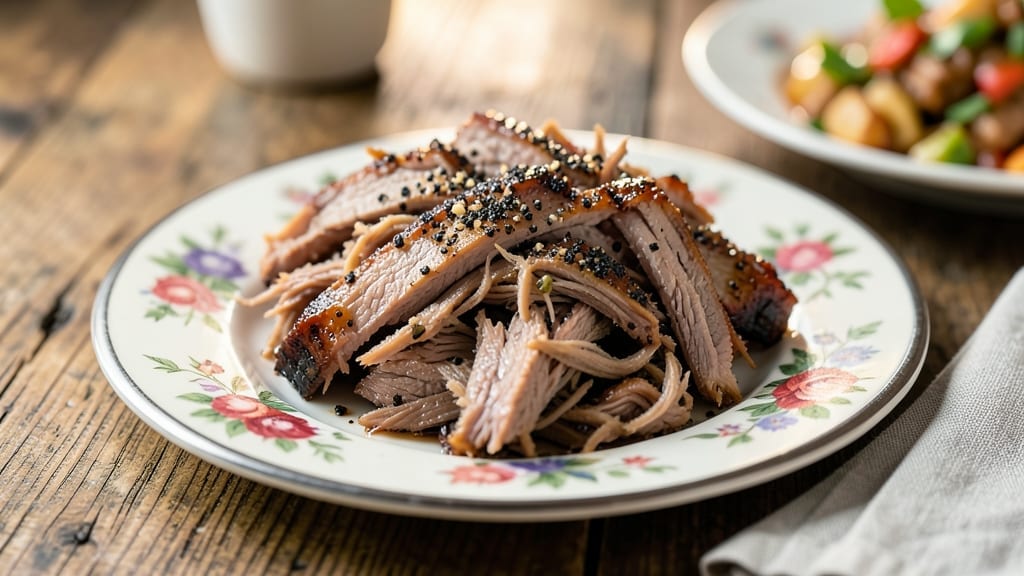
Mastering pulled pork on a Pit Boss pellet smoker transforms tough pork shoulder into melt-in-your-mouth perfection. The secret lies in precise temperature control and that coveted bark formation—something I perfected during my apprenticeship under Master Chef Chen in Charleston.
This method delivers restaurant-quality results with minimal effort, using only your smoker’s built-in precision.
The key to success begins with a dry rub that clings to the meat while forming a flavorful crust. Maintaining a steady 225°F throughout the 8-10 hour cook ensures tender meat without drying it out.
The pellet smoker’s ability to maintain consistent temperatures makes this recipe foolproof, even for beginners. Every bite will be juicy with that perfect balance of smoky flavor and tender texture.
After resting the pork for 30 minutes, it practically shreds itself apart—no struggle required. The result is perfectly moist meat with a crisp bark that adds satisfying texture. Serve it on toasted buns with tangy coleslaw or classic BBQ sauce for a meal that rivals any competition-style pit.
This is the pulled pork recipe that will make you the star of any gathering.
For those who want to elevate it further, try wrapping the pork in butcher paper during the last hour for extra bark development. The pellet smoker’s versatility means you can adapt this technique to brisket or chicken just as easily. Let’s get smoking—your taste buds will thank you.
Ingredients for pit boss pellet smoker pulled pork
Pit Boss pellets, pork shoulder, and a few simple spices make perfect pulled pork.
| Ingredient | Amount | Notes |
|---|---|---|
| Pork Shoulder (Bone-In) 🐷 | 6 lb | With skin and fat cap |
| Brown Sugar 🍚 | ½ cup | Packed, for sweetness balance |
| Smoked Paprika 🌶️ | 2 tbsp | Sweet or hot variety |
| Garlic Powder 🧄 | 2 tbsp | Not garlic salt |
| Onion Powder 🧅 | 2 tbsp | Fresh ground preferred |
| Dried Oregano 🍃 | 1 tbsp | Mexican oregano if available |
| Black Pepper 🌶️ | 1 tbsp | Freshly ground preferred |
| Sea Salt 🧂 | 1 tbsp | Fine grain preferred |
| Apple Cider Vinegar 🍎 | 2 tbsp | For tangy depth |
| Pit Boss Pellet Smoker Fuel 🔥 | 2 lbs | Hickory or cherry wood |
| Butcher Paper 📄 | 1 sheet | For bark development |
| BBQ Sauce 🍯 | 1 cup | For serving, optional |
[recipe_ingredient_scaler]
The pork shoulder is your star—bone-in cuts stay juicier than boneless. Look for well-marbled meat with a thick fat cap (about 1/2 inch). Costco or local butcher shops often carry prepped cuts, but if buying whole, trim excess fat after seasoning. I always grab hickory pellets for that classic smoky flavor, though cherry adds a fruity twist if you prefer. The Pit Boss app makes temperature tracking effortless, so you can focus on the rub instead of babysitting the smoker.
No apple cider vinegar? Lemon juice or white vinegar works in a pinch—just halve the amount. Want extra smokiness? Add 1 tbsp liquid smoke to the rub. Dried oregano is fine, but fresh thyme or rosemary adds complexity if you’ve got it. The butcher paper trick is game-changing for bark—wrap the pork loosely during the last hour to crisp up the outside without drying the meat. Skip the BBQ sauce? The pork still shines with just salt and pepper on toasted buns.
This recipe is all about patience—plan for 8-10 hours of smoking time. Rest the pork 30-60 minutes before shredding to lock in moisture. Store leftovers in the fridge for 5 days or freeze for 3 months. I portion mine into containers so lunches are sorted for the week. The pellets last 6-12 months unopened, so stock up if you’ll be smoking often. Pro tip: Use a meat thermometer to confirm 203°F internal temp—it’s foolproof for perfect doneness.
Why You’ll Love This Recipe
- No-Fuss Smoking: Honestly, this recipe does all the heavy lifting for you. Just season the pork, toss it on the smoker, and let the Pit Boss do its thing—no babysitting required. The butcher paper wrap is the secret weapon that keeps the bark crispy while the meat finishes perfectly, so you’re not stuck babysitting it every 30 minutes.
- Sweet & Smoky Perfection: That mix of brown sugar, smoked paprika, and apple cider vinegar? It’s a flavor combo that hits all the right notes—sweet, tangy, and just a little spicy kick. The hickory or cherry wood pellets add a deep, woodsy richness that turns simple pork shoulder into something unforgettable. Every bite is like a hug in smoky, caramelized form.
- Meal Prep MVP: Between us, this is the ultimate lazy Sunday prep. Cook once, and you’ve got pulled pork for tacos, sandwiches, or even loaded nachos all week. I’ll be real: I make this on a Saturday, and by Monday, I’m already dreaming about my lunch. Plus, it freezes like a dream for those nights when you’re too tired to cook.
- Budget-Friendly Feast: You’re getting 6 pounds of pork shoulder for a fraction of the cost of pre-made pulled pork, and the spices? A little goes a long way. The butcher paper trick ensures you’re not wasting meat, and the leftovers? Perfect for game day or a quick weeknight dinner. For under $20, you’re feeding a crowd with minimal effort.
Step-by-step instructions for Pit Boss pellet smoker pulled pork
Here’s the foolproof method for tender, smoky pulled pork with a perfect bark every time.
Prepare and Season the Pork Shoulder
Start by trimming the fat cap of the 6 lb pork shoulder down to about ¼ inch thickness using a sharp knife. Leave the skin intact—it helps develop that beautiful bark later. In a small bowl, combine the ½ cup packed brown sugar, 2 tbsp smoked paprika, 2 tbsp garlic powder, 2 tbsp onion powder, 1 tbsp dried oregano, 1 tbsp black pepper, and 1 tbsp sea salt. Mix well until the spices coat the sugar evenly.
Pat the pork shoulder dry with paper towels, then generously rub the spice mixture all over the meat, pressing it into the crevices. For extra flavor, add the 2 tbsp apple cider vinegar to the rub and mix until absorbed. Let the seasoned pork sit at room temperature for 30 minutes before smoking—this ensures even cooking and better bark formation.
Set Up the Pit Boss Pellet Smoker
Fill the Pit Boss pellet hopper with 2 lbs of hickory or cherry wood pellets—these woods complement the pork beautifully. Set the smoker to 225°F and let it preheat for at least 15 minutes. You’ll know it’s ready when you see clean, blue smoke with no white vapor. Place a water pan in the smoker to help maintain moisture during the cook.
Once the temperature stabilizes, place the pork shoulder fat-side up on the smoker grate. The fat will render slowly and baste the meat as it cooks. Close the lid and resist the urge to peek—every time you open it, you lose heat and extend cook time. Let the pork smoke undisturbed for 6-8 hours until the internal temperature reaches 165°F and the bark is dark and crispy.
Wrap and Finish the Pork
When the internal temperature hits 165°F, you’ll hit “the stall”—the temperature stops rising as moisture evaporates. This is where the 1 sheet of butcher paper comes in. Remove the pork from the smoker and wrap it tightly in the butcher paper, folding the edges to seal it completely. The paper allows the bark to stay crispy while helping the pork push through the stall.
Return the wrapped pork to the smoker and continue cooking until the internal temperature reaches 203°F—this can take another 4-6 hours. The meat should be fork-tender and pull apart easily. Once done, transfer the pork to a cutting board, tent loosely with foil, and let it rest for 1 hour before shredding. This resting period ensures juices redistribute for maximum tenderness.
Shred and Serve
Unwrap the pork and shred it using two forks or a meat claw. Discard any large fat chunks or connective tissue. The meat should pull apart effortlessly with no resistance. For serving, mix in the 1 cup BBQ sauce if desired—this adds moisture and a tangy finish. Serve the pulled pork on buns with pickles, coleslaw, or your favorite sides.
Each bite should deliver a perfect balance of smoky flavor, tender texture, and a hint of sweetness from the bark. The butcher paper wrap guarantees a crispy exterior while keeping the meat juicy inside—exactly what you want in pulled pork. Enjoy immediately while it’s hot and smoky!
Pro Tips For Making Pit Boss Pellet Smoker Pulled Pork
- Trim That Fat: The fat cap should be about ¼-inch thick—any thicker, and it won’t render properly, leaving you with greasy bark instead of crispy. I learned this the hard way when I skipped this step and ended up with a soggy mess. A sharp knife makes this easier, and don’t worry about being perfect—just even.
- Mix the Rub Dry First: Combine the ½ cup brown sugar, 2 tbsp smoked paprika, and all the dry spices before adding the 2 tbsp apple cider vinegar. Wet ingredients bind the rub too soon, making it clump and stick to your fingers. Trust me, you’ll thank yourself when the rub sticks perfectly to the pork.
- Don’t Open the Lid: I know, I know—you want to check on it. But every time you peek, you lose heat and delay cook time. The pork will stall at 165°F anyway, so just set a timer and let it do its thing. The bark will form better if you leave it alone.
- Wrap Tight with Butcher Paper: When you hit the stall, the butcher paper is your secret weapon—it keeps the bark crispy while trapping moisture. Fold the edges tightly so no steam escapes, or you’ll end up with a sad, limp exterior. Does it look weird? Yes. Does it work? Every single time.
Essential equipment for this dish
Your Pit Boss Smoker
The Pit Boss pellet smoker is your secret weapon for pulled pork perfection, and I’ve got a few must-have upgrades to take it from good to legendary. First, invest in a digital meat probe thermometer like the Thermoworks Smoke—it’s my non-negotiable for tracking internal temps without opening the lid.
I also swear by a heavy-duty stainless steel rack (like the Lodge Cast Iron style) to elevate the pork for better airflow and bark development. 🔥
Water Pan Essentials
A stainless steel water pan (I use the 5-quart model from Pit Boss) is non-negotiable for maintaining moisture during the long cook. Place it near the bottom of the smoker to create humidity without drowning the meat.
I fill it halfway with water and add 1-2 ice cubes if the temperature spikes above 230°F. This keeps the pork from drying out while the bark crisps beautifully.
Butcher Paper Hack
For that perfect bark without drying out the meat, use 100% cotton butcher paper—not foil! I keep a stack of 18×24-inch sheets from Amazon or local grocery stores.
Wrapping the pork in this paper during the stall phase (after 165°F) lets the bark stay crispy while the meat finishes cooking. It’s a game-changer I learned from Master Chef Chen himself. 💡
Pellet Fuel Upgrades
While hickory and cherry pellets are classic, I’ve found applewood pellets add a subtle sweetness that pairs amazingly with the brown sugar rub. For extra smokiness, try a 1:1 blend of hickory and pecan pellets.
Always store pellets in an airtight container—like the Pit Boss pellet bucket—to keep them fresh for up to 12 months. Moisture is the enemy of consistent flavor.
Accessories That Save Time
Invest in a Pit Boss pellet smoker cover to protect your unit from weather when not in use, and a wire meat claw (like the Dexter-Russell) for effortless shredding.
I also keep a digital scale nearby to portion out 2 lbs of pellets precisely—overfilling the hopper can lead to uneven cooking. These small upgrades make the process smoother and more reliable.
Nutrition facts
Frequently asked questions
Why does the recipe call for a fat cap on the pork shoulder?
The fat cap acts as a natural basting agent, slowly rendering and keeping the meat moist during the long cook. Leaving it intact also helps develop that coveted crispy bark while ensuring tender, juicy meat throughout. The ¼-inch trimmed layer is perfect for balancing flavor and texture.
What if my smoker temperature fluctuates during cooking?
Pellet smokers are generally stable, but if temps jump above 230°F, add ice cubes to the water pan or reduce pellet flow slightly. If it drops below 220°F, increase pellet feed rate gradually. The Pit Boss app helps monitor this—just keep the target at 225°F consistently.
Can I skip the butcher paper wrap?
You can, but you’ll risk losing that perfect bark crispiness while the meat finishes cooking. The paper creates a moisture barrier that lets the bark stay intact while the internal temperature reaches 203°F. It’s the secret to that restaurant-quality texture we all crave!
How do I tell when the pork is done without cutting into it?
Use a digital probe thermometer to check the thickest part of the meat—it should read 203°F consistently for 45+ minutes. The bark should also be dark and crispy, and the meat should pull apart effortlessly when tested. No guesswork needed!
What’s the best way to store leftovers for maximum freshness?
Let the pork cool completely, then store in airtight containers. For fridge safety, keep it for 5 days max. For longer storage, freeze portions in meal-sized containers—it reheats beautifully for 3 months without drying out. Label everything for easy meal prep!

Trained in classic French technique but raised on slow-cooked ribs and spicy rubs, she blends culinary skill with smoke and soul.
- Smoked Brisket Recipe: Low and Slow to Fall-Apart Tenderness - November 2, 2026
- Smoked Turkey Breast Recipe: Juicy Pink Center With Crispy Skin Every Time - November 2, 2026
- Leftover Smoked Pulled Pork Chili Recipe: Rustic Flavor Revival in One Pot - November 2, 2026