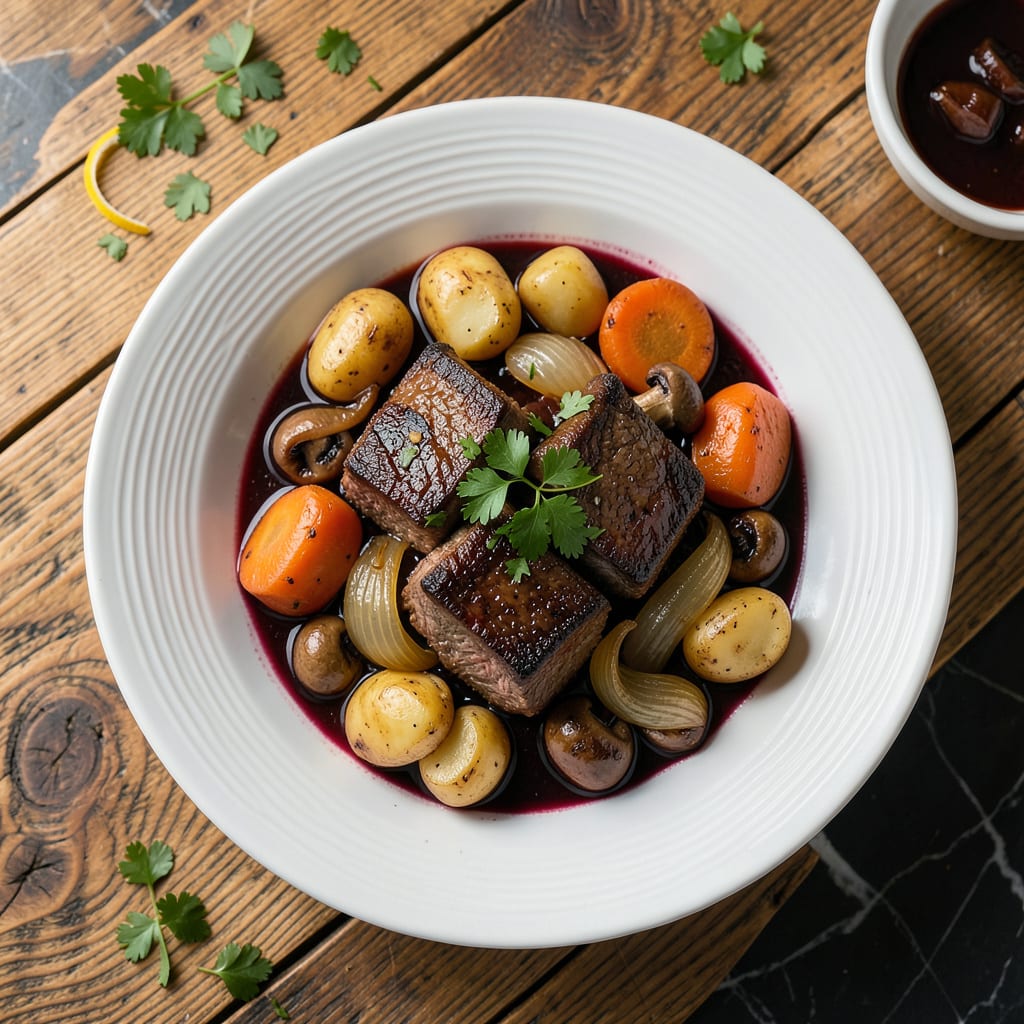
I’ll be real with you—beef bourguignon is one of those dishes that tastes even better when it looks as good as it smells. After years of perfecting this French classic, I’ve learned that presentation isn’t just for fancy restaurants. A few simple techniques can turn your home-cooked stew into a showstopper that’ll have everyone reaching for their phones before their forks.
This isn’t about complicated garnishes or hard-to-find tools. We’re talking about working with what you’ve already got in your kitchen—how to arrange those tender beef chunks, where to pool that rich red wine sauce, and why the right side dish makes all the difference. The best part? These plating tricks take less than 5 minutes but make your dish look like it came from a Parisian bistro.
What you’ll end up with is more than just a delicious meal—it’s an experience. Imagine fall-apart tender beef glistening with sauce, perfectly placed over creamy mashed potatoes, with just the right pop of green from fresh parsley. The kind of plate that makes people pause before digging in, even when they’re starving.
Whether you’re cooking for a special occasion or just want to elevate your weeknight dinner, these plating steps will change how you serve this dish. No culinary degree required—just a little intention and my tried-and-true method for making beef bourguignon look as impressive as it tastes.
📚 In This Guide
- What You’ll Need
- Instructions
- Tips and Common Mistakes
What Youll Need
- ● Cooked beef bourguignon (about 4 cups, warm—not piping hot)
- ● Wide, shallow bowls or plates (10–12″ diameter, white or neutral for contrast)
- ● Slotted spoon (for precise ingredient placement)
- ● Ladle (for sauce distribution)
- ○ Tweezers or small tongs (optional, for garnish placement)
- ○ Small squeeze bottle (optional, for sauce drizzles)
- ● Fresh herbs (2–3 sprigs thyme, 1 tbsp parsley, finely chopped)
- ○ Edible flowers or microgreens (optional, for color)
- ● Crusty bread or mashed potatoes (1 cup per serving, as a base)
- ● Paper towels (to wipe plate edges for a clean finish)
- ○ Warm water in a spray bottle (optional, to prevent sauce from setting too fast)
Step-by-Step Instructions for Plating Beef Bourguignon
Transforming your rich, flavorful stew into a visually stunning dish is easier than you think—let’s make it shine.
Choose the Right Vessel for Serving
Start by selecting shallow, wide-rimmed bowls or plates that are oven-safe if you plan to warm them. I prefer white or neutral-colored dishes because they make the deep colors of the bourguignon pop. The wide rim gives you space to artfully arrange components without crowding.
Warm your plates in a 200°F oven for 5-10 minutes before plating. This keeps the dish hot longer and prevents the sauce from cooling too quickly. Cold plates make even the best bourguignon seem lackluster—warm plates elevate the dining experience.
Create a Stable Base with Mashed Potatoes
Place a generous scoop of creamy mashed potatoes off-center on each plate, using the back of a spoon to create a smooth, slightly domed surface. I like to position it at about the 7 o’clock position—this creates visual interest and leaves room for other components.
The potatoes should form a sturdy foundation that will hold the beef and vegetables. Make sure they’re piping hot when plating to maintain temperature contrast with the stew. You can also use a piping bag with a large star tip for a more refined presentation if you’re feeling fancy.
Arrange the Beef and Vegetables with Intention
Select the most attractive pieces of beef—look for well-browned edges and uniform shapes. Place 3-4 pieces of beef atop the mashed potatoes, slightly overlapping if needed. Then artfully scatter the glazed carrots, mushrooms, and pearl onions around the beef.
I aim for odd numbers of each vegetable (3 carrots, 5 mushrooms, 7 onions) as this creates more visual appeal than even groupings. Arrange them so colors contrast nicely—the orange carrots against the brown mushrooms and white onions. Leave some negative space on the plate to prevent a crowded look.
Sauce with Precision and Purpose
Ladle the rich red wine sauce around—not over—the beef and vegetables. I start at the 12 o’clock position and drizzle in a circular motion, letting the sauce pool naturally in the plate’s contours. The goal is to have sauce touch all components without drowning them.
Use just enough sauce to moisten the plate but not so much that flavors become muddled. You want each bite to have the perfect ratio of meat, vegetables, and sauce. For extra shine, you can lightly brush the exposed beef surfaces with a bit of reduced sauce using a pastry brush.
Add Final Garnishes for Color and Texture
Finish with fresh parsley leaves scattered across the dish—the bright green provides beautiful contrast against the rich browns and reds. I like to use flat-leaf parsley for its broader leaves and cleaner look compared to curly parsley.
Add a few turns of freshly cracked black pepper over the entire plate for subtle texture and visual interest. If you’re serving with crusty bread, place a warm slice at the 2 o’clock position. The bread should be visible but not dominate the plate—it’s there to soak up every last bit of that amazing sauce.
Tips and Common Mistakes for Perfect Plating
Plating like a professional chef is all about attention to detail—here’s what I’ve learned from years of presenting rich dishes like this.
Temperature Control: Those 5-10 minutes warming plates at 200°F make a surprising difference. I once served bourguignon on cold plates and the sauce thickened prematurely, ruining the silky texture. Warm plates keep everything at the ideal serving temperature throughout the meal, especially important for a dish with multiple temperature components like hot beef and creamy potatoes.
Visual Balance: In Step 3, when arranging your 3-4 pieces of beef, think about creating a focal point. I position the most beautifully browned piece slightly forward, with others angled behind it. This creates depth and makes the plate look intentionally designed rather than just assembled. The odd-numbered vegetable arrangement mentioned in the instructions isn’t just for looks—it actually helps guide the eye naturally around the plate.
Sauce Technique: The circular drizzling method in Step 4 prevents soggy components while ensuring every bite has sauce. I use the back of my spoon to create little “rivers” of sauce that connect the elements—this makes the plate look cohesive. If your sauce starts to pool too much in one area, tilt the plate slightly to distribute it evenly before serving. A quick swipe with a clean finger can remove any accidental drips on the plate rim for that polished look.
Final Presentation: The 2 o’clock bread placement in Step 5 isn’t arbitrary—it creates balance with the potatoes at 7 o’clock. I always warm the bread just before plating and angle it slightly toward the center of the plate. This makes the dish feel complete while keeping the focus on the bourguignon. For extra impact, I sometimes brush the bread with a tiny bit of the reduced sauce before placing it—this ties all the flavors together visually and gastronomically.
Pro Tips for Plating Beef Bourguignon
- Plating like a professional chef is all about attention to detail—here’s what I’ve learned from years of presenting r…
- Temperature Control: Those 5-10 minutes warming plates at 200°F make a surprising difference. I once served bourguign…
- Visual Balance: In Step 3, when arranging your 3-4 pieces of beef, think about creating a focal point. I position the…
Frequently Asked Questions
How far in advance can I plate beef bourguignon before serving?
For best results, plate beef bourguignon no more than 10-15 minutes before serving to keep it warm and prevent soggy garnishes. If prepping ahead, store components separately: reheat the stew gently (add a splash of broth if needed) and assemble just before serving. Cold plates? Warm them in the oven at 200°F for 5 minutes first!
What’s the best alternative to pearl onions for plating?
No pearl onions? No problem! Try these swaps:
- Shallots (quarter and roast for sweetness)
- Cipollini onions (blanched and caramelized)
- Baby carrots (glazed for color contrast)
- Mushroom caps (seared for umami depth)
Pick options that match the stew’s rustic elegance!
Why does my beef bourguignon look watery when plated?
Watery plating usually means the stew wasn’t reduced enough. Fix it by:
- Simmering uncovered for 10-15 more minutes to thicken.
- Mixing 1 tsp cornstarch with cold water, stirring it in, and heating briefly.
- Using a slotted spoon to plate solids, then drizzling reduced sauce artistically.
Pro tip: Chill leftovers—the fat solidifies for easy skimming!
Can I plate beef bourguignon in a shallow bowl instead of a plate?
A wide, shallow bowl (like a pasta bowl) is ideal—it cradles the stew while showing off layers. Arrange beef and veggies in the center, sauce around the edges, and top with herbs. For contrast, place a crusty bread slice on the rim. Avoid deep bowls; they hide your artistry!
What’s the easiest way to garnish beef bourguignon like a pro?
Keep it simple but striking:
- Fresh herbs: Flat-leaf parsley or thyme sprigs (add last minute).
- Crunch: Toasted baguette croutons or fried shallots.
- Brightness: A drizzle of red wine reduction or pomegranate molasses.
- Cheese: Shaved Gruyère or a dollop of whipped goat cheese.
Less is more—pick one focal garnish!
Plating beef bourguignon like a pro is all about balancing rustic charm with elegant precision—and now you’ve got the tools to nail it! 🎨 From choosing the right dishware to garnishing with intention, these steps turn a hearty classic into a showstopper. Remember, presentation elevates the dining experience just as much as flavor does.
Ready to impress? Grab your favorite wine glass, plate up a serving, and share your masterpiece with friends—or snap a photo for the ’gram! For extra flair, experiment with edible flowers or a drizzle of reduced red wine sauce next time. Bon appétit! 🍷✨

Trained in classic French technique but raised on slow-cooked ribs and spicy rubs, she blends culinary skill with smoke and soul.
- Recipe For Oven Baked Haddock: Buttery Crumbs With Zesty Lemon Topping - October 3, 2026
- Recipe For Fried Salmon Patties With Flour: Crispy Golden Crust With Flaky Centers - October 3, 2026
- Meat and Potato Recipe Ideas: Savory Pairings for Hearty Meals - October 3, 2026