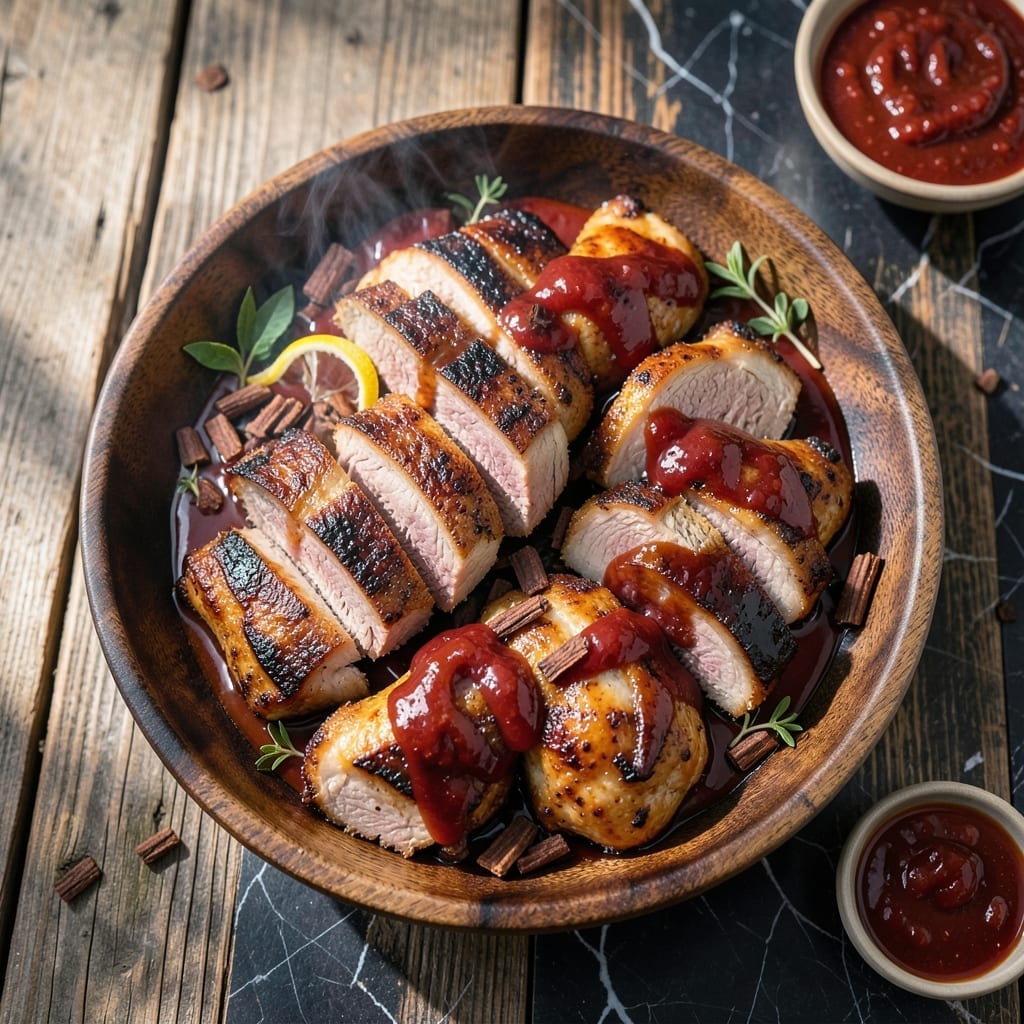
Getting my first whiff of hickory smoke at my family backyard cookout still takes me back. This grill recipe brings that same smoky sweetness to your table with tender pork and chicken.
I blend my French training with traditional barbecue techniques to create a foolproof method for juicy, flavorful results every time.
Ingredients for Pork and Chicken Barbecue
Pantry staples meet smoky grill magic for this backyard classic.
| Ingredient | Amount | Notes |
|---|---|---|
| Pork Shoulder 🥩 | 2 lb | Boneless, cut into chunks |
| Chicken Thighs 🍗 | 2 lb | Boneless, skin-on preferred |
| Hickory Wood Chips 🪵 | 1 cup | Soaked in water 30 minutes |
| Barbecue Sauce 🍯 | 2 cups | Sweet and smoky variety |
| Brown Sugar 🧈 | ½ cup | Light or dark works |
| Paprika 🌶️ | 2 tbsp | Smoked paprika preferred |
| Garlic Powder 🧄 | 1 tbsp | Freshly ground if possible |
| Onion Powder 🧅 | 1 tbsp | Fine grain preferred |
| Salt 🧂 | 1 tbsp | Kosher or sea salt |
| Black Pepper 🌶️ | 1 tsp | Freshly ground preferred |
| Apple Cider Vinegar 🍏 | ¼ cup | Balances sweetness of sauce |
| Worcestershire Sauce 🫒 | 2 tbsp | Adds umami depth |
| Olive Oil 🫒 | 2 tbsp | For coating meat before seasoning |
| Yellow Mustard 🟡 | 1 tbsp | Helps rub adhere to meat |
[recipe_ingredient_scaler]
The pork shoulder is non-negotiable here—bone-in or boneless, but make sure it has good marbling for that melt-in-your-mouth texture. I grab mine from Costco for consistent quality, but any butcher worth their salt will hook you up. Chicken thighs stay juicier than breasts on the grill (trust me on this one). The wood chips? Hickory is traditional, but apple or cherry wood works too for a sweeter smoke.
No smoked paprika? Regular paprika plus a pinch of cayenne gets you close. Out of Worcestershire? Soy sauce with a splash of lemon juice in a pinch. The brown sugar can be swapped for honey or maple syrup if you’re watching refined sugar. Barbecue sauce brand doesn’t matter much—Sweet Baby Ray’s or Stubb’s are both crowd-pleasers. Just avoid anything with high-fructose corn syrup as the first ingredient.
Leftovers keep 4-5 days in the fridge and actually taste better the next day. Freezes beautifully for 3 months—portion into meal-sized containers before freezing. The wood chips? Store in a sealed bag away from moisture (or they’ll mold).
Why You’ll Love This Recipe
- Set It and Forget It: I toss the pork shoulder and chicken thighs on the smoker with hickory chips, then let the low heat do all the work for hours.
- Smoky Sweet Perfection: The brown sugar caramelizes with the barbecue sauce while the hickory smoke wraps every bite in that deep, woodsy flavor.
- Feeds the Whole Crew: Between us, this is my go-to for summer cookouts—pork for the adults, chicken for the kids, and everyone’s happy.
- Leftovers for Days: Honestly, the meat tastes even better the next day, and it stretches into sandwiches, tacos, or just straight off the fridge shelf.
Step-by-Step Instructions for Pork and Chicken Barbecue
Here’s the method I use for achieving fall-off-the-bone tenderness with a smoky, caramelized crust.
Step 1: Prepare the Dry Rub and Coat the Meat
In a medium bowl, combine the 2 tbsp paprika, 0.5 cup brown sugar, 1 tbsp garlic powder, 1 tbsp onion powder, 1 tbsp salt, and 1 tsp black pepper. This blend creates the perfect balance of sweet, smoky, and savory flavors that will form a beautiful bark on your meat.
Pat the 2 lb pork shoulder (cut into chunks) and 2 lb chicken thighs dry with paper towels. Lightly coat them with the 2 tbsp olive oil and 1 tbsp yellow mustard—this helps the rub adhere and promotes even browning. Massage the dry rub into all surfaces of the meat, pressing firmly so it sticks well. Let it rest at room temperature for 30 minutes while you prepare the grill.
Step 2: Set Up the Grill for Indirect Heat
Soak the 1 cup hickory wood chips in water for 30 minutes to prevent them from burning too quickly. Drain them just before using. Set up your grill for indirect heat: for a charcoal grill, bank the coals to one side; for a gas grill, preheat only half the burners to medium-high heat (375-400°F).
Add the soaked wood chips directly onto the hot coals or into a smoker box for a gas grill. You want to see a steady stream of thin, blue smoke—this is the sweet spot for infusing flavor without bitterness. Place a drip pan with a little water under the grate where the meat will cook to catch drippings and maintain moisture.
Step 3: Smoke the Meat Low and Slow
Place the pork shoulder chunks and chicken thighs on the grill grate over the drip pan, away from direct heat. Cover the grill and maintain a temperature of 250-275°F. Cook the pork for 2-2.5 hours and the chicken for 1-1.5 hours, or until the internal temperature of the pork reaches 195°F and the chicken reaches 165°F.
Resist the urge to peek too often—every time you open the lid, you lose heat and smoke. I like to rotate the meat halfway through cooking for even exposure to the smoke. The pork is done when it pulls apart easily with a fork, and the chicken should have a deep golden-brown color with juices running clear.
Step 4: Glaze with Barbecue Sauce and Finish
In a small bowl, mix the 2 cups barbecue sauce with the 0.25 cup apple cider vinegar and 2 tbsp Worcestershire sauce. This thins the sauce slightly and adds a tangy depth that cuts through the sweetness. During the last 20-30 minutes of cooking, brush the meat generously with the sauce mixture, reapplying every 5-10 minutes.
Move the meat over direct heat for the final 2-3 minutes per side to caramelize the sauce into a sticky, glossy glaze. Keep a close eye on it—sugar burns easily. The sauce should bubble and thicken slightly, creating a beautiful, lacquered finish. Remove from the grill and let rest for 10 minutes before serving to allow the juices to redistribute.
Pro Tips For Making Pork And Chicken Barbecue
- Soak the Wood: I learned this the hard way—soak those hickory chips in water for at least 30 minutes before smoking, or they’ll burn up faster than you can say “dry meat.” Sounds tedious, but it keeps the smoke steady and the temperature controlled.
- Trim the Fat: Pork shoulder has a lot of fat, and while some is good, too much can cause flare-ups. Trim it down to about ¼-inch—enough for flavor, but not so much that it turns your grill into a fire hazard.
- Sauce Last: After burning more than a few batches, I finally figured out that brushing on the barbecue sauce too early just turns it into a charred mess. Wait until the last 15-20 minutes of cooking to glaze the pork and chicken.
- Rest Under Foil: Give both meats a solid 10-15 minutes under foil after pulling them off the heat. It’s not the prettiest step, but it locks in the juices and makes the meat way more tender when you slice or pull it.
Troubleshooting Perfect Results
Uneven Cooking
If your pork finishes before the chicken, move it to a cooler part of the grill or wrap it in foil to keep warm. Chicken thighs can dry out if overcooked, so pull them when they hit 165°F internal temperature. I use a ThermoWorks Instant Read for accuracy. 🌡️
Dry Rub Not Sticking
If your rub slides off, the meat may still be too wet. Pat it completely dry with paper towels first. The olive oil and yellow mustard base helps adhesion, but don’t oversaturate. Let the rub sit for 30 minutes before grilling to set properly.
Bitter Smoke Flavor
Thick white smoke causes bitterness. Ensure your hickory wood chips are soaked 30 minutes and producing thin blue smoke before adding meat. If using charcoal, wait until coals are fully ashed over—black smoke ruins everything. Keep the grill lid closed as much as possible.
Sauce Burning
Sugar burns easily over direct heat. Only glaze during the final 2-3 minutes per side over direct flame. If sauce blackens, move meat back to indirect heat and reduce heat immediately. I thin my sauce with apple cider vinegar to prevent scorching.
Tough Pork
Pork needs time to break down. If it’s tough, it likely didn’t reach 195°F internal temperature. Wrap in foil with apple juice and continue cooking until probe-tender. The collagen in pork shoulder needs that heat to melt into gelatin. 💡
Wood Chips Not Smoking
If chips ignite instead of smoldering, they’re too dry. Soak them longer next time—1 hour is ideal. For gas grills, use a smoker box and keep the temperature below 350°F. Direct flame on wood chips creates ash, not smoke.
Nutrition Facts
Frequently Asked Questions
Can I use chicken breasts instead of thighs?
Yes, but thighs stay juicier. If using breasts, cook to 165°F and monitor closely to prevent drying. Brining for 30 minutes first helps maintain moisture.
How do I know when the pork is done?
Pork shoulder is ready at 195°F internal temp. It should pull apart easily with a fork. For extra tenderness, let it rest 10 minutes before serving.
Can I make this in the oven?
Use 275°F for 3-4 hours in a covered roasting pan. Add wood chips in a foil pouch for smoky flavor. Finish under the broiler for a caramelized crust.
How do I store leftovers?
Store in an airtight container in the fridge for 4-5 days or freeze for up to 3 months. Reheat gently to preserve moisture.

Trained in classic French technique but raised on slow-cooked ribs and spicy rubs, she blends culinary skill with smoke and soul.
- Octopus Recipe Pan Fried: Crispy Edges With Tender Bites - October 3, 2026
- Recipe For Fried Pork Chops In An Iron Skillet: Crispy Crust With Juicy Centers - October 3, 2026
- Recipe for Fully Cooked Spiral Ham: Sweet Glaze and Effortless Elegance - October 3, 2026