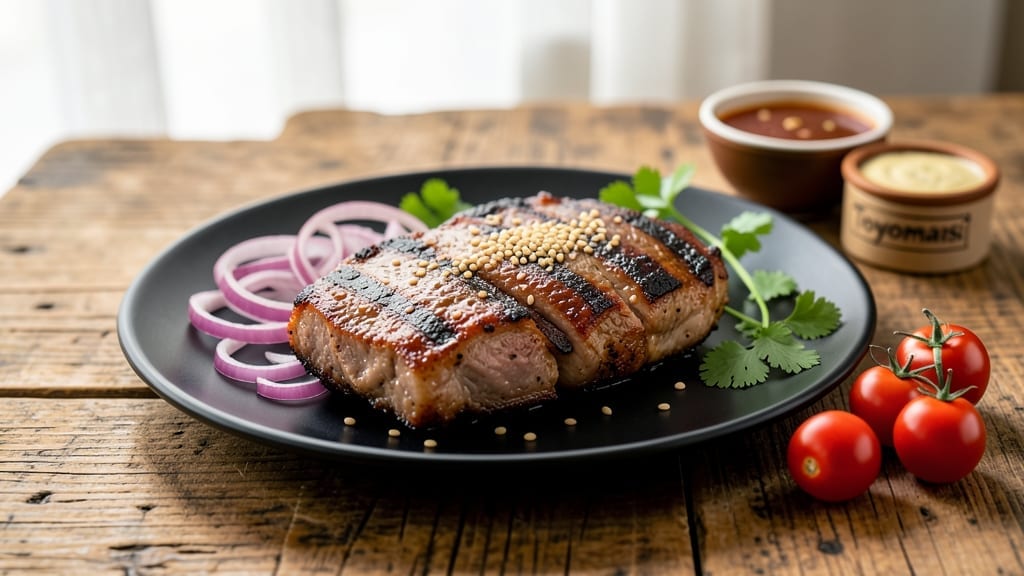
This beloved pork barbecue recipe from the Philippines delivers smoky, tender meat with a signature sticky-sweet vinegar glaze that balances heat and acidity perfectly. 🔥 Growing up, my family’s backyard cookouts were all about this dish—juicy pork skewers grilled over charcoal, basted with… a tangy-sweet sauce that made every bite unforgettable.
The key lies in marinating the pork just right and mastering the grill temperature to achieve that signature caramelized crust without drying out the meat.
The beauty of this recipe is its versatility—whether you’re grilling over charcoal, using a gas grill, or even cooking indoors with a cast-iron skillet, the technique remains the same.
The marinade, a blend of soy sauce, calamansi (or lemon), and garlic, infuses the pork with deep umami flavors, while the vinegar glaze adds that signature tangy sweetness that defines Filipino barbecue.
It’s a dish that brings people together, perfect for gatherings or a simple weeknight dinner when you crave bold, smoky flavors.
By the time you’re done, you’ll have perfectly grilled pork with a glossy, caramelized glaze that clings to every bite—juicy inside, slightly charred on the outside.
The aroma alone will have everyone gathering around the grill, and the first taste will remind you why this dish is a staple in Filipino cookouts. Serve with steamed rice, garlic fried rice, or a side of fresh vegetables to complete the meal.
This recipe works equally well for skewers or larger cuts of pork, making it adaptable for any occasion. Whether you’re recreating a classic Filipino feast or introducing friends to this flavorful dish, the results are always impressive. Let’s get started on creating the perfect pork barbecue!
Ingredients for pork barbecue recipe philippines
Pork cubes, tangy marinade, and a smoky grill make this Filipino classic unforgettable.
| Ingredient | Amount | Notes |
|---|---|---|
| Boneless Pork Shoulder 🥩 | 2 lb | Cut into 1-inch cubes |
| Soy Sauce 🍶 | ½ cup | High-quality, like Kikkoman |
| Calamansi Juice 🍋 | ¼ cup | Substitute with lemon juice |
| Garlic Cloves 🧄 | 8 cloves | Minced, fresh preferred |
| Brown Sugar 🍚 | ¼ cup | Packed, light brown preferred |
| Cane Vinegar 🍶 | ¼ cup | White vinegar works too |
| Black Peppercorns 🌶️ | 1 tsp | Freshly cracked preferred |
| Ground White Pepper 🌶️ | ½ tsp | For milder heat |
| Bay Leaves 🌿 | 2 whole | Dried, crushed slightly |
| Olive Oil 🫒 | 2 tbsp | Extra-virgin for richness |
| Green Onions 🧅 | 4 whole | Sliced, for garnish |
| Bamboo Skewers 🍴 | 12 whole | Soaked in water 30 mins |
| Salt 🧂 | 1 ½ tsp | Diamond Crystal preferred |
[recipe_ingredient_scaler]
The pork shoulder is non-negotiable here—its fat content keeps the meat juicy while grilling. Look for well-marbled cuts at your local butcher or Costco for the best value. If you can’t find calamansi juice, lemon juice works perfectly—it’s the secret weapon in that signature tangy-sweet balance. For the vinegar, cane vinegar adds depth, but white vinegar is a solid backup. The garlic should be fresh—pre-minced jarred garlic lacks punch. I always double-check the soy sauce label for high-sodium content since we’re using it liberally here. The bamboo skewers? Soak them for at least 30 minutes to prevent burning on the grill.
No calamansi? Lime juice is a close second, though it’s slightly less sour. Running short on cane vinegar? Apple cider vinegar gives a fruity twist that still works. The brown sugar can be swapped for white sugar in a pinch, but the molasses notes in cane sugar are worth it. For the pepper, black peppercorns cracked in a mortar give better flavor than pre-ground. If you’re using pre-ground, toast it lightly in a dry pan first to wake up the oils. The bay leaves? Crush them slightly before adding to release more aroma. And if you’re grilling indoors, cast iron gets you that smoky crust—just crank the heat high.
Marinate the pork for at least 4 hours—overnight if possible. The flavors meld beautifully. Store any leftover marinade in the fridge for up to 1 week—it makes a killer dip for veggies. Grilled pork keeps well in the fridge for 3-4 days, but the glaze hardens when chilled, so reheat gently with a splash of water. For leftovers, freeze in single portions for quick meals—just thaw overnight in the fridge before reheating. The skewers? Rinse and dry after soaking, then store in a sealed container for up to 2 weeks.
Why You’ll Love This Recipe
- Marinate & Forget: Honestly, this is the kind of dish where you can dump everything in a bowl, walk away, and come back to perfection. That overnight soak with the soy sauce, calamansi juice, and brown sugar does all the heavy lifting—no chopping, no stress. Just toss the pork cubes in, let it sit, and wake up to tender meat that practically falls off the skewers.
- Tangy-Sweet Addiction: The combo of calamansi juice and brown sugar creates that signature Filipino tangy-sweet balance that’s impossible to resist. It’s like a caramelized, garlicky hug on your tongue—savory from the soy sauce, a little kick from the peppercorns, and that smoky grill char. Trust me, one bite and you’ll be reaching for seconds.
- Feed a Crowd, No Fuss: This recipe is my secret weapon for game days, family gatherings, or even a lazy Sunday lunch. The skewers cook in batches, so you can feed 6-8 people without breaking a sweat. Plus, the leftover marinade becomes the best impromptu veggie dip—just toss it with cucumber or carrots, and boom, you’ve got a side dish.
- Budget-Friendly Flavor Bomb: You’re getting ridiculously good results from pantry staples—boneless pork shoulder, soy sauce, and brown sugar. No fancy ingredients, no expensive cuts, just pure flavor. And if you’re feeling thrifty, the leftover pork reheats beautifully for lunches or quick meals the next day. It’s the kind of dish that makes me feel like a smart cook without any effort.
Step-by-step instructions for pork barbecue Philippines
Here’s how to transform simple ingredients into tender, caramelized pork skewers with that signature tangy-sweet glaze.
👨🍳 Step 1: Marinate the Pork for Maximum Flavor
In a large bowl, combine the 2 lb boneless pork shoulder cut into 1-inch cubes with the ½ cup soy sauce, ¼ cup calamansi juice, 8 minced garlic cloves, ¼ cup brown sugar, ¼ cup cane vinegar, 1 tsp cracked black peppercorns, ½ tsp ground white pepper, 2 crushed bay leaves, and 1½ tsp salt. Mix thoroughly with your hands until every piece is evenly coated.
Here’s the thing—calamansi juice is key for that authentic Filipino tang, but if you can’t find it, lemon juice works in a pinch. Let the mixture marinate in the refrigerator for at least 4 hours (overnight is even better). This long soak breaks down the tough pork fibers, ensuring fork-tender results. Don’t skip this step; the magic happens during marinating.
🍳 Step 2: Skewer and Prep for Grilling
Soak the 12 bamboo skewers in water for 30 minutes to prevent burning on the grill. Thread 3-4 marinated pork cubes onto each skewer, leaving a small gap between pieces for even cooking. Arrange the skewers on a plate, cover with plastic wrap, and refrigerate for 30 minutes to help them hold their shape.
Preheat your grill to medium-high heat (about 375°F). The reason for the high heat is to create those beautiful grill marks while keeping the interior juicy. If you’re using a charcoal grill, wait until the coals are covered with white ash before starting. For gas grills, preheat for 10-15 minutes—you want those grates screaming hot.
🔥 Step 3: Grill to Perfect Doneness
Place the skewers on the grill and cook for 8-10 minutes, turning occasionally, until the pork develops deep grill marks and the internal temperature reaches 160°F when measured with an instant-read thermometer. You’ll notice the marinade bubbling and forming a sticky glaze—this is your signal that the flavors are intensifying.
Here’s where it gets tricky: don’t overcrowd the grill. Leave space between skewers so they cook evenly and get those coveted char marks. If the glaze starts to burn before the pork is done, move the skewers to a cooler part of the grill for the last few minutes. The pork should be tender enough to pull apart easily with tongs but still hold its shape on the skewers.
🥘 Step 4: Finish with Green Onions and Serve
Transfer the grilled skewers to a serving platter and sprinkle with the 4 sliced green onions. The green onions add a fresh contrast to the rich, smoky flavors. Let the pork rest for 5 minutes before serving—this allows the juices to redistribute, preventing them from running out when you cut into the skewers.
Serve immediately with steamed rice and a side of atchara (pickled papaya) if you like. The pork should be tender with a caramelized exterior, the glaze clinging to each piece, and the flavors perfectly balanced between sweet, tangy, and smoky. Each bite should deliver that perfect combination of textures and tastes that makes this dish so special.
Pro Tips For Making Pork Barbecue Recipe Philippines
- Crush the Garlic: DESCRIPTION: I used to mince garlic cloves like I was in a hurry, but this recipe demands fresh, fine mincing—almost like a paste. The 8 cloves should disappear into the marinade completely, or you’ll taste uneven bursts of raw garlic instead of smooth, infused flavor. Use the flat side of your knife to smash them first, then mince finely. Trust me, your pork will thank you.
- Don’t Rush the Vinegar: DESCRIPTION: The ¼ cup cane vinegar (or white vinegar) is the tangy backbone of this dish, but it’s also the ingredient that can make your pork taste harsh if you’re not careful. Let the marinade sit for at least 4 hours—overnight if possible—so the acid has time to tenderize the pork, not just sit on top. I learned this the hard way when my skewers tasted sour instead of balanced.
- Space the Skewers: DESCRIPTION: Crowding the grill is the fastest way to turn your glaze into burnt sugar and your pork into sad, steamed cubes. Leave gaps between skewers—even if it means grilling in batches—and resist the urge to move them around too much. The first 2 minutes at 375°F should give you those perfect crosshatch marks without fighting for space.
- Save the Marinade: DESCRIPTION: That leftover marinade after cubing the pork? Don’t pour it down the drain—it’s liquid gold. Strain out the bay leaves and peppercorns, then store it in the fridge for up to a week. Brush it on the skewers during the last minute of grilling for extra stickiness, or use it as a dip for veggies. I’ve turned a “waste” into my favorite quick appetizer.
Creative variations of this dish
Ilocano-Style Lechon Kawali
In the Ilocano region, pork barbecue takes on a distinct character with a drier, more charred exterior and a marinade that leans into more garlic and vinegar for that signature tang.
I first tasted this version at a local competition in Baguio, where the skewers were stacked high on a charcoal bin—the smoke infused the meat with a deeper, woodier flavor.
The Ilocano version often uses more crushed black pepper and a touch of toasted coconut flakes sprinkled on top before grilling for extra crunch. The result? A bolder, smokier bite that’s perfect for those who love their pork with a little extra kick. 🔥
Tagalog Grilled Pork Skewers
The Tagalog version keeps the classic marinade but often incorporates more soy sauce and brown sugar to create a sweeter, stickier glaze that clings to the meat.
I remember my aunt’s version always had a thin layer of crushed peanuts mixed into the marinade, adding a nutty depth that balanced the tanginess. This style is ideal for family gatherings, where the pork is often served with steamed rice and a side of sinigang (sour soup).
The key here is to baste the skewers with extra marinade during the last 2 minutes of grilling to intensify that glossy finish.
Spicy Lechon Manok-Inspired Twist
For those who love heat, I add 1-2 tbsp of Penzeys hot honey to the marinade or drizzle it over the finished skewers. The honey’s caramelized sweetness contrasts beautifully with the chili crisp I like to sprinkle on top.
I also experiment with smoked paprika in the marinade for a subtle smokiness that complements the grill. This version is a crowd-pleaser at my cookouts, especially when paired with cooling cucumber salad to balance the spice. 🌶️
Vegetarian “Pork” Alternative
If you’re avoiding meat but still want that Filipino barbecue experience, try soy-cured tofu or seitan marinated in the same soy, vinegar, and garlic blend. I’ve found that extra-firm tofu pressed for 30 minutes absorbs the flavors best, while seitan’s chewy texture mimics pork’s bite.
Skewer them like the pork and grill over medium-high heat—just watch for burning, as tofu can dry out faster. Serve with the same sides to keep the authentic vibe. This version is a game-changer for vegetarians who miss the flavors of home.
Indoor Grill Hack
No outdoor grill? No problem. I use a cast-iron skillet on high heat to mimic the grill’s sear. First, sear the skewers for 2 minutes per side, then reduce heat to medium-low and cover with a lid to steam the pork for 6-8 minutes until it reaches 160°F.
The lid traps moisture, keeping the meat juicy while developing those grill marks. For extra smokiness, add a few drops of liquid smoke to the marinade or place a charcoal chimney nearby (with caution!) to infuse the air. This method works like a charm for indoor cooking. ⚡
Nutrition facts
Frequently asked questions
Why does the marinade need so much time?
The 4-hour minimum marinade time (or overnight) is essential because it breaks down the tough pork fibers, ensuring tender, juicy results. The soy sauce, vinegar, and garlic work together to infuse the meat with deep flavor while the brown sugar caramelizes slightly, creating that signature sticky glaze. Skipping this step can leave the pork chewy instead of melt-in-your-mouth perfect.
Can I use a different type of vinegar?
While cane vinegar is ideal for authentic flavor, white vinegar works in a pinch. Apple cider vinegar adds a subtle sweetness, but stick to plain vinegar if you’re avoiding fruitiness. Avoid flavored vinegars—they can overpower the dish. The acidity is key for tenderizing and balancing the sweetness.
How do I prevent the glaze from burning before the pork is done?
Watch the glaze closely—if it starts burning, move the skewers to a cooler part of the grill. Alternatively, brush on extra marinade during the last 2 minutes of cooking to create a fresh layer. Never overcrowd the grill, as this traps heat and causes uneven cooking. A well-maintained grill with proper heat zones is your best friend here.
What’s the best way to reheat leftovers?
Reheat gently in a skillet over low-medium heat with a splash of water to restore moisture. Microwaving can dry out the pork, making it tough. If the glaze hardens, a quick brush with extra soy sauce or vinegar brings back that sticky shine. Serve with fresh green onions for a pop of color and flavor.

Trained in classic French technique but raised on slow-cooked ribs and spicy rubs, she blends culinary skill with smoke and soul.
- Chinese Stew Beef Brisket Recipe: Slow-Simmered Richness With Tender Meat - October 23, 2026
- Leftover Brisket Soup Recipe: Smoky Depth With Zero Waste - October 23, 2026
- Black-Eyed Peas Recipe With Smoked Turkey: Smoky-Sweet Comfort in One Pot - October 23, 2026