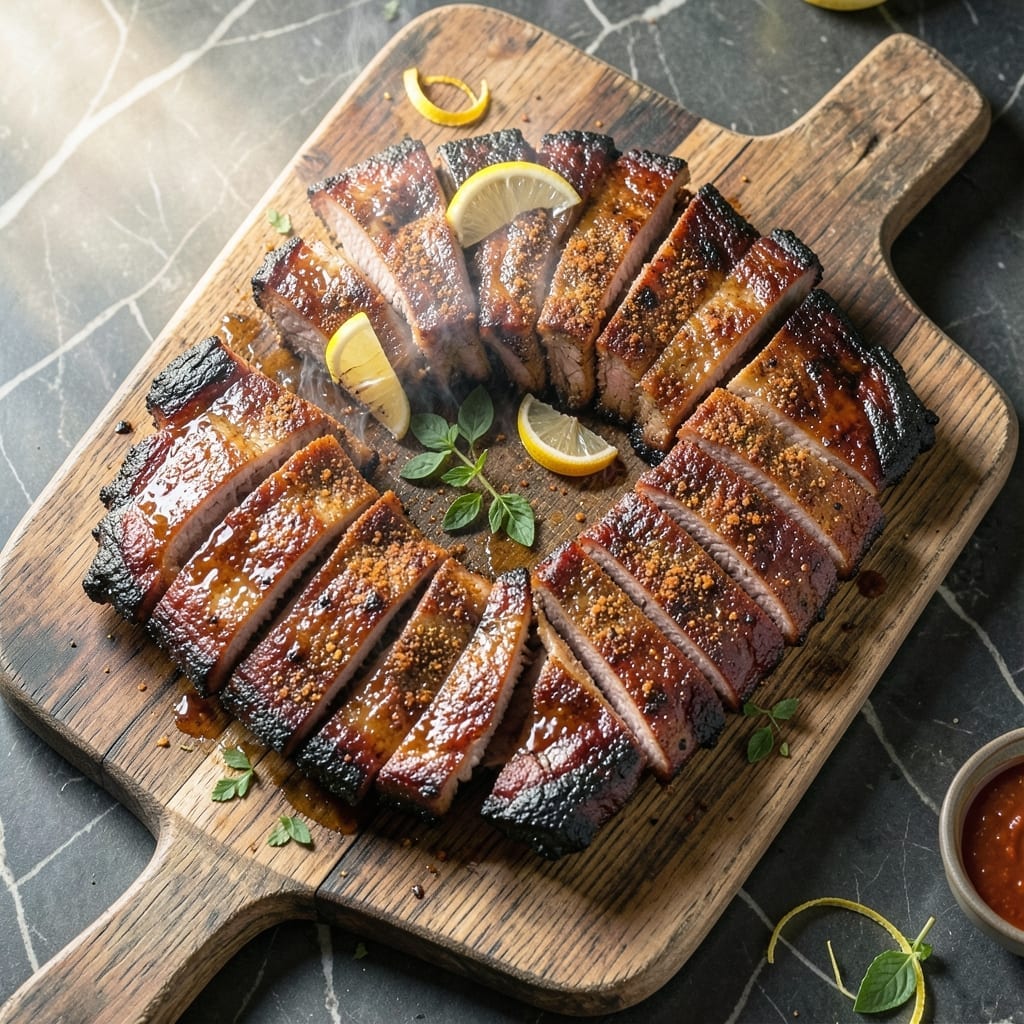
There’s nothing like the smell of pork spare ribs sizzling over charcoal to bring back memories of backyard cookouts. This method delivers that perfect crispy exterior with tender meat underneath.
Using a simple dry rub and careful heat management, you’ll achieve a smoky char that’s hard to beat. The key is patience and maintaining consistent temperatures throughout the cooking process.
Ingredients for Pork Spare Ribs Charcoal Grill
Pantry staples and a full rack of ribs create that backyard cookout magic.
| Ingredient | Amount | Notes |
|---|---|---|
| Pork Spare Ribs 🥩 | 3 lb | Full rack, membrane removed |
| Brown Sugar 🍚 | ½ cup | Light or dark variety |
| Kosher Salt 🧂 | 2 tbsp | Diamond Crystal preferred |
| Black Pepper 🌶️ | 1 tbsp | Freshly ground coarse |
| Smoked Paprika 🌶️ | 1 tbsp | Sweet or hot variety |
| Garlic Powder 🧄 | 1 tbsp | Not garlic salt |
| Onion Powder 🧅 | 1 tbsp | Fine grind preferred |
| Chili Powder 🌶️ | 1 tsp | Mild or hot blend |
| Cayenne Pepper 🔥 | ½ tsp | Adjust for heat preference |
| Charcoal Briquettes ⚫ | 50 pieces | Natural lump preferred |
| Apple Cider Vinegar 🍏 | ¼ cup | For mopping sauce |
| Olive Oil 🫒 | 2 tbsp | For binding dry rub |
[recipe_ingredient_scaler]
The ribs are the foundation—look for St. Louis-style spare ribs at your butcher or Costco for consistent sizing. Ask them to remove the membrane if you’re unsure how (it’s a thin, papery layer on the bone side). Diamond Crystal kosher salt is ideal for the dry rub due to its flaky texture and pure flavor. For the charcoal, natural lump charcoal burns hotter and cleaner than briquettes, but either works.
No smoked paprika? Regular paprika with a pinch of liquid smoke gets you close. Want more depth? Add ground cumin at half the amount. If you’re out of apple cider vinegar, white vinegar in a pinch works, but the apple cider adds a subtle sweetness. The brown sugar can be swapped for turbinado or coconut sugar—just pulse it fine in a blender first.
Store ribs in the fridge for up to 3 days before cooking, or freeze for 3 months. The dry rub keeps indefinitely in a sealed jar. Once cooked, ribs hold well wrapped in foil for 4 hours at room temperature (perfect for picnics).
Why You’ll Love This Recipe
- Low-Effort Grilling: I just rub the ribs with brown sugar, salt, and smoked paprika, then let the charcoal do the work—no fancy steps.
- Smoky Sweet Crust: The brown sugar caramelizes into this sticky, smoky crust with a hint of heat from the paprika. Honestly, it’s the best part.
- Crowd-Pleasing Classic: I’ve served these at summer BBQs and casual family dinners—everyone from picky kids to my uncle who “only eats steak” asks for seconds.
- Budget-Friendly Feast: Pork spare ribs are cheaper than baby backs, and one rack stretches to feed four with leftovers for sandwiches the next day.
Step-by-Step Instructions for Pork Spare Ribs Charcoal Grill
Master the technique for fall-off-the-bone ribs with perfect char and crispy edges.
Step 1: Prepare and Season the Ribs
Pat the 3 lb Pork Spare Ribs dry with paper towels to ensure the dry rub adheres properly. In a bowl, combine the 0.5 cup Brown Sugar, 2 tbsp Kosher Salt, 1 tbsp Black Pepper, 1 tbsp Smoked Paprika, 1 tbsp Garlic Powder, 1 tbsp Onion Powder, 1 tsp Chili Powder, and 0.5 tsp Cayenne Pepper.
Drizzle the 2 tbsp Olive Oil over the ribs and rub it evenly across the surface. Apply the dry rub mixture generously to all sides, pressing it into the meat to create a flavorful crust. Let the seasoned ribs sit at room temperature for 30 minutes while you prepare the grill.
Step 2: Set Up the Charcoal Grill for Indirect Heat
Arrange the 50 pieces Charcoal Briquettes in a two-zone fire: pile coals on one side of the grill for direct heat and leave the other side empty for indirect cooking. Light the coals and let them burn until covered with white ash, about 15-20 minutes.
Place a drip pan filled with water on the indirect heat side to maintain moisture and catch drippings. The grill temperature should stabilize around 275-300°F for low-and-slow cooking. Adjust the vents to control airflow and maintain consistent heat.
Step 3: Smoke the Ribs Low and Slow
Place the ribs bone-side down on the indirect heat side of the grill. Cover with the lid and cook for 3 hours, maintaining the temperature between 275-300°F. Check the coals every 45 minutes, adding more as needed to sustain heat.
After the first 2 hours, mix the 0.25 cup Apple Cider Vinegar with equal parts water in a spray bottle. Lightly mist the ribs every 30 minutes to keep them moist and enhance the bark formation.
Step 4: Finish with Direct Heat for Crispy Edges
Once the ribs reach an internal temperature of 195-203°F (about 3-4 hours total), transfer them to the direct heat side. Sear for 2-3 minutes per side to develop a crispy exterior and deep char.
Watch closely—this step adds the final crispy texture promised in the title. The ribs should have a dark, caramelized crust with meat that pulls back slightly from the bones.
Step 5: Rest and Serve
Remove the ribs from the grill and let them rest on a cutting board for 10-15 minutes. This allows the juices to redistribute for maximum tenderness. Slice between the bones and serve immediately while still warm.
The finished ribs will have a smoky depth, crispy bark, and meat that cleanly pulls from the bone with each bite.
Pro Tips For Making Pork Spare Ribs Charcoal Grill
- Preheat the Coals: I learned this the hard way—wait until your charcoal is covered with white ash before cooking. It guarantees even heat and prevents those dreaded flare-ups that char your ribs.
- Trim the Membrane: Sounds tedious, but it works: peel off that tough membrane on the bone side of the ribs with a paper towel for better grip. Your ribs will absorb the brown sugar rub way better.
- Low and Slow: After burning three batches, I finally figured out that 250-275°F is the sweet spot. Cook them for 3-4 hours with indirect heat—any hotter and your ribs will be tough.
- Rest Before Serving: Give your ribs a solid 10 minutes under foil after grilling. It locks in the juices and makes the meat fall right off the bone—I skip this when I’m lazy, but the dish is noticeably better when I don’t.
Regional Styles of This pork spare ribs charcoal grill
Memphis Dry Rub
Memphis-style ribs skip the sauce entirely, focusing on a bold dry rub. I use 2 tbsp brown sugar and 1 tbsp paprika as the base, then add 1 tsp cayenne for heat. The ribs get a dusting of rub before, during, and after cooking for maximum flavor penetration. 🗺️
Texas Smokehouse
Everything’s bigger in Texas, including the smoke flavor. I use hickory or oak charcoal for a robust profile. The ribs cook low and slow at 225°F for up to 6 hours, with a final brush of vinegar-based mop sauce. The bark gets so dark it’s nearly black.
Kansas City Sweet
This style loves its sticky, sweet sauce. After smoking the ribs for 3 hours, I brush on a sauce made with 1 cup ketchup, ½ cup brown sugar, and ¼ cup apple cider vinegar. The sauce caramelizes beautifully over the final hour of cooking.
Carolina Vinegar
Eastern Carolina focuses on a tangy vinegar sauce. I mix 1 cup apple cider vinegar with 1 tbsp red pepper flakes and 2 tsp salt. The ribs get basted with this mixture every 30 minutes during the last 2 hours of cooking. The result is a perfect balance of smoke and acidity.
St. Louis Style
These are actually spare ribs that have been trimmed into a rectangular shape. I find they cook more evenly than full spare ribs. The 3 lb rack fits perfectly on my grill, and the uniform shape makes for easier slicing and serving. The meat-to-bone ratio is ideal for those who love the rib experience.
Nutrition Facts
Frequently Asked Questions
What’s the ideal temperature range for cooking?
Maintain 275-300°F for low-and-slow cooking. This ensures tender meat while building a smoky crust. Use the grill vents to adjust heat as needed.
How do I know when they’re done?
Check internal temperature with a meat thermometer—it should read 195-203°F. The meat will also pull back from the bones about ½ inch.
Can I use gas instead of charcoal?
Yes, but you’ll miss the smoky flavor. Add wood chips to your gas grill’s smoker box for similar results. Preheat to 275°F and follow the same steps.
Why rest the ribs after grilling?
Resting for 10-15 minutes lets juices redistribute, making the meat more tender and flavorful. Cutting too soon causes dryness.

Trained in classic French technique but raised on slow-cooked ribs and spicy rubs, she blends culinary skill with smoke and soul.
- Recipe for Boneless Pork Chops in Cast Iron Skillet: Sear and Baste to Juicy Perfection - October 3, 2026
- Recipe for Boneless Cross Rib Roast: Slow-Roasted Beef with Herb Crust - October 3, 2026
- Hamburgers in Sauce Recipe Crock Pot: Slow-Cooked Savory Delight - October 3, 2026