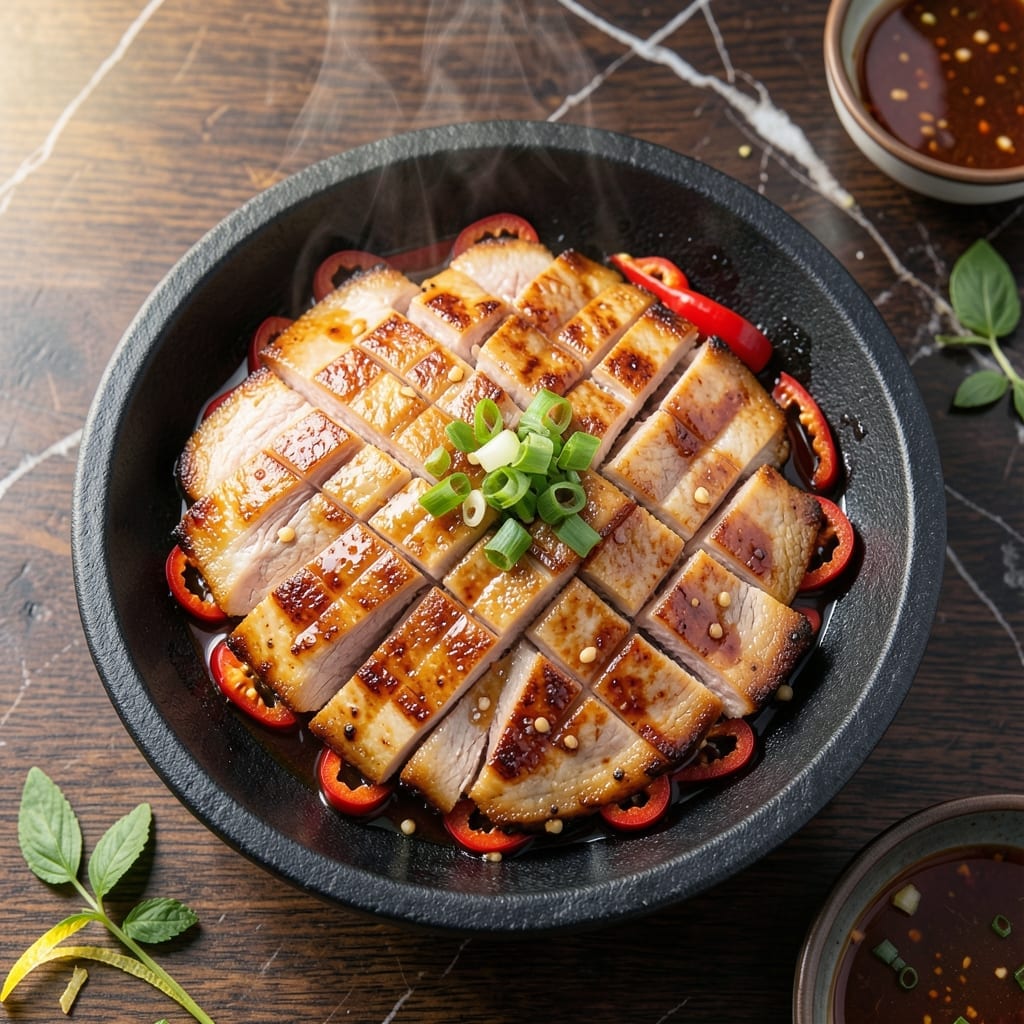
This Korean pork belly delivers crispy skin and a sticky sweet-spicy glaze that’s impossible to resist. The secret lies in proper scoring and a two-stage cooking process that guarantees perfect texture every time.
I’ve refined this method to balance traditional Korean flavors with foolproof technique. The marinade builds deep umami, while the glaze caramelizes beautifully under high heat to create that signature shine.
What you’ll get is tender meat with a shatteringly crispy top layer, all coated in a glossy sauce that’s both sweet and subtly spicy. The aroma alone will have everyone gathering around the table.
Serve with rice and quick-pickled vegetables for a complete meal. Here’s how to achieve restaurant-quality results at home.
Ingredients for Pork Belly Recipe Korean
These carefully selected ingredients create that signature crispy skin and glossy sweet-spicy finish everyone loves.
| Ingredient | Amount | Notes |
|---|---|---|
| Pork Belly 🥓 | 2 lb | Skin-on, scored in crosshatch pattern |
| Soy Sauce 🫙 | ½ cup | Low-sodium preferred for balance |
| Gochujang 🌶️ | ⅓ cup | Korean fermented chili paste essential |
| Brown Sugar 🍚 | ⅓ cup | Light or dark, packed firmly |
| Rice Vinegar 🍯 | ¼ cup | Seasoned variety adds depth |
| Garlic Cloves 🧄 | 6 cloves | Minced finely for even distribution |
| Fresh Ginger 🌿 | 1 tbsp | Grated, peeled first |
| Sesame Oil 🫒 | 2 tbsp | Toasted, for authentic aroma |
| Sesame Seeds 🌰 | 2 tbsp | Toasted for garnish and crunch |
| Green Onions 🧅 | 4 whole | Thinly sliced, white and green parts |
| Kosher Salt 🧂 | 1 tbsp | Diamond Crystal preferred for texture |
| Black Pepper 🌶️ | 1 tsp | Freshly cracked for best flavor |
| Honey 🍯 | 2 tbsp | For glaze sheen and sweetness |
| Mirin 🍶 | 2 tbsp | Sweet rice wine for depth |
[recipe_ingredient_scaler]
The pork belly is non-negotiable for authentic texture. Source from Asian markets where they stock skin-on, well-marbled cuts (or ask your butcher to score it). Kochujang brands vary—Sempio or Chung Jung One are reliable. For soy sauce, Kikkoman low-sodium avoids over-salting. The ginger and garlic should be fresh—no shortcuts here (the pre-minced stuff lacks punch).
No gochujang? Miso paste plus sriracha in equal parts gets you close but not identical. Brown sugar can be coconut sugar for depth, though the flavor profile shifts slightly. Rice vinegar swaps with apple cider vinegar if needed. The mirin is subtle but important—dry sherry in a pinch. For the sesame oil, never use un-toasted; the flavor is entirely different.
Marinated pork belly keeps in the fridge for 24-48 hours before cooking. Cooked leftovers store 4-5 days refrigerated or 3 months frozen. Reheat in a skillet (not microwave) to revive the crispiness. Always bring pork belly to room temperature before cooking for even rendering.
Why You’ll Love This Recipe
- One Pan Wonder: I just toss the pork belly with soy sauce, gochujang, and brown sugar, then let the oven do the work.
- Sweet & Spicy Fix: That combo of gochujang heat with the caramelized brown sugar? Ridiculously good.
- Feeds a Crowd: Honestly, I make a big batch and it disappears—whether it’s dinner or packed for lunch the next day.
- Budget Stretcher: Pork belly is affordable, and a little goes a long way with these bold flavors.
Step-by-Step Instructions for Korean Pork Belly
Achieve perfectly crispy skin and a glossy sweet-spicy glaze with this proven technique.
Step 1: Cure and Dry the Pork Belly
Pat the 2 lb pork belly completely dry with paper towels, paying special attention to the scored skin. I always start by rubbing the skin with 1 tbsp kosher salt and 1 tsp black pepper, working it into every crevice of the crosshatch pattern.
Place the pork belly on a wire rack set over a plate, skin-side up, and refrigerate uncovered for 12-24 hours. This drying process is crucial—it draws out moisture from the skin, ensuring it renders to maximum crispness during cooking. You’ll notice the skin tightens and darkens slightly as it air-dries.
Step 2: Create the Sweet-Spicy Marinade
In a bowl, whisk together 0.5 cup soy sauce, 0.33 cup gochujang, 0.33 cup brown sugar, 0.25 cup rice vinegar, 6 cloves minced garlic, and 1 tbsp grated fresh ginger until the brown sugar fully dissolves. The mixture should be thick, glossy, and deeply aromatic.
Add 2 tbsp sesame oil, 2 tbsp honey, and 2 tbsp mirin, whisking until smooth. This combination delivers the perfect balance of heat, sweetness, and umami. I always let this marinade sit for 10 minutes to allow the flavors to meld before using it.
Step 3: Cook and Glaze the Pork Belly
Preheat your oven to 300°F. Place the pork belly on a wire rack set in a baking sheet, skin-side up. Roast for 1 hour, then increase the temperature to 425°F and continue roasting for 20-25 minutes until the skin is deep golden brown and crispy.
During the last 10 minutes of cooking, brush the pork belly generously with the marinade. Watch closely—the sugar in the glaze can burn if left too long. The skin should be blistered and crackling, with the glaze caramelizing into a sticky, glossy finish.
Step 4: Rest and Finish
Remove the pork belly from the oven and let it rest for 10 minutes before slicing. This resting period allows the juices to redistribute and the skin to set—cutting too soon will cause the crispy top to soften from the steam.
Slice the pork belly into ½-inch thick pieces, cutting against the grain for maximum tenderness. Drizzle with any remaining marinade and sprinkle with 2 tbsp toasted sesame seeds and thinly sliced 4 whole green onions. Serve immediately while the skin remains crisp and the glaze is still glossy.
Pro Tips For Making Pork Belly Recipe Korean
- Score the Skin: Cut shallow slits in the pork belly skin—about 1/4 inch apart—to help render the fat and let the gochujang glaze penetrate deeper. I learned this the hard way after my first few batches turned out greasy instead of crispy.
- Bloom the Gochujang: Cook the gochujang with a splash of oil for 1-2 minutes before adding liquids to deepen its flavor. Sounds weird, but it removes the raw edge and makes the sauce taste richer.
- Don’t Rush the Render: Start the pork belly on medium-low heat to slowly render the fat before cranking it up to crisp the skin. After burning three batches, I finally figured out that patience here is non-negotiable.
- Rest Before Slicing: Let the pork belly rest for 5-10 minutes after cooking so the juices redistribute. My grandmother swore by this, and she was right—it keeps every bite juicy, not just the first few.
Creative Variations of pork belly recipe korean
Spicy Gochujang Boost
For extra heat, add 1 tbsp additional gochujang and 1 tsp gochugaru (Korean chili flakes) to the marinade. The flakes add smoky depth without overwhelming the sweetness. I love this version when I want a real kick. 🌶️
Honey Sriracha Twist
Replace brown sugar with ½ cup honey and add 2 tbsp sriracha to the marinade. This creates a glossier glaze with a different kind of sweet heat. The honey also helps the skin crisp up even more beautifully.
Citrus Infusion
Add zest of 1 orange and 2 tbsp fresh orange juice to the marinade for a bright, citrusy note. This cuts through the richness beautifully and pairs wonderfully with the sesame. The acidity also helps tenderize the meat slightly.
Soy-Glazed Simplicity
For a milder version, reduce gochujang to 2 tbsp and add 2 tbsp hoisin sauce. This creates a sweeter, less spicy profile that’s still packed with umami. I sometimes add 1 tsp five-spice powder for complexity.
Crispy Air Fryer Method
After marinating, cook the pork belly in an air fryer at 375°F for 25-30 minutes, flipping halfway. The circulating air creates incredibly crispy skin all over. Brush with extra marinade for the last 5 minutes. 🔥
Gochujang-Miso Fusion
Combine 2 tbsp white miso paste with the gochujang in the marinade. The miso adds a fermented depth that complements the chili perfectly. This version has a more complex, savory profile that’s absolutely addictive.
Nutrition Facts
Frequently Asked Questions
What’s the best way to get extra crispy skin?
Dry the skin thoroughly, then refrigerate uncovered for 12-24 hours before cooking. This removes moisture so it renders perfectly under high heat.
Can I use regular soy sauce instead of low-sodium?
Yes, but reduce added salt in the recipe. Regular soy sauce is saltier, which may overpower the sweet-spicy balance in your glaze.
How do I store leftovers?
Refrigerate in an airtight container for 4-5 days or freeze for 3 months. Reheat in a skillet to restore crispiness.
What if my glaze burns during cooking?
Lower the oven temperature and tent with foil. Brush glaze on only during the last 10 minutes to prevent burning.

Trained in classic French technique but raised on slow-cooked ribs and spicy rubs, she blends culinary skill with smoke and soul.
- Recipe for Boneless Pork Chops in Cast Iron Skillet: Sear and Baste to Juicy Perfection - October 3, 2026
- Recipe for Boneless Cross Rib Roast: Slow-Roasted Beef with Herb Crust - October 3, 2026
- Hamburgers in Sauce Recipe Crock Pot: Slow-Cooked Savory Delight - October 3, 2026