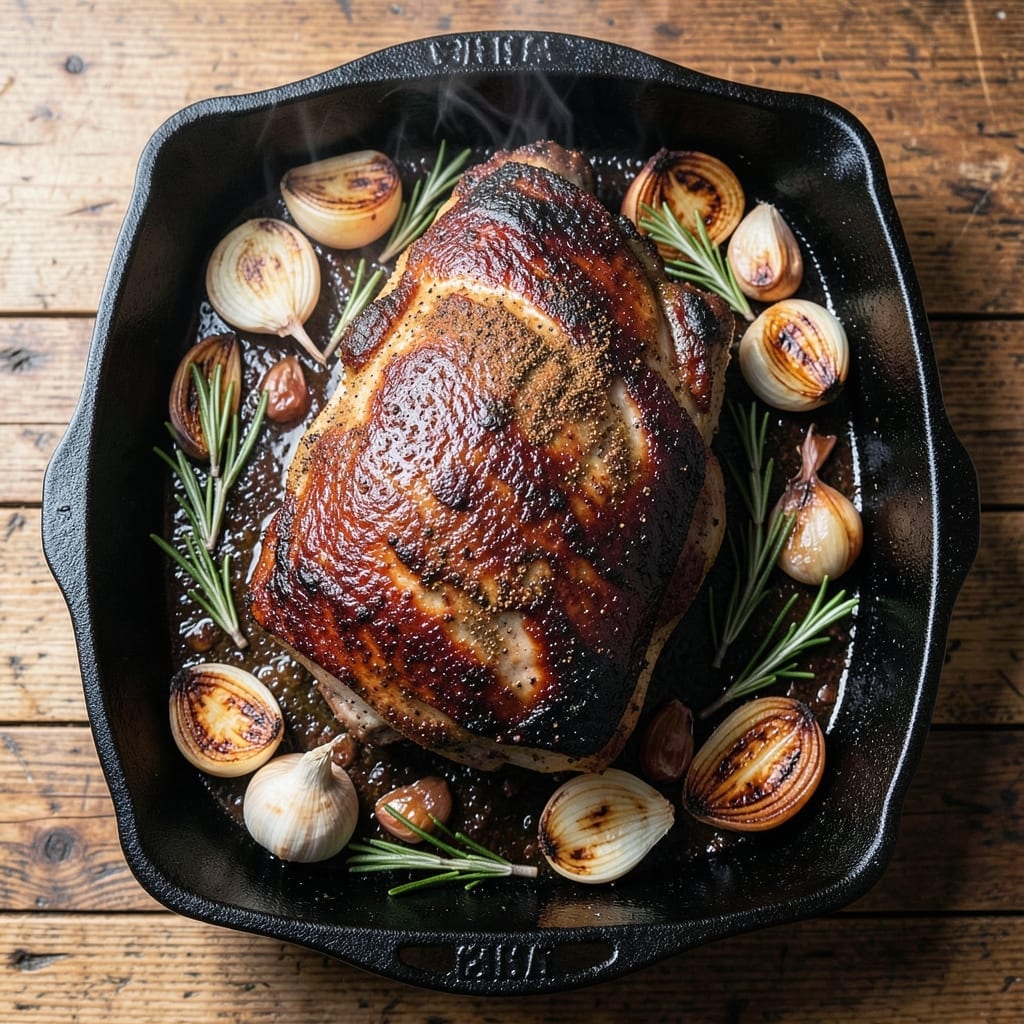
This pork butt roast transforms tough cuts into tender, fall-apart perfection with minimal effort. The oven does most of the work while you enjoy the aroma of slow-roasting meat filling your kitchen.
I developed this method after years of experimenting with temperatures and timing. The key is low heat and patience—this isn’t a quick weeknight meal, but the results are worth every minute.
You’ll end up with meat so tender it shreds with a fork, with a caramelized crust that locks in juices. The exterior develops a rich, savory bark while the inside stays moist and flavorful.
Serve on sandwiches, tacos, or alongside your favorite sides. Here’s how to achieve restaurant-quality results at home.
Ingredients for Pork Butt Roast Recipe Oven
Pantry staples plus one star ingredient: that pork butt. Nothing else required for perfection.
| Ingredient | Amount | Notes |
|---|---|---|
| Pork Butt Roast 🥩 | 4 lb | Bone-in for extra flavor |
| Kosher Salt 🧂 | 2 tbsp | Diamond Crystal preferred |
| Black Pepper 🌶️ | 2 tsp | Freshly ground coarse |
| Garlic Powder 🧄 | 1 tbsp | Not garlic salt |
| Onion Powder 🧅 | 1 tbsp | Dehydrated, fine texture |
| Smoked Paprika 🌶️ | 2 tsp | Sweet or hot variety |
| Dried Oregano 🍃 | 1 tbsp | Mediterranean or Mexican |
| Brown Sugar 🧈 | ¼ cup | Light or dark packed |
| Apple Cider Vinegar 🍏 | ¼ cup | For acidity balance |
| Olive Oil 🫒 | 2 tbsp | Extra-virgin for richness |
| Yellow Mustard 🟡 | 2 tbsp | Prepared, not dry |
| Low-Sodium Chicken Broth 🍲 | 1 cup | Or substitute water |
[recipe_ingredient_scaler]
The pork butt is everything here. Look for bone-in cuts at Costco or your butcher—they have more connective tissue, which breaks down into that fall-apart texture. I always grab a piece with good fat marbling (that white streaking). The size matters too: 4 pounds feeds four with leftovers. If you see pork shoulder labeled the same, it’s basically identical—just a different part of the same cut.
No smoked paprika? Regular paprika plus a pinch of liquid smoke works in a pinch. Brown sugar can be swapped for honey or maple syrup (use one-third less liquid). Out of apple cider vinegar? White vinegar or lemon juice will do—just cut the amount by half. The mustard is mostly for binding the rub, so any prepared mustard (Dijon, spicy, whatever) is fine.
Leftovers keep 4-5 days in the fridge, or freeze for 3 months. The fat will solidify when cold—just reheat gently. I like to shred and portion into freezer bags (that bark gets mixed in too). Perfect for sandwiches or tacos later.
Why You’ll Love This Recipe
- Set It and Forget: I rub the pork butt with salt, pepper, garlic and onion powder, pop it in the oven, and let the heat do the work for hours.
- Flavor Bomb: The dry rub turns into a crunchy crust while the meat stays juicy—every bite is packed with savory goodness.
- Feeds the Whole Crew: One pork butt makes enough for Sunday dinner, sandwiches the next day, and still freezes a portion for later.
- Budget Winner: Pork butt is cheap per pound, stretches across multiple meals, and still tastes like a million bucks.
Step-by-Step Instructions for Pork Butt Roast Oven
Here’s how to transform that pork butt into fall-apart perfection with minimal effort.
Step 1: Create the Flavor-Packed Dry Rub
In a small bowl, combine 2 tbsp Kosher Salt, 2 tsp Black Pepper, 1 tbsp Garlic Powder, 1 tbsp Onion Powder, 2 tsp Smoked Paprika, and 1 tbsp Dried Oregano. This blend delivers deep, savory notes with a subtle smoky heat.
Mix thoroughly to break up any clumps in the spices. The fine texture of the onion and garlic powder ensures they adhere well to the meat’s surface. This rub creates a rich crust that locks in moisture while adding layers of flavor to every bite.
Step 2: Prepare and Season the Pork Butt
Pat the 4 lb Pork Butt Roast dry with paper towels to remove excess moisture—this helps the rub stick and promotes better browning. Place it on a clean work surface and rub it all over with 2 tbsp Olive Oil and 2 tbsp Yellow Mustard.
The mustard acts as a binder for the dry rub while adding a subtle tang that balances the richness of the pork. Now, apply the spice mixture evenly, pressing it into the meat so it forms a thick, flavorful crust. Let it sit at room temperature for 30 minutes to allow the seasonings to penetrate.
Step 3: Slow-Roast to Tenderness
Preheat your oven to 300°F. Place the seasoned pork butt in a Dutch oven or heavy roasting pan. Pour 1 cup Low-Sodium Chicken Broth into the pan to create steam, which keeps the meat moist during the long cook.
Cover tightly with a lid or foil and transfer to the oven. Roast for 4 to 5 hours, turning the roast halfway through, until the internal temperature reaches 195-200°F. At this point, the connective tissue breaks down, and the meat becomes fork-tender.
Step 4: Glaze and Finish for Maximum Flavor
Carefully remove the pork from the oven and transfer it to a cutting board. Skim excess fat from the cooking liquid, then stir in 0.25 cup Brown Sugar and 0.25 cup Apple Cider Vinegar to create a tangy-sweet glaze.
Return the pork to the pan, baste it with the glaze, and place it back in the oven, uncovered, for 20-30 minutes at 375°F. This final step caramelizes the exterior, creating a sticky, flavorful bark while the vinegar cuts through the richness.
Let the pork rest for 15-20 minutes before shredding or slicing. The juices will redistribute, ensuring every bite is succulent and packed with the deep, smoky-sweet flavors you’ve built throughout the process.
Pro Tips For Making Pork Butt Roast Recipe Oven
- Dry the Surface: Pat the pork butt completely dry with paper towels before seasoning—I learned this the hard way after my first few roasts came out steamed instead of browned.
- Season Generously: Use more kosher salt than you think, especially on the fat cap, since pork butt can handle it and the spices need to penetrate that thick cut.
- Low and Slow: Start at 450°F for 30 minutes to get a good crust, then drop to 275°F for the rest—this guarantees fall-apart tenderness without drying it out.
- Rest Before Slicing: Let it rest under foil for at least 20 minutes after pulling it from the oven, or all those juices will end up on your cutting board instead of in the meat.
Regional Styles of This pork butt roast recipe oven
Southern Style
This is the classic approach I grew up with in Ohio, heavily influenced by Carolina traditions. The dry rub uses 2 tsp smoked paprika for that signature smoky depth, with brown sugar added to the glaze for a sweet finish. I love serving it with tangy coleslaw and cornbread. 🌶️
Texas Twist
Texas pitmasters often skip the sweet glaze entirely, focusing on a heavier black pepper and salt crust. I add 1 tbsp chili powder to the rub for extra heat. The meat is smoked first, then finished in the oven at 300°F until it reaches 203°F internally.
Cuban Mojo Style
For a bright, citrusy variation, I marinate the pork overnight in 1 cup orange juice, ½ cup lime juice, and 6 crushed garlic cloves. The acid tenderizes the meat while adding vibrant flavor. Roast as usual, then shred for Cubano sandwiches.
Asian-Inspired
Swap the dry rub for a wet marinade of ½ cup soy sauce, ¼ cup hoisin, 3 tbsp honey, and 1 tbsp grated ginger. Roast at 325°F for 4 hours, then shred for bao buns or rice bowls. 💛
Kansas City Sweet
This Midwestern favorite amps up the sweetness. I increase the brown sugar to ½ cup in the glaze and add 2 tbsp molasses. The result is sticky, caramelized pork that’s perfect for sandwiches with pickles.
Spicy Cajun
Add 1 tbsp cayenne pepper and 1 tsp thyme to your dry rub for a Louisiana kick. I like serving this with dirty rice or in po’ boys. The heat builds beautifully as the pork slow-roasts in the oven.
Nutrition Facts
Frequently Asked Questions
Do I need to cover the roast while cooking?
Yes, cover tightly with a lid or foil for the first 4-5 hours at 300°F. This traps steam to prevent drying out. Uncover only for the final 20-30 minutes to crisp the exterior.
Can I use a smaller or larger cut?
Adjust cooking time: 1.5 hours per pound at 300°F is a good rule. A 3 lb roast may finish in 4 hours, while a 6 lb could take 6-7 hours. Always check internal temp reaches 195-200°F.
Why does the meat need to rest before serving?
Resting for 15-20 minutes allows juices to redistribute throughout the meat. If you cut too soon, all those flavorful juices will spill out, leaving the pork dry.

Trained in classic French technique but raised on slow-cooked ribs and spicy rubs, she blends culinary skill with smoke and soul.