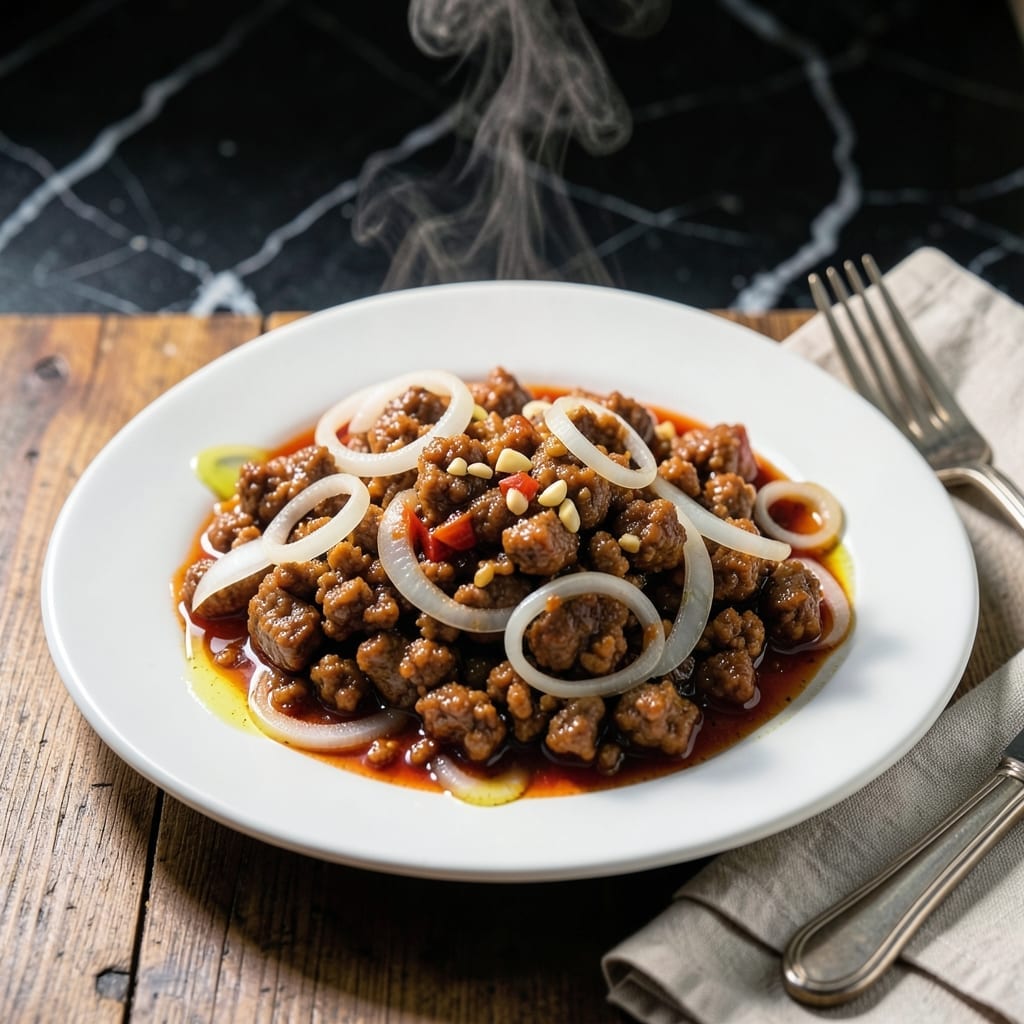
This Filipino-style dish brings bold, savory flavors to your table with simple ingredients and traditional techniques.
I’ve refined this method over time to capture the authentic taste of Panlasang Pinoy, using ground pork and aromatic seasonings. The key is balancing sweet, salty, and tangy notes for a dish that’s both comforting and deeply flavorful.
With a 30-minute cook time, this recipe delivers tender pork in a rich, aromatic sauce that pairs perfectly with steamed rice. It’s a staple worth mastering.
Serve it for dinner or meal prep for the week—it reheats beautifully and tastes even better the next day.
Ingredients for Ground Pork Recipe Panlasang Pinoy
These traditional ingredients create a rich, savory Filipino-style pork dish with authentic flavor.
| Ingredient | Amount | Notes |
|---|---|---|
| Ground Pork 🥩 | 1 ½ lb | 80/20 fat ratio preferred |
| White Onion 🧅 | 1 whole | Medium-sized, finely diced |
| Garlic Cloves 🧄 | 6 cloves | Minced for maximum flavor |
| Soy Sauce 🫒 | ½ cup | Use low-sodium if preferred |
| Vinegar 💧 | ¼ cup | White or cane vinegar works |
| Brown Sugar 🍚 | 2 tbsp | Packed, for sweetness balance |
| Bay Leaves 🌿 | 2 pieces | Dried, whole leaves |
| Black Peppercorns 🌶️ | 1 tsp | Freshly cracked preferred |
| Tomato Sauce 🍅 | 1 cup | Plain, no added herbs |
| Chicken Liver Spread 🍗 | 2 tbsp | Optional but traditional (pâté-style) |
| Potatoes 🥔 | 2 whole | Medium, peeled and diced |
| Carrots 🥕 | 1 whole | Medium, peeled and diced |
| Green Peas 🌱 | ½ cup | Fresh or frozen, thawed |
| Salt 🧂 | 1 tsp | Adjust to taste after cooking |
[recipe_ingredient_scaler]
The ground pork is the foundation here—opt for 80/20 fat ratio for the most authentic texture and flavor. Asian markets often carry the best quality, but standard grocery store pork works fine. For the soy sauce, Silver Swan or Datu Puti are traditional Filipino brands that deliver the right balance of salt and umami (the good stuff, not the low-quality imitations).
No chicken liver spread? Skip it entirely—it’s traditional but not essential. Want more depth? Add a splash of fish sauce (patis) at the end. Fresh tomatoes can replace tomato sauce in a pinch (just blend and strain). The vinegar can be apple cider at a 1:1 ratio, though white vinegar is more traditional (and cheaper).
This dish reheats beautifully—flavors deepen overnight. Keeps for 4-5 days in the fridge, or freeze portions for up to 3 months. Always reheat gently to preserve the pork’s tenderness (worth the extra minute).
Why You’ll Love This Recipe
- One Pan Meal: I love that I only need a single skillet—ground pork, onions, garlic, soy sauce, and vinegar all cook together in minutes.
- Umami Bomb: The mix of soy sauce and vinegar gives it that tangy-savory depth I crave every time.
- Feeds the Crew: Between us, this stretches easily for a family dinner or doubles as leftovers for lunch the next day.
- Budget Keeper: Ground pork is so affordable, and honestly, a little goes a long way with these bold flavors.
Step-by-Step Instructions for Filipino-Style Ground Pork
This traditional method ensures rich, balanced flavors with a perfect saucy consistency.
Step 1: Sauté Aromatics and Brown the Meat
Heat a large pot over medium heat and add the 1.5 lb ground pork. Break it up with a wooden spoon and cook until it loses its raw color, about 5-6 minutes.
Add the finely diced white onion and cook for 3 minutes until translucent. Stir in the minced garlic cloves and cook for 30 seconds until fragrant. This builds the flavor foundation of the dish.
Season with 1 tsp salt and the 1 tsp black peppercorns, then add the 2 pieces bay leaves to infuse the oil with their earthy aroma.
Step 2: Build the Sauce Base
Pour in the 0.5 cup soy sauce, 0.25 cup vinegar, and 1 cup tomato sauce. Stir well to combine, scraping up any browned bits from the bottom of the pot.
Add the 2 tbsp brown sugar and mix until it dissolves completely. This balance of sweet, salty, and tangy is essential to authentic Filipino flavor.
Let the sauce simmer for 5 minutes to meld the flavors and reduce slightly. The mixture should start to thicken and deepen in color.
Step 3: Incorporate Vegetables and Liver Spread
Add the diced potatoes and diced carrots to the pot. Stir to coat them in the sauce. These vegetables will soak up the rich flavors as they cook.
Mix in the 2 tbsp chicken liver spread until fully incorporated. This adds a traditional depth of flavor that’s characteristic of many Filipino pork dishes.
Pour in ½ cup water (not listed in ingredients but necessary for cooking), cover, and simmer for 10-12 minutes until the potatoes are nearly tender.
Step 4: Finish with Green Peas and Final Adjustments
Stir in the 0.5 cup green peas and cook for an additional 3-4 minutes until all vegetables are tender and the sauce has thickened to your desired consistency.
Taste and adjust seasoning if needed, though the soy sauce and liver spread typically provide enough saltiness. The peas should be bright green and heated through.
Remove the bay leaves before serving. The final dish should have a glossy sauce that clings to the pork and vegetables, with a perfect balance of savory, sweet, and tangy notes.
Pro Tips For Making Ground Pork Recipe Panlasang Pinoy
- Brown the Pork First: Cook the ground pork on medium-high heat until it loses its pink color before adding anything else—I learned this the hard way after ending up with a watery, pale mess.
- Mince Onions Fine: Chop the white onions into tiny pieces, about 1/8-inch, so they melt into the dish and don’t leave big, crunchy chunks in the final sauce.
- Balance the Vinegar: Use 1 part vinegar to 2 parts soy sauce for the right tangy-savory kick; I was skeptical until I tried it, and now it’s non-negotiable.
- Deglaze the Pan: After browning the pork, pour in about 2 tablespoons of water to scrape up the browned bits—this adds depth to the sauce without extra effort.
Regional Styles of This ground pork recipe panlasang pinoy
Manila-Style Classic
This is the version most Filipinos know from home kitchens in Manila. The key is using Silver Swan soy sauce for that authentic umami depth. I love how the sauce reduces to a glossy consistency that clings perfectly to steamed rice. 💫
Bicol Region Twist
In Bicol, they add coconut milk (about 1 cup) along with the tomato sauce for a richer, creamier texture. The dish becomes ginataang (cooked in coconut milk), which balances the tanginess beautifully. It’s comfort food at its finest.
Ilocos Variation
The Ilocos region prefers a drier texture, so they often use less liquid and add bagoong (fermented fish paste) for an extra umami punch. Just 1 tbsp of bagoong transformed this dish for me the first time I tried it.
Pampanga Influence
Chefs in Pampanga—known as the culinary capital—elevate this with annatto oil for color and a touch of calamansi juice at the end. The citrus brightens all the flavors. I learned this trick from a Kapampangan friend at the Portland farmers market.
They also sometimes add bell peppers for extra crunch and sweetness.
Cebuano Approach
In Cebu, they often include pineapple chunks (about ½ cup) for a sweet-tangy contrast. The fruit soaks up the sauce and adds a delightful texture. It’s a variation that surprised my daughter Lily the first time she tried it.
Nutrition Facts
Frequently Asked Questions
Can I use lean ground pork instead of 80/20?
You can, but the dish may be less flavorful and drier. The fat in 80/20 enhances the richness and keeps the pork tender during cooking. If using lean, add 1-2 tbsp oil to compensate.
Why do we add vinegar to the sauce?
The vinegar balances the sweetness and saltiness, creating that signature tangy Filipino flavor profile. It also helps tenderize the meat. Use white vinegar for authenticity.
What if my sauce is too thin?
Simmer uncovered for 5-10 minutes to reduce. For faster thickening, mix 1 tbsp cornstarch with 2 tbsp water and stir in. This maintains the glossy texture.
Can I make this ahead of time?
The flavors deepen overnight. Store in an airtight container for up to 5 days in the fridge or freeze for 3 months. Reheat gently with a splash of water.

Trained in classic French technique but raised on slow-cooked ribs and spicy rubs, she blends culinary skill with smoke and soul.
- Recipe for Boneless Pork Chops in Cast Iron Skillet: Sear and Baste to Juicy Perfection - October 3, 2026
- Recipe for Boneless Cross Rib Roast: Slow-Roasted Beef with Herb Crust - October 3, 2026
- Hamburgers in Sauce Recipe Crock Pot: Slow-Cooked Savory Delight - October 3, 2026