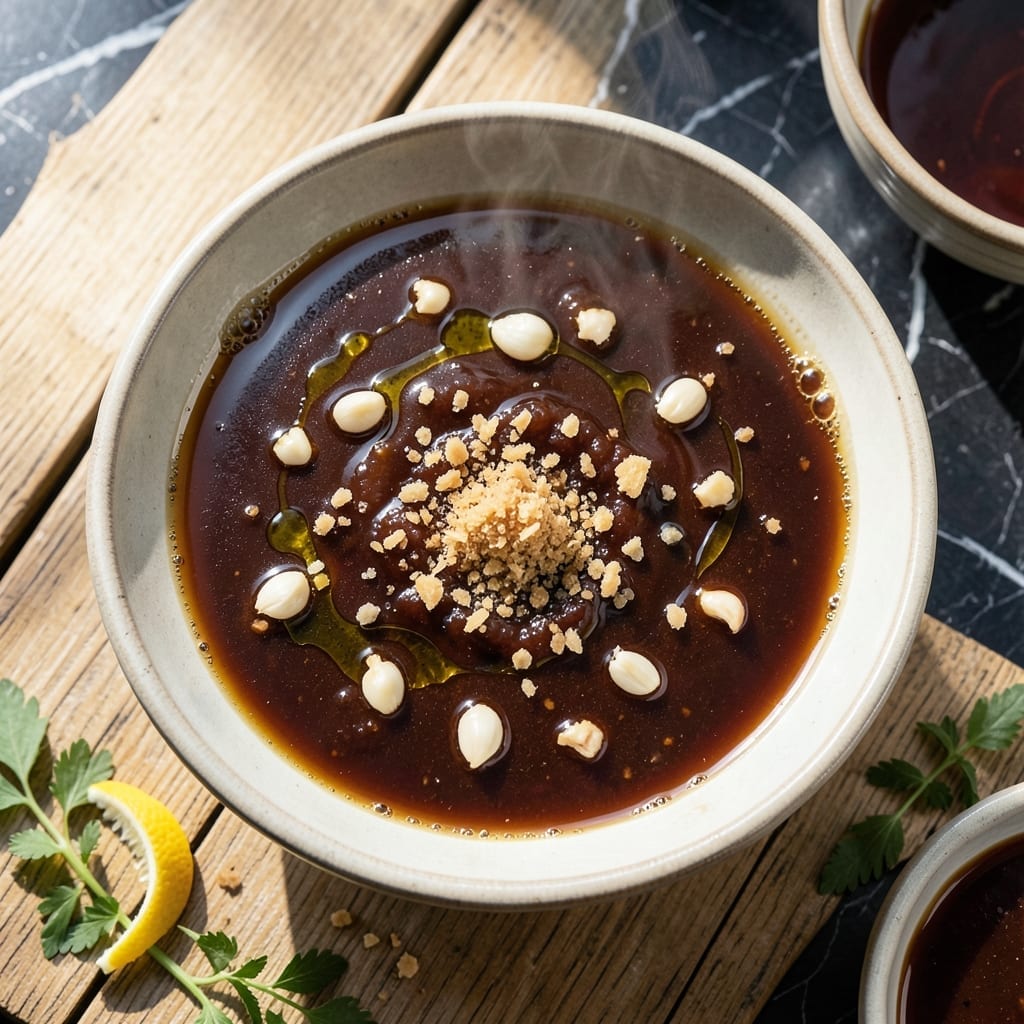
This marinade transforms ordinary pork into something extraordinary with its perfect balance of sweet, tangy, and savory notes. I developed it after years of experimenting with flavor combinations at local BBQ competitions.
With just a few simple ingredients and 15 minutes of marinating time, you’ll achieve deeply flavorful pork with a caramelized crust when grilled. The acid in the marinade tenderizes while herbs and spices build complex layers.
Ingredients for Pork Grill Marinade
Nine ingredients transform pork with bold, balanced flavor in minutes.
| Ingredient | Amount | Notes |
|---|---|---|
| Soy Sauce 🫒 | ½ cup | Low-sodium preferred for balance |
| Brown Sugar 🍚 | ¼ cup | Light or dark variety works |
| Apple Cider Vinegar 🍏 | 2 tbsp | For bright acidity and tang |
| Olive Oil 🫒 | ¼ cup | Extra-virgin for depth of flavor |
| Garlic Cloves 🧄 | 4 cloves | Minced for maximum flavor infusion |
| Fresh Ginger Root 🌿 | 1 tbsp | Grated, peeled before use |
| Dijon Mustard 🟡 | 1 tbsp | For a subtle sharpness |
| Worcestershire Sauce 🫒 | 1 tbsp | Adds umami depth to marinade |
| Black Pepper 🌶️ | 1 tsp | Freshly ground for best results |
[recipe_ingredient_scaler]
The soy sauce is doing the heavy lifting here—Kikkoman or San-J if you want that clean, consistent flavor. Brown sugar adds caramelization (light for mild sweetness, dark for molasses notes). I grab my apple cider vinegar from Whole Foods because their organic version has that perfect sharpness. Olive oil? Any extra-virgin will work, but the good stuff (the kind you’d drizzle on bread) really shines.
No soy sauce? Tamari or coconut aminos work in a pinch (taste first—coconut aminos are sweeter). Swap apple cider vinegar for rice vinegar or lemon juice at the same amount. Fresh ginger is ideal, but ground ginger at half the quantity gets you close. Skip the Worcestershire if you’re avoiding anchovies—add an extra teaspoon of soy sauce and a pinch of smoked paprika instead.
This marinade keeps for 5 days in the fridge (the flavors actually deepen over time). Freeze portions in ice cube trays for up to 3 months—perfect for last-minute grilling. Shake or stir before using, as the sugar may settle.
Why You’ll Love This Recipe
- 5-Minute Mix: I just toss soy sauce, brown sugar, vinegar, oil, and garlic in a bowl—no fuss, no blender.
- Sweet-Savory Magic: The brown sugar caramelizes on the grill while the garlic and soy sauce pack a serious umami punch.
- Grill Night Hero: Works for chops, tenderloin, or even kebabs. Honestly, I’ve used it for chicken in a pinch.
- Stretches Far: A single batch marinates enough pork for a family dinner plus leftovers for sandwiches the next day.
Step-by-Step Instructions for Pork Grill Marinade
This method ensures deep flavor penetration and that ideal char when grilled.
Step 1: Combine Wet Ingredients for the Base
In a medium bowl, whisk together the 0.5 cup Soy Sauce, 0.25 cup Brown Sugar, 2 tbsp Apple Cider Vinegar, and 0.25 cup Olive Oil. The soy sauce provides the salty backbone, while the brown sugar adds caramelization potential for the grill.
I always use low-sodium soy sauce here—it lets you control the saltiness without overpowering the other flavors. The olive oil helps distribute the marinade evenly across the pork surface. Whisk until the brown sugar begins to dissolve, which usually takes 1-2 minutes of vigorous mixing.
Step 2: Incorporate Aromatic and Umami Elements
Add the 4 cloves Garlic Cloves (minced), 1 tbsp Fresh Ginger Root (grated), 1 tbsp Dijon Mustard, 1 tbsp Worcestershire Sauce, and 1 tsp Black Pepper to the bowl. These ingredients create the complex flavor profile that makes this marinade special.
The garlic and ginger should be finely minced and grated respectively for maximum surface area contact with the meat. I’ve found that freshly ground black pepper makes a noticeable difference in both aroma and heat. Stir everything together until fully combined—the mixture should look slightly thickened from the mustard.
Step 3: Marinate the Pork for Maximum Flavor
Place your pork in a resealable plastic bag or shallow dish and pour the marinade over it. Make sure the pork is fully submerged or coated on all sides. For best results, marinate in the refrigerator for at least 4 hours, but overnight is ideal.
I like to flip the pork halfway through the marinating time to ensure even flavor distribution. The acid in the apple cider vinegar and the enzymes in the ginger will start to break down the meat surface, allowing deeper penetration of all those bold flavors. Don’t exceed 24 hours of marinating, as the texture can become mushy.
Step 4: Grill to Perfection with Reserved Marinade
Remove the pork from the marinade and let any excess drip off. Pat it dry with paper towels—this creates that perfect sear on the grill. Reserve some marinade for basting if desired, but only use it if you boil it for 3 minutes first to kill any bacteria.
Grill over medium-high heat until the pork reaches your desired doneness. The sugars in the marinade will caramelize beautifully, creating that coveted char. Baste with the reserved (boiled) marinade during the last 2 minutes of cooking for extra flavor and shine. Let the pork rest for 5-10 minutes before serving to allow the juices to redistribute.
Pro Tips For Making Pork Grill Marinade
- Marinate Overnight: I learned this the hard way—pork needs at least 4 hours in the soy-brown sugar mix, but overnight actually changes the outcome. The vinegar tenderizes and the garlic flavor deepens.
- Balance the Sweetness: Brown sugar can overpower, so cut it by a tablespoon if your soy sauce is already sweet. I skip this when I’m lazy, but the marinade is noticeably better when I don’t.
- Crush the Garlic: My grandmother swore by this, and she was right: smashed garlic cloves release way more flavor into the olive oil base than minced.
- Reserve Some Marinade: Sounds weird, but it works: set aside a few tablespoons of the soy-vinegar mix before adding raw pork—use it for basting to avoid contamination.
Essential Equipment for Great pork grill marinade
Mixing Bowls
I always start with a stainless steel mixing bowl—my 1.5-quart from OXO is perfect for this marinade. Stainless won’t react with the acid in the vinegar like some plastic or aluminum bowls might. Plus, it’s easy to clean and lasts forever. 💪
Whisk Selection
A good balloon whisk is essential for emulsifying the oil and vinegar. I use my 10-inch Ateco whisk—it fits comfortably in my hand and the wires are sturdy enough to handle the brown sugar without bending. The rounded shape helps get into the bowl’s corners.
Measuring Tools
For accuracy, I rely on my stainless steel measuring cups and spoons from Cuisinox. The ¼ cup and tablespoon measures are particularly important for this recipe. I also keep a liquid measuring cup handy for the olive oil to ensure I don’t overpour.
Marinating Containers
For marinating, I prefer gallon-sized zip-top freezer bags—they’re space-efficient and ensure the marinade coats every surface. For larger cuts, a glass baking dish with a lid works well. I found mine at a local restaurant supply store for under $10.
Fine Grater
A microplane is my secret weapon for the ginger. It creates a fine, almost paste-like texture that distributes evenly in the marinade. I’ve had my Microplane 40020 for years—it’s held up through countless batches of this marinade and more.
Garlic Press
While not strictly necessary, my RSVP garlic press makes quick work of the 4 cloves. It’s sturdy, easy to clean, and I love that it has a built-in cleaner. Honestly, I use it so often it’s become an extension of my hand in the kitchen. ✨
Nutrition Facts
Frequently Asked Questions
Can I use this marinade for other meats?
This works beautifully with chicken, beef, or even shrimp. For chicken, reduce marinating time to 2-4 hours to avoid over-tenderizing.
How long can I store leftover marinade?
Unused marinade keeps in the fridge for up to 5 days in an airtight container. For longer storage, freeze it for up to 3 months.
Why does my pork taste bitter after marinating?
This usually happens when marinated too long. Stick to 4-24 hours max. The vinegar and ginger can over-tenderize and create bitterness beyond that.

Trained in classic French technique but raised on slow-cooked ribs and spicy rubs, she blends culinary skill with smoke and soul.
- Recipe for Boneless Pork Chops in Cast Iron Skillet: Sear and Baste to Juicy Perfection - October 3, 2026
- Recipe for Boneless Cross Rib Roast: Slow-Roasted Beef with Herb Crust - October 3, 2026
- Hamburgers in Sauce Recipe Crock Pot: Slow-Cooked Savory Delight - October 3, 2026