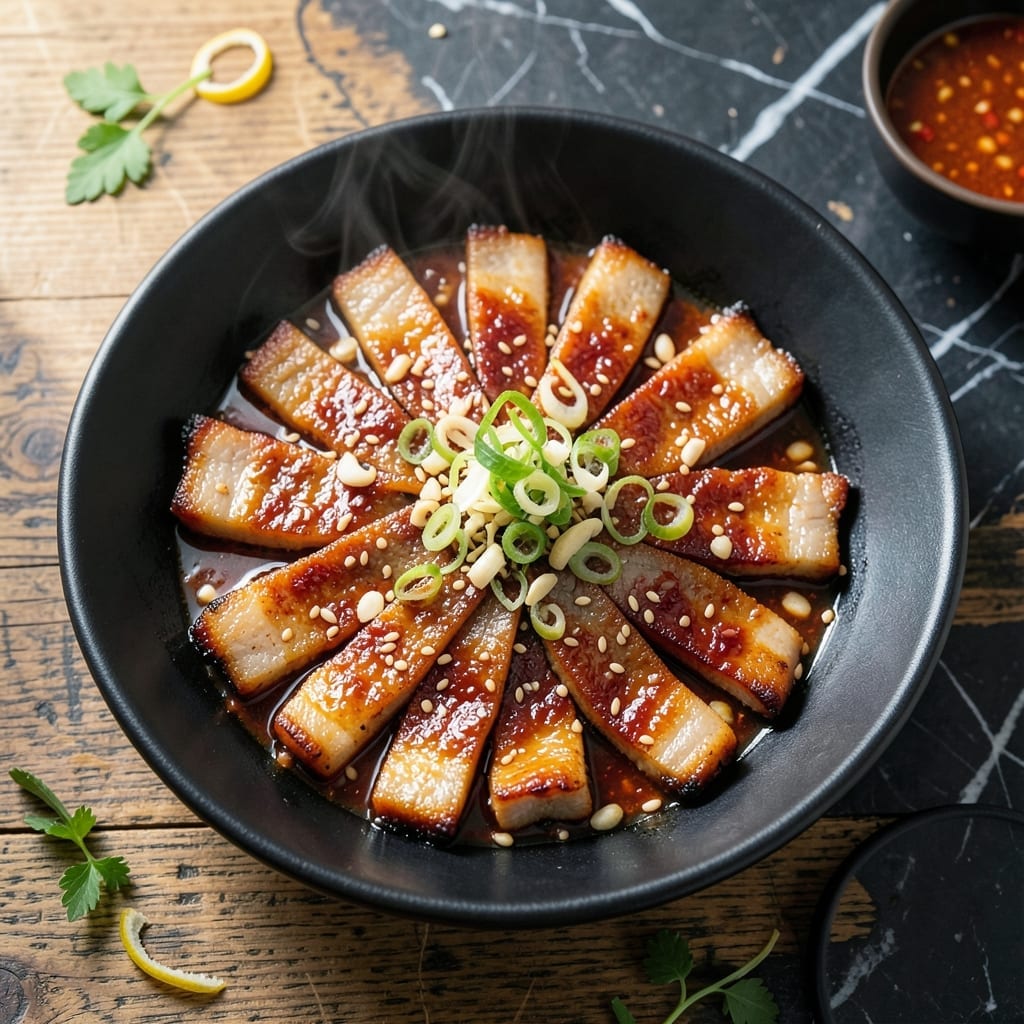
This Korean-style pork jowl delivers crispy perfection with bold, authentic flavors that rival traditional pork belly. The secret lies in proper marination and high-heat cooking to achieve that coveted texture.
I’ve refined this method to ensure each bite offers a satisfying crunch followed by tender, flavorful meat. The marinade combines classic Korean ingredients to create depth without overpowering the pork’s natural richness.
Cooking at the right temperature is crucial—too low and it won’t crisp, too high and it burns. This technique guarantees consistent results every time, with layers of umami and a hint of sweetness.
Serve with rice, kimchi, and ssamjang for a complete meal. The contrast of textures and flavors makes this dish unforgettable.
Ingredients for Pork Jowl Recipe Korean
Transform pork jowl into crispy perfection with these authentic Korean ingredients and bold flavors.
| Ingredient | Amount | Notes |
|---|---|---|
| Pork Jowl 🥩 | 2 lb | Skin-on, cut into 1-inch strips |
| Soy Sauce 🫙 | ½ cup | Korean or low-sodium preferred |
| Gochujang 🌶️ | 3 tbsp | Korean red pepper paste |
| Brown Sugar 🍚 | 3 tbsp | Light or dark variety |
| Garlic Cloves 🧄 | 6 cloves | Minced finely |
| Fresh Ginger 🌿 | 1 tbsp | Grated or minced |
| Sesame Oil 🫒 | 2 tbsp | Toasted for depth |
| Rice Vinegar 🍶 | 2 tbsp | For acidity balance |
| Green Onions 🧅 | 4 whole | Thinly sliced for garnish |
| Sesame Seeds 🌰 | 1 tbsp | Toasted for garnish |
| Black Pepper 🌶️ | 1 tsp | Freshly ground preferred |
| Neutral Cooking Oil 🫒 | ½ cup | For high-heat frying |
| Korean Pear 🍐 | ½ whole | Peeled and grated optional |
| Salt 🧂 | 1 tsp | Kosher or sea salt |
[recipe_ingredient_scaler]
The pork jowl is non-negotiable here—look for skin-on cuts at a reputable butcher or Korean market for optimal texture. Marbling ensures tenderness, while the skin guarantees that coveted crunch. H-Mart or Assi Plaza often carry pre-cut strips, saving prep time. For the gochujang, Sempio or Chongga brands deliver consistent heat and depth without artificial additives.
No gochujang? Miso paste plus a dash of sriracha (1:1 ratio) works in a pinch, though the flavor profile shifts slightly. Brown sugar can be swapped for honey or maple syrup, but adjust sweetness to taste. If Korean pear is unavailable, grated apple or pineapple adds the enzyme tenderizing effect. The sesame oil must be toasted—Kadoya or Ottogi are reliable options.
Marinated pork keeps 2-3 days in the fridge, but cook within 24 hours for peak freshness. Store cooked jowl in an airtight container—it reheats well, though crispiness fades after the first day. Freeze uncooked strips for up to 3 months.
Why You’ll Love This Recipe
- Minimal Chopping Required: I just slice the pork jowl, toss it with soy sauce, gochujang, and garlic—no fancy prep.
- Sweet-Spicy Perfection: The brown sugar caramelizes with the gochujang, creating this sticky, finger-licking glaze.
- Feeds a Hungry Crowd: I made this for my in-laws and everyone went back for seconds, even the picky eaters.
- Stretches the Budget: Pork jowl is cheaper than belly, and a little goes a long way with that bold flavor.
Step-by-Step Instructions for Korean Pork Jowl
This method ensures maximum crispiness while infusing bold Korean flavors into every bite.
Step 1: Prepare the Pork Jowl Marinade
In a large mixing bowl, combine the 0.5 cup Soy Sauce, 3 tbsp Gochujang, 3 tbsp Brown Sugar, 6 cloves minced Garlic Cloves, 1 tbsp Fresh Ginger, 2 tbsp Sesame Oil, 2 tbsp Rice Vinegar, 1 tsp Black Pepper, and 1 tsp Salt.
Whisk the mixture until the brown sugar fully dissolves and the marinade becomes smooth and glossy. For extra depth of flavor, grate 0.5 whole Korean Pear into the marinade and stir to incorporate. This natural tenderizer also adds subtle sweetness.
Step 2: Marinate the Pork Jowl
Add the 2 lb Pork Jowl strips to the marinade, ensuring each piece is fully coated. I use my hands for this step—it’s the most effective way to work the marinade into every crevice of the meat. Massage the pork for 2-3 minutes to help the flavors penetrate.
Cover the bowl with plastic wrap and refrigerate for at least 4 hours (overnight is ideal). The longer marinating time allows the soy sauce and gochujang to deeply flavor the pork while the korean pear begins tenderizing the meat. This step is non-negotiable for achieving maximum flavor.
Step 3: Pan-Fry to Crispy Perfection
Heat 0.5 cup Neutral Cooking Oil in a large skillet over medium-high heat until it shimmers. Remove the pork jowl from the marinade (reserve the marinade) and pat it dry with paper towels. Working in batches to avoid crowding, carefully place the pork strips in the hot oil.
Fry undisturbed for 4-5 minutes per side until deeply golden brown and crispy. The meat should sizzle actively—if it doesn’t, your oil isn’t hot enough. Use tongs to flip the pieces only once to ensure even browning and that coveted crispy texture. Transfer cooked pieces to a paper towel-lined plate to drain excess oil.
Step 4: Glaze and Garnish
Pour the reserved marinade into the same skillet and bring to a simmer over medium heat. Cook for 3-4 minutes until the sauce thickens slightly and becomes glossy. This transforms the marinade into a rich glaze that will cling beautifully to the crispy pork.
Return all the crispy pork jowl to the skillet and toss to coat evenly in the glaze. Cook for an additional 1-2 minutes to allow the flavors to meld. Transfer to a serving platter and garnish with thinly sliced 4 whole Green Onions and 1 tbsp Sesame Seeds. Serve immediately while the pork is at its crispest.
Pro Tips For Making Pork Jowl Recipe Korean
- Score the Fat: Make shallow cuts in the pork jowl fat cap before marinating—this helps the gochujang and soy sauce penetrate deeper and crisp up better when cooking.
- Balance the Marinade: I learned this the hard way: mix 2 parts soy sauce to 1 part gochujang with the brown sugar to keep the flavors bold but not overwhelmingly spicy.
- Don’t Rush the Caramelization: Cook the pork jowl on medium-low heat after marinating to let the brown sugar caramelize slowly without burning the garlic.
- Rest Before Slicing: After cooking, give the pork jowl a solid 10 minutes to rest—this keeps the juices from running out when you slice it thin for serving.
Serving Suggestions for pork jowl recipe korean
Traditional Korean Spread
Serve this creation with steamed white rice as the base to soak up the rich glaze. Add kimchi on the side for that tangy crunch that cuts through the fat. I love using Napa cabbage kimchi from Mother-in-Law’s brand for consistent quality.
Ssam Style Feast
For a hands-on experience, set out butter lettuce leaves and ssamjang (Korean dipping sauce). Wrap a piece of crispy pork in lettuce with a dab of ssamjang, some rice, and a bite of garlic clove for the full ssam experience. 🔥
Pickled Vegetables
Balance the richness with quick-pickled radishes or cucumbers. Thinly slice Korean daikon radish and soak in rice vinegar, sugar, and salt for 30 minutes. The cool crunch contrasts beautifully with the hot, crispy pork.
Bibimbap Bowl
Chop the pork and serve over rice with sautéed spinach, carrots, and zucchini. Top with a fried egg and drizzle with gochujang sauce. This creates a complete bibimbap with all the flavors in one bowl.
Beer Pairings
An ice-cold Korean lager like Hite or OB Beer cleanses your palate between bites. For craft options, try Kloud beer’s crisp, clean finish. The carbonation helps cut through the richness. 🍺
Finishing Touches
Always garnish with thinly sliced green onions and toasted sesame seeds just before serving. For extra flair, add a sprinkle of flaky sea salt to enhance the crispy skin. Serve immediately while the pork is at its peak texture.
Nutrition Facts
Frequently Asked Questions
Can I use pork belly instead of jowl?
Yes, but the texture differs. Pork belly has more fat layers, while jowl offers a meatier bite with crispy skin. Adjust cooking time to 6-7 minutes per side for belly.
Why does my marinade taste too salty?
Use low-sodium soy sauce or reduce to 1/3 cup. Korean soy sauces vary in saltiness. Balance with extra brown sugar or Korean pear.
How do I store leftovers?
Keep in an airtight container for up to 3 days. Reheat in a dry pan over medium heat to restore some crispiness. Never microwave.
What if I don’t have gochujang?
Substitute with 1 tbsp miso paste + 1 tbsp sriracha + 1 tsp sugar. The flavor won’t be identical but still delicious.

Trained in classic French technique but raised on slow-cooked ribs and spicy rubs, she blends culinary skill with smoke and soul.
- Recipe for Boneless Pork Chops in Cast Iron Skillet: Sear and Baste to Juicy Perfection - October 3, 2026
- Recipe for Boneless Cross Rib Roast: Slow-Roasted Beef with Herb Crust - October 3, 2026
- Hamburgers in Sauce Recipe Crock Pot: Slow-Cooked Savory Delight - October 3, 2026