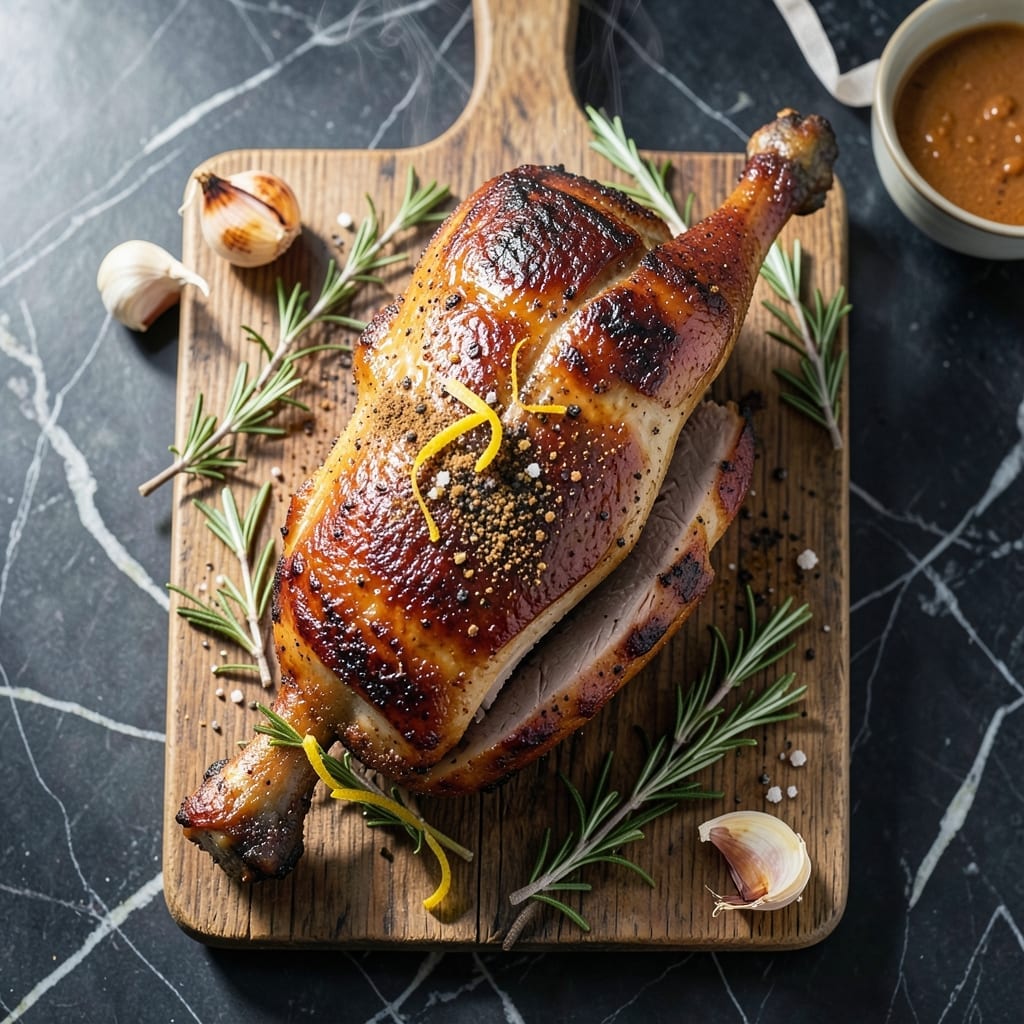
This slow-roasted pork leg delivers fall-off-the-bone tenderness every time. I developed this method after years of experimenting with low, steady heat to transform tough cuts into melt-in-your-mouth perfection.
The secret is patience—roasting at 275°F for hours allows the collagen to break down gradually. A simple dry rub enhances the natural pork flavor without overpowering it. The result is meat so tender it pulls apart with just a fork.
You’ll achieve a crispy exterior that gives way to juicy, succulent meat inside. The slow cooking process ensures even the leanest parts stay moist and flavorful. This technique works for any pork leg cut you find at your butcher.
Serve with roasted vegetables or mashed potatoes to soak up the rich juices. The leftovers make incredible sandwiches the next day.
Ingredients for Pork Leg
Simple dry rub and fresh herbs transform this pork into something spectacular.
| Ingredient | Amount | Notes |
|---|---|---|
| Pork Leg 🐖 | 4 lb | Bone-in, skin-on preferred |
| Kosher Salt 🧂 | 1 ½ tbsp | Diamond Crystal preferred |
| Black Pepper 🌶️ | 1 tbsp | Freshly ground, coarse |
| Garlic Powder 🧄 | 1 tbsp | Not garlic salt |
| Onion Powder 🧅 | 1 tbsp | Fresh ground for best flavor |
| Smoked Paprika 🌶️ | 1 tsp | Sweet or hot variety |
| Dried Oregano 🍃 | 1 tsp | Mediterranean variety preferred |
| Olive Oil 🫒 | 2 tbsp | Extra-virgin for richness |
| Apple Cider Vinegar 🍏 | 1 tbsp | Balances dry rub flavors |
| Brown Sugar 🍚 | 1 tbsp | Light or dark variety |
| Fresh Rosemary 🌿 | 2 tbsp | Chopped, stems removed |
| Fresh Thyme 🍃 | 1 tbsp | Leaves stripped from stems |
| Carrots 🥕 | 3 whole | Large, cut into chunks |
| Yellow Onions 🧅 | 2 whole | Medium, quartered |
| Chicken Stock 🍲 | 1 cup | Low-sodium preferred |
[recipe_ingredient_scaler]
The pork leg is the star—bone-in, skin-on gives the best texture and flavor. I always grab mine from Whole Foods or a local butcher (they’ll often have better marbling than supermarket cuts). Ask for the shank end if you want extra collagen for that melt-in-your-mouth feel. Don’t skip the skin—it crisps up beautifully in the low oven (worth the extra minute to score it first).
No smoked paprika? Regular paprika plus a pinch of chipotle powder gets you close. Fresh herbs not an option? Dried at one-third the amount works in a pinch (just rehydrate in a little water first). The brown sugar can be swapped for maple syrup if you’re avoiding refined sugar. For the stock, homemade is ideal, but Better Than Bouillon is a solid store-bought backup.
Leftovers keep for 4-5 days in the fridge, but honestly, they’re even better the next day. Freezes beautifully for 3 months—portion into sandwich-sized servings (trust me, you’ll want seconds). The rendered fat from the pork? Save it. It’s liquid gold for roasting potatoes later.
Why You’ll Love This Recipe
- Set It and Forget: Honestly, just rub the pork leg with salt, pepper, garlic and onion powder, then let the oven do the heavy lifting.
- Crispy Outside, Juicy Inside: That combo of spices creates a crust so good I catch myself sneaking bites before serving.
- Feeds a Crowd: One pork leg and a handful of pantry staples, and suddenly I’ve got enough for Sunday dinner plus leftovers.
- Dollar Stretcher: I paid less per pound for the pork leg than chicken breasts, and it tastes way more impressive.
Step-by-Step Instructions for Slow-Roasted Pork Leg
This method delivers melt-in-your-mouth tenderness with minimal hands-on time.
Step 1: Create the Dry Rub and Season the Pork Leg
In a small bowl, combine the 1.5 tbsp Kosher Salt, 1 tbsp Black Pepper, 1 tbsp Garlic Powder, 1 tbsp Onion Powder, 1 tsp Smoked Paprika, and 1 tsp Dried Oregano. This blend creates a flavor profile that complements the richness of the pork without overpowering it.
Pat the 4 lb Pork Leg dry with paper towels, then rub the spice mixture all over, pressing firmly to adhere. I focus on getting the rub into every crevice and under the skin if it’s still attached. Let the seasoned pork sit at room temperature for 30 minutes to allow the salt to begin penetrating the meat.
Step 2: Sear the Pork Leg for Depth of Flavor
Heat the 2 tbsp Olive Oil in a large Dutch oven or heavy pot over medium-high heat. Once shimmering, add the pork leg and sear on all sides for 3-4 minutes per side until deeply browned. This sear builds a flavorful crust and enhances the overall depth of the dish.
Remove the pork from the pot and set it aside. In the same pot, add the 3 whole Carrots (cut into chunks) and 2 whole Yellow Onions (quartered). Sauté for 2-3 minutes until they begin to soften and brown slightly. This step ensures the vegetables absorb all the flavorful fond from searing the pork.
Step 3: Slow-Roast with Aromatics and Liquid
Return the pork leg to the pot, placing it on top of the vegetables. Pour in the 1 cup Chicken Stock, 1 tbsp Apple Cider Vinegar, and 1 tbsp Brown Sugar. Scatter the 2 tbsp Fresh Rosemary and 1 tbsp Fresh Thyme over the top. The vinegar and sugar balance the richness, while the herbs infuse the meat with aromatic depth.
Cover the pot tightly and transfer it to a preheated 325°F oven. Roast for 2.5 to 3 hours, basting the pork with the pan juices every 45 minutes. You’ll know it’s ready when the meat falls away from the bone with gentle pressure and the internal temperature reaches 195°F.
Step 4: Rest and Serve
Carefully transfer the pork leg to a cutting board and tent it loosely with foil. Let it rest for 15-20 minutes—this step is non-negotiable for juicy, tender meat. The pork will continue to cook slightly during this time, and the juices will redistribute throughout.
Serve the pork with the roasted vegetables and pan juices spooned over the top. The meat should be so tender it nearly collapses under its own weight, with every bite infused with the deep, savory flavors of the dry rub and aromatic herbs.
Pro Tips For Making Pork Leg
- Score the Skin: Use a sharp knife to cut 1/4-inch slits in the pork leg skin before seasoning—this lets the salt and spices penetrate deeper and helps the fat render out properly. —
- Rest Before Roasting: After seasoning with kosher salt, black pepper, garlic powder, and onion powder, let the pork leg sit uncovered in the fridge for at least 2 hours (or overnight). This dries the surface for crispier skin. —
- Skip the Overcrowding: If roasting, place the pork leg on a rack in the pan, not directly on the bottom. I learned this the hard way—without airflow, the skin steams instead of crisps. —
- Use a Meat Thermometer: Pull the pork leg at 195°F internal temperature for fall-apart tenderness. Guessing by time alone usually leads to dry or undercooked meat.
Essential Equipment for Great pork leg
Dutch Oven Essentials
Invest in a quality 5-6 quart Dutch oven—I swear by my Le Creuset for even heat distribution. The heavy lid traps moisture perfectly for slow-roasting. This single piece of equipment transforms tough cuts into tender masterpieces every time.
Instant-Read Thermometer
Don’t guess when cooking large cuts. My ThermoWorks MK4 gives accurate readings in 2-3 seconds. Aim for 195°F internal for that perfect pull-apart texture. It’s the only way to ensure your pork leg reaches ideal doneness without overcooking. 🌡️
Sharp Chef’s Knife
A 8-inch chef’s knife from Wüsthof or Victorinox makes quick work of trimming and portioning. The blade length gives you control for both fine herb work and breaking down large cuts. I keep mine razor-sharp for safety and precision.
Heat-Resistant Gloves
Handling a 4 lb pork leg fresh from the oven requires protection. I use silicone-coated gloves that withstand up to 450°F. They give you the dexterity to baste and move the meat without burning your hands.
Roasting Rack
Elevate your pork leg on a rack inside the Dutch oven for even air circulation. A simple stainless steel rack prevents the bottom from steaming in its juices. This small addition makes a noticeable difference in achieving that perfect crust.
Basting Brush
Use a silicone basting brush to coat the pork with pan juices every 45 minutes. The heat-resistant bristles won’t melt or degrade. This tool helps build layers of flavor and keeps the exterior moist during the long roast. 💡
Nutrition Facts
Frequently Asked Questions
How long should I rest the meat before serving?
Let it rest for 15-20 minutes after cooking. This allows the juices to redistribute, ensuring moist, tender meat. Skipping this step can result in dry pork.
Can I use a boneless cut instead?
Yes, but bone-in gives better flavor and moisture. If using boneless, reduce cooking time by 30 minutes and check internal temperature at 195°F. The bone helps conduct heat evenly.
What if my pork isn’t falling apart after 3 hours?
Continue cooking in 30-minute increments until it reaches 195°F internally. Collagen breaks down at different rates—patience is key for that perfect texture.

Trained in classic French technique but raised on slow-cooked ribs and spicy rubs, she blends culinary skill with smoke and soul.
- Recipe for Boneless Pork Chops in Cast Iron Skillet: Sear and Baste to Juicy Perfection - October 3, 2026
- Recipe for Boneless Cross Rib Roast: Slow-Roasted Beef with Herb Crust - October 3, 2026
- Hamburgers in Sauce Recipe Crock Pot: Slow-Cooked Savory Delight - October 3, 2026