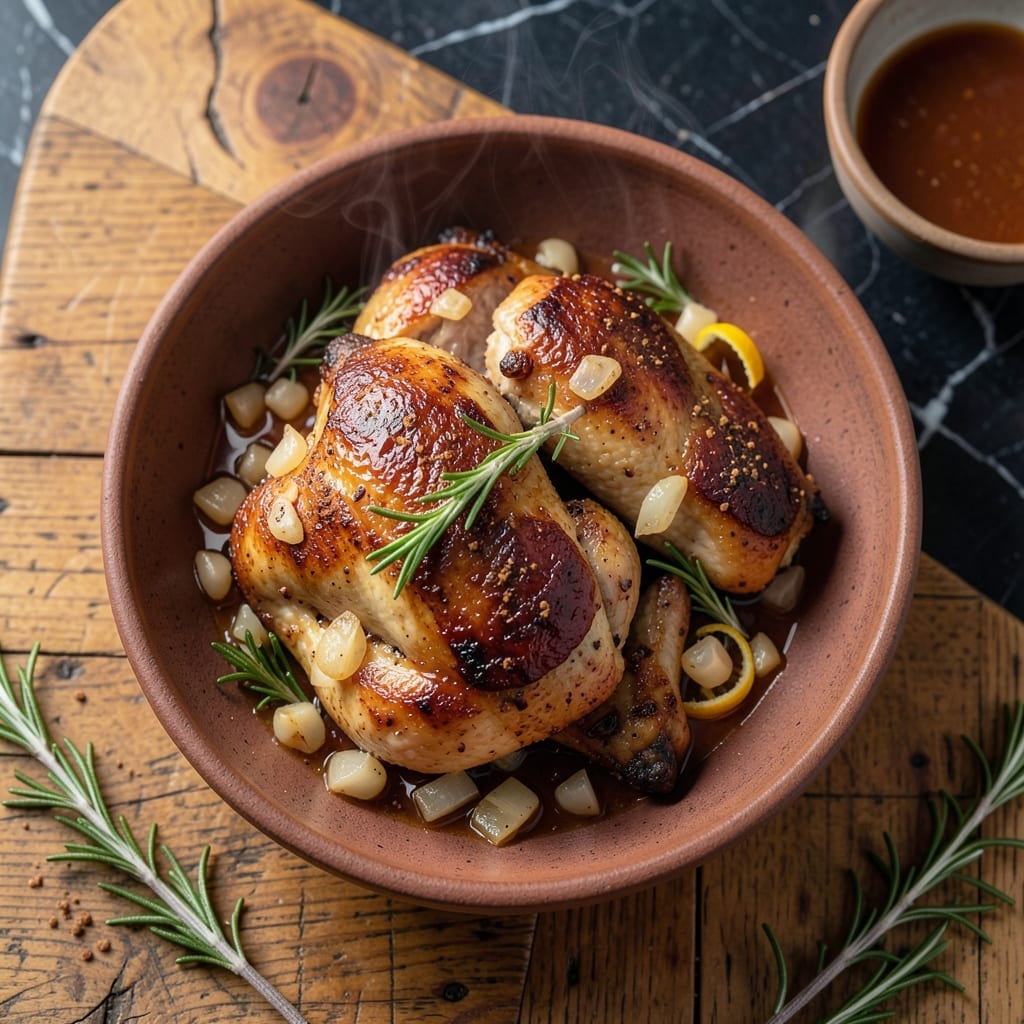
This dish transports you to medieval feasts with its rich blend of spices and slow-roasting technique. I’ve adapted ancient methods for modern kitchens while preserving the authentic character that defined royal tables.
The secret lies in a carefully balanced spice rub of cinnamon, ginger, and nutmeg—flavors that were precious commodities in the Middle Ages. These warm, aromatic notes complement the chicken’s natural richness without overpowering it.
What emerges from the oven is tender, fall-off-the-bone meat with a deeply fragrant crust. The spices create a complex flavor profile that feels both historical and surprisingly contemporary.
Serve this with crusty bread and hearty vegetables for a meal worthy of a king’s table. The preparation honors tradition while delivering restaurant-quality results.
Ingredients for Medieval Chicken
These carefully selected ingredients recreate an authentic medieval feast worthy of royalty.
| Ingredient | Amount | Notes |
|---|---|---|
| Chicken Thighs 🍗 | 2 ½ lb | Bone-in, skin-on for richness |
| Ground Cinnamon 🌿 | 1 ½ tsp | Ceylon if available for authenticity |
| Ground Ginger 🌿 | 1 tsp | Freshly ground preferred |
| Ground Nutmeg 🌰 | ½ tsp | Freshly grated for best aroma |
| Garlic Cloves 🧄 | 6 cloves | Minced finely for even distribution |
| Fresh Rosemary 🌿 | 2 tbsp | Chopped, stems discarded |
| Fresh Thyme 🌿 | 2 tbsp | Leaves stripped from stems |
| Sea Salt 🧂 | 1 ½ tsp | Coarse grain, Diamond Crystal preferred |
| Black Pepper 🌶️ | 1 tsp | Freshly ground for maximum flavor |
| Extra-Virgin Olive Oil 🫒 | 3 tbsp | Cold-pressed for superior quality |
| Red Wine Vinegar 🍷 | 2 tbsp | For balancing richness |
| Honey 🍯 | 1 tbsp | Local raw honey preferred |
| Onion 🧅 | 1 whole | Yellow onion, finely diced |
| Dry White Wine 🍷 | ½ cup | Sauvignon Blanc or Pinot Grigio |
[recipe_ingredient_scaler]
The chicken must be bone-in, skin-on for authentic texture and flavor. Thighs outperform breasts here, as they withstand long roasting without drying out. Whole Foods or a trusted butcher will have the best quality—look for air-chilled birds with consistent sizing. For the spices, Penzeys offers exceptional cinnamon and nutmeg, though bulk bins at natural food stores are also reliable.
No fresh herbs? Dried rosemary and thyme at one-third the amount work in a pinch, though the flavor won’t be as vibrant. Substitute maple syrup for honey if needed, but avoid agave—it lacks the depth. For the wine, a splash of apple cider vinegar can replace the vinegar in emergencies. The onion can be shallots if you prefer a milder bite.
The spice rub can be made 24 hours ahead and stored in an airtight container. Marinated chicken keeps in the fridge for up to 12 hours before cooking. Leftovers reheat beautifully and taste even better the next day, keeping for 4-5 days refrigerated.
Why You’ll Love This Recipe
- One Pan Wonder: I just toss the chicken thighs with cinnamon, ginger, and nutmeg, then let the oven do the work—hardly any cleanup.
- Warm Spice Magic: The cinnamon and ginger give it this cozy, aromatic depth that’s way more interesting than plain roasted chicken.
- Feeds a Crowd: Honestly, I double the batch and it’s still gone by the next day—great for potlucks or lazy Sundays.
- Budget Stretcher: Chicken thighs stay juicy and cheap, and those spices last forever in my pantry.
Step-by-Step Instructions for Spiced and Roasted Chicken
Follow this authentic method to achieve tender meat with a richly spiced, golden crust.
Step 1: Prepare the Medieval Spice Marinade
In a large bowl, whisk together the 3 tbsp extra-virgin olive oil, 2 tbsp red wine vinegar, and 1 tbsp honey until fully emulsified. This creates the base for your marinade that will penetrate the chicken deeply.
Add the 1.5 tsp ground cinnamon, 1 tsp ground ginger, 0.5 tsp ground nutmeg, 1.5 tsp sea salt, and 1 tsp black pepper. Stir thoroughly to combine the spices evenly. The aroma should be warm and complex, with the cinnamon providing a Medieval authenticity.
Step 2: Marinate the Chicken with Aromatics
Finely dice the 1 whole onion and mince the 6 cloves garlic cloves. Add these to the spice mixture along with the chopped 2 tbsp fresh rosemary and stripped 2 tbsp fresh thyme leaves. Stir to distribute the herbs and aromatics evenly.
Pat the 2.5 lb chicken thighs dry with paper towels, then add them to the marinade. Turn to coat every piece completely, ensuring the skin is well saturated. Cover and refrigerate for at least 4 hours, or preferably overnight, to allow the flavors to develop fully.
Step 3: Roast to Golden Perfection
Preheat your oven to 400°F. Remove the chicken from the marinade, reserving the excess liquid, and arrange the pieces skin-side up in a single layer in a roasting pan. Pour the 0.5 cup dry white wine into the pan along with any remaining marinade.
Roast for 35-40 minutes, basting occasionally with the pan juices, until the skin is deep golden brown and crisp. The chicken is done when the internal temperature reaches 165°F and the juices run clear. The spices will create a fragrant, caramelized crust.
Step 4: Rest and Serve
Transfer the chicken to a serving platter and let it rest for 10 minutes to allow the juices to redistribute. This resting period ensures the meat remains moist and flavorful when sliced or served whole.
Spoon the pan juices over the chicken just before serving. The sauce should be rich and aromatic, with a balance of sweetness from the honey and acidity from the vinegar. Serve with crusty bread or over a bed of greens to soak up every last drop of the Medieval-inspired sauce.
Pro Tips For Making Medieval Chicken
- Brown the Thighs First: Sear the chicken thighs skin-side down in a hot pan for 5-7 minutes until deeply golden. I learned this the hard way—skipping this step leaves the meat bland and the sauce thin.
- Toast the Spices: Lightly toast the cinnamon, ginger, and nutmeg in the pan after removing the chicken for 30 seconds. Sounds weird, but it works: it wakes up the flavors so they don’t taste flat.
- Crush the Garlic: Smash the garlic cloves with the side of your knife before adding them—no need to mince. After burning three batches, I finally figured out whole cloves can scorch and turn bitter.
- Rest Before Serving: Let the chicken rest under foil for 5-10 minutes after cooking. My grandmother swore by this, and she was right: the juices redistribute, and the spices mingle properly.
Essential Equipment for medieval chicken
Roasting Pan Essentials
I swear by my Le Creuset enameled cast iron roaster for even heat distribution. Its heavy base prevents hot spots that can burn the honey in your marinade. A 13×9-inch size perfectly fits 2.5 lb chicken thighs in a single layer with room for basting. 🔥
Marinating Vessel
A large glass mixing bowl with lid from Pyrex lets you marinate and store the chicken in one container. The non-reactive surface won’t absorb the red wine vinegar or honey flavors. I keep one dedicated just for marinades.
Precision Thermometer
Don’t guess with medieval cooking—use a ThermoWorks Dot instant-read thermometer. It gives accurate 165°F readings in 3-4 seconds. I check the thickest thigh and near the bone for perfect doneness every time.
Herb Preparation Tools
A Wüsthof 8-inch chef’s knife makes quick work of the rosemary and thyme. Pair it with a bamboo cutting board that won’t dull your blade. I keep mine exclusively for herbs to avoid cross-contamination with raw chicken.
Basting Brush
Use a silicone basting brush for those pan juices—it withstands 400°F heat and won’t melt. The flexible head reaches into corners of your roasting pan. I rinse mine immediately after use to prevent the honey from hardening. 💡
Resting Surface
A warm serving platter (preheated in a 200°F oven) keeps your chicken hot during the 10-minute rest. I use a stoneware platter that retains heat beautifully and looks rustic enough for a king’s table.
Nutrition Facts
Frequently Asked Questions
Can I use chicken breasts instead of thighs?
Thighs work best for this recipe due to their fat content and ability to stay moist during roasting. If you must use breasts, reduce cooking time to 25-30 minutes and baste frequently to prevent drying out.
Why are these specific spices used?
Cinnamon, ginger, and nutmeg were prized in medieval times for their exotic flavors and preservative qualities. They create a warm, aromatic profile that was highly valued in royal kitchens.
Can I make this in a slow cooker?
For authentic results, roasting is recommended to achieve the caramelized crust. However, you can adapt it by cooking on low for 4-5 hours, though the texture will differ.
What if I don’t have fresh herbs?
Dried herbs work in a pinch—use 1/3 the amount of fresh. The flavor won’t be as vibrant, but the dish will still be delicious.

Trained in classic French technique but raised on slow-cooked ribs and spicy rubs, she blends culinary skill with smoke and soul.
- Recipe for Boneless Pork Chops in Cast Iron Skillet: Sear and Baste to Juicy Perfection - October 3, 2026
- Recipe for Boneless Cross Rib Roast: Slow-Roasted Beef with Herb Crust - October 3, 2026
- Hamburgers in Sauce Recipe Crock Pot: Slow-Cooked Savory Delight - October 3, 2026