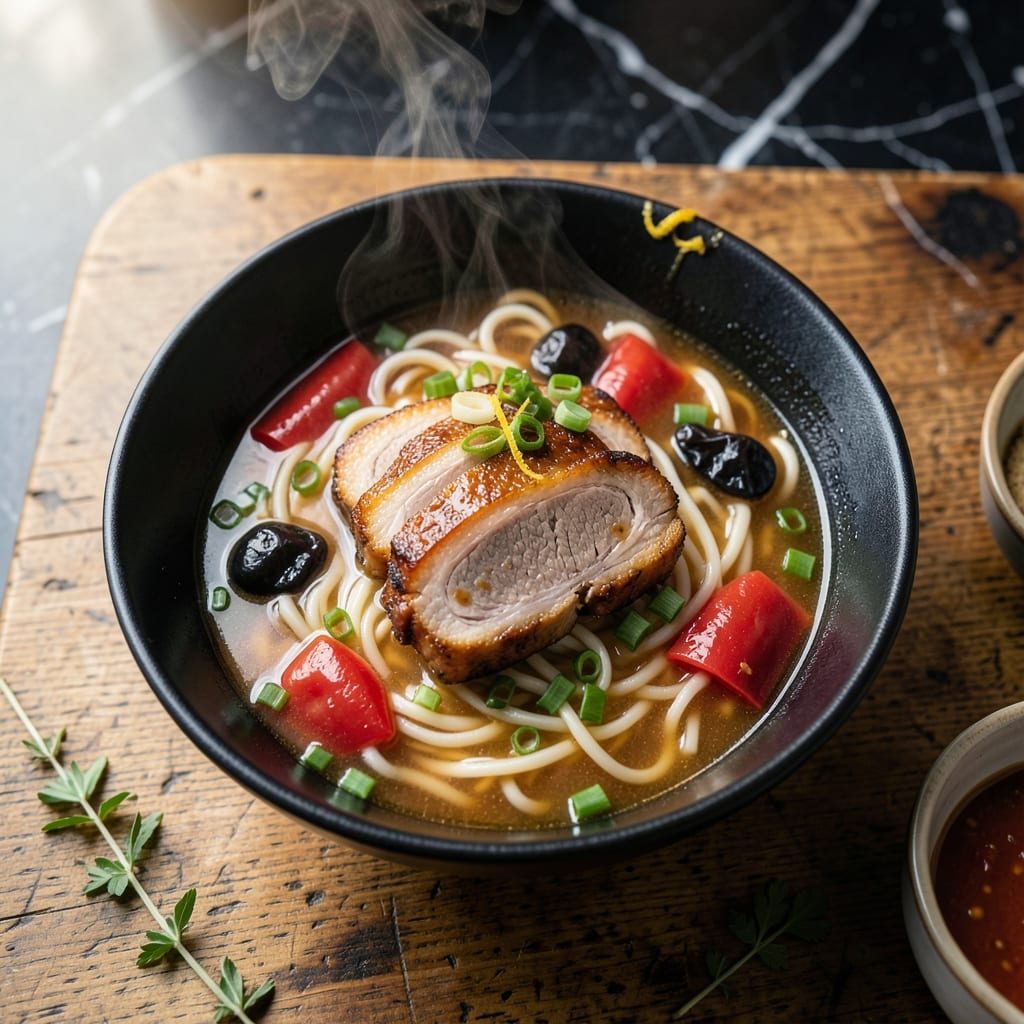
This pork loin ramen delivers a tender, flavorful experience with every spoonful. The slow-cooked broth transforms simple ingredients into a rich, aromatic base that elevates the dish.
I developed this method to ensure the pork stays tender and juicy, while the noodles absorb all the savory depth of the broth. It’s a satisfying meal that balances comfort with sophistication.
What makes this ramen special is the careful layering of flavors—from the umami-packed broth to the perfectly cooked pork and springy noodles. The result is a bowl that feels restaurant-worthy but is entirely homemade.
Ready to create this at home? The process is straightforward, with clear steps to achieve tender pork and a deeply flavorful broth.
Ingredients for Pork Loin Ramen
Rich broth and tender pork require just these essential ingredients for restaurant-worthy results.
| Ingredient | Amount | Notes |
|---|---|---|
| Pork Loin 🥩 | 1 ½ lb | Trimmed of excess fat |
| Ramen Noodles 🍜 | 12 oz | Dried or fresh, uncooked |
| Chicken Stock 🍲 | 8 cups | Low-sodium preferred for broth control |
| Soy Sauce 🫙 | ½ cup | Dark or all-purpose variety |
| Mirin 🍶 | ¼ cup | Sweet cooking rice wine |
| Sake 🍶 | ¼ cup | Dry Japanese rice wine |
| Garlic Cloves 🧄 | 6 cloves | Peeled, smashed for broth infusion |
| Fresh Ginger 🌿 | 2 tbsp | Peeled, thinly sliced |
| Green Onions 🧅 | 4 whole | Thinly sliced for garnish |
| Soft-Boiled Eggs 🥚 | 4 whole | Marinated in soy-mirin mixture |
| Shiitake Mushrooms 🍄 | 6 oz | Fresh or dried, rehydrated |
| Sesame Oil 🫒 | 1 tbsp | Toasted for finishing aroma |
| Nori Sheets 🌊 | 2 sheets | Cut into strips for garnish |
| Chili Oil 🌶️ | 1 tbsp | Optional for spicy finish |
| Sesame Seeds 🌰 | 1 tsp | Toasted, for garnish |
[recipe_ingredient_scaler]
The pork loin is the star—select a well-marbled piece from a trusted butcher or Whole Foods. For the broth, San Marzano tomatoes aren’t needed here, but low-sodium chicken stock is key to controlling salt levels. Fresh ginger and garlic should be firm and aromatic (avoid sprouting or shriveled cloves). Mitsukan makes a reliable mirin that’s widely available.
No pork loin? Pork shoulder works but requires longer cooking. Substitute dried shiitakes if fresh aren’t available—rehydrate and use the soaking liquid in the broth. For a quicker version, pre-cooked rotisserie chicken can replace pork (though the texture differs). The ramen noodles must be wheat-based—rice noodles lack the chew this dish demands.
Broth keeps 3 days refrigerated or 3 months frozen. Cooked pork stores 4 days in the fridge. Assemble bowls fresh—noodles soften if left in broth. Toast sesame seeds just before serving for maximum crunch (worth the extra minute).
Why You’ll Love This Recipe
- One-Pot Wonder: I toss everything in—pork loin, noodles, stock—and let the mirin and soy do the work.
- Umami Bomb: Honestly, the pork soaks up the chicken stock and soy like it was born to.
- Weeknight Hero: Between us, I’ve served this for lazy Tuesday dinners and last-minute guest meals.
- Stretches Far: Leftovers taste even better the next day, and the pork loin keeps it budget-friendly.
Step-by-Step Instructions for Pork Loin Ramen
Master the technique for building layers of umami flavor in this comforting bowl.
Step 1: Sear and Simmer the Pork Loin
Pat the 1.5 lb Pork Loin dry and season generously with salt and pepper. Heat a heavy pot over medium-high heat and add the pork, searing on all sides until deeply browned—about 3-4 minutes per side. This caramelization builds the foundation of flavor for the broth.
Remove the pork and set aside. In the same pot, add the 6 cloves Garlic Cloves and 2 tbsp Fresh Ginger, sautéing for 1-2 minutes until fragrant. Pour in the 8 cups Chicken Stock, 0.5 cup Soy Sauce, 0.25 cup Mirin, and 0.25 cup Sake, scraping up any browned bits from the bottom.
Step 2: Poach the Pork and Infuse the Broth
Return the pork to the pot, ensuring it is fully submerged in the liquid. Bring to a gentle simmer, then reduce heat to low. Cover and poach for 45-60 minutes, turning the pork occasionally, until it reaches an internal temperature of 145°F and feels tender when pierced with a knife.
While the pork cooks, the broth will absorb its rich, savory essence. Remove the pork from the broth and let it rest for 10 minutes before slicing thinly against the grain. Strain the broth through a fine-mesh sieve to remove the aromatics, then return it to the pot to keep warm.
Step 3: Prepare the Noodles and Mushrooms
In a separate pot, cook the 12 oz Ramen Noodles according to package instructions until al dente. Drain and rinse under cold water to stop the cooking process, then divide among four serving bowls. Meanwhile, thinly slice the 6 oz Shiitake Mushrooms and sauté them in a dry pan over medium heat for 3-4 minutes until golden brown and tender.
Add the mushrooms to the bowls with the noodles. Slice the 4 whole Green Onions thinly and set aside for garnish. Peel and halve the 4 whole Soft-Boiled Eggs, marinated earlier in a mix of leftover soy-mirin liquid, and place two halves in each bowl.
Step 4: Assemble and Finish the Ramen
Ladle the hot broth over the noodles, mushrooms, and eggs, ensuring everything is fully submerged. Arrange the sliced pork loin on top, pressing it lightly into the broth to warm through. Drizzle each bowl with 1 tbsp Sesame Oil and, if desired, 1 tbsp Chili Oil for a spicy finish.
Garnish with the sliced green onions, 2 sheets Nori Sheets cut into strips, and a sprinkle of 1 tsp Sesame Seeds. Serve immediately, encouraging everyone to mix the ingredients well to distribute the flavors evenly. The pork should be tender and juicy, soaking up the rich, aromatic broth with every bite.
Pro Tips For Making Pork Loin Ramen
- Sear the Loin Hot: I learned this the hard way—crank the pan to medium-high and get a deep golden crust on that pork before adding liquids. A good sear locks in the juices and keeps the meat from turning dry in the broth.
- Slice Against Grain: After resting the pork for 5-10 minutes, slice it thin against the grain. It makes the loin tender enough to melt in your mouth, even in a quick ramen bowl.
- Deglaze with Mirin: Skip the water when scraping up those browned bits—pour in the mirin first to dissolve the fond. It adds a sweet depth to the broth that plain stock can’t touch.
- Undercook Noodles Slightly: Pull the ramen noodles off the heat just before they’re fully tender—they’ll finish cooking in the hot broth. Overcooked noodles turn mushy fast, and nobody wants sad, limp ramen.
Health Benefits of This Dish
Protein Powerhouse
Pork loin offers lean protein—about 24 grams per 3-ounce serving—to support muscle growth and repair. This makes the dish satisfying while keeping it relatively light compared to fattier cuts. I love how it fuels my body without feeling heavy. 💪
Rich in B Vitamins
The pork in this meal provides essential B vitamins, including B6 and B12, which help with energy metabolism and brain function. A single serving covers a significant portion of your daily needs for these nutrients.
Bone Broth Benefits
The slow-simmered broth is packed with collagen and amino acids from the pork and chicken stock. These compounds support joint health and gut integrity, making every sip nourishing as well as delicious.
Low-Carb Option
With 12 oz ramen noodles divided among four servings, you can control carbs by adjusting portions. The pork and broth provide plenty of flavor and nutrients even with fewer noodles, which I often do for a lighter meal.
Umami for Digestion
The combination of soy sauce, mirin, and sake in the broth stimulates digestion and enhances nutrient absorption. These fermented ingredients also contribute probiotics for gut health. 🌟
Balanced Nutrients
Shiitake mushrooms add fiber and vitamin D, while eggs provide choline for brain health. Together with the pork and broth, this dish offers a well-rounded mix of proteins, vitamins, and minerals.
Nutrition Facts
Frequently Asked Questions
Can I substitute pork shoulder for loin?
Yes, but cook it 2-3 hours instead of 45-60 minutes. Shoulder has more fat, making the broth richer but the meat less lean.
How do I store leftover broth?
Cool completely, then refrigerate in an airtight container for up to 3 days. For longer storage, freeze for 3 months.
Why did my pork turn out dry?
Overcooking is the main culprit. Remove pork at 145°F and let it rest 10 minutes before slicing. Slicing too soon causes juices to escape.
Can I use fresh ramen noodles?
Fresh noodles cook faster (2-3 minutes) than dried. Taste test frequently to avoid overcooking.

Trained in classic French technique but raised on slow-cooked ribs and spicy rubs, she blends culinary skill with smoke and soul.
- Recipe for Boneless Pork Chops in Cast Iron Skillet: Sear and Baste to Juicy Perfection - October 3, 2026
- Recipe for Boneless Cross Rib Roast: Slow-Roasted Beef with Herb Crust - October 3, 2026
- Hamburgers in Sauce Recipe Crock Pot: Slow-Cooked Savory Delight - October 3, 2026