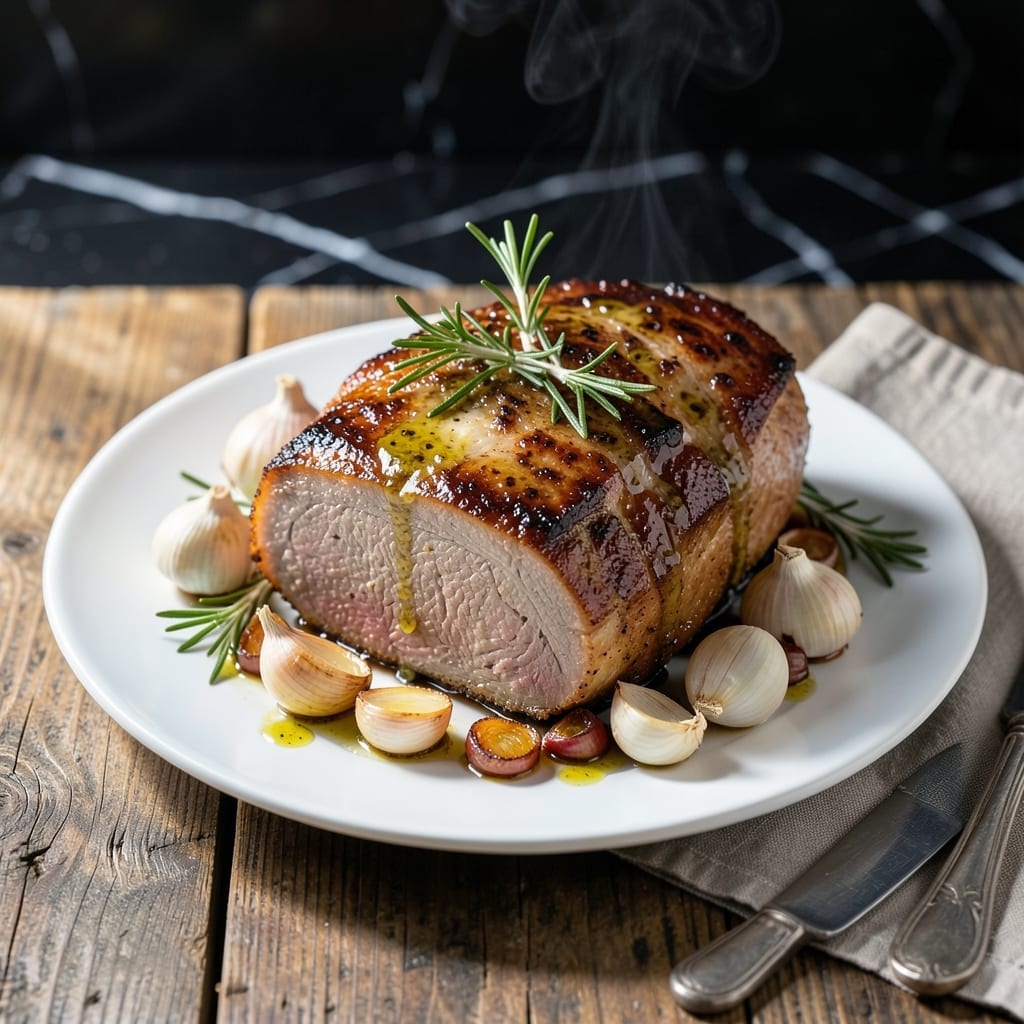
Sunday suppers deserve a centerpiece that impresses without overwhelming the cook. This herb-crusted pork loin delivers tender, juicy slices with a fragrant crust.
Using simple ingredients and precise timing, I’ve developed a foolproof method that ensures perfect results every time. The secret lies in the herb blend and proper roasting technique.
Ingredients for Pork Loin Roast
Center-cut pork loin and aromatic herbs create this impressive Sunday centerpiece with minimal effort.
| Ingredient | Amount | Notes |
|---|---|---|
| Boneless Pork Loin Roast 🥩 | 2 ½ lb | Center-cut, trimmed of excess fat |
| Kosher Salt 🧂 | 1 ½ tsp | Diamond Crystal preferred for even seasoning |
| Freshly Ground Black Pepper 🌶️ | 1 tsp | Coarse grind for texture |
| Dijon Mustard 🟡 | 2 tbsp | Whole grain for rustic texture |
| Extra-Virgin Olive Oil 🫒 | 2 tbsp | Divided for searing and crust |
| Fresh Rosemary 🌿 | 2 tbsp | Finely chopped, stems discarded |
| Fresh Thyme Leaves 🍃 | 2 tbsp | Stripped from stems |
| Garlic Cloves 🧄 | 4 cloves | Minced for maximum flavor dispersion |
| Dried Sage 🌿 | 1 tsp | Rubbed between fingers to release oils |
| Panko Breadcrumbs 🍞 | ½ cup | For crispy herb crust topping |
| Low-Sodium Chicken Broth 🥣 | ½ cup | For deglazing and moisture |
| Unsalted Butter 🧈 | 2 tbsp | Melted for basting |
[recipe_ingredient_scaler]
The pork loin quality is paramount. Center-cut roasts from Whole Foods or your local butcher offer the most even thickness and marbling. Look for pieces with a thin fat cap—trim excess fat yourself for better crust adhesion. A 2.5 lb roast serves four generously. The herb selection should be vibrant; wilted rosemary or thyme won’t deliver the same fragrant punch (worth the extra minute to pick through).
No fresh herbs? Dried at one-third the amount works, though the flavor profile will be more concentrated. Panko can be swapped for regular breadcrumbs, but the texture won’t be as crisp. Out of Dijon? Whole-grain mustard adds a pleasant seed pop, while yellow mustard brings too much tang. For the broth, vegetable stock maintains the pork’s purity of flavor if avoiding chicken products.
Roast leftovers keep beautifully, sealed in their juices for 4-5 days. The herb crust softens but the flavor intensifies. Slice and reheat in a skillet with a splash of broth. Freezes well for 3 months—portion before freezing for easy Sunday meal prep.
Why You’ll Love This Recipe
- Set It and Forget: I rub the pork loin with Dijon and olive oil, toss it in the oven, and let the salt and pepper do their magic—hardly any hands-on time.
- Crispy, Juicy Bite: The mustard crust gives that tangy crunch while the inside stays so tender it falls apart.
- Feeds My Crew Twice: One roast means dinner tonight and sandwiches tomorrow—my wallet and my lunchbox both thank me.
- Weeknight Hero: Five ingredients, one pan, and the house smells incredible without me slaving over the stove.
Step-by-Step Instructions for Herb-Crusted Pork Loin Roast
Master this technique for a perfectly juicy roast with a crisp, aromatic herb crust every time.
Step 1: Prepare and Season the Pork Loin
Pat the 2.5 lb boneless pork loin roast dry with paper towels to ensure a proper sear. This step is crucial—moisture on the surface prevents browning. Season the roast aggressively with the 1.5 tsp kosher salt and 1 tsp freshly ground black pepper, pressing the seasoning into the meat so it adheres.
Let the seasoned roast sit at room temperature for 30 minutes while you preheat the oven to 375°F. This rest allows the salt to penetrate the surface, ensuring even seasoning throughout the meat.
Step 2: Sear the Roast for a Flavorful Crust
Heat 1 tbsp extra-virgin olive oil in a large oven-safe skillet or Dutch oven over medium-high heat. When the oil shimmers, add the pork loin and sear for 3-4 minutes per side until deeply browned. You want a rich, golden crust—this develops the Maillard reaction for complex flavor.
During searing, baste the roast with the remaining 1 tbsp extra-virgin olive oil and 2 tbsp unsalted butter to enhance the crust. Use tongs to hold the roast and spoon the hot oil and butter over the top and sides. Transfer the roast to a plate once seared.
Step 3: Create and Apply the Herb Crust
In a small bowl, combine the 2 tbsp Dijon mustard, 2 tbsp fresh rosemary, 2 tbsp fresh thyme leaves, 4 cloves minced garlic cloves, 1 tsp dried sage, and 0.5 cup panko breadcrumbs. Stir until the mixture resembles a thick paste. The mustard acts as a binder, while the herbs and panko create a fragrant, textured crust.
Spread this mixture evenly over the top and sides of the seared pork loin, pressing gently to ensure it adheres. The crust should be thick and uniform—this will form a crispy, flavorful layer as it roasts.
Step 4: Roast to Perfection
Return the pork loin to the skillet (or place it on a rack in a roasting pan) and transfer it to the preheated 375°F oven. Pour the 0.5 cup low-sodium chicken broth into the pan to deglaze and add moisture, which prevents the crust from drying out.
Roast for 45-60 minutes, or until the internal temperature reaches 145°F on an instant-read thermometer. The crust should be deep golden brown and crisp, while the meat remains tender and juicy. If the panko begins to darken too quickly, tent the roast loosely with foil.
Step 5: Rest and Serve
Transfer the roast to a cutting board and tent it loosely with foil. Let it rest for 10-15 minutes—this allows the juices to redistribute, ensuring every slice is moist and flavorful. The internal temperature will rise slightly during resting, reaching the ideal 150-155°F for perfect doneness.
Slice the roast against the grain into ½-inch thick pieces. Serve with the pan juices spooned over the top. The herb crust should be crisp and aromatic, while the pork inside remains succulent and tender.
Pro Tips For Making Pork Loin Roast
- Use a Meat Thermometer: Pull the roast at 145°F—any higher and it turns dry. I learned this the hard way after overcooking three loin roasts in a row.
- Pat It Dry First: Blot the pork loin with paper towels before seasoning. Sounds weird, but it works: the salt and pepper stick better, and you get a proper crust.
- Don’t Skip the Rest: Give it a solid 10 minutes under foil after roasting. My grandmother swore by this, and she was right: the juices redistribute, or they’ll all end up on the cutting board.
- Rub with Mustard: Coat the loin with Dijon before roasting—about 2 tablespoons, brushed on thin. I was skeptical until I tried it; the mustard forms a flavorful crust that olive oil alone can’t.
Common Mistakes When Making Great Pork Loin Roast
Skipping the Rest
I see too many cooks slice into their roast right out of the oven. That 10-15 minute rest is non-negotiable—it lets juices redistribute. Without it, you’ll lose 30% of moisture to your cutting board, leaving dry meat. 💡
Uneven Seasoning
Don’t just sprinkle salt on top—rub it aggressively into every surface. I use Diamond Crystal kosher salt for even coverage. Forgetting to season the sides means bland bites in every other forkful.
Overcrowded Pan
Your pork loin needs space to sear properly. Crowding the pan lowers the temperature, causing the meat to steam instead of brown. Use a 12-inch skillet or Dutch oven for a 2.5 lb roast.
Ignoring Internal Temp
Color isn’t a reliable doneness indicator. Pork loin is safe at 145°F but reaches ideal tenderness at 150-155°F after resting. I pull mine at 145°F and tent with foil—it climbs the rest of the way.
Dry Herb Crust
If your panko topping burns before the meat cooks, tent loosely with foil. I also add 0.5 cup chicken broth to the pan for moisture. Without it, the crust can turn bitter and dry. 🔥
Slicing Wrong
Always cut against the grain into ½-inch slices. This shortens muscle fibers, making each bite tender. The grain runs lengthwise in pork loin—slice perpendicular to it for the best texture.
Nutrition Facts
Frequently Asked Questions
What internal temperature should I aim for?
Pull the roast at 145°F internally, then let it rest. It’ll rise to 150-155°F for perfect juiciness.
Can I use dried herbs instead of fresh?
Yes, use dried at one-third the amount. The flavor will be more concentrated, but still delicious.
How long should it rest before slicing?
Rest for 10-15 minutes to let juices redistribute. Skipping this makes the meat dry.
What if my herb crust burns before it’s done?
Tent loosely with foil and add 0.5 cup broth to the pan. This prevents burning while keeping moisture.

Trained in classic French technique but raised on slow-cooked ribs and spicy rubs, she blends culinary skill with smoke and soul.
- Recipe for Boneless Pork Chops in Cast Iron Skillet: Sear and Baste to Juicy Perfection - October 3, 2026
- Recipe for Boneless Cross Rib Roast: Slow-Roasted Beef with Herb Crust - October 3, 2026
- Hamburgers in Sauce Recipe Crock Pot: Slow-Cooked Savory Delight - October 3, 2026