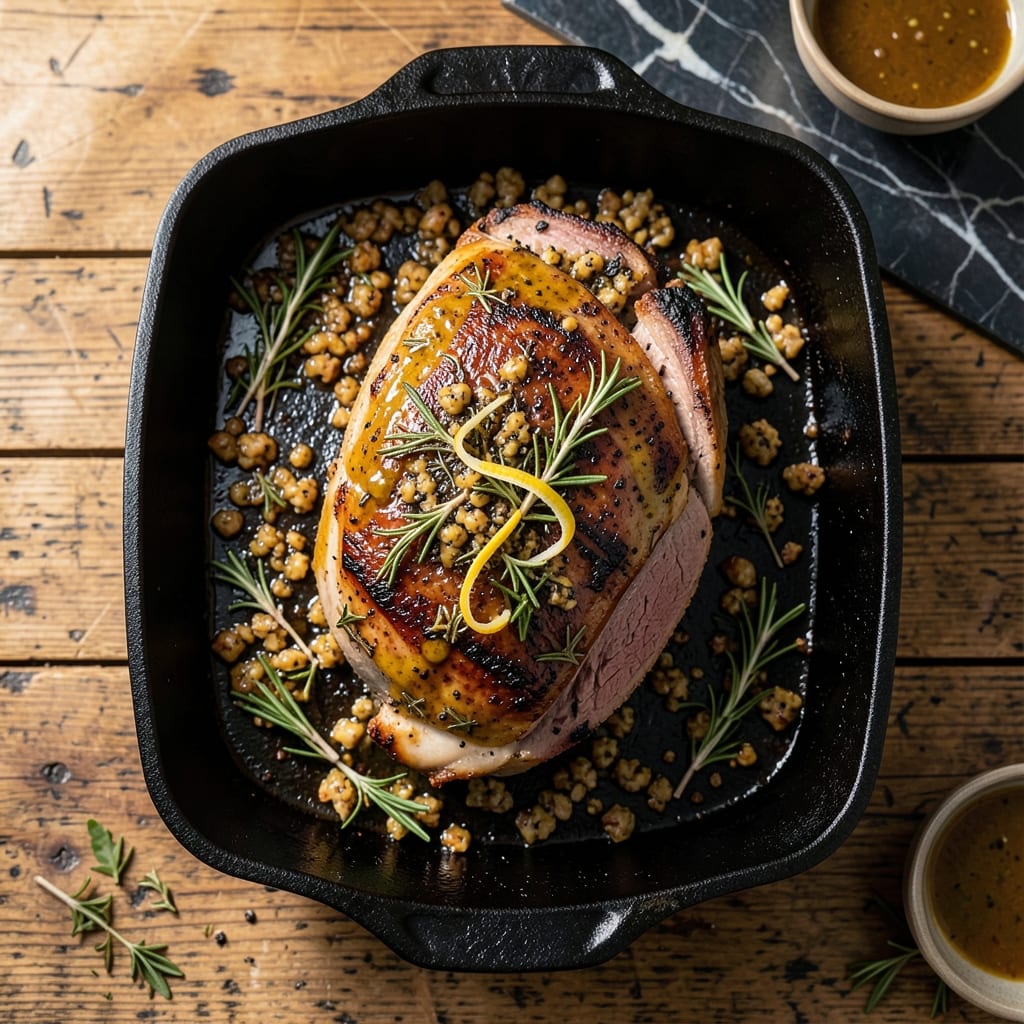
This herb-crusted pork prime rib transforms any dinner into a special occasion. A simple yet elegant preparation highlights the natural richness of the meat.
I’ve refined this method to ensure a perfectly tender roast with a golden, aromatic crust. The key is a slow, steady roast that locks in juices while allowing the herbs to infuse every bite.
The result is a centerpiece-worthy dish with a crispy exterior and moist, flavorful interior. Its impressive presentation belies how straightforward it is to prepare.
Serve with roasted vegetables or mashed potatoes for a complete meal that feels fit for a celebration.
Ingredients for Pork Prime Rib
Elevate your dinner with this impressive centerpiece featuring prime ingredients and aromatic herbs.
| Ingredient | Amount | Notes |
|---|---|---|
| Pork Prime Rib Roast 🥩 | 4 lb | Bone-in, fat cap on |
| Fresh Rosemary 🌿 | 2 tbsp | Finely chopped, stems discarded |
| Fresh Thyme 🍃 | 2 tbsp | Leaves stripped from stems |
| Garlic Cloves 🧄 | 6 cloves | Minced to fine paste |
| Dijon Mustard 🟡 | 3 tbsp | Whole grain preferred |
| Extra-Virgin Olive Oil 🫒 | 2 tbsp | Divided for crust and sear |
| Kosher Salt 🧂 | 2 tsp | Diamond Crystal preferred |
| Freshly Ground Black Pepper 🌶️ | 1 ½ tsp | Coarse grind for texture |
| Dry White Wine 🍷 | ½ cup | For deglazing pan |
| Chicken Stock 🥣 | 1 cup | Low-sodium preferred |
| Unsalted Butter 🧈 | 3 tbsp | Cubed, for basting |
| Shallots 🧅 | 2 whole | Finely minced for pan sauce |
| All-Purpose Flour 🌾 | 1 tsp | For thickening sauce |
[recipe_ingredient_scaler]
The pork prime rib is the foundation—source bone-in, well-marbled roasts from a reputable butcher or Whole Foods for optimal tenderness and flavor. Look for a cut with a thick fat cap (at least 1/4 inch) to ensure a juicy result. The herbs should be fresh and vibrant; avoid the pre-packaged stuff if it looks wilted or browned. A 4-pound roast serves 4 generously, with leftovers for sandwiches the next day.
No fresh herbs? Dried at one-third the quantity works in a pinch, though the flavor won’t be as bright. For the wine, any dry white (Sauvignon Blanc, Pinot Grigio) is ideal—avoid sweet varieties. If you’re out of Dijon, whole-grain mustard adds a nice texture. The chicken stock can be swapped for vegetable stock if needed, but adjust seasoning accordingly.
Store the roast in the coldest part of your fridge until ready to cook—use within 2-3 days for peak freshness. Leftovers keep for 4 days refrigerated or freeze for up to 3 months. The herb crust can be prepped a day ahead, but apply it just before roasting for the best texture.
Why You’ll Love This Recipe
- Minimal Effort: I just rub the roast with Dijon, herbs and garlic, then let the oven do the work.
- Herb-Crusted Perfection: That crispy rosemary-thyme crust with juicy pork underneath? Ridiculously good.
- Feeds a Crowd: One roast and I’ve got Sunday dinner sorted for six—no stress.
- Leftovers for Days: The slices reheat beautifully for sandwiches. Honestly, they might taste even better the next day.
Step-by-Step Instructions for Herb-Crusted Pork Prime Rib
This method ensures a perfectly seared exterior and juicy interior with aromatic herb flavors.
Step 1: Prepare the Herb Crust
In a small bowl, combine the 2 tbsp fresh rosemary, 2 tbsp fresh thyme, 6 cloves garlic cloves minced to a fine paste, 3 tbsp Dijon mustard, 1 tbsp extra-virgin olive oil, 2 tsp kosher salt, and 1.5 tsp freshly ground black pepper. Stir until the mixture forms a thick, uniform paste.
The garlic should be minced finely enough to incorporate smoothly into the crust. This herb mixture will create a flavorful seal on the pork prime rib roast, locking in juices while adding depth to each bite.
Step 2: Sear the Pork Prime Rib
Preheat your oven to 450°F. Heat the remaining 1 tbsp extra-virgin olive oil in a large oven-safe skillet or roasting pan over medium-high heat. Pat the 4 lb pork prime rib roast dry with paper towels, then rub the herb crust mixture evenly over the entire surface, pressing gently to adhere.
Sear the roast on all sides for 2-3 minutes per side until deeply browned. The crust should develop a rich, golden color, indicating the formation of a flavorful crust. This step enhances the visual appeal and adds a textural contrast to the final dish.
Step 3: Roast to Perfection
Transfer the seared roast to the preheated oven. Roast for 20 minutes, then reduce the oven temperature to 325°F and continue roasting for an additional 45-60 minutes, or until the internal temperature reaches 145°F for medium-rare.
The pork prime rib roast should be basted every 15 minutes with the pan juices to ensure even cooking and to enhance the crust. The internal temperature is the most reliable indicator of doneness, so use a meat thermometer for accuracy.
Step 4: Create the Pan Sauce
Transfer the roast to a cutting board and tent loosely with foil to rest for 15 minutes. Place the roasting pan on the stovetop over medium heat. Add the 2 whole shallots and cook for 2-3 minutes until softened.
Deglaze the pan with the 0.5 cup dry white wine, scraping up any browned bits. Stir in the 1 cup chicken stock and bring to a simmer. Whisk in the 1 tsp all-purpose flour to thicken, then finish by whisking in the 3 tbsp unsalted butter until the sauce is smooth and glossy.
Pro Tips For Making Pork Prime Rib
- Start with Room Temp: Pull the pork rib roast out of the fridge 1-2 hours before cooking—I learned this the hard way after serving tough, unevenly cooked meat to dinner guests.
- Score the Fat Cap: Cut shallow slits in the fat cap before seasoning so the rosemary, thyme, and garlic actually penetrate the meat instead of just sitting on top.
- Skip the Overcrowding: Use a roasting pan that gives the pork at least 2 inches of space on all sides, or you’ll end up steaming it instead of getting that perfect crust.
- Slather with Dijon: Brush the roast with Dijon mustard before the herb rub—sounds weird, but it works: the mustard helps the garlic and herbs stick and adds a subtle tang that cuts through the richness.
Pro Cooking Tips for Perfect Results
Thermometer Precision
Invest in a quality instant-read thermometer—I swear by ThermoWorks ThermaPen. Pork prime rib is done at 145°F for medium-rare, but remove it at 140°F since it’ll rise while resting. The difference between perfect and overcooked is just 5°F. 🌡️
Crust Adhesion
Press the herb crust firmly into the meat before searing. The mustard in the mixture acts as a natural glue. If it’s not sticking, pat the roast drier—excess moisture is the enemy of a good crust. I also let it sit at room temperature for 30 minutes before cooking.
Basting Technique
Baste every 15 minutes with pan juices using a silicone brush or spoon. This keeps the crust moist and builds layers of flavor. Don’t open the oven door too long—temperature drops cost you 10-15 minutes of cooking time.
Resting Importance
Let it rest for 15-20 minutes after roasting. The juices redistribute throughout the meat during this time. If you cut too soon, you’ll lose up to 40% of the moisture on your cutting board. I tent mine loosely with foil to keep it warm.
Pan Sauce Pro Tip
For extra-rich sauce, add a splash of heavy cream at the end. Simmer for 2 minutes to meld flavors. Strain the sauce through a fine-mesh sieve for silky texture. This elevates the dish from great to restaurant-quality.
Fat Cap Utilization
Don’t trim the fat cap completely—it self-bastes the roast as it cooks. Score it lightly in a crosshatch pattern before applying the herb crust. This helps render the fat and allows the flavors to penetrate deeper. 💡
Nutrition Facts
Frequently Asked Questions
Should I leave the fat cap on?
The fat cap self-bastes the meat as it cooks. Score it lightly in a crosshatch pattern before adding the herb crust for better flavor penetration.
How do I know when it’s done?
Use a meat thermometer—remove at 140°F for medium-rare. The temperature will rise to 145°F while resting. Never guess with pork prime rib!
Can I make this ahead?
Prepare the herb crust up to a day ahead, but apply it just before cooking. The roast itself is best cooked fresh, though leftovers keep well for 4 days.
What if my crust isn’t sticking?
Pat the roast completely dry first. Excess moisture prevents adhesion. The mustard in the crust acts as glue—press firmly when applying.

Trained in classic French technique but raised on slow-cooked ribs and spicy rubs, she blends culinary skill with smoke and soul.
- Recipe for Boneless Pork Chops in Cast Iron Skillet: Sear and Baste to Juicy Perfection - October 3, 2026
- Recipe for Boneless Cross Rib Roast: Slow-Roasted Beef with Herb Crust - October 3, 2026
- Hamburgers in Sauce Recipe Crock Pot: Slow-Cooked Savory Delight - October 3, 2026