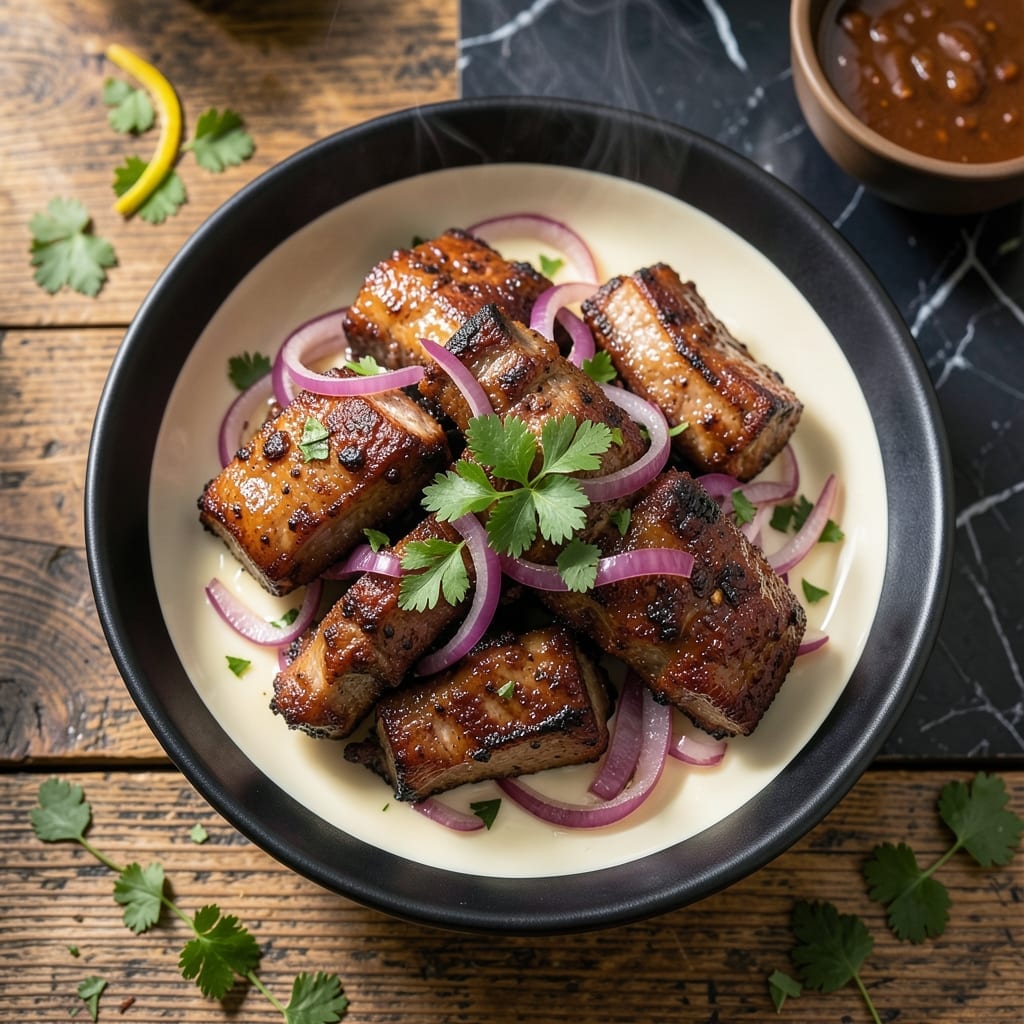
Slow-roasting transforms pork rib tips from tough cuts to fall-off-the-bone tenderness. This method coaxes out deep, smoky flavors without a smoker.
I developed this technique blending my French training with pitmaster instincts. The low temperature breaks down collagen while keeping meat juicy.
The result is tender rib tips with a caramelized crust. Each bite delivers rich, concentrated pork flavor that rivals traditional BBQ.
Perfect for weekend cooking when you want restaurant-quality results with minimal effort. The slow roast does most of the work for you.
Ingredients for Pork Rib Tip
Pantry staples and a few hours create restaurant-quality rib tips at home.
| Ingredient | Amount | Notes |
|---|---|---|
| Pork Rib Tips 🍖 | 2 ½ lb | Trimmed of excess fat |
| Kosher Salt 🧂 | 2 tsp | Diamond Crystal preferred |
| Black Pepper 🌶️ | 1 tsp | Freshly ground preferred |
| Smoked Paprika 🌶️ | 1 tbsp | Sweet or hot variety |
| Garlic Powder 🧄 | 1 tbsp | Not garlic salt |
| Onion Powder 🧅 | 1 tbsp | Fresh ground preferred |
| Brown Sugar 🍚 | ¼ cup | Light or dark variety |
| Apple Cider Vinegar 🍏 | 2 tbsp | Balances sweetness |
| Olive Oil 🫒 | 2 tbsp | For rubbing the meat |
| Beef Broth 🥩 | 1 cup | Low-sodium preferred |
| Tomato Paste 🍅 | 2 tbsp | For depth of flavor |
| Worcestershire Sauce 💧 | 1 tbsp | Adds umami depth |
| Dijon Mustard 🥄 | 1 tbsp | For tangy richness |
[recipe_ingredient_scaler]
The pork rib tips are everything here. Look for well-marbled cuts at your butcher or Costco—they’ll reward you with that fall-apart texture. Trim any large fat caps yourself (it’s quick and saves money). For the spices, Penzeys or bulk bins at natural food stores ensure freshness. Don’t skip toasting the smoked paprika—it wakes up the flavor (worth the extra minute).
No pork rib tips? Pork shoulder cut into strips works in a pinch. Out of smoked paprika? Regular paprika plus a pinch of liquid smoke gets you close. Swap apple cider vinegar for white vinegar if needed. The tomato paste can be from those squeeze tubes at Trader Joe’s—no waste, keeps for months. Beef broth can be chicken or veggie, but beef gives the deepest flavor.
This tastes even better the next day once the flavors meld. Store in the fridge for up to 4 days, or freeze for 3 months. Reheat in the oven to keep the meat tender—microwaving can dry it out (trust me on this one).
Why You’ll Love This Recipe
- No Fuss Cooking: I toss the rib tips with the spices and let the oven do the work. Honestly, it’s almost hands-off.
- Smoky Depth: That smoked paprika and garlic powder combo gives every bite a rich, savory punch.
- Feeds a Hungry Crowd: I serve these at backyard get-togethers and they disappear fast. Between us, I always make extra.
- Budget Stretch: One pack of rib tips goes a long way, and the spices are pantry staples. I’ll be real: it’s a wallet-friendly win.
Step-by-Step Instructions for Pork Rib Tips
Here’s the method for achieving fall-off-the-bone tenderness with rich, smoky flavor.
Step 1: Season the Pork Rib Tips Generously
Pat the 2.5 lb Pork Rib Tips dry with paper towels to ensure the rub adheres properly. In a small bowl, combine the 2 tsp Kosher Salt, 1 tsp Black Pepper, 1 tbsp Smoked Paprika, 1 tbsp Garlic Powder, 1 tbsp Onion Powder, and 0.25 cup Brown Sugar.
Rub this mixture evenly over all surfaces of the pork rib tips, pressing it in firmly to create a flavorful crust. I like to let the seasoned meat sit at room temperature for 20-30 minutes while the oven preheats—this allows the spices to penetrate the surface.
Step 2: Sear for Depth of Flavor
Heat the 2 tbsp Olive Oil in a large Dutch oven or oven-safe pot over medium-high heat. When the oil shimmers, add the seasoned pork rib tips in a single layer, working in batches if necessary to avoid overcrowding.
Sear each piece for 2-3 minutes per side until deeply browned. You’re looking for a rich, caramelized crust that signals the Maillard reaction is working its magic. Transfer the seared pork rib tips to a plate and set aside temporarily.
Step 3: Create the Braising Liquid
In the same pot, reduce heat to medium and add the 2 tbsp Tomato Paste. Cook for 1-2 minutes, stirring constantly, until it darkens slightly and becomes fragrant. This step builds a flavor foundation for your braising liquid.
Pour in the 2 tbsp Apple Cider Vinegar, 1 tbsp Worcestershire Sauce, 1 tbsp Dijon Mustard, and 1 cup Beef Broth. Scrape up all the browned bits from the bottom of the pot with a wooden spoon—this deglazing captures all those concentrated flavors.
Step 4: Slow-Roast to Perfection
Return the seared pork rib tips to the pot, along with any accumulated juices. The liquid should come about halfway up the meat—if it doesn’t, add a splash more beef broth. Cover the pot tightly with a lid.
Transfer to a preheated 325°F oven and braise for 2 to 2.5 hours until the pork rib tips are fork-tender. You’ll know it’s ready when the meat easily pulls apart with a gentle tug. I recommend checking at the 2-hour mark and then every 15 minutes thereafter.
Step 5: Reduce and Serve
Carefully remove the pork rib tips from the pot and set them aside. Place the pot on the stovetop over medium-high heat and bring the braising liquid to a boil. Cook for 5-7 minutes until the liquid reduces by about half and thickens into a glossy sauce.
Return the pork rib tips to the pot and turn to coat them in the reduced sauce. The sauce should cling beautifully to the meat. Serve immediately, spooning extra sauce over the top. The pork should be tender enough to cut with a fork, with a rich, complex flavor from the slow braising process.
Pro Tips For Making Pork Rib Tip
- Dry the Tips First: Pat the rib tips completely dry with paper towels before seasoning—moisture is the enemy of a good crust, and I learned this the hard way after my first few batches steamed instead of seared.
- Season Generously: Don’t be shy with the kosher salt, smoked paprika, and garlic powder; these cuts need bold seasoning to stand up to their rich flavor, especially if you’re smoking or slow-cooking them.
- Resist Early Peeking: If you’re searing or smoking, keep the lid closed or your hands off the pan for at least 20 minutes—every time you open it, you lose heat and add 10 minutes to your cook time.
- Rest Before Serving: Pull the rib tips off the heat, tent them loosely with foil, and let them rest for 10 minutes—this lets the juices redistribute, and the difference between slicing too soon and waiting is night and day.
Perfect Pairings for This Recipe
Side Dish Pairings
I love serving these with creamy coleslaw—the cool crunch cuts through the richness beautifully. Toss 4 cups shredded cabbage with ¼ cup mayonnaise and 1 tbsp apple cider vinegar for a quick version. The acidity mirrors the braising liquid perfectly. 🥗
Starchy Companions
Buttermilk biscuits are my go-to for soaking up that glossy sauce. Use White Lily flour for the fluffiest texture. Alternatively, garlic mashed potatoes add a comforting touch—just fold in 3 roasted garlic cloves for extra depth.
Vegetable Sides
Roasted Brussels sprouts with a drizzle of balsamic glaze complement the smoky notes. Toss 1 lb halved sprouts with 2 tbsp olive oil and roast at 400°F for 20 minutes. The caramelization echoes the rib tips’ crust.
Beverage Pairings
A Malbec from Argentina stands up to the bold flavors—its dark fruit notes pair well with the smoky-sweet glaze. For beer lovers, a porter like Guinness offers roasted malt flavors that complement the dish. Non-alcoholic? Try sparkling black cherry soda. 🍷
Nutrition Facts
Frequently Asked Questions
What’s the best way to trim rib tips?
Use a sharp knife to remove any large fat caps or membrane. Leave some marbling for flavor and moisture during cooking. A well-trimmed tip ensures even seasoning and cooking
Can I use a slow cooker instead of the oven?
Yes, cook on low for 6-8 hours or high for 4-5 hours. Transfer to a skillet to reduce the sauce afterward for best texture.
How do I know when they’re done?
The meat should pull apart easily with a fork. If it resists, give it another 15-30 minutes at 325°F. Overcooking is hard to do with this method!

Trained in classic French technique but raised on slow-cooked ribs and spicy rubs, she blends culinary skill with smoke and soul.
- Recipe for Boneless Pork Chops in Cast Iron Skillet: Sear and Baste to Juicy Perfection - October 3, 2026
- Recipe for Boneless Cross Rib Roast: Slow-Roasted Beef with Herb Crust - October 3, 2026
- Hamburgers in Sauce Recipe Crock Pot: Slow-Cooked Savory Delight - October 3, 2026