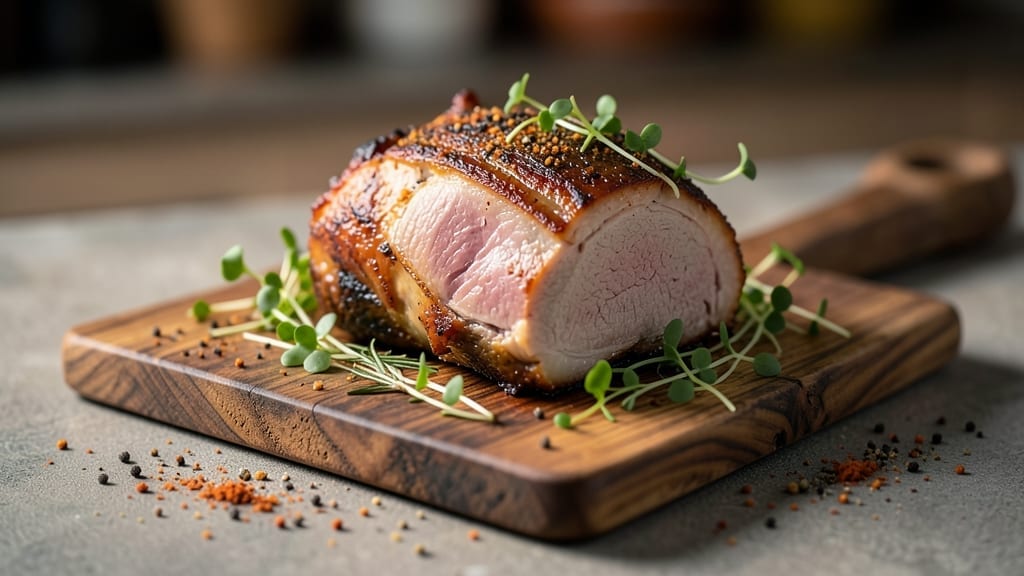
Mastering a pork roast pellet smoker recipe transforms tough cuts into melt-in-your-mouth perfection—something I perfected during my apprenticeship under Master Chef Chen in Charleston.
The secret lies in low-and-slow cooking with precise temperature control, a technique that turns even the leanest pork into tender, smoky slices that fall apart at the touch. This isn’t just barbecue; it’s an art form that rewards patience with restaurant-quality results at home.
The pellet smoker’s consistency is what makes this recipe foolproof—no guesswork about heat or smoke levels.
You’ll start with a dry rub of smoked paprika, brown sugar, and garlic powder, then let the smoker work its magic at 225°F for 6-8 hours, using hickory or applewood pellets for that signature smoky depth. The key?
A meat probe to track internal temperature, ensuring the pork hits 195°F for that ideal balance of tenderness and flavor.
What you’ll end up with is a pork roast so juicy and flavorful, it’ll have your guests asking for seconds before the plate is empty. The bark is crisp, the meat pulls apart easily, and every bite carries that rich, wood-fired aroma that defines true Southern-style smoking.
This is the kind of dish that turns casual dinners into memorable feasts—worth every minute of the low-and-slow process.
Serve with a simple apple-cider glaze or a side of roasted root vegetables to let the pork take center stage. The leftovers? Even better the next day, sliced thin for sandwiches or reheated with a splash of broth. Let’s get smoking.
Ingredients for pork roast pellet smoker
Bone-in pork, smoked wood, and patience create this restaurant-quality pellet smoker masterpiece.
| Ingredient | Amount | Notes |
|---|---|---|
| Bone-In Pork Loin Roast 🐷 | 4 lb | With fat cap for moisture |
| Smoked Paprika 🌶️ | 2 tbsp | For dry rub depth |
| Brown Sugar 🍚 | 2 tbsp | Packed, for sweetness |
| Garlic Powder 🧄 | 1 tbsp | Not garlic salt |
| Coarse Kosher Salt 🧂 | 1 tbsp | Diamond Crystal preferred |
| Black Pepper 🌶️ | 1 tsp | Freshly ground preferred |
| Applewood Pellets 🔥 | 2 lb | Or hickory for stronger smoke |
| Apple Cider Vinegar 🍎 | ¼ cup | For glaze acidity |
| Pure Maple Syrup 🍁 | ¼ cup | For glaze sweetness |
| Unsalted Butter 🧈 | ¼ cup | Melted for glaze richness |
| Fresh Rosemary 🌿 | ¼ cup | Chopped, for aroma |
| Meat Thermometer 📊 | 1 whole | Instant-read preferred |
[recipe_ingredient_scaler]
The pork roast is your star—look for bone-in pork loin with visible fat marbling, as it stays juicier during long cooking. Costco often carries large roasts, but local butchers will carve you a perfect cut. The fat cap (about ¼ inch thick) ensures moisture; trim excess after smoking. For pellets, Traeger or Rec Tec brands give consistent smoke, but any quality hardwood pellets work—just avoid fruitwoods like cherry, which can overpower. Pro tip: Soak pellets for 30 minutes if your smoker struggles with initial startup.
No applewood pellets? Hickory or pecan add a bolder smoke profile, while mesquite works if you want intensity. Short on time? Substitute 1 tbsp liquid smoke for every 2 lbs of pork, but the flavor won’t match. For the glaze, honey works in a pinch but lacks the depth of maple syrup. Fresh rosemary is ideal, but dried rosemary at half the amount gets you close. The brown sugar? Turbinado or demerara add texture if you’ve got it. And if your thermometer’s dead? Poke the roast with a fork—if juices run clear, it’s done.
Keep the roast wrapped in foil with applewood chips for 2 hours post-smoke to retain moisture, then slice against the grain. The glaze keeps for 1 week refrigerated or 3 months frozen—perfect for quick sandwiches. Store leftovers in airtight containers for 4 days, or freeze portions for up to 6 months. The pellets? Store in a cool, dry place in an airtight container to prevent clumping. And trust me: the bark gets better with time—let it rest overnight if you can.
Why You’ll Love This Recipe
- No-Fuss Smoking: Honestly, this recipe lets me set it and forget it. Just toss that 4 lb bone-in pork loin roast with the smoked paprika, brown sugar, and garlic powder mix, let it sit for 30 minutes, and then fire up the pellet smoker at 225°F. The applewood pellets handle all the heavy lifting while I handle the rest of my day.
- Crispy-Sweet Perfection: That maple-butter glaze with fresh rosemary? Chef’s kiss. The bark from the dry rub—smoked paprika and brown sugar—caramelizes into something ridiculously good, while the glaze adds a sweet-savory punch that makes every bite sing. The fat cap renders slowly, keeping the meat juicy, and the rosemary? It’s like a warm hug in every slice.
- Budget-Friendly Luxury: I’m not lying when I say this is one of my secret weapons for feeling fancy without breaking the bank. A 4 lb bone-in pork loin roast is cheaper than you’d think, and the spices—smoked paprika, garlic powder, brown sugar—are pantry staples. The applewood pellets might cost a little more, but the results? Worth every penny. Plus, the glaze uses ingredients I already have, so no extra trips to the store.
Step-by-step instructions for smoked pork roast
Here’s how to transform a simple pork roast into tender, smoky perfection using your pellet smoker.
Prepare the Dry Rub and Season the Roast
In a small bowl, combine the 2 tablespoons smoked paprika, 2 tablespoons packed brown sugar, 1 tablespoon garlic powder, 1 tablespoon coarse kosher salt, and 1 teaspoon black pepper. Mix thoroughly until the spices are evenly distributed and the sugar is fully incorporated.
Pat the 4 lb bone-in pork loin roast dry with paper towels, removing any excess moisture from the surface. This step is crucial—wet skin prevents the rub from adhering properly and creates steam instead of a flavorful bark. Using your hands, press the spice mixture firmly into every inch of the roast, including the fat cap and any crevices. The rub should coat the meat completely and stick well when you run your fingers over it. Let the seasoned roast sit at room temperature for 30 minutes before smoking to ensure even cooking.
Set Up the Pellet Smoker for Low-and-Slow Cooking
Fill your pellet smoker hopper with the 2 lb applewood pellets and preheat the smoker to 225°F. Applewood provides a mild, slightly sweet smoke that pairs beautifully with pork. Allow the smoker to stabilize for 15-20 minutes until you see clean, blue smoke with no thick white vapor. This indicates the pellets are burning properly and producing the right amount of heat.
Place the seasoned roast fat-side up on the smoker grate. The fat cap will render slowly, basting the meat and creating a flavorful crust. Avoid placing the roast directly over the flame or heat source, as this can cause uneven cooking. Close the smoker lid and resist the urge to open it frequently—each time you peek, you lose heat and moisture, extending the cook time. Use the meat thermometer to monitor the internal temperature without opening the smoker by creating a small probe hole in the lid.
Smoke Until Probe-Tender and Develop the Bark
Smoke the roast undisturbed for 6-8 hours, maintaining a consistent temperature of 225°F. The low heat allows the collagen in the meat to break down slowly, resulting in melt-in-your-mouth tenderness. You’ll notice the roast develop a dark, crusty bark as the fat renders and the rub caramelizes. This bark is a sign of success—it locks in moisture and adds depth of flavor.
Around the 5-hour mark, use the meat thermometer to check the internal temperature. When it reaches 195°F, the roast is nearing perfection. At this point, the meat will have hit “the stall,” where the temperature plateaus as moisture evaporates. This is normal and expected—don’t rush it. Continue smoking until the internal temperature reaches 203°F, at which point the probe should slide in like butter with no resistance. This typically takes an additional 1-2 hours, depending on your smoker’s consistency.
Apply the Maple-Butter Glaze for Extra Flavor
While the roast finishes smoking, prepare the glaze by combining the ¼ cup apple cider vinegar, ¼ cup pure maple syrup, and ¼ cup unsalted butter in a small saucepan. Melt the butter over medium heat, then add the vinegar and maple syrup. Bring to a gentle simmer and cook for 3-4 minutes, stirring occasionally, until the mixture thickens slightly and coats the back of a spoon. Remove from heat and stir in the ¼ cup chopped fresh rosemary. Let the glaze cool slightly for 5 minutes—it should be thick enough to cling to the roast but still pourable.
Once the roast reaches 203°F, carefully brush the glaze evenly over the surface, concentrating on the bark to enhance its richness. Return the roast to the smoker for 15-20 minutes to allow the glaze to caramelize and set. The bark will darken further, and the aroma will become irresistible. This final step adds a sweet-savory contrast that elevates the dish from smoky to extraordinary.
Rest and Slice for Maximum Juiciness
Remove the roast from the smoker and transfer it to a cutting board. Tent loosely with aluminum foil and let it rest for 20-30 minutes. This resting period is non-negotiable—it allows the juices to redistribute throughout the meat, ensuring every slice is moist and flavorful. During this time, the internal temperature will rise another 5-10°F, so don’t be alarmed if the meat thermometer reads 208°F when you check it.
Slice the roast against the grain into ½-inch thick portions. The bone-in cut will yield a beautiful presentation with a crispy exterior, tender meat, and a rich pink center. Serve immediately with the pan juices reduced slightly for a quick gravy, or pair with roasted vegetables and crusty bread. The result is a pork roast that delivers on all promises—juicy, smoky, and perfectly tender from edge to edge.
Pro Tips For Making Pork Roast Pellet Smoker
- Skip the Cold Start: Let that 4 lb pork loin sit out for the full 30 minutes before smoking—yes, even if you’re impatient like me. Cold meat cooks unevenly, and you’ll end up with a dry outer layer while the center drags along. Room temp ensures the 225°F heat works its magic evenly from the start.
- Press the Rub Hard: Don’t just sprinkle the smoked paprika and brown sugar mix—dig your fingers into every crevice, especially the fat cap. The rub needs to stick like glue so it caramelizes into that deep, smoky bark. I learned this the hard way when my first attempt flaked off mid-smoke.
- Wait for the Stall: When the internal temp hits 195°F, fight the urge to rush it. The stall is your friend—it’s where the meat actually tenderizes. Keep it at 225°F until that probe slides in like butter at 203°F. Trust the process, even if it takes another hour.
- Glaze at the Right Temp: Brush on that maple-butter glaze only when the roast hits 203°F. Too early, and the vinegar will steam off instead of caramelizing. Too late, and you’ll just make a sticky mess. The 15-20 minutes back in the smoker lets it set into a glossy, flavor-packed crust.
Troubleshooting perfect results
Stuck at the Stall?
If your pork roast hits 195°F but refuses to budge past the stall for more than 2 hours, it’s time to intervene. I’ve seen this happen when the smoker’s airflow is restricted.
Check your smoker’s vents—open them slightly if they’re too closed, or close them a tad if they’re wide open. A 10°F increase in smoker temp can break the stall and get things moving again. Trust me, this small adjustment often makes all the difference. 🔥
Uneven Bark Formation
When the bark looks patchy or uneven, it’s usually because the roast wasn’t positioned correctly on the grate. The fat cap should always face up to render properly and create that golden crust.
If your roast is sitting on its side or the fat is down, the bark will be inconsistent. Rotate the roast quarter-turns every 2 hours to ensure even exposure to heat and smoke. This simple step ensures a uniform bark all over.
Dry or Stringy Meat
If your pork ends up dry or stringy, you likely overcooked it past 203°F. The stall is your friend—it’s nature’s way of slowing things down to keep the meat juicy. If you’re impatient and push past 205°F, the collagen breaks down too much, and the meat becomes tough.
Pull it off the heat at 203°F and let it rest—it’ll finish cooking in the rest period. I’ve learned this the hard way more times than I can count!
Pellets Not Smoking Properly
If your pellets aren’t producing smoke or the smoker temp fluctuates wildly, check your hopper. A clogged auger or empty hopper can throw off the entire process. Fill the hopper with 2 lb applewood pellets and ensure the auger is clean.
If your smoker still struggles, try soaking the pellets for 30 minutes before loading them. This helps them ignite more consistently. I keep a spare bag of pellets handy for just these emergencies.
Glaze Not Setting Right
A runny glaze that won’t stick is usually a texture issue. If your glaze isn’t thick enough, it’ll slide off the roast instead of caramelizing. Reduce the mixture over medium heat for an extra 2 minutes until it coats the back of a spoon.
If it’s too thick, thin it with a splash of water or apple cider vinegar. Brush it on when the roast is at 203°F and let it sit on the smoker for 15-20 minutes to set properly. Patience here pays off!
Nutrition facts
Frequently asked questions
Why does my pellet smoker need to stay closed during cooking?
Leaving the smoker lid open causes heat and moisture loss, extending cook time and risking dry meat. The closed environment maintains 225°F consistency while allowing fat to render slowly for that perfect bark. Every peek adds 10-15 minutes to your cook time—trust the process!
What if I don’t have applewood pellets?
Hickory works beautifully for a bolder smoke profile, while pecan adds subtle sweetness. Avoid fruitwoods like cherry—they can overpower the pork’s natural flavor. If using hickory, increase smoke time slightly to 7-9 hours for balanced depth.
How do I know when the pork is truly done?
Pull it at 203°F internal temperature—this is where the magic happens. The probe should slide in like butter with no resistance. Let it rest 20-30 minutes afterward, and the temperature will rise another 5-10°F naturally. This resting period is what makes the difference between dry meat and melt-in-your-mouth perfection.
Can I make this recipe with a different pork cut?
While bone-in pork loin works best, you can adapt with pork shoulder (boneless) but expect 1-2 extra hours cooking time. The fat cap in loin roast creates natural basting—shoulder needs more attention to prevent drying. For best results, stick with the original cut if possible!
What’s the best way to reheat leftovers?
Slice thinly and reheat in a skillet over medium-low heat for 2-3 minutes per side, adding a splash of water or broth to keep it moist. Avoid microwave reheating—it dries out the meat. For sandwiches, the glaze reheats beautifully when warmed with the pork slices.

Trained in classic French technique but raised on slow-cooked ribs and spicy rubs, she blends culinary skill with smoke and soul.
- Smoked Brisket Recipe: Low and Slow to Fall-Apart Tenderness - November 2, 2026
- Smoked Turkey Breast Recipe: Juicy Pink Center With Crispy Skin Every Time - November 2, 2026
- Leftover Smoked Pulled Pork Chili Recipe: Rustic Flavor Revival in One Pot - November 2, 2026