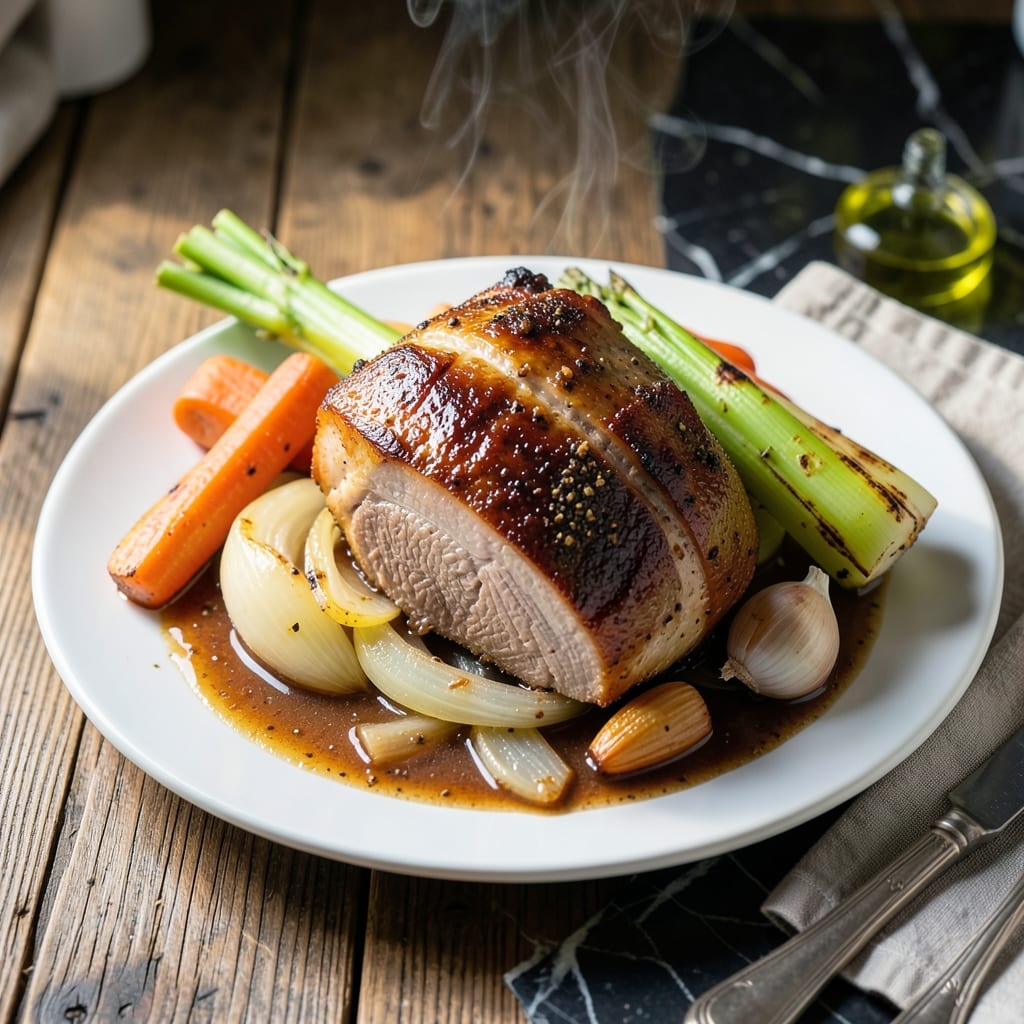
This pork roast transforms a humble cut of meat into something extraordinary through slow cooking in beef broth. The rich, savory liquid infuses the pork with depth that water or chicken stock simply can’t match.
I developed this method after years of testing in my small Boston kitchen, seeking the perfect balance of tenderness and flavor. The beef broth creates a velvety sauce that complements the pork’s natural sweetness without overpowering it.
The result is fall-apart tender meat with a deeply flavorful sauce that’s perfect for serving over mashed potatoes or egg noodles. The aroma alone will have everyone gathering around the table before dinner is ready.
This approach proves that simple ingredients and patient cooking can produce restaurant-quality results at home. The beef broth makes all the difference in creating that signature savory depth.
Ingredients for Pork Roast Recipe with Beef Broth
Simple ingredients transform into a restaurant-quality dish with slow cooking in rich broth.
| Ingredient | Amount | Notes |
|---|---|---|
| Pork Shoulder Roast 🥩 | 3 lb | Boneless, trimmed of excess fat |
| Beef Broth 🥣 | 4 cups | Low-sodium preferred for control |
| Yellow Onion 🧅 | 1 whole | Large, quartered |
| Carrots 🥕 | 3 whole | Peeled and cut into chunks |
| Celery Stalks 🌿 | 3 pieces | Cut into large pieces |
| Garlic Cloves 🧄 | 6 cloves | Smashed, peeled |
| Dried Thyme 🌿 | 1 tsp | Or 1 tbsp fresh thyme leaves |
| Dried Rosemary 🌿 | 1 tsp | Crushed between fingers |
| Bay Leaves 🍃 | 2 whole | Dried, for aromatic depth |
| Olive Oil 🫒 | 2 tbsp | For searing pork |
| Salt 🧂 | 1 ½ tsp | Kosher or sea salt |
| Black Pepper 🌶️ | 1 tsp | Freshly ground preferred |
| All-Purpose Flour 🌾 | 2 tbsp | Optional for thickening sauce |
[recipe_ingredient_scaler]
The pork shoulder is non-negotiable for that fall-apart texture. Boston Market or your local butcher will have well-marbled cuts. Look for pieces with a decent fat cap—it renders down for flavor. The beef broth should be low-sodium so you can control the seasoning. I prefer Swanson or Better Than Bouillon for consistent quality.
No pork shoulder? Pork butt works identically. Short on fresh herbs? One-third the amount of dried gets you close. The carrots and celery can be swapped for parsnips or fennel if that’s what you have. For a richer sauce, deglaze the pan with half a cup of red wine before adding the broth.
This reheats beautifully—tastes even better the next day. Store in the fridge for up to 4 days or freeze for 3 months. The fat solidifies when chilled; skim it off before reheating for a cleaner sauce.
Why You’ll Love This Recipe
- One Pan Wonder: I toss the pork shoulder, beef broth, and veggies in one roasting pan and let the oven do the rest.
- Deep Rich Flavor: The beef broth soaks into the pork shoulder, making every bite juicy and packed with savory goodness.
- Feeds a Crowd: I make this for Sunday dinner and have enough leftovers for sandwiches the next day.
- Budget Friendly: A pork shoulder roast is affordable, and the beef broth and veggies stretch it even further.
Step-by-Step Instructions for Pork Roast With Beef Broth
This method delivers tender meat with rich, savory depth from the slow cooking process.
Step 1: Sear and Season the Pork Shoulder
Pat the 3 lb Pork Shoulder Roast completely dry with paper towels. This ensures a proper sear. Season all sides generously with the 1.5 tsp Salt and 1 tsp Black Pepper, pressing the spices into the meat so they adhere during cooking.
Heat the 2 tbsp Olive Oil in a large Dutch oven or heavy pot over medium-high heat. When the oil shimmers, add the pork shoulder and sear for 4-5 minutes per side until deeply browned. You want a dark, flavorful crust on all sides—this builds the foundation for your sauce.
Step 2: Sauté the Aromatic Vegetables
Remove the pork from the pot and set aside. Reduce heat to medium. Add the 1 whole Yellow Onion, 3 whole Carrots, and 3 pieces Celery Stalks to the pot. Cook for 5-6 minutes, stirring occasionally, until the vegetables begin to soften and develop some color.
Add the 6 cloves Garlic Cloves and cook for 1 minute until fragrant. Stir in the 1 tsp Dried Thyme, 1 tsp Dried Rosemary, and 2 whole Bay Leaves. These herbs will infuse the broth with warm, earthy notes as everything simmers.
Step 3: Deglaze and Begin Braising
Pour in the 4 cups Beef Broth, scraping the bottom of the pot to release all the browned bits. These fond bits dissolve into the liquid, creating incredible depth of flavor. Return the pork shoulder to the pot, ensuring it’s mostly submerged in the broth.
Bring the mixture to a gentle simmer over medium-high heat, then reduce the heat to low. Cover the pot and let it braise undisturbed for 2.5 to 3 hours. The pork is done when it pulls apart easily with a fork.
Step 4: Thicken the Sauce and Finish
Remove the pork from the pot and set it aside to rest. If you prefer a thicker sauce, mix the 2 tbsp All-Purpose Flour with 2 tablespoons of cold water to create a slurry. Stir the slurry into the simmering broth and cook for 3-4 minutes until the sauce thickens slightly.
Taste and adjust the seasoning with additional salt and pepper if needed. The sauce should be rich, savory, and full of depth from the slow cooking process. Remove the bay leaves before serving.
Step 5: Serve and Enjoy
Shred or slice the pork and return it to the pot to soak up the flavorful sauce. Serve the pork hot with the vegetables and broth ladled over the top. The meat should be fall-apart tender, and the sauce should cling beautifully to each piece.
This dish pairs well with mashed potatoes, crusty bread, or buttered noodles to soak up every last bit of the delicious sauce. The flavors deepen even more the next day, making leftovers a treat.
Pro Tips For Making Pork Roast Recipe With Beef Broth
- Sear Before Roasting: I learned this the hard way—searing the pork shoulder in a hot pan for 3-4 minutes per side locks in juices and adds a deep flavor that beef broth alone can’t provide.
- Use Low-Sodium Broth: Sounds weird, but it works: low-sodium beef broth lets you control the saltiness, especially since pork shoulder and vegetables reduce down and concentrate flavors as they cook.
- Skip the Overcrowding: Resist the urge to cram all the carrots, celery, and onions under the roast—spread them around so they caramelize instead of steam, which gives you those rich, sticky bits in the pan.
- Rest Before Slicing: After pulling it from the oven, give the pork a solid 15 minutes under foil—yes, even if you’re starving—so the juices redistribute and don’t all end up on the cutting board.
Essential Equipment for This Recipe
Dutch Oven Essentials
I swear by my 6-quart enameled cast iron Dutch oven for this recipe. The heavy base distributes heat evenly, preventing hot spots that can burn your broth. Lodge makes a great budget-friendly option, while Le Creuset is my splurge choice that lasts forever. 🔥
Quality Tongs
You need 12-inch locking tongs to safely flip that 3 lb pork shoulder during searing. I prefer OXO Good Grips for their comfortable handles and sturdy construction. Look for ones that can handle high heat without melting.
Instant-Read Thermometer
While not strictly necessary, I love my ThermoWorks Instant Read for checking doneness. Stick it in the thickest part—195-203°F means your pork is ready to fall apart. This prevents guesswork and ensures perfect results every time.
Wooden Spoon
A good wooden spoon is essential for scraping up all those flavorful browned bits when deglazing. I keep a 12-inch olive wood spoon dedicated to my Dutch oven. Avoid metal utensils that can scratch your enameled surface.
Fat Separator
For a cleaner sauce, I use a 2-cup fat separator to skim excess fat after cooking. The OXO Good Grips model has a handy stoppour feature. This lets you pour out the rich, flavorful broth while leaving the grease behind.
Glass Measuring Cups
You’ll need accurate measurements for your 4 cups beef broth. I use Pyrex glass measuring cups because they’re heatproof and won’t absorb odors. The clear markings make it easy to see exactly how much liquid you’re adding.
Nutrition Facts
Frequently Asked Questions
Can I use chicken broth instead?
While you can, beef broth adds a deeper, richer flavor that complements pork beautifully. Chicken broth will work in a pinch but may result in a milder taste. Stick with low-sodium to control seasoning.
How do I prevent the pork from drying out?
Keep it mostly submerged in broth and maintain a gentle simmer. Cooking at too high heat or uncovered can dry it out. 2.5 to 3 hours on low heat ensures tenderness.
What if my sauce is too thin?
Mix 2 tbsp flour with cold water to create a slurry, then stir into the simmering broth. Cook for 3-4 minutes until thickened. This adds body without altering flavor.
Can I make this in a slow cooker?
Yes! Sear the pork first, then transfer to your slow cooker with broth and aromatics. Cook on low for 8 hours or high for 5-6 hours for the same fall-apart texture.

Trained in classic French technique but raised on slow-cooked ribs and spicy rubs, she blends culinary skill with smoke and soul.
- Recipe for Fried Pork Chops With Flour: Crispy Crust and Juicy Centers - October 3, 2026
- Octopus Recipe Pan Fried: Crispy Edges With Tender Bites - October 3, 2026
- Recipe For Fried Pork Chops In An Iron Skillet: Crispy Crust With Juicy Centers - October 3, 2026