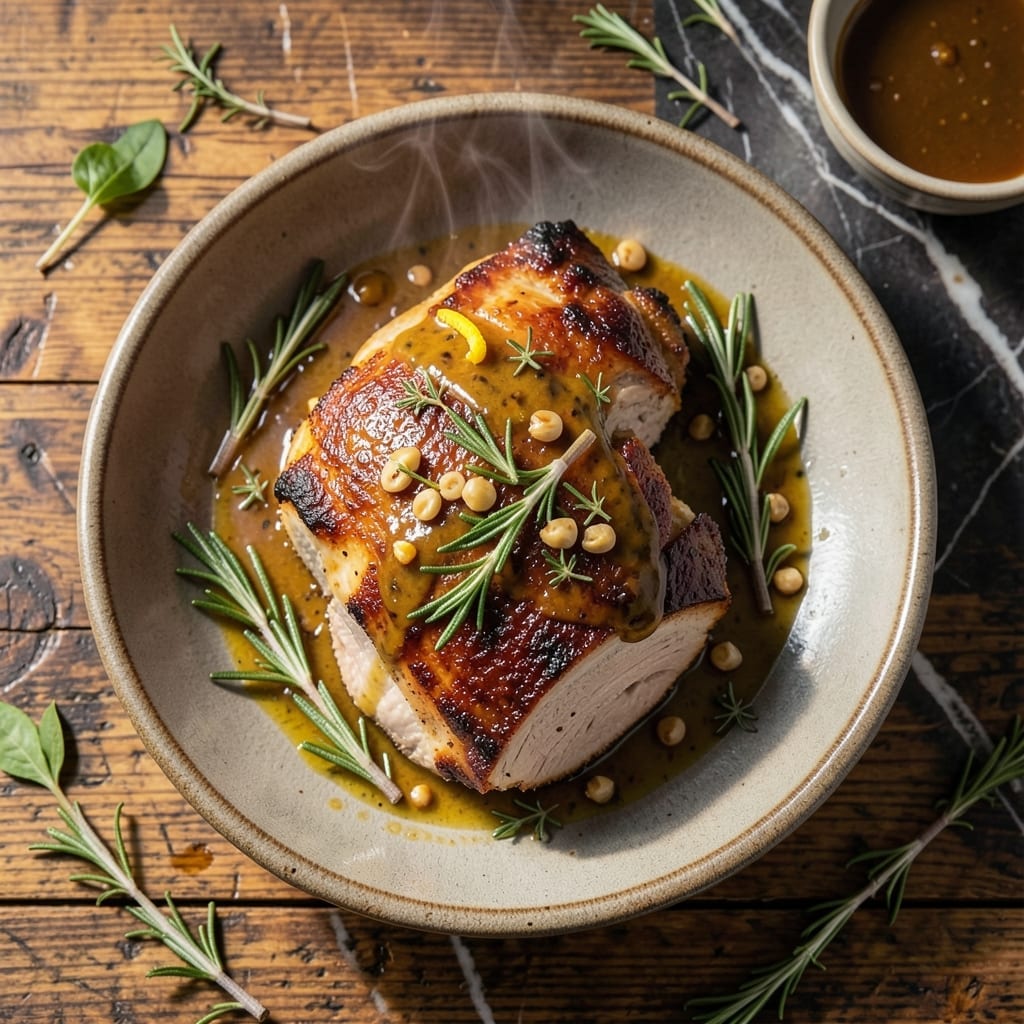
This herb-crusted pork roast redefines Sunday dinner with its fall-apart tender texture and bold flavor profile. The Dijon mustard base creates a sticky, caramelized crust that locks in juices while adding a subtle tang.
I developed this recipe after years of testing different herb combinations and cooking methods in my small Boston kitchen. The key is layering fresh rosemary and thyme over the mustard before roasting, which infuses every bite with aromatic depth.
The result is a centerpiece dish that’s impressive yet approachable. The meat pulls apart effortlessly with a fork, while the crust develops a rich, golden-brown finish that’s impossible to resist.
Perfect for family gatherings or a cozy weeknight meal, this roast delivers consistent results with minimal active prep time. The aroma alone will have everyone gathering around the table.
Ingredients for Pork Roast Recipe with Dijon Mustard
Pantry staples and fresh herbs create that unforgettable crust and tender meat.
| Ingredient | Amount | Notes |
|---|---|---|
| Pork Shoulder Roast 🐖 | 3 lb | Bone-in, skin-on preferred |
| Dijon Mustard 🟡 | ½ cup | Whole grain or smooth |
| Fresh Rosemary 🌿 | 2 tbsp | Finely chopped, stems discarded |
| Fresh Thyme 🍃 | 2 tbsp | Leaves stripped from stems |
| Garlic Cloves 🧄 | 6 cloves | Minced finely for even distribution |
| Olive Oil 🫒 | 2 tbsp | Extra-virgin for richness |
| Kosher Salt 🧂 | 1 ½ tsp | Diamond Crystal preferred |
| Black Pepper 🌶️ | 1 tsp | Freshly ground for best flavor |
| Yellow Onion 🧅 | 1 whole | Large, quartered for roasting |
| Carrots 🥕 | 3 whole | Peeled and cut into chunks |
| Chicken Stock 🍲 | 1 cup | Low-sodium for better control |
| Honey 🍯 | 1 tbsp | Optional for glaze sweetness |
| Red Wine Vinegar 💧 | 1 tbsp | Balances richness of pork |
[recipe_ingredient_scaler]
The pork shoulder is non-negotiable here—bone-in, skin-on from Whole Foods or your local butcher gives you that fall-apart texture. Ask them to leave the fat cap on (that’s where the flavor lives). I’ve tried sirloin and tenderloin, but shoulder wins every time. For the herbs, fresh rosemary and thyme are key—dried just doesn’t cut it for the crust. Hit the farmers market if you can.
No Dijon? Regular mustard plus a pinch of white wine vinegar gets you close. Out of fresh herbs? Dried at one-third the amount, but toast them in a dry pan first to wake up the flavors. Pork shoulder too big? Cut it in half and freeze the rest for later. The chicken stock can be swapped for veggie stock if you’re serving vegetarians alongside (just keep the pork separate, obviously).
This roast tastes even better the next day—4-5 days in the fridge, and the leftovers make killer sandwiches. Freeze portions for up to 3 months (slice before freezing for easy reheating). The crust softens when stored, but a quick broil brings it back to life.
Why You’ll Love This Recipe
- One Pan Wonder: I just rub the pork with Dijon, herbs, and garlic, then let the oven do the work—no flipping, no fuss.
- That Dijon Crust: Honestly, the tangy mustard and fragrant rosemary-thyme combo creates a crust so good, I catch myself sneaking bites straight from the pan.
- Feeds a Crowd: This roast is my go-to for Sunday dinners, effortlessly stretching to feed six with leftovers for sandwiches the next day.
- Budget Hero: Pork shoulder stays affordable, and with just a few pantry staples, I get a meal that tastes like a fancy restaurant dish.
Step-by-Step Instructions for Pork Roast With Dijon Mustard
Here’s the method I use for that herb-crusted perfection with fall-apart texture.
Step 1: Prepare the Herb and Mustard Rub
Finely chop the 2 tbsp fresh rosemary and strip the leaves from the 2 tbsp fresh thyme. In a bowl, combine these with the 0.5 cup Dijon mustard, 6 cloves garlic cloves (minced), 2 tbsp olive oil, 1.5 tsp kosher salt, and 1 tsp black pepper.
Mix until it forms a thick paste. The herbs will release their oils, creating a fragrant base that clings perfectly to the pork. This rub is what gives the roast its signature crust and deep flavor.
Step 2: Coat and Sear the Pork Shoulder Roast
Pat the 3 lb pork shoulder roast dry with paper towels to ensure the rub adheres. Rub the mustard-herb mixture all over the pork, pressing it into the meat so it forms an even coat. Don’t be shy—this layer will caramelize beautifully as it roasts.
Heat a large Dutch oven over medium-high heat. Add the pork and sear on all sides for 2-3 minutes per side until deep golden brown. The sear locks in juices and creates a flavorful fond that’ll enhance the sauce later.
Step 3: Add Aromatics and Braise
Remove the pork and set it aside. In the same Dutch oven, add the 1 whole yellow onion (quartered) and 3 whole carrots (peeled and cut into chunks). Sauté for 3-4 minutes until they start to soften and pick up the browned bits from the pork.
Return the pork to the pot. Pour in the 1 cup chicken stock, 1 tbsp honey, and 1 tbsp red wine vinegar. The liquid should come about halfway up the pork. Bring to a gentle simmer, then cover and transfer to a preheated 325°F oven.
Step 4: Roast Until Fall-Apart Tender
Roast the pork for 2.5 to 3 hours, turning it halfway through the cooking time. The pork is done when it shreds easily with a fork and reaches an internal temperature of 195-200°F. The low and slow method ensures the connective tissue breaks down completely.
Baste the pork occasionally with the pan juices to keep it moist and build layers of flavor. The dijon mustard in the rub will deepen in color and create a sticky, savory glaze that coats every bite.
Step 5: Rest and Serve
Carefully remove the pork from the Dutch oven and transfer it to a cutting board. Let it rest for 15-20 minutes before shredding or slicing. This resting period allows the juices to redistribute, so every piece stays tender and flavorful.
Skim excess fat from the braising liquid and reduce it on the stovetop for 5-10 minutes if a thicker sauce is desired. Serve the pork with the carrots, onions, and a generous spoonful of the sauce. The result is a dish that’s rich, aromatic, and impossibly tender.
Pro Tips For Making Pork Roast Recipe With Dijon Mustard
- Sear First, Roast Later: I learned this the hard way—sear the pork shoulder in a screaming-hot pan for 3-4 minutes per side before roasting to lock in juices and get that deep, caramelized crust under the mustard.
- Score the Fat: Cut 1/4-inch slits into the fat cap before rubbing with Dijon and herbs—this lets the flavors penetrate and keeps the meat from curling as it cooks.
- Skip Cold Mustard: Sounds weird, but it works: warm the Dijon mustard slightly (10 seconds in the microwave) before brushing it on—it spreads smoother and adheres better to the pork.
- Rest Under Foil: After roasting, tent the pork loosely with foil and let it rest for at least 15 minutes—this keeps the mustard glaze from drying out while the juices redistribute.
Make-Ahead Tips for Leftovers
Overnight Prep
Mix the 0.5 cup Dijon mustard, 2 tbsp fresh rosemary, 2 tbsp fresh thyme, and 6 garlic cloves the night before. The flavors meld beautifully as it rests in the fridge, saving you time on cooking day.
Morning Sear
If you’re short on time, sear the pork in the morning, then let it cool before refrigerating. When ready to cook, bring it to room temperature for 30 minutes before roasting. This keeps the cooking schedule flexible.
Braise Ahead
Cook the entire roast the day before, then store it in its braising liquid. Reheat gently in a 300°F oven for 20-25 minutes before serving. The flavors deepen overnight, making it even more delicious.
Vegetable Prep
Chop the yellow onion and carrots the night before and store them in the fridge. This small step makes the cooking process smoother and less stressful.
Sauce Reduction
Strain and reduce the braising liquid separately if you prefer a thicker sauce. Store it in the fridge and reheat before serving. This adds a professional touch to your meal. 💛
Nutrition Facts
Frequently Asked Questions
Can I use a different cut of pork for this recipe?
Pork shoulder works best for fall-apart texture. For something leaner, try pork loin but reduce cooking time to 1.5-2 hours at 325°F to prevent drying out. Shoulder’s fat content keeps it moist during the long roast.
How do I prevent the mustard crust from burning?
Tent the roast with foil after 1 hour of cooking. This protects the crust while allowing the meat to cook through. Remove the foil during the last 30 minutes to let it crisp up again.
What can I serve with this pork roast?
Mashed potatoes soak up the sauce beautifully. Roasted Brussels sprouts or a crisp apple slaw balance the richness. For a lighter option, try steamed green beans with almonds.

Trained in classic French technique but raised on slow-cooked ribs and spicy rubs, she blends culinary skill with smoke and soul.
- Recipe for Boneless Pork Chops in Cast Iron Skillet: Sear and Baste to Juicy Perfection - October 3, 2026
- Recipe for Boneless Cross Rib Roast: Slow-Roasted Beef with Herb Crust - October 3, 2026
- Hamburgers in Sauce Recipe Crock Pot: Slow-Cooked Savory Delight - October 3, 2026