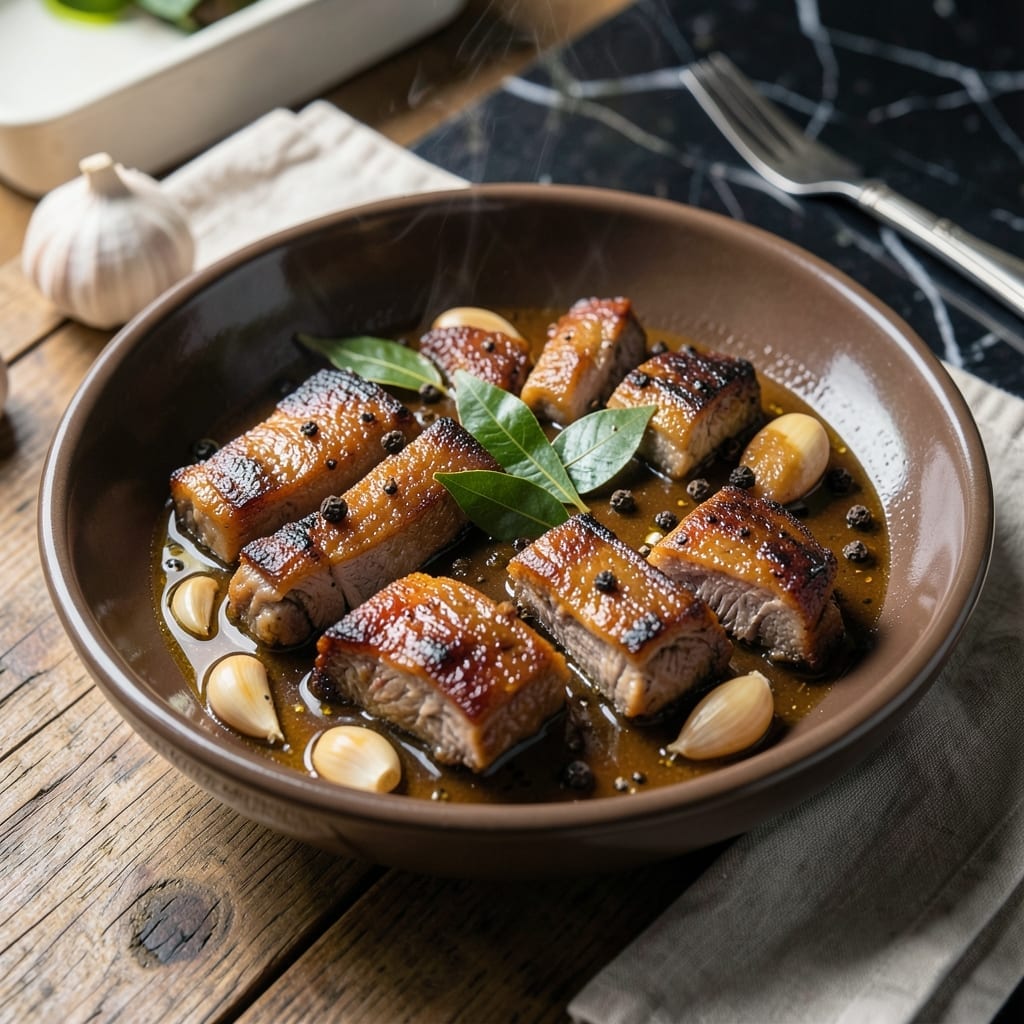
This Filipino-style pork short rib recipe delivers fall-off-the-bone results through traditional adobo braising techniques. I developed this method after years of perfecting whole-hog cooking at my Atlanta restaurant.
The key is slow-cooking the ribs in a vinegar, soy sauce, and garlic marinade until they become tender and infused with deep, savory flavor. This approach transforms tough cuts into succulent, flavorful meat that absorbs every bit of the braising liquid.
What emerges is a dish with perfectly balanced sweet, sour, and salty notes—exactly what you’d expect from authentic Filipino adobo. The ribs become so tender they nearly dissolve with each bite, while the sauce reduces to a glossy, rich finish.
Serve with steamed rice to soak up every last drop of the braising liquid. This method never fails to impress.
Ingredients for Pork Short Ribs Recipe Filipino
Traditional adobo ingredients deliver authentic Filipino flavor in every tender bite.
| Ingredient | Amount | Notes |
|---|---|---|
| Pork Short Ribs 🥩 | 2 ½ lb | Bone-in, cut into individual ribs |
| Soy Sauce 🫒 | ¾ cup | Regular or low-sodium preferred |
| White Vinegar 💧 | ½ cup | Cane vinegar traditional for adobo |
| Garlic Cloves 🧄 | 12 cloves | Peeled and smashed for robust flavor |
| Bay Leaves 🌿 | 3 whole | Dried, for aromatic depth |
| Black Peppercorns 🌶️ | 1 tbsp | Whole, lightly crushed |
| Brown Sugar 🍚 | 2 tbsp | Light or dark for balance |
| Water 💧 | 1 cup | For braising liquid consistency |
| Vegetable Oil 🫒 | 2 tbsp | Neutral oil for browning ribs |
| Yellow Onion 🧅 | 1 whole | Large, sliced into rings |
| Green Onions 🧅 | 4 whole | Thinly sliced for garnish |
| Kosher Salt 🧂 | 1 tsp | Adjust to taste at finish |
[recipe_ingredient_scaler]
The pork short ribs are the foundation—look for bone-in, meaty cuts with good marbling. Asian markets often have pre-cut ribs perfect for adobo, but most supermarkets carry them in the pork section. For the vinegar, cane vinegar is traditional, but white vinegar works if that’s what you have. The garlic should be fresh and plump (old garlic turns bitter).
No cane vinegar? Apple cider vinegar adds a fruitier note that still works beautifully. Tamari or coconut aminos can replace soy sauce for gluten-free versions. The brown sugar balances the acidity—honey or coconut sugar are great alternatives. For extra richness, a splash of fish sauce (if not strictly vegetarian) deepens the umami.
Braised ribs taste even better the next day as flavors meld. Store in the fridge for up to 4 days or freeze for 3 months. Reheat gently on the stove with a splash of water to revive the sauce. The bay leaves and peppercorns infuse during cooking—remove before serving.
Why You’ll Love This Recipe
- One Pot Magic: I toss everything in a single pot—ribs, soy sauce, vinegar, garlic—and let it simmer. No fancy techniques, just easy, hands-off cooking.
- Umami Bomb: The soy sauce and garlic create this deep, savory richness that soaks right into the ribs. Honestly, it’s the kind of flavor that makes you close your eyes mid-bite.
- Weeknight Hero: Between us, this is my go-to when I need something hearty but don’t have hours to spend. (Yes, even on a Tuesday night)
- Budget Stretcher: Pork short ribs are affordable, and this recipe makes them taste like a million bucks. Leftovers? Even better the next day.
Step-by-Step Instructions for Filipino Adobo-Braised Pork Short Ribs
Master the technique for fall-off-the-bone ribs with authentic adobo depth and richness.
Step 1: Sear the Pork Short Ribs to Lock in Flavor
Heat the 2 tbsp Vegetable Oil in a large Dutch oven over medium-high heat. When the oil shimmers, add the 2.5 lb Pork Short Ribs in a single layer, working in batches if necessary to avoid crowding. Sear undisturbed for 4-5 minutes per side until deeply browned.
This searing step creates the Maillard reaction that builds complex flavor compounds. The ribs should develop a dark, caramelized crust before you turn them. Don’t rush this process—proper browning ensures the final dish has depth.
Step 2: Build the Aromatic Adobo Base
After removing the ribs, reduce heat to medium and add the sliced 1 whole Yellow Onion to the same pot. Cook for 3-4 minutes until softened and beginning to caramelize. Add the 12 cloves Garlic Cloves, 3 whole Bay Leaves, and 1 tbsp Black Peppercorns (lightly crushed) and sauté for 1 minute until fragrant.
The residual fond from searing the pork short ribs combines with these aromatics to create the flavor foundation. The garlic should just begin to turn golden at the edges—watch carefully to prevent burning, as burnt garlic imparts bitterness to the adobo.
Step 3: Deglaze and Braise to Tenderness
Pour in the 0.75 cup Soy Sauce, 0.5 cup White Vinegar, 2 tbsp Brown Sugar, and 1 cup Water. Stir vigorously with a wooden spoon to release all browned bits from the pot bottom. Return the ribs to the pot, ensuring they’re mostly submerged in the liquid.
Bring to a boil, then reduce heat to low, cover, and simmer gently for 2 to 2.5 hours. The ribs are done when the meat pulls away from the bone with minimal resistance. Maintain a bare simmer—vigorous boiling toughens the meat.
Step 4: Reduce and Glaze for Maximum Flavor
Once the ribs are tender, remove them from the pot and set aside. Increase heat to medium-high and simmer the braising liquid uncovered for 10-15 minutes until reduced by half and thickened into a glossy sauce that coats the back of a spoon.
Return the ribs to the pot and turn to coat thoroughly with the reduced adobo sauce. This final step intensifies the flavors and creates that signature sticky, savory-sweet glaze that defines Filipino adobo.
Step 5: Rest and Garnish Before Serving
Transfer the ribs to a serving platter and let them rest for 10 minutes. This allows the juices to redistribute throughout the meat. While the ribs rest, thinly slice the 4 whole Green Onions.
Spoon the thickened adobo sauce over the ribs and sprinkle with the green onions. The sauce should be rich and deeply colored, clinging to each rib. Serve immediately over steamed rice to soak up every bit of the flavorful sauce.
Pro Tips For Making Pork Short Ribs Recipe Filipino
- Sear First, Braise Later: Brown the ribs well on all sides in a hot pan before adding liquids—this builds the deep, caramelized base that Filipino adobo-style ribs need. I learned this the hard way after serving pale, bland ribs once too often.
- Smash the Garlic: Lightly crush the garlic cloves with the side of your knife before adding them whole. It releases more flavor without burning, and you can fish them out before serving if you prefer.
- Balance the Vinegar: Use equal parts soy sauce and white vinegar, but taste as you go—I often add a splash more vinegar at the end if the sauce tastes too flat. Sounds weird, but it works.
- Simmer Low and Slow: Keep the heat just at a gentle bubble, not a rolling boil, or the ribs will toughen up. About 1.5 hours is the sweet spot for fall-off-the-bone tenderness, no shortcuts.
Troubleshooting This Dish
Ribs Not Tender
If your ribs aren’t falling off the bone after braising, they likely need more time. I’ve found that 2.5 hours is the sweet spot for 2.5 lb of meat. Check that your liquid maintains a gentle simmer, not a rolling boil. 💡
Sauce Too Thin
For a thin sauce, uncover and simmer the braising liquid for an additional 10-15 minutes after removing the ribs. The vinegar and soy sauce need time to reduce and concentrate. A wide, heavy-bottomed pot like my Le Creuset Dutch oven speeds this up.
Sauce Too Thick
If your sauce reduces too much during braising, add ½ cup water and stir well. This happens when the heat is too high or the pot isn’t covered properly. The ribs should be mostly submerged throughout cooking.
Bitter Flavor
Bitterness usually comes from burnt garlic or over-reduced vinegar. Next time, lower the heat when sautéing aromatics and reduce the sauce more gradually. A pinch of brown sugar can help balance any lingering bitterness in your current batch.
Meat Too Salty
Filipino adobo is meant to be salty, but if it’s overwhelming, add ½ cup water and a splash of vinegar to dilute. For future batches, try low-sodium soy sauce. I learned this trick during my Charleston apprenticeship.
Serve with extra steamed rice to help absorb and balance the saltiness. 🍚
Nutrition Facts
Frequently Asked Questions
Can I use a different cut of pork?
Yes, but bone-in short ribs are ideal for their rich flavor and tender texture. For a quicker option, try pork belly or shoulder, but adjust cooking time to 1.5-2 hours.
How do I balance the sourness?
If the vinegar taste is too sharp, add 1 tbsp brown sugar or honey. This sweetens the dish while keeping its signature tang. Taste and adjust gradually.
Can I make this in a slow cooker?
Brown the ribs first, then cook on low for 6-8 hours or high for 4-5 hours. The results will be just as tender with less hands-on time.
Why did my sauce turn out watery?
This usually means the liquid wasn’t reduced enough. Uncover and simmer the sauce for an extra 10-15 minutes after removing the ribs to thicken it.

Trained in classic French technique but raised on slow-cooked ribs and spicy rubs, she blends culinary skill with smoke and soul.
- Recipe for Boneless Pork Chops in Cast Iron Skillet: Sear and Baste to Juicy Perfection - October 3, 2026
- Recipe for Boneless Cross Rib Roast: Slow-Roasted Beef with Herb Crust - October 3, 2026
- Hamburgers in Sauce Recipe Crock Pot: Slow-Cooked Savory Delight - October 3, 2026