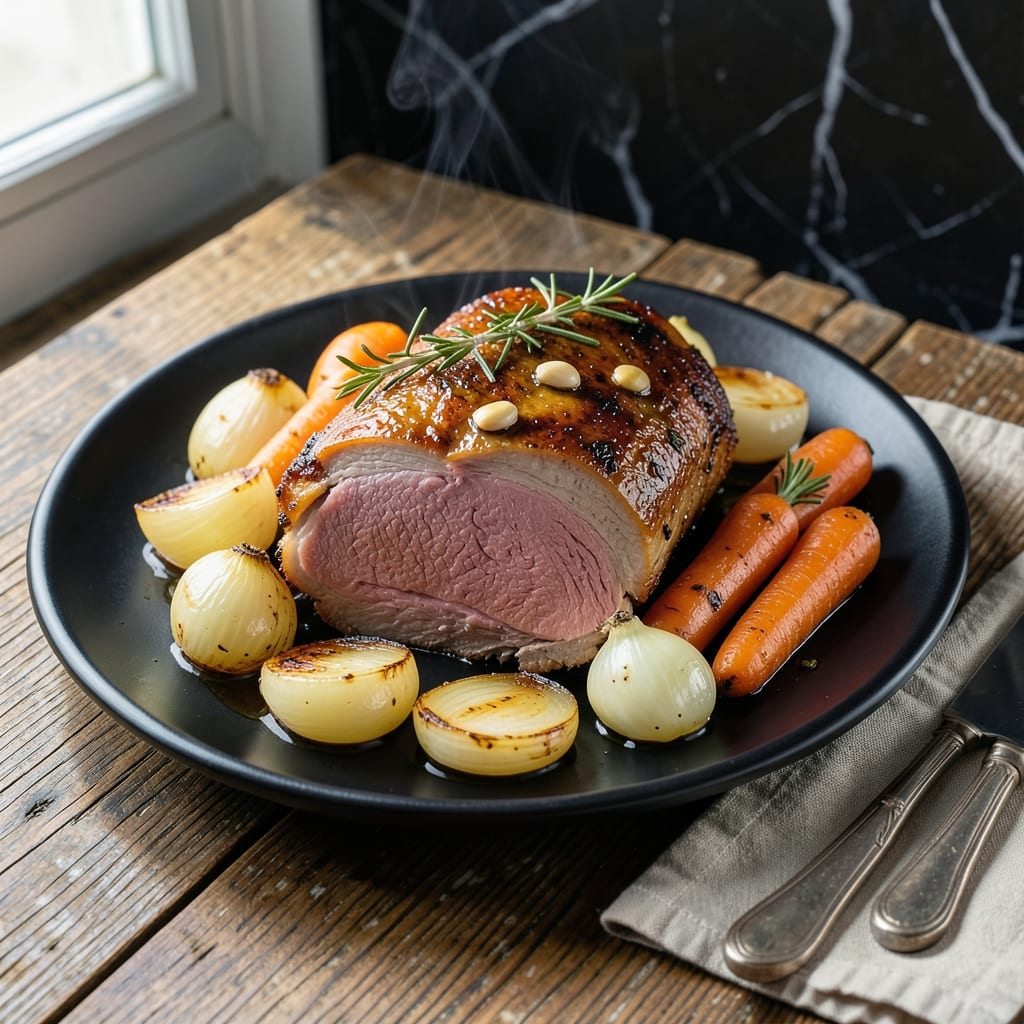
Slow-roasting pork with fresh rosemary transforms a simple cut into a tender, aromatic masterpiece. This method, perfected in my grandmother’s diner, coaxes out deep flavors while keeping the meat impossibly juicy.
The key lies in patience and precision. A long, low-temperature roast allows the rosemary to infuse every bite, creating layers of herbaceous richness that complement the pork’s natural sweetness.
By the time it emerges from the oven, the meat will be fall-apart tender with a golden crust, filling your kitchen with an irresistible aroma. The rosemary’s piney notes balance the pork’s richness perfectly.
Serve it with roasted vegetables or mashed potatoes for a meal that feels both elegant and comforting. Here’s how to achieve that perfect result every time.
Ingredients for Pork Roast Recipe with Rosemary
Simple ingredients, grandma’s diner method, fall-apart pork every time.
| Ingredient | Amount | Notes |
|---|---|---|
| Pork Shoulder 🥩 | 3 lb | Bone-in preferred for flavor |
| Fresh Rosemary Sprigs 🌿 | 4 whole | Woodsy stems, not dried |
| Garlic Cloves 🧄 | 6 cloves | Peeled, smashed lightly |
| Kosher Salt 🧂 | 1 ½ tbsp | Diamond Crystal preferred |
| Black Peppercorns 🌶️ | 1 tbsp | Freshly cracked coarse |
| Extra-Virgin Olive Oil 🫒 | 2 tbsp | Fruity, robust variety |
| Yellow Onion 🧅 | 1 whole | Large, quartered |
| Carrots 🥕 | 3 whole | Peeled, cut into chunks |
| Celery Stalks 🥬 | 3 whole | Cut into large pieces |
| Dry White Wine 🍷 | 1 cup | Crisp, unoaked variety |
| Chicken Stock 🥣 | 1 cup | Low-sodium preferred |
| Dijon Mustard 🟡 | 1 tbsp | Whole-grain for texture |
| Fresh Thyme Sprigs 🍃 | 3 whole | Optional, complements rosemary |
[recipe_ingredient_scaler]
The pork shoulder is non-negotiable here—bone-in from a good butcher gives you that melt-in-your-mouth texture grandma’s diner was known for. I get mine from Whole Foods when their sales hit (usually Thursdays). Look for marbling throughout, not just on top. The rosemary? Fresh sprigs only—dried just doesn’t have the same piney punch. Grab a bunch with thick, woody stems; those flimsy ones wilt before they flavor.
No white wine? Apple cider vinegar plus water (1:3 ratio) in a pinch, though you’ll miss the depth. Fresh thyme can sub for the rosemary at half the amount, but it’s not quite the same. Skip the Dijon if you must, but whole-grain mustard adds a textural contrast that’s worth the jar space. Chicken stock can be subbed with vegetable stock—just go for low-sodium to control the seasoning yourself.
This roast actually gets better overnight. Shreds perfectly for sandwiches after 4 days in the fridge, or freeze portions for 3 months (the fat solidifies, making slicing for sandwiches easier). Leftovers? Pulled pork tacos the next day—just reheat with a splash of broth.
Why You’ll Love This Recipe
- One Pan Wonder: I toss the pork shoulder with rosemary, garlic, salt, and pepper, then let the oven do all the work.
- Herb-Infused Magic: The fresh rosemary and garlic create a fragrance that fills the house, and the flavor seeps right into the meat.
- Feeds a Crowd: I’ve served this for Sunday dinner and weeknight leftovers—always a hit with both family and friends.
- Budget Stretch: Pork shoulder is affordable, and the leftovers make killer sandwiches or tacos for days.
Step-by-Step Instructions for Pork Roast With Rosemary
Here’s how to achieve fall-apart tenderness with aromatic depth every time.
Step 1: Season and Sear the Pork Shoulder
Pat the 3 lb Pork Shoulder dry with paper towels. This ensures a good sear. Rub it all over with the 1.5 tbsp Kosher Salt and freshly cracked 1 tbsp Black Peppercorns. I like to press the seasoning in so it adheres well.
Heat the 2 tbsp Extra-Virgin Olive Oil in a Dutch oven over medium-high heat. When the oil shimmers, sear the pork on all sides until deep golden brown, about 3-4 minutes per side. Don’t rush this—it builds the flavor base. Remove the pork and set aside.
Step 2: Build the Aromatic Base
In the same pot, add the quartered 1 whole Yellow Onion, the 3 whole Carrots cut into chunks, and the 3 whole Celery Stalks in large pieces. Sauté for 5 minutes until the onions start to soften and brown slightly.
Add the 6 cloves Garlic Cloves (peeled and smashed), the 4 whole Fresh Rosemary Sprigs, and the 3 whole Fresh Thyme Sprigs. Stir for 30 seconds until fragrant. Here’s the thing—this is where the magic starts. The herbs release their oils into the fat, infusing every bite.
Step 3: Deglaze and Braise to Tenderness
Pour in the 1 cup Dry White Wine to deglaze the pot, scraping up all those browned bits with a wooden spoon. Let it simmer for 2 minutes until reduced by half. This step lifts all that caramelized flavor into the braising liquid.
Stir in the 1 cup Chicken Stock and 1 tbsp Dijon Mustard. Return the pork to the pot, along with any accumulated juices. The liquid should come about halfway up the meat. Bring to a simmer, then cover and transfer to a 325°F oven.
Step 4: Slow-Roast Until Fork-Tender
Roast for 2.5 to 3 hours, turning the pork halfway through. You’ll know it’s done when it shreds easily with a fork. I check at the 2.5-hour mark—your oven might run hot or cool, so start there.
The pork is ready when the internal temperature reaches 195-200°F and it pulls apart with no resistance. This low-and-slow method guarantees that melt-in-your-mouth texture. Real talk: if it’s not tender yet, give it more time. It won’t dry out.
Step 5: Rest and Serve with Braising Liquid
Carefully transfer the pork to a cutting board and tent loosely with foil. Let it rest for 15 minutes—this allows the juices to redistribute. Skim any excess fat from the braising liquid, then reduce it on the stovetop for 5-7 minutes until slightly thickened.
Shred or slice the pork and serve it with the reduced braising liquid spooned over the top. The vegetables will be incredibly tender and flavorful—don’t discard them. Each bite should deliver rich, aromatic depth with that promised tenderness.
Pro Tips For Making Pork Roast Recipe With Rosemary
- Start Low and Slow: I learned this the hard way—pork shoulder needs 300°F for the first 2-3 hours to break down the fat without drying out. Cranking the heat early just gives you a tough, sad roast.
- Score the Fat Cap: Cut 1/4-inch crosshatches into the fat before seasoning so the rosemary and garlic actually penetrate. Sounds fussy, but it makes a real difference in flavor.
- Skip the Dried Rosemary: Fresh sprigs bruised with the flat of your knife release oils that dried just can’t match. After using dried once, I never went back.
- Rest Before Slicing: Give it a solid 15-20 minutes under foil after roasting—this keeps the juices from running all over the cutting board. I skip this when I’m lazy, but the dish is noticeably better when I don’t.
Perfect Pairings for This Dish
Vegetable Sides
I love serving this with roasted Brussels sprouts tossed with the same olive oil and a pinch of the leftover rosemary. Roast them at 400°F for 20-25 minutes until crispy. David swears by this combo—it’s his favorite way to eat this dish. 💪
Creamy Pairings
Mashed potatoes are a must—they soak up that rich braising liquid beautifully. I make mine with Yukon Golds, plenty of butter, and a splash of warm cream. For a lighter option, try creamy polenta instead.
Wine Choices
A crisp Pinot Grigio from Northern Italy cuts through the richness perfectly. For red lovers, a Chianti Classico with its bright acidity and cherry notes complements the rosemary beautifully. I always keep a few bottles from Central Market on hand for this. 🍷
Bread Options
Serve with crusty sourdough to mop up every last bit of sauce. I get mine from the Austin farmers market on Saturdays—look for a loaf with a thick, chewy crust. Warm it in the oven for 5 minutes before serving.
Fresh Finishes
A simple apple and fennel salad adds a refreshing contrast. Thinly slice 1 apple and 1 fennel bulb, toss with lemon juice, and finish with flaky salt. It’s a bright counterpoint to the rich pork.
Comfort Classics
For a hearty meal, add buttermilk biscuits—just like Nana Mae used to make. Her secret was brushing the tops with melted butter right before baking. They’re perfect for sandwiches with leftover pork the next day.
Nutrition Facts
Frequently Asked Questions
Can I use dried rosemary instead of fresh?
Yes, but use 1/3 the amount since dried is more concentrated. Soak it in warm water for 10 minutes first to rehydrate and release flavors. Fresh is ideal though for the best aroma.
What if my pork isn’t tender after 3 hours?
Give it more time! Pork shoulder needs 195-200°F internally to break down. Check every 30 minutes until it shreds easily. Low-and-slow is key—it won’t dry out.
Should I cover the roast while cooking?
Yes, keep it covered for the first 2 hours, then uncover to let the top brown. This traps steam to tenderize the meat while still allowing a crust to form.
Can I make this in a slow cooker?
Sear the pork first, then cook on low for 8 hours or high for 5-6 hours. Add a splash of stock if the liquid reduces too much.

Trained in classic French technique but raised on slow-cooked ribs and spicy rubs, she blends culinary skill with smoke and soul.
- Recipe for Boneless Pork Chops in Cast Iron Skillet: Sear and Baste to Juicy Perfection - October 3, 2026
- Recipe for Boneless Cross Rib Roast: Slow-Roasted Beef with Herb Crust - October 3, 2026
- Hamburgers in Sauce Recipe Crock Pot: Slow-Cooked Savory Delight - October 3, 2026