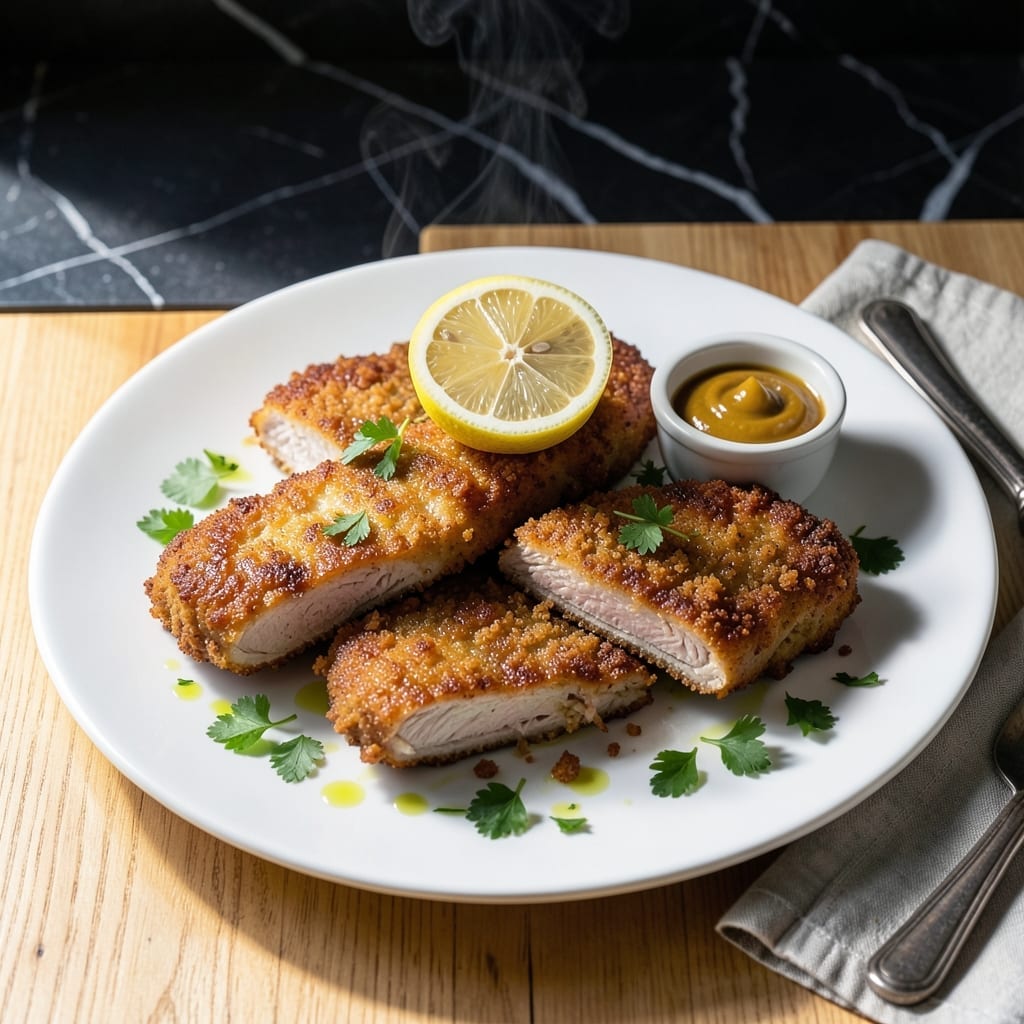
This panko-coated pork schnitzel delivers an unmatched crispy texture that traditional breadcrumbs simply can’t match. The Japanese breadcrumbs create a lighter, airier crust that stays shatteringly crispy long after frying.
I developed this method after testing multiple breading techniques, and panko consistently produced the most impressive results. The secret is pressing the crumbs firmly into the pork to ensure maximum adhesion during cooking.
Each bite offers tender pork encased in a golden, crispy shell that crackles with every cut. The contrast between the juicy meat and the airy breadcrumb coating makes this dish truly special.
Serve immediately for the best texture, as the panko coating retains its crispiness longer than regular breadcrumbs. Here’s how to achieve perfect results every time.
Ingredients for Pork Schnitzel Recipe Panko
Thin pork cutlets meet panko breadcrumbs for an irresistibly crispy result every time.
| Ingredient | Amount | Notes |
|---|---|---|
| Pork Cutlets 🥩 | 4 whole | Thin-cut, about 1/4-inch thick |
| Panko Breadcrumbs 🍞 | 2 cups | Japanese-style for maximum crispiness |
| All-Purpose Flour 🌾 | ½ cup | For initial dredging |
| Large Eggs 🥚 | 2 whole | Beaten for breading adhesion |
| Dijon Mustard 🟡 | 2 tbsp | For extra flavor in egg wash |
| Kosher Salt 🧂 | 1 ½ tsp | Divided for seasoning |
| Freshly Ground Black Pepper 🌶️ | 1 tsp | Divided for seasoning |
| Garlic Powder 🧄 | 1 tsp | For breading mixture |
| Onion Powder 🧅 | 1 tsp | For breading mixture |
| Neutral Oil 🛢️ | 1 ½ cups | For frying, like vegetable or canola |
| Lemon Wedges 🍋 | 4 pieces | For serving |
| Fresh Parsley 🌿 | ¼ cup | Chopped, for garnish |
[recipe_ingredient_scaler]
The pork cutlets must be thin—about 1/4-inch thick—for even cooking and maximum crispiness. Ask your butcher to slice them or pound thicker cuts yourself using a meat mallet. Panko breadcrumbs are non-negotiable here; their coarse texture creates the signature shatter. Look for authentic Japanese brands like Kikkoman at Asian markets or the international aisle.
No panko? Crush plain melba toast for a similar texture, though the flavor won’t be identical. Regular breadcrumbs will work in a pinch but expect a denser crust. For the egg wash, whole milk can replace the Dijon if preferred. The neutral oil must have a high smoke point—peanut or sunflower oil are excellent alternatives to vegetable or canola.
Fry in batches to avoid crowding the pan, which lowers oil temperature and results in soggy breading. Serve immediately for peak crispiness, though the schnitzel holds its texture better than traditional versions. Leftovers keep in the fridge for 2-3 days but are best reheated in a hot oven to revive the crust.
Why You’ll Love This Recipe
- Weeknight Hero: I can bread and pan-fry a batch of these golden cutlets faster than the oven preheats.
- Crunch Factor: Panko and Dijon give that shatteringly crisp coat with a tangy kick that regular breadcrumbs just can’t match.
- Crowd Pleaser: I’ve served this for casual dinners and birthday feasts—everyone from picky kids to my foodie uncle cleans their plate.
- Stretches Further: Leftovers reheat beautifully for sandwiches the next day, so my grocery budget actually thanks me.
Step-by-Step Instructions for Pork Schnitzel with Panko
Master the technique for achieving an ultra-crispy coating that shatters with every bite.
Step 1: Season and Dredge the Pork Cutlets
Pat the 4 whole Pork Cutlets dry with paper towels to ensure maximum breading adhesion. Season both sides evenly with ½ tsp Kosher Salt and ½ tsp Freshly Ground Black Pepper. This initial seasoning enhances the meat’s natural flavor.
Set up a breading station with three shallow dishes. Place the 0.5 cup All-Purpose Flour in the first. Dredge each cutlet through the flour, shaking off any excess. The flour creates a dry surface for the egg wash to cling to, forming the foundation of the crispy crust.
Step 2: Prepare the Egg Wash with Mustard
In the second dish, whisk together the 2 whole Large Eggs with 2 tbsp Dijon Mustard until fully combined. The mustard adds a subtle tang and helps the breadcrumbs adhere more securely. This step is crucial for preventing the coating from separating during frying.
Dip each floured cutlet into the egg mixture, turning to coat completely. Allow any excess to drip off for a moment—this prevents clumping in the final breading layer. The egg wash acts as a glue, ensuring every bit of panko stays in place.
Step 3: Apply the Panko Breading Mixture
In the third dish, combine the 2 cups Panko Breadcrumbs with 1 tsp Kosher Salt, ½ tsp Freshly Ground Black Pepper, 1 tsp Garlic Powder, and 1 tsp Onion Powder. Mix well to distribute the seasonings evenly. Panko’s larger, irregular crumbs create more surface area for crispiness.
Press each cutlet firmly into the panko mixture, ensuring full coverage. Turn and press again—don’t just sprinkle. The pressure helps the breadcrumbs embed into the egg wash. For extra crispiness, I double-dip: egg wash then panko a second time. Let the breaded cutlets rest for 5 minutes to set the coating.
Step 4: Fry to Golden Perfection
Heat 1.5 cups Neutral Oil in a large, heavy skillet over medium-high heat to 350-375°F. Use a deep-fry thermometer for accuracy—oil temperature is critical. If it’s too cool, the schnitzel will absorb oil and become greasy; too hot, and the outside will burn before the inside cooks.
Fry the cutlets 2 at a time to avoid crowding the pan, which lowers the oil temperature. Cook for 2-3 minutes per side until deep golden brown and crispy. Transfer to a paper towel-lined plate to drain. The schnitzel should be cooked through with no pink remaining in the center.
Step 5: Serve Immediately with Garnishes
Serve the schnitzel hot, straight from the fryer, to preserve the crispiness. The contrast between the crunchy exterior and tender pork is best experienced immediately. Garnish with 0.25 cup Fresh Parsley and serve with 4 pieces Lemon Wedges on the side.
Squeeze fresh lemon juice over each piece just before eating—the acidity cuts through the richness beautifully. For an authentic touch, serve with a simple green salad or potato salad. The key is serving quickly; panko loses its crispness as it sits.
Pro Tips For Making Pork Schnitzel Recipe Panko
- Pound the Cutlets: Use a meat mallet or rolling pin to pound the pork cutlets to an even 1/4-inch thickness. This guarantees even cooking and prevents chewy spots—especially crucial with panko, which browns fast.
- Double-Dredge for Crisp: Dip each cutlet in flour, then egg, then panko, but repeat the egg and panko step once more. The extra layer makes the crust shatter when bitten, and the Dijon in the egg wash adds a subtle tang.
- Skip Cold Oil: I learned this the hard way—start frying only when the oil reaches 350°F (a wood chopstick should sizzle when dipped). Cold oil soaks into the panko, turning your crispy schnitzel into a soggy mess.
- Rest on a Rack: After frying, place the schnitzel on a wire rack, not paper towels. This keeps the bottom from steaming and losing its crunch while you finish the batch.
Wine and Beer Pairings for This pork schnitzel recipe panko
Crisp White Wines
A dry German Riesling from the Mosel region cuts through the richness with its bright acidity and mineral notes. The subtle petrol aroma complements the golden crust beautifully. I often grab a bottle from New Seasons Market for under $20. 🍷
Light Bodied Reds
For red lovers, a chilled Pinot Noir from Oregon’s Willamette Valley offers red fruit flavors without overpowering the dish. The earthy notes pair well with the pork’s savory character. Look for Domaine Serene or Eyrie Vineyards.
German Beer Pairings
A crisp German Pilsner like Warsteiner or Jever provides refreshing contrast to the fried coating. The clean, slightly bitter finish cleanses your palate between bites. I always keep a six-pack in our fridge for schnitzel nights. 🍺
Wheat Beer Option
A Hefeweizen with its banana and clove notes creates an interesting flavor interplay. The effervescence helps cut through the oiliness. Weihenstephaner is my go-to, though any quality German wheat beer works.
Non-Alcoholic Choice
For a non-alcoholic option, try a sparkling apple cider from local Pacific Northwest producers. The bubbles and sweet-tart flavor mirror the lemon garnish perfectly. Portland Cider Company makes an excellent version.
Nutrition Facts
Frequently Asked Questions
Why use panko instead of regular breadcrumbs?
Panko creates a lighter, airier crust that stays crispy longer. Its coarse texture provides more surface area for maximum crunch compared to fine breadcrumbs.
Should I pound the pork cutlets myself?
If you can’t find thin-cut pork, pound thicker cuts to ¼-inch thickness between plastic wrap. This ensures even cooking and prevents chewy texture. Use a meat mallet or rolling pin.
How do I keep the breading from falling off?
Press the panko firmly into each cutlet and let rest for 5 minutes before frying. The double-dip method (egg then panko twice) creates an extra-secure coating.
Can I bake instead of fry?
Yes, bake at 400°F for 15-20 minutes, flipping halfway. Spray with oil for crispiness, though frying yields better texture. Use a wire rack for air circulation.

Trained in classic French technique but raised on slow-cooked ribs and spicy rubs, she blends culinary skill with smoke and soul.
- Recipe for Boneless Pork Chops in Cast Iron Skillet: Sear and Baste to Juicy Perfection - October 3, 2026
- Recipe for Boneless Cross Rib Roast: Slow-Roasted Beef with Herb Crust - October 3, 2026
- Hamburgers in Sauce Recipe Crock Pot: Slow-Cooked Savory Delight - October 3, 2026