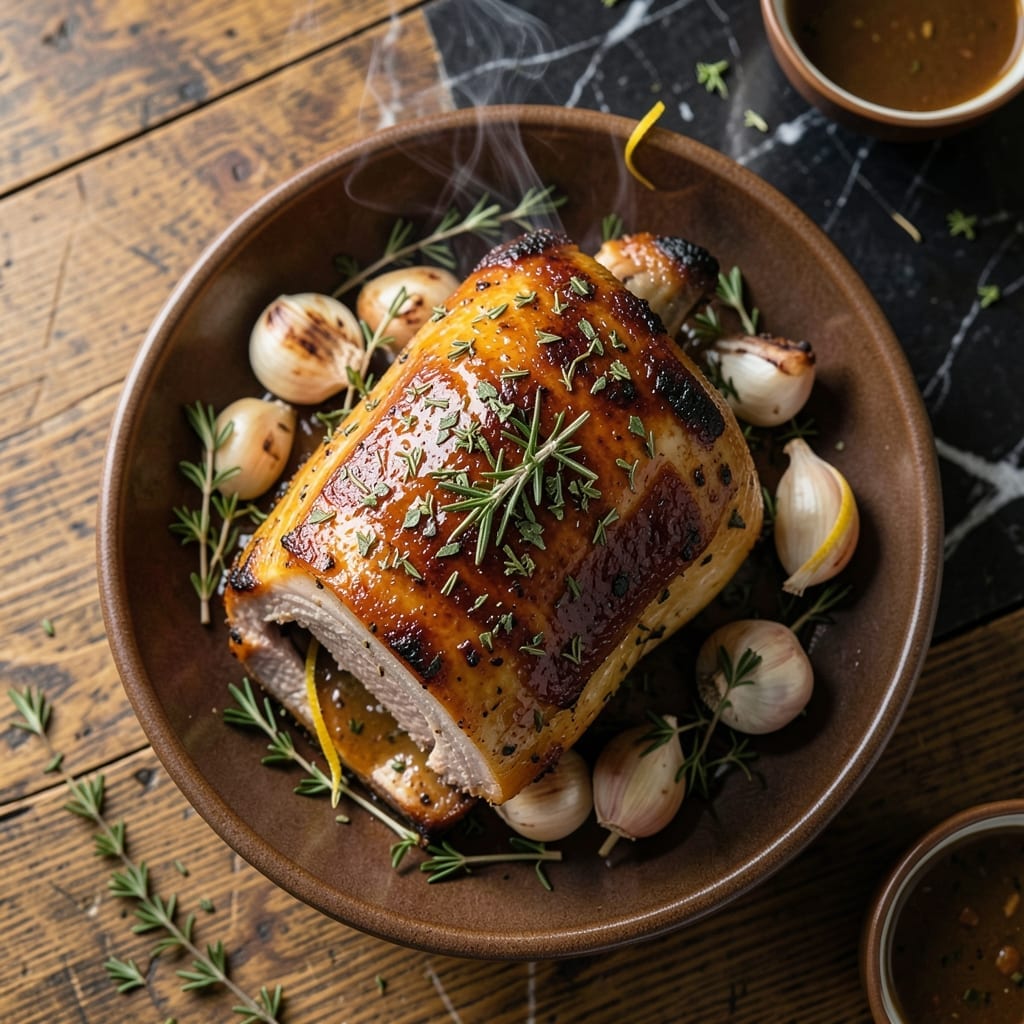
This herb-crusted pork roast elevates your Thanksgiving table with a restaurant-quality centerpiece that’s surprisingly simple to prepare. I developed this method after years of testing holiday mains, and it never fails to impress.
The secret lies in a fragrant herb crust that forms a golden seal, locking in juices while creating a crisp exterior. Slow-roasting at 325°F ensures the meat stays tender and flavorful, with every bite infused with aromatic herbs.
You’ll serve a perfectly cooked roast with a beautiful crust, ready to slice into moist, flavorful portions. The aroma alone will have your guests gathering in the kitchen well before dinner is served.
Pair with classic sides like mashed potatoes and roasted vegetables for a complete holiday meal. This dish deserves its place as the star of your feast.
Ingredients for Pork Roast Recipe for Thanksgiving
A handful of fresh herbs and a good cut of pork are all it takes to create this showstopper.
| Ingredient | Amount | Notes |
|---|---|---|
| Bone-In Pork Shoulder Roast 🥩 | 5 lb | Skin-on for crispy crackling |
| Kosher Salt 🧂 | 2 tbsp | Diamond Crystal preferred for texture |
| Freshly Ground Black Pepper 🌶️ | 1 ½ tbsp | Coarse grind for crust |
| Fresh Rosemary 🌿 | ¼ cup | Stems removed, finely chopped |
| Fresh Thyme 🍃 | ¼ cup | Leaves stripped from stems |
| Fresh Sage 🍃 | ¼ cup | Finely minced for even distribution |
| Garlic Cloves 🧄 | 8 cloves | Peeled and thinly sliced |
| Dijon Mustard 🟡 | ½ cup | Whole grain for texture |
| Extra-Virgin Olive Oil 🫒 | ¼ cup | For herb crust binding |
| Dry White Wine 🍷 | 1 cup | For deglazing and moisture |
| Chicken Stock 🥣 | 2 cups | Low-sodium preferred |
| Unsalted Butter 🧈 | 4 tbsp | Cubed for basting |
| Yellow Onion 🧅 | 1 whole | Roughly chopped for roasting bed |
| Carrots 🥕 | 3 whole | Peeled and cut into chunks |
| Celery Stalks 🥬 | 3 whole | Cut into large pieces |
[recipe_ingredient_scaler]
The pork shoulder is non-negotiable here—bone-in, skin-on gives you that perfect crackling and juicy meat. I get mine from Whole Foods or a good local butcher (ask for the Boston butt cut). The rosemary, thyme, and sage should be fresh—dried just won’t give you that vibrant aromatic punch the crust needs. Look for bunches with bright, perky leaves, not the wilted ones lurking at the bottom of the display.
Out of white wine? Apple cider or additional stock works in a pinch (though the wine adds brightness). No fresh herbs? Dried at one-third the amount, but toast them first to wake up the flavors. The Dijon can be swapped for whole-grain mustard, but avoid the sweet kinds. For the butter, ghee or olive oil are fine substitutes if you’re avoiding dairy.
The roast can sit overnight with the herb crust (uncooked) for deeper flavor. Leftovers keep 4-5 days in the fridge or freeze for 3 months. Slice cold, then reheat in the juices to keep it moist.
Why You’ll Love This Recipe
- Set and Forget: I rub the pork shoulder with salt, pepper, and fresh herbs, then let the oven do the work while I prep the rest of the meal.
- Herb-Crusted Perfection: The rosemary and thyme create this insane crust that’s crispy outside, juicy inside—honestly, my favorite part.
- Feeds a Crowd: One bone-in pork shoulder roast easily serves 8-10, making it ideal for Thanksgiving without breaking the bank.
- Leftovers for Days: Between us, the sandwiches I make with the leftovers are almost better than the original meal.
Step-by-Step Instructions for Herb-Crusted Pork Roast
This method delivers a showstopping centerpiece with crispy skin and tender, flavorful meat.
Step 1: Prepare the Herb Crust and Score the Pork
In a small bowl, combine the 0.25 cup fresh rosemary, 0.25 cup fresh thyme, 0.25 cup fresh sage, and 8 cloves garlic cloves. I finely chop everything together for even distribution. Stir in the 2 tbsp kosher salt and 1.5 tbsp freshly ground black pepper to create a fragrant herb paste.
Pat the 5 lb bone-in pork shoulder roast dry with paper towels, then score the skin in a crosshatch pattern. This helps the fat render out and creates more surface area for the crust to adhere. Rub the roast all over with the 0.5 cup Dijon mustard, then press the herb mixture into every crevice.
Step 2: Sear and Build the Roasting Bed
Heat the 0.25 cup extra-virgin olive oil in a large Dutch oven over medium-high heat. Sear the pork on all sides until the skin begins to crisp and turn golden, about 3-4 minutes per side. You’ll hear a satisfying sizzle—that’s the sound of flavor development.
While the pork sears, roughly chop the 1 whole yellow onion, 3 whole carrots, and 3 whole celery stalks. Scatter these vegetables in the bottom of the Dutch oven to create a natural roasting rack. This elevates the meat, allowing air to circulate underneath for even cooking.
Step 3: Roast with Aromatic Liquids
Place the seared pork on top of the vegetables. Pour the 1 cup dry white wine and 2 cups chicken stock into the pot, being careful not to wash off the herb crust. The liquid should come about halfway up the vegetables but not touch the pork.
Cover the Dutch oven and transfer it to a preheated 325°F oven. Roast for 3 hours, then uncover and increase the heat to 400°F. Roast for another 30-45 minutes until the skin is deeply browned and the internal temperature reaches 195°F.
Step 4: Baste and Rest for Maximum Flavor
Remove the pork from the oven and transfer it to a cutting board. Skim any excess fat from the roasting liquid, then whisk in the 4 tbsp unsalted butter to create a rich basting sauce. Generously brush this over the pork—this final step adds a glossy sheen and layers of flavor.
Tent the pork loosely with foil and let it rest for 20-30 minutes. This allows the juices to redistribute, ensuring every bite is moist and tender. The skin will stay crispy if you resist the urge to cover it tightly. Serve with the roasted vegetables and pan juices for a complete holiday meal.
Pro Tips For Making Pork Roast Recipe For Thanksgiving
- Dry the Roast: Pat the pork shoulder completely dry before seasoning—this guarantees a better crust and helps the salt and herbs stick properly.
- Start Hot, Finish Low: Sear the roast at 450°F for 20 minutes, then drop to 325°F until it hits 195°F internally. This locks in flavor and keeps the meat tender.
- Rest Before Carving: Let the pork rest under foil for at least 15 minutes after roasting. I learned this the hard way—cutting too soon loses all the juices.
- Bruise the Herbs: Crush the rosemary and thyme between your palms before rubbing them on the roast. Sounds weird, but it works—releases way more flavor.
Common Mistakes When Making This Recipe
Skipping the Score
Not scoring the skin is the most common mistake I see. Those crosshatch cuts allow fat to render out and help the herb crust adhere properly. Use a sharp knife to make ¼-inch deep cuts in a diamond pattern. This step takes 2 minutes but makes all the difference. 💡
Rushing the Sear
Don’t rush the searing process over medium-high heat. The pork needs 3-4 minutes per side to develop that golden crust. If you move it too soon, the herb mixture won’t stick and you’ll lose that beautiful color. I use my Lodge cast iron for this step.
Overcrowding the Pan
Using a pot that’s too small means the pork steams instead of sears. Your Dutch oven should have at least 2 inches of space around the roast. This allows proper browning and prevents the herb crust from turning soggy.
Ignoring Internal Temp
Pork shoulder needs to reach 195°F internally for that fall-apart tenderness. Many people pull it at 160°F thinking it’s done, but that’s too soon. Use a meat thermometer and check the thickest part, avoiding the bone.
Skipping the Rest
Cutting into the roast immediately after cooking causes all those precious juices to spill out. Let it rest for 20-30 minutes tented loosely with foil. This gives the muscle fibers time to reabsorb the juices. Trust me, it’s worth the wait. ⏰
Drowning the Roast
Adding too much liquid washes off that beautiful herb crust. The 1 cup wine and 2 cups stock should only come halfway up the vegetables, not touch the pork. This maintains the crust’s integrity while keeping the meat moist.
Nutrition Facts
Frequently Asked Questions
How long should I let the roast rest before slicing?
Let it rest for 20-30 minutes tented loosely with foil. This allows juices to redistribute for maximum moisture. Cutting too soon causes dry meat.
Can I use a boneless pork shoulder instead?
Yes, but bone-in gives better flavor and moisture. If using boneless, reduce cooking time by 20-30 minutes and check internal temp often. The bone helps conduct heat evenly.
What if my herb crust isn’t crispy?
Uncover and roast at 400°F for the final 30-45 minutes. Ensure the liquid doesn’t touch the pork. Pat the skin dry before starting for best results.
Can I make this ahead of time?
Prepare the herb crust a day ahead and refrigerate uncovered. Roast as directed, adding 15-20 minutes if starting cold. Reheat slices in pan juices to serve.

Trained in classic French technique but raised on slow-cooked ribs and spicy rubs, she blends culinary skill with smoke and soul.
- Recipe for Boneless Pork Chops in Cast Iron Skillet: Sear and Baste to Juicy Perfection - October 3, 2026
- Recipe for Boneless Cross Rib Roast: Slow-Roasted Beef with Herb Crust - October 3, 2026
- Hamburgers in Sauce Recipe Crock Pot: Slow-Cooked Savory Delight - October 3, 2026