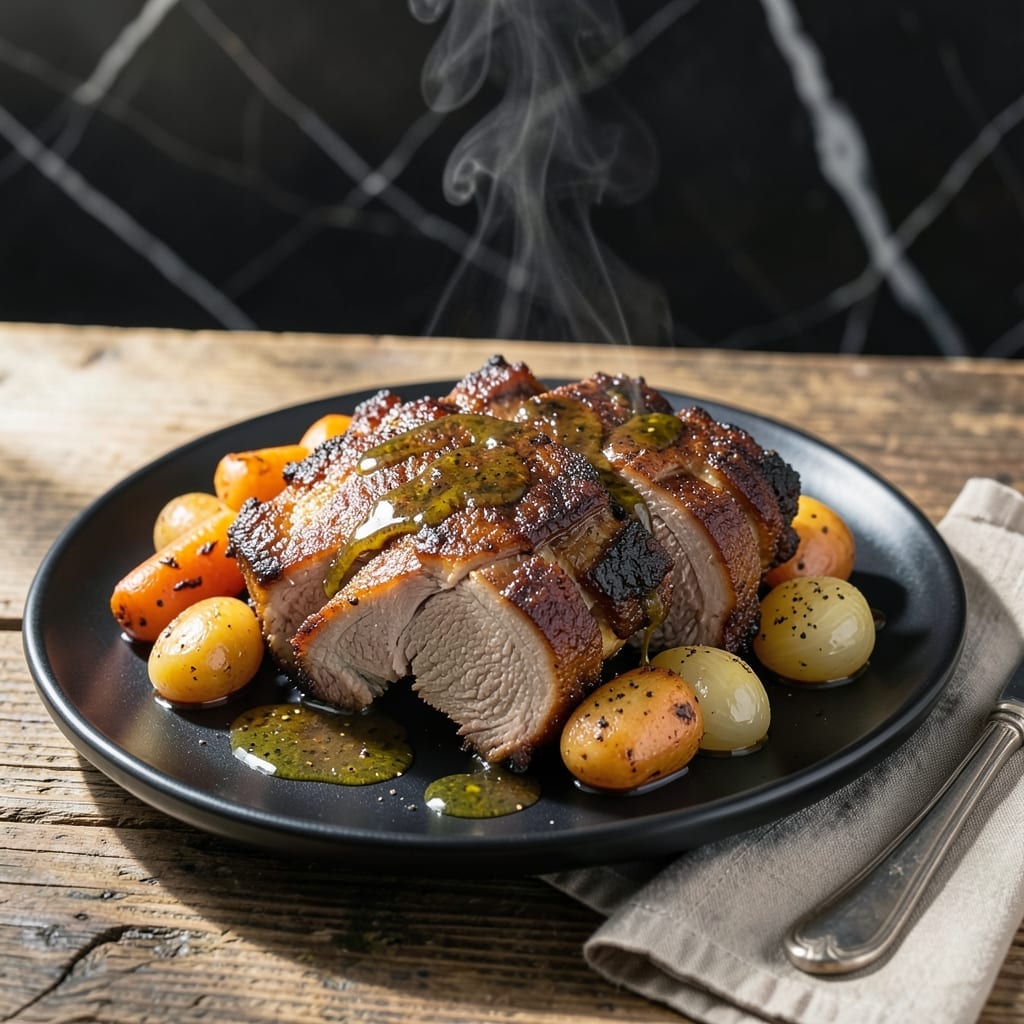
There’s nothing quite like the rich, deep flavor of slow-braised pork short ribs straight from the oven. This method transforms tough cuts into fall-off-the-bone tenderness while filling your kitchen with an irresistible aroma.
I developed this recipe in my tiny Boston kitchen, testing it repeatedly to ensure perfect results every time. The key is low heat and patience—allowing the connective tissue to melt into gelatin while the meat absorbs all the braising liquid’s complexity.
The process begins with searing the ribs to develop a caramelized crust, then braising them in a flavorful liquid until they’re impossibly tender. Each bite delivers layers of savory depth that make this dish worth the wait.
Serve these ribs over creamy polenta or buttery mashed potatoes to soak up every drop of the rich braising sauce. The result is a meal that feels special enough for company but simple enough for a Sunday supper.
Ingredients for Pork Short Ribs Recipe Oven
Rich, deep flavors come from simple ingredients and time in the oven.
| Ingredient | Amount | Notes |
|---|---|---|
| Pork Short Ribs 🥩 | 3 lb | Bone-in, English cut preferred |
| Kosher Salt 🧂 | 1 ½ tsp | Divided for seasoning and sauce |
| Black Pepper 🌶️ | 1 tsp | Freshly ground preferred |
| Olive Oil 🫒 | 2 tbsp | For searing ribs |
| Yellow Onion 🧅 | 1 whole | Large, diced |
| Garlic Cloves 🧄 | 6 cloves | Minced for braising liquid |
| Carrots 🥕 | 3 whole | Peeled and chopped |
| Celery Stalks 🥬 | 2 whole | Chopped for mirepoix |
| Tomato Paste 🍅 | 3 tbsp | For depth of flavor |
| Dry Red Wine 🍷 | 1 ½ cups | Bold variety like Cabernet Sauvignon |
| Beef Stock 🥣 | 2 cups | Low-sodium preferred |
| Fresh Thyme Sprigs 🌿 | 4 whole | Tied with kitchen twine |
| Bay Leaf 🍃 | 1 whole | Dried, for aroma |
| Balsamic Vinegar 🧈 | 2 tbsp | For acidity balance |
| Brown Sugar 🧈 | 1 tbsp | Light or dark variety |
[recipe_ingredient_scaler]
The pork short ribs are the star here. Bone-in, English-cut ribs (about 1.5 inches thick) give the best texture after braising. Look for ribs with good marbling at Whole Foods or your local butcher—Costco also carries them in bulk. The meat should be bright red with some fat; avoid ribs that look gray or dried out (trust me on this one). Patience is key—low heat transforms the connective tissue into melt-in-your-mouth gelatin.
No red wine? Beef broth with an extra tbsp of balsamic vinegar works in a pinch. Short on time? Substitute pre-chopped mirepoix from the grocery store. For the stock, Better Than Bouillon is a solid backup. The tomato paste can be swapped for tomato sauce reduced by half. If you can’t find fresh thyme, dried thyme at one-third the amount gets the job done (just tie it in cheesecloth).
Braised ribs taste even better the next day. Store in the fridge for up to 4 days or freeze for 3 months. To reheat, warm gently in the braising liquid to maintain moisture. The sauce thickens as it cools—just stir in a splash of stock when reheating (worth the extra minute).
Why You’ll Love This Recipe
- I’ll be real: this is my go-to when I need to feed six without breaking a sweat.
- Set It and Forget It: Honestly, I just season, sear, and let the oven do the heavy lifting for hours.
- Melt-in-Your-Mouth Tender: The slow roast turns the ribs so tender they fall off the bone, with onions caramelizing in the pan.
- Feeds a Hungry Crowd: I’ll be real: this is my go-to when I need to feed six without breaking a sweat.
Step-by-Step Instructions for Pork Short Ribs Oven
Here’s the method for achieving tender, fall-off-the-bone ribs with a rich, deeply flavored sauce.
Step 1: Season and Sear the Pork Short Ribs
Pat the 3 lb Pork Short Ribs dry with paper towels. Season generously with 1.5 tsp Kosher Salt and 1 tsp Black Pepper, ensuring all sides are evenly coated. This step builds flavor and creates a perfect crust when seared.
Heat 2 tbsp Olive Oil in a large Dutch oven over medium-high heat. Working in batches if necessary, sear the ribs for 3-4 minutes per side until deeply browned. The goal is a dark, caramelized crust that locks in juices and adds complexity to the dish. Remove ribs and set aside.
Step 2: Build the Aromatic Base
In the same pot, add the diced 1 whole Yellow Onion, chopped 3 whole Carrots, and chopped 2 whole Celery Stalks. Cook for 5-6 minutes until the vegetables soften and begin to caramelize.
Stir in minced 6 cloves Garlic Cloves and 3 tbsp Tomato Paste, cooking for 1-2 minutes until the tomato paste darkens slightly. This step deepens the umami flavor and creates a robust foundation for the braising liquid.
Step 3: Deglaze and Prepare the Braising Liquid
Pour in 1.5 cups Dry Red Wine, scraping the browned bits from the bottom of the pot with a wooden spoon. Let the wine simmer for 3-4 minutes until it reduces by half. This deglazing process captures all the concentrated flavors from searing.
Add 2 cups Beef Stock, 4 whole Fresh Thyme Sprigs, 1 whole Bay Leaf, 2 tbsp Balsamic Vinegar, and 1 tbsp Brown Sugar. Stir to combine, ensuring the brown sugar dissolves completely. The balsamic vinegar and brown sugar balance the richness with a touch of acidity and sweetness.
Step 4: Braise to Tender Perfection
Return the seared ribs to the pot, ensuring they are mostly submerged in the liquid. Cover tightly and transfer to a preheated 325°F oven. Braise for 2.5 to 3 hours, turning the ribs halfway through the cooking time.
Check for doneness by testing with a fork—the meat should pull away from the bone effortlessly. The ribs are finished when they reach an internal temperature of 195-200°F and the sauce has thickened slightly. This low-and-slow method guarantees melt-in-your-mouth tenderness.
Step 5: Rest and Serve
Remove the pot from the oven and let the ribs rest in the braising liquid for 10-15 minutes. This allows the juices to redistribute and the flavors to meld further. Skim any excess fat from the surface of the sauce before serving.
Serve the ribs hot, spooning the rich, aromatic sauce over the top. The sauce should be thick enough to coat the back of a spoon, with layers of depth from the wine, stock, and vegetables. Garnish with fresh thyme if desired.
Pro Tips For Making Pork Short Ribs Recipe Oven
- Dry the Ribs: Pat the pork short ribs completely dry with paper towels before seasoning—this guarantees a better sear and prevents steaming in the oven.
- Season Overnight: Salt and pepper the ribs at least 12 hours before cooking; I learned this the hard way after my first few batches tasted flat.
- Don’t Overcrowd: Leave space between ribs in the roasting pan so they brown instead of steam—yes, even if it means using two pans.
- Start Hot: Sear the ribs in a screaming-hot oven (450°F for 20 minutes) before dropping the temp to 325°F for the long braise.
Common Mistakes When Making Perfect Results
Skipping the Sear
I learned the hard way in my Boston kitchen that skipping the sear means missing out on the Maillard reaction. Those browned bits create the deep, complex flavor base for your sauce. Always sear the 3 lb Pork Short Ribs in 2 tbsp Olive Oil for 3-4 minutes per side until deeply browned. 🔥
Rushing the Braise
Low and slow is the only way to transform tough connective tissue into silky gelatin. Resist the urge to crank up the heat. Your 325°F oven needs 2.5 to 3 hours to work its magic—any faster and the meat will be tough and dry.
Overcrowding the Pot
If your Dutch oven is too full, the ribs will steam instead of sear properly. Work in batches if needed when browning the 3 lb of ribs. This gives each piece enough space to develop that perfect crust we talked about earlier.
Using the Wrong Cut
English-cut, bone-in ribs about 1.5 inches thick are ideal. Flanken-cut ribs won’t hold up to the long braise. I’ve tested this repeatedly in my tiny kitchen—trust me, the right cut makes all the difference.
Neglecting Liquid Levels
Check your braising liquid halfway through cooking. If it’s reduced too much, add ½ cup Beef Stock to keep the ribs mostly submerged. Without enough liquid, the meat will dry out and the sauce won’t develop its rich, velvety texture.
Skipping the Rest
Those 10-15 minutes of rest time aren’t optional. This lets the juices redistribute throughout the meat. Skipping this step means all that beautiful moisture will end up on your cutting board instead of in every bite. 💡
Nutrition Facts
Frequently Asked Questions
What oven temperature should I use?
Set your oven to 325°F for the perfect low-and-slow braise. This temperature allows the connective tissue to break down gradually without drying out the meat.
How long do I cook them?
Braise the ribs for 2.5 to 3 hours in the oven. This extended cooking time ensures the meat becomes fork-tender and absorbs all the rich flavors from the braising liquid.
Can I use a different liquid?
Yes! Swap the red wine for beef broth with an extra tbsp of balsamic vinegar. The acidity mimics wine’s depth, though the flavor will be slightly different.
How do I know they’re done?
Test with a fork—the meat should pull away from the bone effortlessly. The internal temperature should reach 195-200°F for fall-off-the-bone tenderness.

Trained in classic French technique but raised on slow-cooked ribs and spicy rubs, she blends culinary skill with smoke and soul.
- Recipe for Boneless Pork Chops in Cast Iron Skillet: Sear and Baste to Juicy Perfection - October 3, 2026
- Recipe for Boneless Cross Rib Roast: Slow-Roasted Beef with Herb Crust - October 3, 2026
- Hamburgers in Sauce Recipe Crock Pot: Slow-Cooked Savory Delight - October 3, 2026