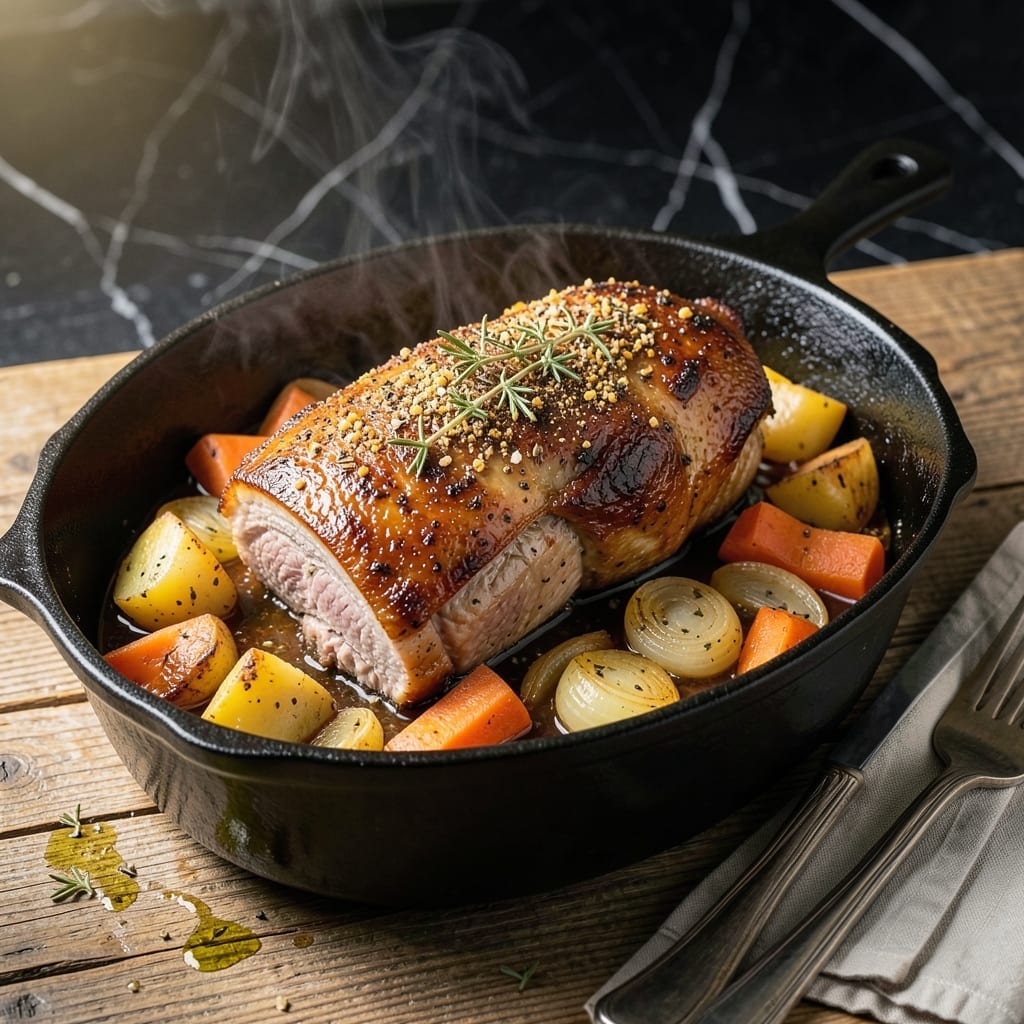
This pork shoulder blade roast transforms tough cuts into fall-apart tender meat with minimal effort. My Dutch oven method locks in moisture while creating a rich, caramelized crust that’s impossible to resist.
The secret lies in the slow braising process. A simple seasoning blend and a hot sear start the flavor development, while the covered Dutch oven finishes the job with steady, even heat.
By the time it comes out, you’ll have a roast with a deep brown exterior and meat so tender it pulls apart with a fork. The pan juices reduce into a natural sauce that’s perfect for serving.
Ideal for Sunday dinners or feeding a crowd. This technique never fails to deliver restaurant-quality results at home.
Ingredients for Pork Shoulder Blade Roast Recipe Dutch Oven
Few ingredients, bold flavor. The Dutch oven does all the heavy lifting here.
| Ingredient | Amount | Notes |
|---|---|---|
| Pork Shoulder Blade Roast 🥩 | 3 lb | Bone-in for best flavor |
| Kosher Salt 🧂 | 1 ½ tsp | Diamond Crystal preferred |
| Black Pepper 🌶️ | 1 tsp | Freshly ground for depth |
| Garlic Powder 🧄 | 1 tsp | Not garlic salt |
| Onion Powder 🧅 | 1 tsp | Balances the seasoning |
| Dried Thyme 🌿 | 1 tsp | Crushed between fingers |
| Dried Rosemary 🍃 | 1 tsp | Crushed to release oils |
| Olive Oil 🫒 | 2 tbsp | For searing and moisture |
| Yellow Onion 🧅 | 1 whole | Large, quartered for braising |
| Carrots 🥕 | 3 whole | Peeled, cut into chunks |
| Celery Stalks 🥬 | 2 whole | Cut into large pieces |
| Low-Sodium Chicken Broth 💧 | 2 cups | Or substitute beef broth |
| Bay Leaf 🌿 | 1 whole | For aromatic depth |
[recipe_ingredient_scaler]
The pork shoulder blade roast is non-negotiable—bone-in gives you that extra richness and moisture. Look for a well-marbled piece at Whole Foods or your local butcher; the fat cap should be about a quarter-inch thick. Avoid pre-cut chunks (they tend to dry out). Most grocery stores label this as ‘pork shoulder blade steak’ or ‘Boston butt.’ If you’re unsure, ask for the shoulder blade roast specifically.
No Dutch oven? A heavy-bottomed oven-safe pot with a tight lid works too. Short on broth? Water with a bouillon cube gets you close. The onion, carrots, and celery are flexible—swap in any hearty vegetables you’ve got (parsnips, potatoes, or even fennel). If you can’t find low-sodium broth, just reduce the salt in the seasoning blend by half.
Leftovers keep beautifully—store in the fridge for up to 4 days or freeze for 3 months. The meat actually tastes better the next day as the flavors meld. Reheat gently in a covered pot with a splash of broth to keep it moist.
Why You’ll Love This Recipe
- One Pan Wonder: I just season, sear, and let the Dutch oven do the work—no complicated steps.
- Deep, Rich Taste: The garlic and onion powders create a savory crust that’s ridiculously good.
- Feeds a Crowd: Between us, this roast stretches for days—perfect for Sunday dinner and leftovers.
- Budget Friendly: Honestly, pork shoulder is cheap, but it tastes like a million bucks.
Step-by-Step Instructions for Pork Shoulder Blade Roast Dutch Oven
Here’s the method that guarantees fall-apart tenderness with a rich, caramelized crust.
Step 1: Season and Sear the Pork Shoulder
Pat the 3 lb Pork Shoulder Blade Roast dry with paper towels—this ensures a proper sear. Rub it evenly with the 1.5 tsp Kosher Salt, 1 tsp Black Pepper, 1 tsp Garlic Powder, 1 tsp Onion Powder, 1 tsp Dried Thyme, and 1 tsp Dried Rosemary. Press the seasoning into the meat so it adheres well.
Heat the 2 tbsp Olive Oil in a Dutch oven over medium-high heat until it shimmers. Sear the pork on all sides for 3-4 minutes per side until deeply browned. You’ll know it’s ready to flip when it releases easily from the pot.
Step 2: Add Aromatics and Begin Braising
Remove the pork and set it aside. Reduce the heat to medium and add the 1 whole Yellow Onion, 3 whole Carrots, and 2 whole Celery Stalks to the Dutch oven. Cook for 4-5 minutes until the vegetables start to soften and brown slightly.
Return the pork to the pot, nestling it among the vegetables. Pour in the 2 cups Low-Sodium Chicken Broth and add the 1 whole Bay Leaf. The liquid should come about halfway up the pork—this creates the perfect environment for slow braising.
Step 3: Slow Braise Until Tender
Cover the Dutch oven with a tight-fitting lid and transfer it to a preheated 325°F oven. Braise for 2.5 to 3 hours, turning the pork every 45 minutes to ensure even cooking. The pork is done when it shreds easily with a fork and the internal temperature reaches 195-200°F.
This low-and-slow method breaks down the collagen in the pork, transforming it into gelatin that keeps the meat incredibly moist. The aromatics infuse the braising liquid with deep, savory flavor, while the crust develops a rich caramelization.
Step 4: Reduce the Sauce and Serve
Carefully remove the pork from the Dutch oven and transfer it to a cutting board. Tent it loosely with foil to keep it warm. Skim any excess fat from the surface of the braising liquid, then place the Dutch oven on the stovetop over medium heat.
Simmer the liquid for 8-10 minutes until it reduces slightly and thickens into a rich, glossy sauce. Discard the bay leaf, then slice or shred the pork. Serve it with the reduced sauce spooned over the top, along with the braised vegetables.
Pro Tips For Making Pork Shoulder Blade Roast Recipe Dutch Oven
- Sear Hard First: Crank the heat to medium-high and get a deep brown crust on all sides of the pork shoulder before adding any liquid—this builds flavor that slow cooking can’t replicate. I learned this the hard way after too many pale, bland roasts.
- Dry the Meat Well: Pat the pork shoulder completely dry with paper towels before seasoning. Sounds weird, but it works: wet meat steams instead of searing, and you’ll lose that crucial crispy exterior.
- Don’t Rush the Rest: Let the roast rest under foil for at least 15-20 minutes after pulling it from the Dutch oven. Skip this and all the juices will end up on your cutting board, not in the meat.
- Boost with Fresh Herbs: Toss a few sprigs of rosemary or thyme into the Dutch oven along with the dry rub—it’s a lazy upgrade that adds depth without extra effort. My grandmother swore by this, and she was right.
Health Benefits of These Flavors
Rich Protein Source
This dish delivers about 50g of protein per serving, supporting muscle repair and growth. The slow cooking process preserves all the natural amino acids, making it a complete protein source. I love how it keeps me full for hours after eating. 💪
Iron and Zinc Boost
Pork shoulder is packed with hemin iron, which your body absorbs more easily than plant-based iron. A 3-ounce serving provides about 15% of your daily iron needs, plus zinc for immune support.
B Vitamin Powerhouse
You’ll get a healthy dose of B12, thiamine, and niacin from this cut. These vitamins help convert food into energy and maintain a healthy nervous system. The Dutch oven method helps retain these water-soluble nutrients.
Healthy Fats
While it contains some saturated fat, pork shoulder also provides monounsaturated fats similar to olive oil. The marbling contributes to the tenderness and rich flavor. I always trim excess fat before cooking to balance indulgence with health.
Collagen Benefits
The slow braising breaks down collagen into gelatin, which supports joint health and digestion. That’s why the meat becomes so tender—it’s literally transforming tough connective tissue into something beneficial for your body.
Low-Carb Friendly
With virtually no carbs, this dish fits perfectly into keto or low-carb diets. The natural juices provide plenty of flavor without added sugars. Pair with roasted vegetables for a complete, satisfying meal. ✨
Nutrition Facts
Frequently Asked Questions
What temperature should the oven be set to?
Use 325°F for the ideal slow braise. This low-and-slow method ensures the collagen breaks down into tender gelatin while the exterior develops a rich caramelized crust.
How long do I cook the pork shoulder?
Braise for 2.5 to 3 hours, turning every 45 minutes. The roast is done when it shreds easily with a fork and reaches 195-200°F internally.
Can I use a different cut of pork?
Yes, but bone-in pork shoulder is best. Pork butt works too, though it may need 30 minutes extra. Avoid lean cuts like tenderloin—they’ll dry out during braising.
Why is my sauce too thin?
Simmer the braising liquid uncovered for 8-10 minutes after removing the pork. Skim excess fat first, then reduce to concentrate flavors into a glossy sauce.

Trained in classic French technique but raised on slow-cooked ribs and spicy rubs, she blends culinary skill with smoke and soul.
- Recipe for Boneless Pork Chops in Cast Iron Skillet: Sear and Baste to Juicy Perfection - October 3, 2026
- Recipe for Boneless Cross Rib Roast: Slow-Roasted Beef with Herb Crust - October 3, 2026
- Hamburgers in Sauce Recipe Crock Pot: Slow-Cooked Savory Delight - October 3, 2026