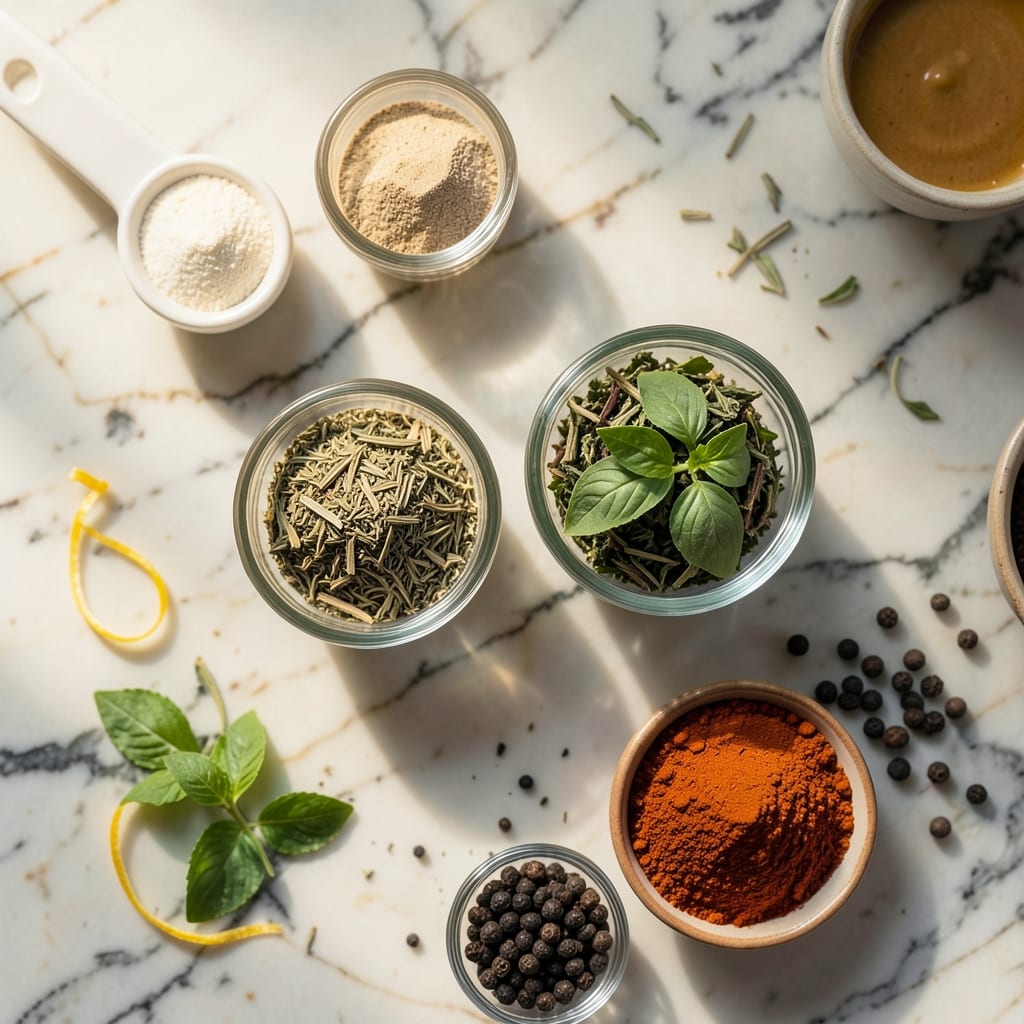
This pellet grill method delivers perfectly tender pork shoulder with a dark, flavorful bark every time. I developed this technique after years of competition cooking and backyard testing.
The key is low and slow smoking with the right wood blend, allowing the collagen to break down while building layers of smoky flavor. The result is fall-apart meat with that coveted crispy exterior.
Ingredients for Pork Shoulder Pellet Grill
These bold ingredients transform pork shoulder into wood-fired perfection with tender meat and crisp bark.
| Ingredient | Amount | Notes |
|---|---|---|
| Pork Shoulder 🥩 | 4 lb | Bone-in, skin removed |
| Yellow Mustard 🟡 | ¼ cup | For binder on rub |
| Brown Sugar 🍚 | ½ cup | Light or dark variety |
| Kosher Salt 🧂 | 2 tbsp | Diamond Crystal preferred |
| Black Pepper 🌶️ | 2 tbsp | Freshly ground coarse |
| Paprika 🌶️ | 1 tbsp | Smoked or sweet variety |
| Garlic Powder 🧄 | 1 tbsp | Not garlic salt |
| Onion Powder 🧅 | 1 tbsp | Fresh ground preferred |
| Cayenne Pepper 🔥 | ½ tsp | Adjust for heat preference |
| Apple Cider Vinegar 🍏 | ¼ cup | For bark development |
| Pellet Grill Wood Pellets 🪵 | 20 lb | Hickory and apple blend |
| Apple Juice 🍎 | 1 cup | For spritzing during cook |
| Unsalted Butter 🧈 | ½ cup | For finishing and serving |
[recipe_ingredient_scaler]
The pork shoulder is the foundation—bone-in provides more flavor and moisture. Most butcher shops or well-stocked supermarkets carry it, often labeled as pork butt. Ask for the skin to be removed if it’s still on. For the wood pellets, a hickory and apple blend delivers that classic competition balance of smokiness and sweetness, available at Home Depot or Ace Hardware.
No apple juice for spritzing? Apple cider or even water works in a pinch. Out of brown sugar? White sugar plus molasses at a 1:1 ratio gets you close. For the rub, freshly ground spices make a noticeable difference—pre-ground loses potency faster. The cayenne can be adjusted or omitted, but the paprika is non-negotiable for that signature bark color.
Store uncooked pork shoulder in the fridge for up to 3-4 days or freeze for 6-12 months. The rub can be mixed ahead and stored in an airtight container for 1 month. Pellets should be kept dry in their original bag or a sealed container.
Why You’ll Love This Recipe
- Set It & Forget: That pellet grill does all the work—I just rub the pork with mustard and spices, then let it smoke low and slow.
- Crispy Bark: The brown sugar caramelizes into this ridiculous crust that cracks with every bite.
- Feeds a Crowd: One shoulder gives me pulled pork for tacos, sandwiches, and a freezer stash for next week.
- Budget Hero: Pork shoulder is cheap, and this recipe turns it into something that tastes like a weekend splurge.
Step-by-Step Instructions for Pork Shoulder on Pellet Grill
Here’s the method that delivers competition-level results with minimal effort.
Step 1: Apply the Rub and Prepare the Shoulder
Pat the 4 lb pork shoulder dry with paper towels to ensure the rub adheres properly. In a bowl, mix 0.5 cup brown sugar, 2 tbsp kosher salt, 2 tbsp black pepper, 1 tbsp paprika, 1 tbsp garlic powder, 1 tbsp onion powder, and 0.5 tsp cayenne pepper until evenly combined.
Spread 0.25 cup yellow mustard thinly over the entire surface of the pork shoulder—this acts as a binder for the rub. Coat the meat generously with the spice mixture, pressing it into the surface so it forms a crust. Let the seasoned pork shoulder rest at room temperature for 30 minutes while you prepare the grill.
Step 2: Set Up the Pellet Grill for Low and Slow Cooking
Fill your pellet grill hopper with 20 lb pellet grill wood pellets—I prefer a hickory and apple blend for balanced smoke flavor. Preheat the grill to 225°F with the lid closed. This temperature ensures slow, even cooking that breaks down the connective tissue in the pork shoulder without drying it out.
Once the grill reaches temperature, place the pork shoulder directly on the grates, fat-side up. This position allows the fat to render and baste the meat as it cooks. Insert a meat probe into the thickest part of the shoulder to monitor the internal temperature throughout the cook.
Step 3: Smoke and Spritz for Bark Development
Smoke the pork shoulder undisturbed for the first 4 hours. After this initial period, begin spritzing the meat every 45-60 minutes with a mixture of 1 cup apple juice and 0.25 cup apple cider vinegar. This keeps the surface moist and helps build a dark, flavorful bark.
Continue smoking until the internal temperature reaches 165-170°F. At this point, you’ll likely hit “the stall,” where the temperature plateaus as moisture evaporates. Wrap the pork shoulder tightly in pink butcher paper or aluminum foil to push through this phase efficiently.
Step 4: Finish and Rest for Optimal Tenderness
Return the wrapped pork shoulder to the grill and continue cooking until the internal temperature reaches 200-203°F. This typically takes another 2-4 hours, depending on the size of the cut. The pork is done when a probe slides in and out of the thickest part with no resistance, like butter.
Remove the pork shoulder from the grill and let it rest, still wrapped, in a cooler or warm oven for at least 1 hour. This resting period allows the juices to redistribute and the collagen to fully break down, ensuring the meat is fall-apart tender when you serve it.
Step 5: Shred and Serve
Unwrap the pork shoulder and transfer it to a large cutting board or serving platter. Use two forks or meat claws to shred the meat, discarding any large fat chunks. The texture should be moist, tender, and easily pulled apart with minimal effort.
Drizzle the shredded pork with the rendered juices from the wrapping and finish with 0.5 cup unsalted butter for added richness. Serve immediately on buns or alongside your favorite sides, ensuring every bite delivers that perfect balance of smoky flavor and melt-in-your-mouth tenderness.
Pro Tips For Making Pork Shoulder Pellet Grill
- Start Low and Slow: I learned this the hard way—crank the pellet grill to 225°F and let that pork shoulder cook for at least 1.5 hours per pound. Anything higher and the fat won’t render properly, leaving you with a tougher cut.
- Score the Fat Cap: sounds weird, but it works: before rubbing with mustard and brown sugar, cut ¼-inch deep slits in the fat cap. This helps the seasoning penetrate and gives the bark that perfect texture.
- Skip the Over-Trimming: After burning three batches, I finally figured out that leaving a thin layer of fat (about ¼ inch) on the pork shoulder keeps it moist during the long cook. Trim too much and you’ll regret it.
- Rest Under Foil: give it a solid 30-45 minutes wrapped in foil after pulling it off the grill—this lets the juices redistribute. I skip this when I’m in a rush, but the meat is noticeably better when I don’t.
Creative Variations of This Recipe
Texas-Style Twist
Swap the brown sugar for 0.5 cup turbinado sugar and add 1 tbsp chili powder plus 1 tsp cumin to your rub. This gives a deeper, earthier profile that’s big at local BBQ competitions. I love how it pairs with the hickory smoke. 🔥
Carolina Vinegar Pull
After shredding, toss the pork with ½ cup apple cider vinegar, 1 tbsp brown sugar, and 1 tsp red pepper flakes for a tangy, thin sauce. This Eastern Carolina style cuts through the richness beautifully.
Asian-Inspired Glaze
In the last 30 minutes of cooking, brush the pork with a mix of ½ cup hoisin sauce, 2 tbsp soy sauce, and 1 tbsp honey. The sweet-savory glaze caramelizes into the bark for an umami punch.
Coffee-Rubbed Boldness
Add 2 tbsp finely ground dark coffee to your rub for a deep, slightly bitter note. It enhances the smokiness and works wonderfully with the apple juice spritz. I pick up my beans from the farmers market.
Honey-Glazed Finish
Before serving, drizzle warm honey mixed with 1 tsp cinnamon over the shredded pork. The floral sweetness contrasts the smoky depth, and it’s a hit at my coastal cookouts. 💛
Spicy Kick Variation
Increase the cayenne to 1 full teaspoon and add 1 tbsp chipotle powder to the rub. For extra heat, include 1 diced jalapeño in your spritz mixture. This brings the fire I crave after foraging wild peppers.
Nutrition Facts

Trained in classic French technique but raised on slow-cooked ribs and spicy rubs, she blends culinary skill with smoke and soul.
- Recipe for Boneless Pork Chops in Cast Iron Skillet: Sear and Baste to Juicy Perfection - October 3, 2026
- Recipe for Boneless Cross Rib Roast: Slow-Roasted Beef with Herb Crust - October 3, 2026
- Hamburgers in Sauce Recipe Crock Pot: Slow-Cooked Savory Delight - October 3, 2026