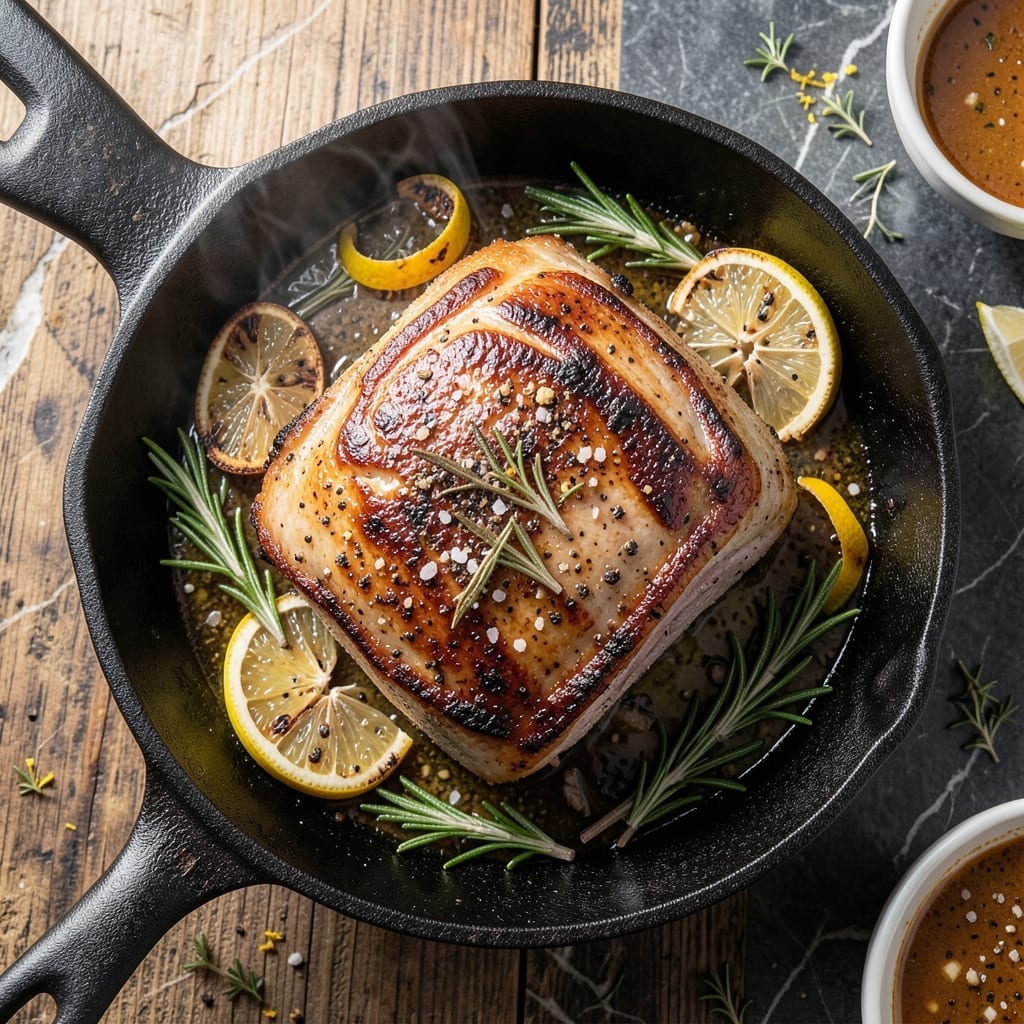
There’s nothing like the aroma of pellet-smoked pork shoulder slow-cooking to tender perfection. This method transforms tough cuts into fall-apart meat with a fragrant herb crust.
I’ve perfected this technique over years of competition cooking. The key is maintaining consistent low heat and letting the smoke work its magic for hours.
Ingredients for Pork Shoulder Roast Grill
Pellet-smoked pork shoulder and a vibrant herb crust deliver competition-level flavor at home.
| Ingredient | Amount | Notes |
|---|---|---|
| Pork Shoulder 🥩 | 4 lb | Bone-in, skin-on preferred |
| Kosher Salt 🧂 | 2 tbsp | Diamond Crystal preferred |
| Black Pepper 🌶️ | 2 tsp | Freshly ground, coarse |
| Garlic Powder 🧄 | 2 tsp | Not garlic salt |
| Onion Powder 🧅 | 2 tsp | Fine grind preferred |
| Dried Rosemary 🌿 | 1 tbsp | Crushed for herb crust |
| Dried Thyme 🍃 | 1 tbsp | Rubbed between fingers |
| Smoked Paprika 🌶️ | 1 tbsp | Sweet or hot variety |
| Olive Oil 🫒 | ¼ cup | For binding herb crust |
| Apple Cider Vinegar 🍏 | ¼ cup | For spritzing during smoke |
| Brown Sugar 🍚 | ¼ cup | Light or dark, packed |
| Wood Pellets 🪵 | 2 cups | Hickory or apple for smoke |
[recipe_ingredient_scaler]
The pork shoulder is non-negotiable—bone-in, skin-on yields superior moisture and bark formation. Source from Costco for consistent quality at volume, or ask your butcher for a Boston butt cut with good fat marbling. The wood pellets matter too: hickory delivers robust smoke, while apple offers a sweeter profile. Avoid mesquite—it can overpower the meat.
No smoked paprika? Regular paprika plus a pinch of liquid smoke works in a pinch. Fresh herbs can replace dried at three times the quantity, but dried adheres better to the crust. Brown sugar can be swapped for turbinado for a coarser texture. For the vinegar spritz, white vinegar is acceptable, though cider vinegar’s fruitiness complements pork better.
Store pork shoulder in the fridge for up to 3 days before cooking, or freeze for 6 months. The herb crust mix keeps indefinitely in a sealed jar. Leftovers? Shred and freeze for sandwiches or tacos—they’ll keep for 3 months without losing quality.
Why You’ll Love This Recipe
- Set It and Forget It: Honestly, just rub the shoulder with salt, pepper, garlic and onion powder, then let the grill do the heavy lifting.
- Smoky, Savory Crust: That mix of spices forms the most ridiculous bark—crispy outside, juicy inside.
- Feeds the Whole Crew: I’ve served this at summer barbecues and Sunday suppers alike, and it’s always the first thing to disappear.
- Leftovers for Days: One shoulder makes enough for sandwiches, tacos, or just picking straight from the fridge at midnight.
Step-by-Step Instructions for Pork Shoulder Roast Grill
Master the technique for fall-off-the-bone results with this proven method.
Step 1: Prepare the Herb Crust
In a bowl, combine the 2 tbsp Kosher Salt, 2 tsp Black Pepper, 2 tsp Garlic Powder, 2 tsp Onion Powder, 1 tbsp Dried Rosemary, 1 tbsp Dried Thyme, and 1 tbsp Smoked Paprika. Crush the rosemary between your fingers to release its aromatic oils.
Slowly drizzle in the 0.25 cup Olive Oil while stirring to create a thick, paste-like consistency. This herb mixture will form a flavorful crust that locks in moisture during the long cooking process. Set this mixture aside while you prepare the pork.
Step 2: Season and Prep the Pork Shoulder
Pat the 4 lb Pork Shoulder dry with paper towels to ensure the rub adheres properly. This step is crucial for developing a good bark. Apply the herb paste liberally to all sides of the pork, pressing it into the meat so it forms an even coating.
Let the seasoned pork sit at room temperature for 30-45 minutes while you prepare your grill. This allows the salt to begin penetrating the meat and the surface to dry slightly, which helps create that desirable crust.
Step 3: Set Up the Pellet Grill for Low and Slow Cooking
Fill your pellet grill’s hopper with the 2 cups Wood Pellets—hickory or apple wood work particularly well with pork. Preheat the grill to 225°F using the smoke setting if available. This low temperature allows the connective tissue in the pork shoulder to break down gradually.
Once preheated, place the pork shoulder directly on the grill grates, fat-side up. The fat cap will render down during cooking, basting the meat naturally. Insert a meat probe into the thickest part of the pork, avoiding the bone if possible.
Step 4: Smoke and Spritz for Maximum Tenderness
Smoke the pork undisturbed for 4-5 hours until it develops a dark, mahogany bark. After this time, begin spritzing the pork every 45-60 minutes with a mixture of the 0.25 cup Apple Cider Vinegar and 0.25 cup Brown Sugar dissolved in 1 cup of water.
This spritz not only adds flavor but also helps keep the surface moist during the long cook. Continue cooking until the internal temperature reaches 195-203°F—this is the sweet spot where collagen breaks down into gelatin, creating that signature pull-apart tenderness.
Step 5: Rest and Serve
When the pork reaches temperature, carefully remove it from the grill and wrap it tightly in foil. Let it rest for at least 1 hour (up to 2 hours is ideal). This resting period allows the juices to redistribute throughout the meat and the internal temperature to equalize.
Unwrap the pork and pull it apart with forks or shred it with meat claws. The meat should come apart with minimal effort, revealing moist, tender strands with that coveted smoke ring. Serve immediately with your favorite barbecue sauce or simply seasoned with additional salt and pepper.
Pro Tips For Making Pork Shoulder Roast Grill
- Dry the Pork: Pat the shoulder completely dry with paper towels before seasoning—I learned this the hard way after my first few attempts ended up steaming instead of searing.
- Low and Slow: Keep your grill between 225-250°F and give it 1.5-2 hours per pound. Sounds tedious, but it’s the only way to get that fall-apart texture.
- Don’t Rush the Rest: Let it rest under foil for at least 30 minutes after grilling, or all the juices will end up on your cutting board instead of in the meat.
- Boost the Rub: Mix your garlic and onion powder with the salt and pepper the night before—it wakes up the flavors and saves you time the next day.
Troubleshooting This Dish
Bark Not Forming
If your pork lacks that coveted dark crust, your grill temperature may be too low. I always check my probe thermometer—aim for consistent 225°F throughout the cook. Also, ensure you didn’t skimp on the herb crust application. 🌡️
Stall Happening Too Early
The stall (when temperature plateaus) often hits around 160-170°F. Don’t panic—this is normal. I wrap my pork in pink butcher paper at this point to push through. Avoid opening the grill during this phase to maintain steady heat.
Dry Meat Texture
Dry pork usually means it cooked too hot or too fast. Stick to 225°F and spritz with apple cider vinegar mixture every 45-60 minutes after the first 4-5 hours. I also
Uneven Cooking
If one side is cooking faster, rotate the pork 180 degrees halfway through. On my pellet grill, I’ve noticed the left side runs slightly hotter. Also, ensure your pork isn’t touching other pieces, which can create steam and slow cooking.
Weak Smoke Flavor
For stronger smoke, use hickory pellets and ensure your hopper stays at least half full. I learned this the hard way at a competition—running low on pellets gives you heat without smoke. Also, avoid peeking during the first 3 hours of cooking. 💡
Temperature Overshooting
If your pork is climbing past 203°F too quickly, your grill may be running hot. I adjust my pellet feed rate or add a water pan to stabilize. Remember, low and slow wins the race with pork shoulder.
Nutrition Facts
Frequently Asked Questions
What’s the ideal internal temperature for pull-apart tenderness?
Aim for 195-203°F internally. This range ensures collagen breaks down completely for that perfect melt-in-your-mouth texture.
How long should I let the pork rest after grilling?
Rest the pork wrapped in foil for at least 1 hour, up to 2 hours maximum. This allows juices to redistribute throughout the meat.
Can I use a gas grill instead of pellet?
Yes, but you’ll need to add wood chips for smoke flavor. Maintain 225°F and use indirect heat. The process takes the same amount of time.
Why is my bark not forming properly?
Check your grill temperature first—it should stay at 225°F. Also, ensure you applied the herb crust generously and didn’t skip drying the meat surface.

Trained in classic French technique but raised on slow-cooked ribs and spicy rubs, she blends culinary skill with smoke and soul.
- Recipe for Boneless Pork Chops in Cast Iron Skillet: Sear and Baste to Juicy Perfection - October 3, 2026
- Recipe for Boneless Cross Rib Roast: Slow-Roasted Beef with Herb Crust - October 3, 2026
- Hamburgers in Sauce Recipe Crock Pot: Slow-Cooked Savory Delight - October 3, 2026