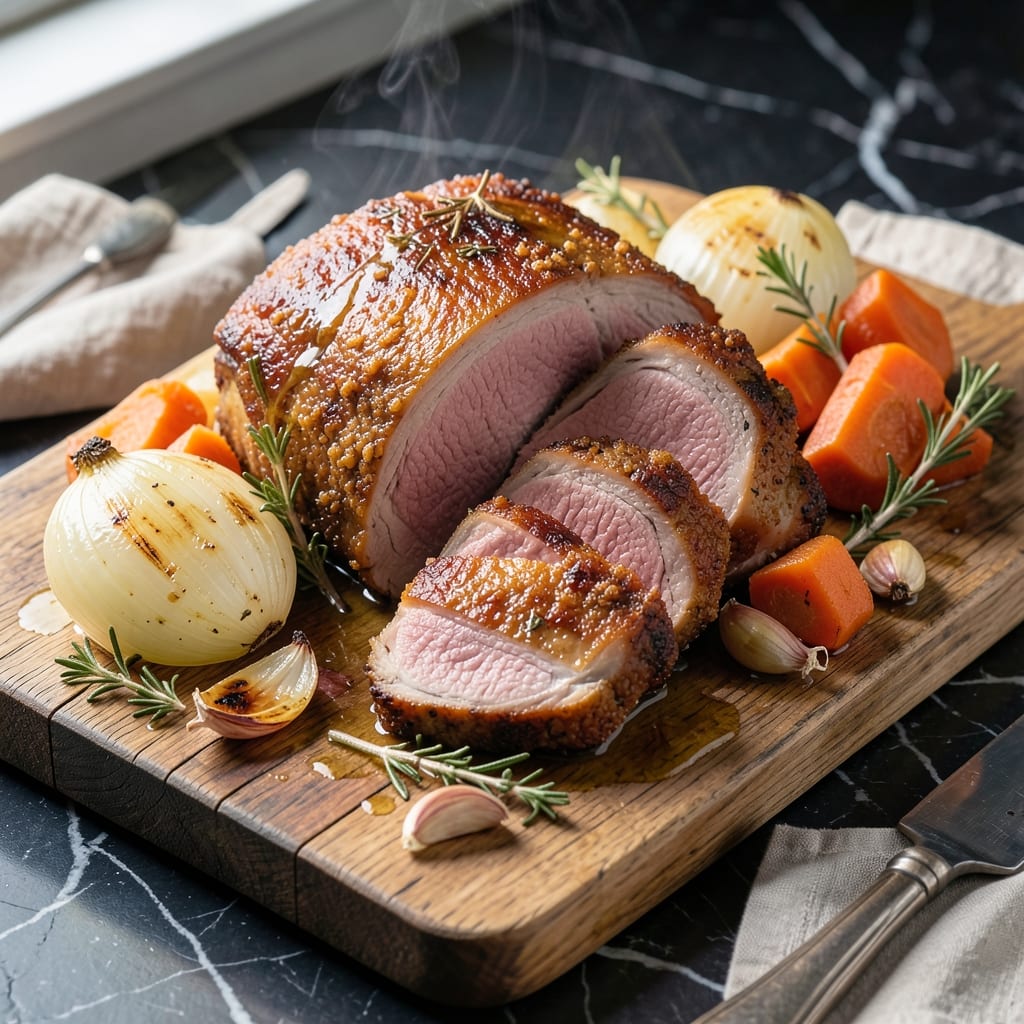
I developed this method after too many dry, tough roasts ruined family dinners in Portland. This approach guarantees tender results without the all-day commitment.
High heat and clever timing transform pork shoulder into pull-apart perfection in record time. No slow cooker needed—just your oven and quick attention to detail.
The secret is starting hot to sear, then reducing heat to lock in juices. By the time it rests, you’ll have meat that yields effortlessly to forks.
Serve this for Sunday supper or weeknight meals when craving restaurant-quality flavor. The process is straightforward, the outcome anything but ordinary.
Ingredients for Pork Shoulder Roast Recipe Oven Quick
Pantry staples and a few fresh additions bring this oven dish to life.
| Ingredient | Amount | Notes |
|---|---|---|
| Pork Shoulder 🥩 | 3 lb | Boneless, cut into large chunks |
| Kosher Salt 🧂 | 1 ½ tsp | Diamond Crystal preferred for even seasoning |
| Black Pepper 🌶️ | 1 tsp | Freshly ground for best flavor |
| Garlic Cloves 🧄 | 6 cloves | Smashed and peeled for robust aroma |
| Dried Rosemary 🌿 | 1 tbsp | Crushed to release essential oils |
| Dried Thyme 🍃 | 1 tbsp | Rubbed between fingers before use |
| Olive Oil 🫒 | 2 tbsp | Extra-virgin for high-heat searing |
| Onion 🧅 | 1 whole | Yellow or white, quartered |
| Carrots 🥕 | 3 whole | Peeled and cut into large pieces |
| Chicken Broth 🍲 | 1 cup | Low-sodium preferred for controlled seasoning |
| Apple Cider Vinegar 🍏 | 2 tbsp | Adds brightness to balance richness |
| Brown Sugar 🍚 | 1 tbsp | Light or dark for caramelization |
| Dijon Mustard 🟡 | 1 tbsp | Smooth variety for even coating |
[recipe_ingredient_scaler]
The pork shoulder is the star here. Look for bone-in if available—it adds depth, but boneless works too (just trim excess fat). Costco has great prices for larger cuts, or ask your butcher to break down a whole shoulder. Fresh herbs would be ideal, but dried work perfectly fine here—just make sure they’re not older than 6 months.
No dried rosemary? Fresh sprigs at double the amount work wonderfully. Out of Dijon? Whole-grain mustard adds a nice texture. For the broth, vegetable works in a pinch, but chicken gives the best flavor. The vinegar can be swapped for lemon juice if that’s what you’ve got on hand.
Leftovers keep beautifully—pack into airtight containers and refrigerate for up to 4 days. To freeze, portion into bags for 3 months. Reheat gently in the oven with a splash of broth to keep it juicy.
Why You’ll Love This Recipe
- One Pan Wonder: I toss the pork shoulder with salt, pepper, garlic, and rosemary, then let the oven do the rest.
- Deep Garlic Flavor: The garlic cloves soften into the meat, creating a rich, aromatic bite in every forkful.
- Feeds Everyone: It’s my go-to for Sunday dinner, weeknight leftovers, or even sandwiches the next day.
- Budget Hero: Pork shoulder stays affordable, and this recipe stretches it into multiple meals without fuss.
Step-by-Step Instructions for Pork Shoulder Roast
Here’s how I achieve fall-apart tender results in record time without sacrificing flavor.
Step 1: Season and Sear the Pork Shoulder
Pat the 3 lb Pork Shoulder chunks dry with paper towels—this ensures a good sear. Season aggressively with the 1.5 tsp Kosher Salt and 1 tsp Black Pepper, pressing the seasoning into the meat so it adheres well.
Heat the 2 tbsp Olive Oil in a large Dutch oven over medium-high heat until shimmering. Working in batches to avoid crowding, sear the pork chunks for 3-4 minutes per side until deep golden brown on all sides. This caramelization builds a flavor foundation that can’t be rushed.
Transfer the seared pork to a plate and set aside. The fond (browned bits) left in the pot will dissolve into your braising liquid, adding incredible depth to the final dish.
Step 2: Build the Aromatic Base
In the same Dutch oven, add the 1 whole Onion (quartered), 3 whole Carrots (cut into large pieces), 6 cloves Garlic Cloves (smashed), 1 tbsp Dried Rosemary, and 1 tbsp Dried Thyme. Cook for 3-4 minutes, stirring occasionally, until the vegetables begin to soften and the herbs release their fragrance.
Pour in the 2 tbsp Apple Cider Vinegar to deglaze, scraping up all those delicious browned bits from the bottom of the pot. The vinegar’s acidity will balance the richness of the pork beautifully.
Stir in the 1 tbsp Brown Sugar and 1 tbsp Dijon Mustard, cooking for 1 minute until the sugar dissolves and the mixture becomes slightly syrupy. This creates a sweet-tangy base that will infuse the pork as it cooks.
Step 3: Braise to Tender Perfection
Return the seared pork to the Dutch oven along with any accumulated juices. Pour in the 1 cup Chicken Broth, ensuring the liquid comes about halfway up the pork—this is the secret to quick yet thorough cooking.
Bring the mixture to a simmer, then reduce heat to medium-low, cover, and cook for 1.5 to 2 hours. You’ll know it’s done when the pork shreds easily with a fork and the liquid has reduced to a rich, flavorful sauce.
Check occasionally to ensure the liquid isn’t evaporating too quickly. If needed, add a splash of water to maintain the braising level. The pork is ready when it reaches an internal temperature of 195-200°F—this higher temperature breaks down the collagen for that melt-in-your-mouth texture.
Step 4: Shred and Serve
Once the pork is tender, remove it from the pot and place it on a cutting board. Using two forks, shred the meat into bite-sized pieces. Discard any large fat chunks, though a little marbling is good for flavor and moisture.
Skim excess fat from the surface of the braising liquid, then return the shredded pork to the pot. Toss to coat in the sauce, allowing the meat to soak up all those developed flavors for 5 minutes.
Serve immediately while hot, with plenty of the cooking liquid spooned over the top. The pork should be moist and tender, with the sauce clinging to each strand. This quick method delivers all the richness of a slow-cooked roast in a fraction of the time.
Pro Tips For Making Pork Shoulder Roast Recipe Oven Quick
- Crank the Heat: Start at 450°F for 20 minutes to get a deep crust on that pork shoulder, then drop to 325°F—this is how you get crispy edges without drying it out.
- Score the Fat: Cut 1/4-inch slits into the fat cap before seasoning so the salt, pepper, and rosemary actually penetrate, not just sit on top.
- Skip the Water Bath: I learned this the hard way—adding liquid to the pan steams the meat instead of roasting it, so keep it dry for that perfect brown exterior.
- Use Garlic Slivers: Slice the garlic cloves into thin slivers and press them into the scored fat instead of mincing—way more flavor with half the effort.
Troubleshooting This Dish
Dry Pork Solution
If your pork turns out dry, it likely didn’t reach the 195-200°F internal temperature needed to break down collagen. Next time, cook it covered for the full 2 hours and check with an instant-read thermometer. I keep a ThermoWorks Dot in my kitchen drawer for just this reason. 🌡️
Tough Meat Fix
Tough results usually mean the braising liquid evaporated too quickly. Add ½ cup water halfway through cooking if the pot looks dry. The liquid should always come about halfway up the pork chunks to ensure even cooking and moisture.
Sauce Too Thin
For a watery sauce, remove the lid and simmer uncovered for 10-15 minutes to reduce. If you’re in a hurry, mix 1 tsp cornstarch with 1 tbsp cold water and stir into the simmering sauce. It’ll thicken beautifully in just 2-3 minutes. 💡
Bland Flavor Boost
If the flavor seems flat, stir in 1 tbsp apple cider vinegar and 1 tsp brown sugar at the end. The acidity brightens the dish while the sugar balances it. I learned this trick from my Portland butcher—it works every time.
Uneven Cooking
Cut your pork into equal-sized chunks (about 2-3 inches) before searing. This ensures all pieces cook at the same rate. If using a bone-in shoulder, remember it may take 15-20 minutes longer to reach temperature.
Nutrition Facts
Frequently Asked Questions
Can I use a different cut of pork?
Pork butt works as a substitute, but avoid lean cuts like tenderloin. Shoulder’s fat and collagen melt during cooking, creating that signature tenderness.
Why start with high heat?
Searing at medium-high heat develops a deep brown crust, locking in juices and adding rich flavor. This step is non-negotiable for depth of taste.
How do I know it’s done?
The meat should reach 195-200°F internally and pull apart effortlessly with forks. If it resists, give it 15-30 minutes more.
Can I make this ahead?
Yes! Shred the pork and store it in its juices for up to 4 days. Reheat gently in the oven with a splash of broth.

Trained in classic French technique but raised on slow-cooked ribs and spicy rubs, she blends culinary skill with smoke and soul.
- Recipe for Boneless Pork Chops in Cast Iron Skillet: Sear and Baste to Juicy Perfection - October 3, 2026
- Recipe for Boneless Cross Rib Roast: Slow-Roasted Beef with Herb Crust - October 3, 2026
- Hamburgers in Sauce Recipe Crock Pot: Slow-Cooked Savory Delight - October 3, 2026