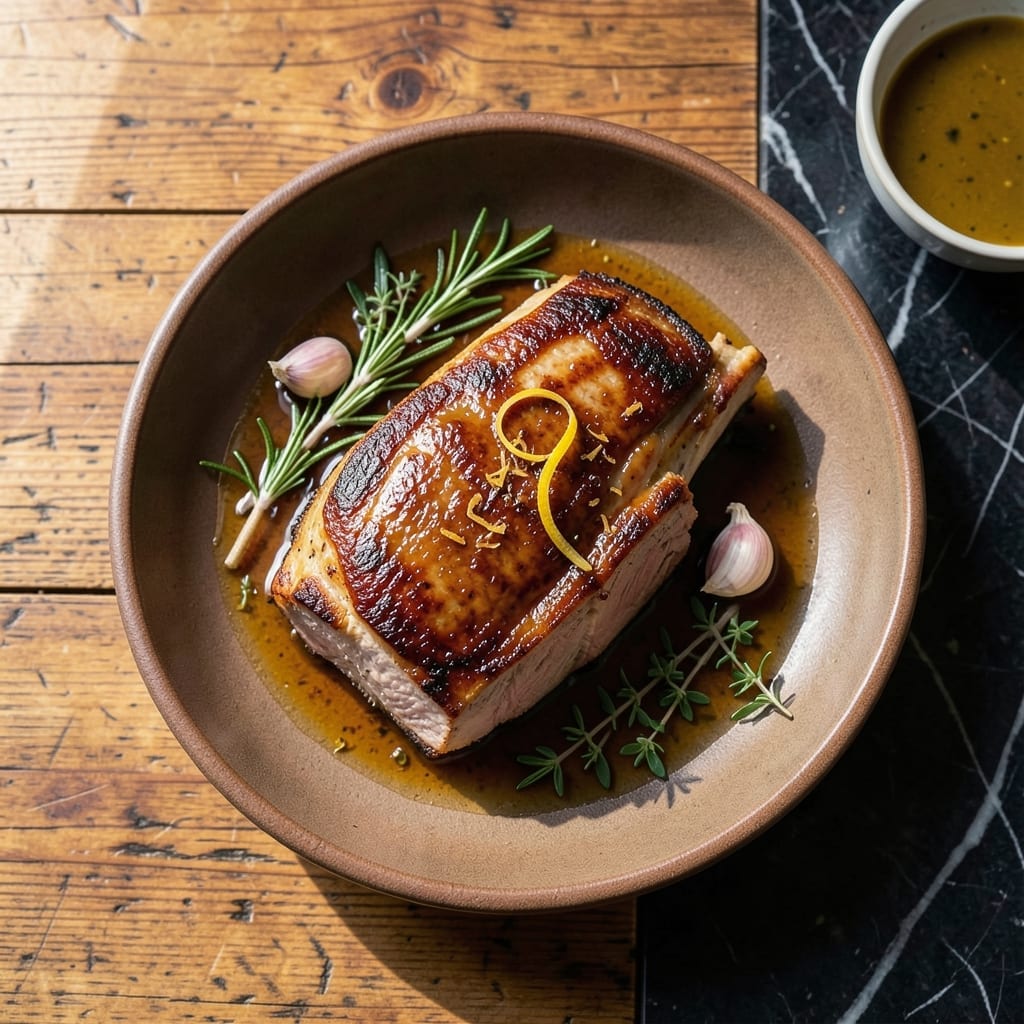
This bone-in pork sirloin roast delivers restaurant-quality results with a simple herb crust that forms a flavorful bark. The bone adds depth to every bite while keeping the meat juicy throughout.
I developed this method after years of testing, combining classic French technique with my pitmaster instincts. A high-heat sear locks in moisture before slower roasting develops that perfect caramelized exterior.
The herb crust creates an aromatic seal that enhances the pork’s natural richness. Each slice reveals tender meat with a golden, crispy exterior that crackles with every cut.
This roast makes an impressive centerpiece for Sunday dinner or special occasions, with leftovers that reheat beautifully for sandwiches.
Ingredients for Pork Sirloin Roast Bone In
Restaurant-quality pork sirloin starts with these bold, aromatic ingredients for herb-crusted perfection.
| Ingredient | Amount | Notes |
|---|---|---|
| Bone-In Pork Sirloin Roast 🥩 | 3 lb | Center-cut, well-marbled |
| Kosher Salt 🧂 | 2 tbsp | Diamond Crystal preferred |
| Black Peppercorns 🌶️ | 1 tbsp | Freshly cracked |
| Fresh Rosemary 🌿 | 3 tbsp | Finely chopped |
| Fresh Thyme 🍃 | 2 tbsp | Leaves stripped from stems |
| Garlic Cloves 🧄 | 6 cloves | Minced to paste |
| Dijon Mustard 🟡 | 3 tbsp | Whole-grain preferred |
| Olive Oil 🫒 | ¼ cup | Extra-virgin for crust |
| Red Wine Vinegar 🍷 | 1 tbsp | For acidity balance |
| Honey 🍯 | 1 tbsp | Local wildflower if available |
| Shallot 🧅 | 1 whole | Finely minced |
| Dry White Wine 🍾 | ½ cup | For deglazing pan |
| Chicken Stock 🥣 | 1 cup | Low-sodium preferred |
[recipe_ingredient_scaler]
The pork itself is critical. Center-cut bone-in sirloin from a reputable butcher like Whole Foods or local farms ensures ideal marbling and moisture. Look for vibrant pink color with visible fat streaking—this guarantees juiciness. The bones should appear moist, not dry or gray. For larger cuts, ask the butcher to French the bones (remove meat between them) for an impressive presentation comparable to high-end steakhouses.
Substitutions require careful balance. Pork loin can replace sirloin but lacks fat—add a tbsp of butter to the crust. No fresh herbs? Use dried at one-third the quantity, though fresh delivers superior aroma. For the wine, dry vermouth works equally well, or substitute apple cider vinegar plus water. The mustard is essential for crust adhesion—whole-grain provides best texture.
The roast can be dry-brined overnight (salt only) for enhanced flavor penetration. Refrigerate uncooked pork for up to 3 days. Cooked leftovers maintain quality for 4-5 days refrigerated or 3 months frozen. Slice only when ready to serve—this preserves moisture and the integrity of that coveted caramelized bark.
Why You’ll Love This Recipe
- Set It and Forget: I rub the roast with salt, pepper, rosemary, and thyme, pop it in the oven, and let the bone-in cut do all the work.
- Herb-Crusted Perfection: The fresh rosemary and thyme form this insane crust that makes every bite ridiculously good.
- Sunday Dinner Star: I serve this for family gatherings, but honestly, it’s just as good on a random Tuesday with leftovers for days.
- Budget-Friendly Feast: One affordable bone-in roast feeds my whole crew, and the leftovers stretch into sandwiches or tacos the next day.
Step-by-Step Instructions for Pork Sirloin Roast Bone-In
Master the technique for herb-crusted pork with caramelized edges and juicy interior.
Step 1: Prepare the Herb Marinade
In a bowl, combine the 3 tbsp Dijon Mustard, 0.25 cup Olive Oil, 1 tbsp Red Wine Vinegar, and 1 tbsp Honey. Whisk until the mixture emulsifies into a smooth, glossy paste.
Add the 3 tbsp Fresh Rosemary, 2 tbsp Fresh Thyme, 2 tbsp Kosher Salt, 1 tbsp Black Peppercorns, 6 cloves Garlic Cloves, and 1 whole Shallot to the bowl. Stir thoroughly to distribute the herbs and aromatics evenly throughout the marinade. This ensures every bite of the finished roast bursts with layered flavor.
Step 2: Coat and Marinate the Bone-In Pork Sirloin Roast
Pat the 3 lb Bone-In Pork Sirloin Roast dry with paper towels to remove excess moisture, which helps the marinade adhere better. Place the roast in a shallow dish or resealable bag and pour the herb marinade over it.
Rub the marinade into every surface, ensuring it coats the meat completely. Cover and refrigerate for at least 4 hours, or ideally overnight. The longer marinating time allows the flavors to penetrate deeply, while the acidity in the mustard and vinegar begins to tenderize the meat.
Step 3: Sear and Roast to Perfection
Preheat your oven to 425°F. Remove the roast from the marinade, letting excess drip off, and place it in a preheated oven-safe skillet or roasting pan over medium-high heat. Sear the roast on all sides for 2-3 minutes per side until a deep, golden crust forms.
Transfer the skillet or pan to the preheated oven and roast for 45-50 minutes, or until the internal temperature reaches 145°F. The searing step creates a flavorful fond in the pan, while the high-heat roasting ensures a caramelized exterior and juicy interior.
Step 4: Deglaze and Rest for Maximum Flavor
Remove the roast from the oven and transfer it to a cutting board. Tent loosely with foil and let it rest for 15 minutes. This resting period allows the juices to redistribute throughout the meat, ensuring a moist and tender result.
Place the skillet or pan on the stovetop over medium heat. Pour in the 0.5 cup Dry White Wine and scrape up the browned bits from the bottom of the pan. Simmer for 2-3 minutes until the liquid reduces by half, then add the 1 cup Chicken Stock and simmer for another 3-4 minutes until slightly thickened. This pan sauce captures all the concentrated flavors from the roasting process.
Pro Tips For Making Pork Sirloin Roast Bone In
- Dry the Roast: Pat the bone-in pork sirloin completely dry with paper towels before seasoning—moisture is the enemy of a good sear and I learned this the hard way after my first few roasts came out gray instead of golden.
- Start Hot: Sear the roast in a screaming-hot pan or oven (450°F minimum) for the first 15 minutes to lock in juices and get that crust everyone fights over at the table.
- Season Aggressively: Don’t be shy with the kosher salt—use about 1 teaspoon per pound, pressing it into the meat along with crushed peppercorns, rosemary, and thyme so the flavors actually stick.
- Rest Under Foil: Let the roast rest covered loosely with foil for at least 15 minutes after pulling it at 145°F internal temp—it keeps the juices from running all over the cutting board instead of staying in the meat.
Common Mistakes When Making Perfect Results
Skipping the Sear
That golden crust isn’t just for looks—it’s where the flavor lives. Skipping the sear means losing the Maillard reaction that creates those complex, meaty flavors. I always use my cast iron skillet for this step, getting it screaming hot before adding the roast. 🔥
Under-Seasoning
Bone-in cuts need bold seasoning to penetrate the meat. Don’t be shy with the kosher salt and fresh herbs in the marinade. I learned this the hard way at my first local BBQ competition—judges could always spot under-seasoned meat.
Rushing the Rest
Cutting too soon lets all those precious juices escape onto your cutting board. That 15-minute rest is non-negotiable for a juicy result. I use this time to make the pan sauce, so the timing works perfectly.
Overcooking
Pork sirloin roast is leaner than other cuts, so it dries out quickly. Pull it at exactly 145°F internal temperature—it’ll rise to 150°F while resting. My ThermoWorks instant-read is my most trusted kitchen tool for this.
Uneven Herb Coating
Glopping all the marinade on one side means uneven flavor. Take the extra minute to rub it into every crevice, especially around the bone. I find using my hands works better than any tool for this job.
Ignoring the Bone
The bone is your flavor ally, but it can cause uneven cooking. Position the roast bone-side down in the pan during searing to protect the meat. This technique also creates a beautiful presentation when sliced.
Nutrition Facts
Frequently Asked Questions
What internal temperature should I aim for?
Pull the roast at exactly 145°F internal temperature. It will rise to 150°F while resting, ensuring perfect doneness without drying out.
Can I use dried herbs instead of fresh?
Yes, but use one-third the amount since dried herbs are more concentrated. Fresh herbs deliver superior aroma and flavor for the crust.
How long should I let it rest before slicing?
A 15-minute rest is essential to let juices redistribute. Slicing too soon causes dry meat and lost flavor on the cutting board.
Why sear the roast first?
Searing creates a flavorful Maillard crust and develops complex meaty flavors. It also locks in moisture for juicier results.

Trained in classic French technique but raised on slow-cooked ribs and spicy rubs, she blends culinary skill with smoke and soul.
- Recipe for Boneless Pork Chops in Cast Iron Skillet: Sear and Baste to Juicy Perfection - October 3, 2026
- Recipe for Boneless Cross Rib Roast: Slow-Roasted Beef with Herb Crust - October 3, 2026
- Hamburgers in Sauce Recipe Crock Pot: Slow-Cooked Savory Delight - October 3, 2026