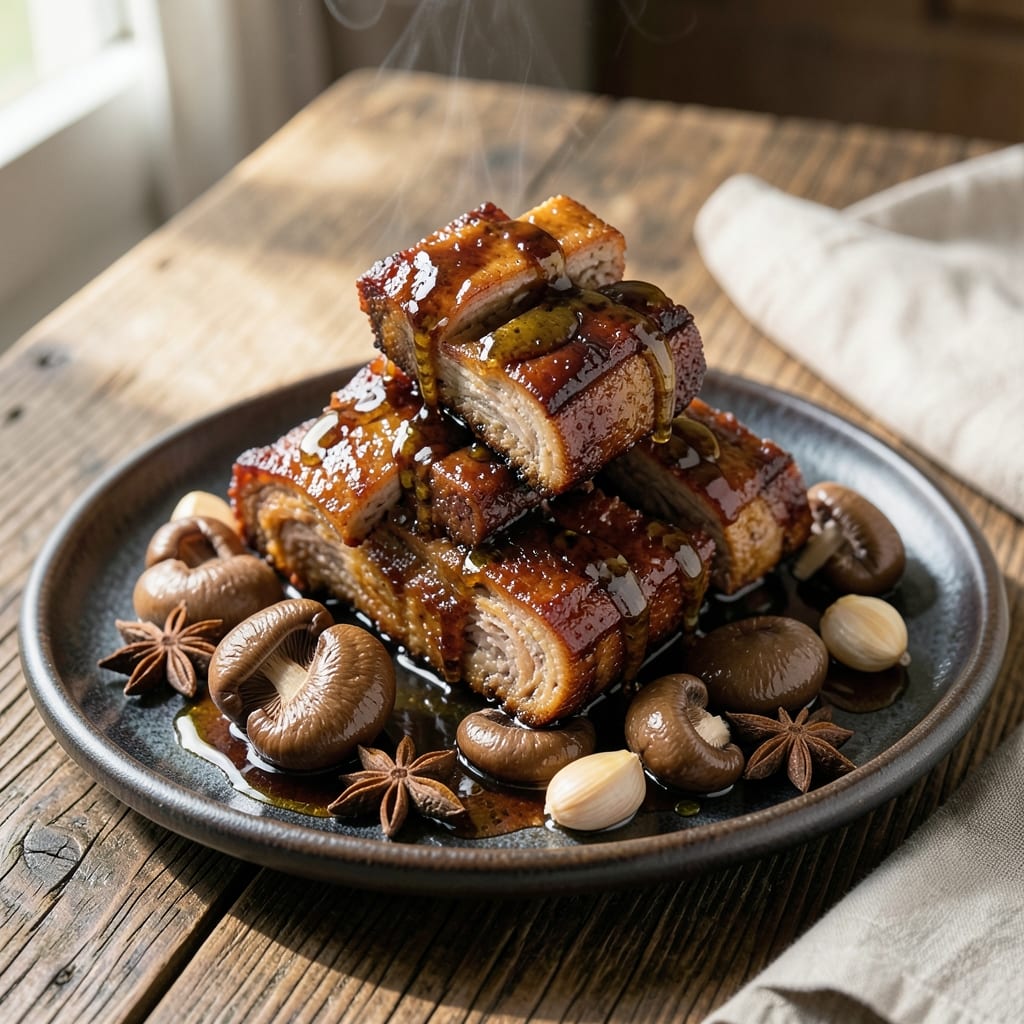
I learned this braising method from my grandmother’s notes, where she described the pork bones as becoming so tender they could be cut with a spoon.
This Chinese technique uses star anise and soy sauce to transform tough cuts into falling-off-the-bone perfection. The long, slow cooking coaxes out rich flavors while softening the meat completely.
The result is a dish with deep, aromatic sauce and meat that separates effortlessly from the bone. Every bite delivers the complex warmth of traditional Chinese spices.
Serve this over steamed rice to soak up every bit of the flavorful braising liquid. This method never fails to deliver restaurant-quality results at home.
Ingredients for Pork Soft Bone Recipe Chinese
Traditional Chinese spices and pork ribs create a deeply aromatic braise with spoon-tender results.
| Ingredient | Amount | Notes |
|---|---|---|
| Pork Spare Ribs 🍖 | 2 lb | Cut into 2-inch pieces, bone-in |
| Star Anise Pods ⭐ | 4 whole | Whole pods for infusion |
| Soy Sauce 🫕 | ½ cup | Dark soy for depth |
| Shaoxing Wine 🍶 | ¼ cup | Chinese rice wine essential |
| Rock Sugar 🍬 | 1 oz | Or substitute brown sugar |
| Garlic Cloves 🧄 | 6 cloves | Smashed for flavor release |
| Scallions 🧅 | 4 whole | Cut into 2-inch segments |
| Fresh Ginger 🌿 | 2 tbsp | Peeled, sliced into coins |
| Dried Shitake Mushrooms 🍄 | 4 whole | Rehydrated, stems removed |
| Water 💧 | 4 cups | Or substitute chicken stock |
| Vegetable Oil 🫒 | 2 tbsp | For searing pork |
| Cinnamon Stick 🌰 | 1 whole | 2-inch piece for aroma |
| Sichuan Peppercorns 🌶️ | 1 tsp | Optional for numbing spice |
| Salt 🧂 | 1 tsp | Adjust to taste |
[recipe_ingredient_scaler]
The pork spare ribs are non-negotiable here. Bone-in pieces (about 2 inches long) ensure the meat stays moist during the long braise. Most Asian grocery stores sell pre-cut ribs for hot pot—perfect for this. Look for ribs with good marbling; the fat renders down into the sauce. Star anise is widely available at Whole Foods or any international market, but avoid the pre-ground version—it lacks depth.
No Shaoxing wine? Dry sherry (not cooking sherry) works as a substitute. Rock sugar can be swapped for brown sugar, but it won’t have the same caramelized complexity. Fresh ginger is a must—peeled and sliced into coins for maximum surface area. If you can’t find dried shiake, fresh cremini mushrooms add a meaty texture, though the flavor will be milder. The cinnamon stick should be broken in half to release its aroma.
This braise improves overnight. Refrigerate in the liquid for up to 3 days—the flavors deepen and the meat becomes even more tender. Freezes beautifully for 3 months. Reheat gently to preserve the pork’s texture (it’s worth the extra minute).
Why You’ll Love This Recipe
- One Pot Wonder: I toss everything in, let it simmer, and the star anise and Shaoxing wine do all the work.
- Rich and Sticky: That rock sugar caramelizes into the soy sauce—deep, sweet, and finger-licking good.
- Weeknight Hero: It’s my go-to for busy evenings when I need something hearty with zero fuss.
- Leftovers Love: Honestly, it tastes even better the next day—if there’s any left.
Step-by-Step Instructions for Chinese Braised Pork Soft Bones
Master this technique for fall-off-the-bone tenderness with aromatic depth in every bite.
Step 1: Sear and Prepare the Aromatics
Heat the 2 tbsp vegetable oil in a heavy pot over medium-high heat until shimmering. Add the 2 lb pork spare ribs and sear until golden brown on all sides, about 5-6 minutes. This builds a flavor foundation and renders some fat.
Remove the ribs and set aside. In the same pot, add the 6 cloves garlic cloves, 4 whole scallions, 2 tbsp fresh ginger, 4 whole star anise pods, 1 whole cinnamon stick, and 1 tsp Sichuan peppercorns. Stir for 1-2 minutes until fragrant but not burnt.
Step 2: Build the Braising Liquid
Return the ribs to the pot. Add the 4 whole dried shitake mushrooms, 0.5 cup soy sauce, 0.25 cup Shaoxing wine, 1 oz rock sugar, 1 tsp salt, and 4 cups water. The liquid should just cover the ribs—add a splash more water if needed.
Bring to a boil, then reduce heat to maintain a gentle simmer. Skim off any foam that rises to the surface during the first 5 minutes. This ensures a clean, clear braising liquid with pure flavor.
Step 3: Braise to Melting Tenderness
Cover the pot and simmer on low heat for 1.5 to 2 hours. The ribs are done when the meat nearly falls off the bone when prodded with a fork. Resist the urge to stir frequently—this can break the ribs and cloud the sauce.
The sauce should reduce by about a third and take on a deep mahogany color from the soy. The star anise and cinnamon will infuse the liquid with warm, complex aromas that define this dish.
Step 4: Reduce and Finish
Uncover and increase heat to medium. Simmer for an additional 10-15 minutes to reduce the sauce to a glossy, syrupy consistency that clings to the ribs. The sauce should be thick enough to coat the back of a spoon.
Discard the cinnamon stick and star anise pods before serving. Taste and adjust seasoning if needed, though the flavors should be balanced from the initial measurements. Serve hot over steamed rice to soak up every bit of the rich sauce.
Pro Tips For Making Pork Soft Bone Recipe Chinese
- Blanch the Ribs: Parboil the spare ribs for 3-4 minutes in boiling water first to remove impurities and blood—this keeps your braising liquid clean and the final sauce a rich, deep brown instead of murky.
- Toast the Star Anise: Dry-toast the star anise pods in the pot for 30 seconds before adding liquids; it wakes up the oils and gives a more complex, aromatic base to the dish.
- Skip the Sugar Substitutes: Rock sugar might seem fussy, but it melts slowly and caramelizes evenly, balancing the soy and wine in a way granulated sugar just can’t.
- Simmer Low and Slow: After the initial boil, drop the heat to the lowest setting and let it bubble gently for at least 1.5 hours—rushing it with high heat leaves the meat tough and the bones stubbornly unyielding.
Common Mistakes When Making This Recipe
Skipping the Sear
I learned the hard way that browning the 2 lb pork spare ribs first is non-negotiable. Skipping this step means missing out on the deep, caramelized flavor base that defines this dish. The 5-6 minutes of searing also renders some fat, which prevents a greasy final sauce. 🔥
Overcrowding the Pot
Resist the urge to cram all the ribs into one layer. If your pot is too small, the meat will steam rather than sear initially, and the braising liquid won’t reduce properly. I use my 5-quart Dutch oven for this reason—it gives the ribs room to brown evenly.
Boiling the Sauce
Once you add the 4 cups water and other liquids, maintain a gentle simmer, not a rolling boil. Boiling toughens the meat and can cause the sauce to break. The first 5 minutes of skimming foam is crucial for a clean, glossy finish.
Impatient Braising
The 1.5 to 2 hours of low, covered simmering is what transforms tough ribs into spoon-tender perfection. I check at the 90-minute mark, but the meat often needs the full time. Rushing this step results in chewy, disappointing pork.
Discarding the Aromatics
While you should remove the cinnamon stick and star anise pods before serving, the dried shitake mushrooms and scallions are edible and packed with flavor. I often chop them and stir them back into the sauce for extra depth.
Skipping the Rest
This dish tastes even better the next day. Let it rest in the braising liquid for at least 30 minutes off the heat before serving. The flavors meld and the meat reabsorbs some of the sauce, making every bite richer. 💡
Nutrition Facts
Frequently Asked Questions
What cut of pork works best for this dish?
Use bone-in pork spare ribs cut into 2-inch pieces. The connective tissue breaks down during the long braise, creating that signature melting tenderness. Avoid lean cuts like tenderloin as they dry out.
Can I substitute ingredients if I can’t find star anise?
For a similar warm, licorice-like flavor, use 1 tsp five-spice powder or 1/2 tsp ground anise seed. The flavor won’t be as complex, but it’ll still be delicious.
How do I know when the pork is done?
The ribs are ready when the meat separates easily from the bone with gentle pressure. This usually takes 1.5 to 2 hours of simmering. If in doubt, give it more time—it’s hard to overcook.
Can I make this in a slow cooker?
Yes! Sear the ribs first, then transfer everything to a slow cooker. Cook on low for 6-8 hours or high for 4-5 hours. The result will be just as tender.

Trained in classic French technique but raised on slow-cooked ribs and spicy rubs, she blends culinary skill with smoke and soul.
- Recipe for Boneless Pork Chops in Cast Iron Skillet: Sear and Baste to Juicy Perfection - October 3, 2026
- Recipe for Boneless Cross Rib Roast: Slow-Roasted Beef with Herb Crust - October 3, 2026
- Hamburgers in Sauce Recipe Crock Pot: Slow-Cooked Savory Delight - October 3, 2026