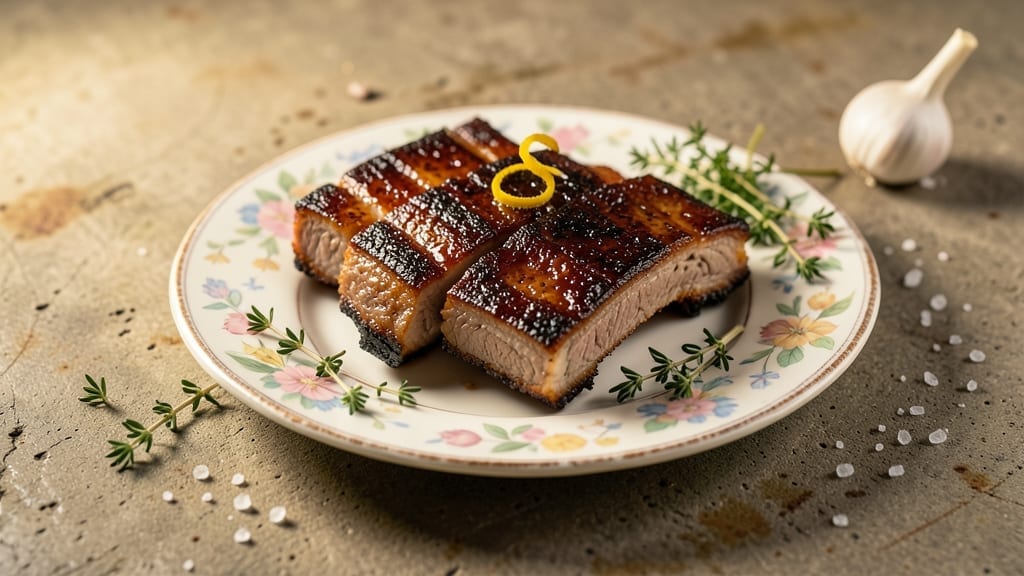
Mastering pork spare ribs in smoker recipe transforms tough cuts into melt-in-your-mouth perfection—just like my granddaddy taught me in those Georgia backyards. The key lies in low-and-slow precision at 225°F, where hickory smoke tenderizes the meat while forming that coveted bark.
This method builds flavor gradually over hours, letting the rub penetrate deep while the collagen breaks down naturally. I’ve perfected it over years of competing in the Southeast BBQ circuit, where judges demand both texture and taste.
The result? Ribs so tender they separate at the slightest touch, with a smoky-sweet crust that’s impossible to resist.
What sets this apart is the balance of time, temperature, and wood choice—hickory for depth, applewood for subtle sweetness. Every bite delivers that perfect harmony of smoky char and fall-off-the-bone tenderness. Trust me, once you try this, you’ll never buy store-bought again.
The best part? These ribs shine as a centerpiece, but pair them with buttery coleslaw and toasted buns for a full spread. Let’s get smoking—your taste buds will thank you.
Ingredients for pork spare ribs in smoker
A few pantry staples and some smoky magic transform tough ribs into melt-in-your-mouth perfection.
| Ingredient | Amount | Notes |
|---|---|---|
| Pork Spare Ribs 🥩 | 5 lb | Bone-in, trimmed of excess fat |
| Yellow Mustard 🧂 | ½ cup | For sticky base layer |
| Brown Sugar 🍯 | ½ cup | Light or dark variety |
| Smoked Paprika 🌶️ | 2 tbsp | Hot smoked preferred |
| Garlic Powder 🧄 | 1 tbsp | Freshly ground preferred |
| Onion Powder 🧅 | 1 tbsp | Diamond Crystal preferred |
| Ground Black Pepper 🌶️ | 1 tbsp | Freshly cracked |
| Kosher Salt 🧂 | 2 tbsp | Coarse grain preferred |
| Apple Cider Vinegar 🍎 | ¼ cup | For tangy balance |
| Hickory Wood Chips 🌳 | 2 cups | Unsoaked, 100% hickory |
| Apple Wood Chips 🍎 | 1 cup | For subtle sweetness |
| Worcestershire Sauce 🍶 | 2 tbsp | For umami depth |
| Unsalted Butter 🧈 | ½ cup | Melted for finishing |
| Fresh Cilantro 🌿 | ¼ cup | Chopped, for garnish |
[recipe_ingredient_scaler]
The ribs are everything here—look for bone-in spare ribs with good marbling, not those pre-cut slabs. Costco or your local butcher usually has the best cuts. If you’re buying a whole packer, trim the silver skin and excess fat yourself—it makes all the difference. The wood chips? 100% hickory and applewood only—no blends with fillers. I buy mine from Traeger or Pit Boss for consistency, but any quality brand works. Soak them for 30 minutes if your smoker runs dry, but honestly, I rarely bother—just check the water pan.
No smoked paprika? Substitute regular paprika plus a pinch of cayenne for heat. Running low on applewood? Cherry wood adds similar sweetness. The Worcestershire sauce is non-negotiable for that deep umami—Lea & Perrins is the gold standard, but any quality brand works. Fresh cilantro wilts fast, so buy it just before you plan to cook. Dried cilantro powder at half the amount is a decent pinch-hitter if you’re really stuck. The brown sugar can be swapped for turbinado or coconut sugar for different flavor profiles, but stick with light or dark brown for that classic BBQ sweetness.
These ribs need space—don’t overcrowd the smoker. 3-4 hours at 225°F is your sweet spot, but they’re done when they pull apart easily. Wrap them in foil with apple juice if they’re not tender enough after 3 hours—the Texas crutch, but it works. Store leftovers in the fridge for 4-5 days or freeze for 3 months. I always make double batches—they disappear fast around here. The bark is best eaten fresh, but the meat stays tender for days. Keep the smoker clean with aluminum foil trays for easy cleanup.
Why You’ll Love This Recipe
- I’ll be real: you’re going to make way too much. But that’s the beauty of it. These ribs keep like a dream for 4-5 days in the fridge, and they taste even better the second day. Freeze half for later, and you’ve got a secret weapon for game days or lazy Sundays. No stress, just deliciousness.
- No-Fuss Smoking: Honestly, this isn’t one of those recipes where you’re chopping onions for hours. Just pat those ribs dry, slather on the dry rub (smoked paprika and garlic powder make it so easy to stick), and let the smoker do the heavy lifting. The mustard-sugar base? Whisked together in minutes. I’ve made this while watching Netflix—trust me.
- Smoky Sweet Magic: That first bite? The crispy edge from the smoked paprika and brown sugar, the creamy fall-apart meat, and the tangy kick from the apple cider vinegar—it’s like a flavor explosion in your mouth. The hickory and apple wood chips give it that perfect smoky depth without overpowering. My family doesn’t even notice the ribs are pork anymore.
- Leftovers That Win: I’ll be real: you’re going to make way too much. But that’s the beauty of it. These ribs keep like a dream for 4-5 days in the fridge, and they taste even better the second day. Freeze half for later, and you’ve got a secret weapon for game days or lazy Sundays. No stress, just deliciousness.
Step-by-step instructions for smoky sweet pork spare ribs
Here’s how to transform tough pork spare ribs into tender, fall-apart perfection with a perfect balance of smoky heat and sweet tang.
Prepare the Ribs with the Dry Rub
In a large bowl, combine the 2 tablespoons smoked paprika, 1 tablespoon garlic powder, 1 tablespoon onion powder, 1 tablespoon ground black pepper, and 2 tablespoons kosher salt. Mix thoroughly until the spices are evenly distributed and there are no visible streaks of salt or pepper.
Pat the 5 lb pork spare ribs dry with paper towels—this is crucial for developing that coveted bark. Then, generously coat each rib with the dry rub mixture, pressing it into the meat so it adheres well. Place the ribs on a wire rack set over a baking sheet and refrigerate uncovered for at least 1 hour (or up to 12 hours for deeper flavor penetration). This drying step ensures the mustard base will stick properly later.
Create the Mustard-Sugar Base and Set Up the Smoker
In a small bowl, whisk together the ½ cup yellow mustard, ½ cup brown sugar, ¼ cup apple cider vinegar, and 2 tablespoons Worcestershire sauce until smooth and fully combined. This mixture will form the sticky, caramelized crust that keeps the ribs moist during the long cook.
While the ribs dry, prepare your smoker by filling the wood chip tray with 2 cups hickory wood chips and 1 cup apple wood chips. Soak them in water for 30 minutes if your smoker requires it, then drain. Set your smoker to 225°F and allow it to preheat for 15-20 minutes until you see steady, thin blue smoke—this indicates the ideal cooking temperature for tenderizing the meat without burning the wood.
Smoke the Ribs Low and Slow
Once the smoker reaches 225°F, place the rubbed ribs on the smoker grates, bone-side down. Brush each rib generously with the mustard-sugar mixture, making sure to coat all surfaces evenly. Close the lid and smoke the ribs for 3 hours, resisting the urge to peek—every time you open the lid, you lose heat and moisture.
After 3 hours, flip the ribs bone-side up and brush them again with the remaining mustard mixture. Continue smoking for another 2-3 hours, or until the internal temperature reaches 195°F and the ribs pull away from the bones with slight resistance. The bark should be deep amber with some caramelization—this is your signal that the collagen has broken down into gelatin, creating that signature tenderness.
Finish with Butter and Cilantro
When the ribs reach 195°F, remove them from the smoker and transfer to a cutting board. Let them rest for 10 minutes before slicing between the bones. Melt the ½ cup unsalted butter in a small saucepan over low heat, then stir in the ¼ cup chopped fresh cilantro until the cilantro is just wilted but still vibrant.
Drizzle the melted butter mixture over the sliced ribs and serve immediately. The butter adds richness and helps distribute the smoky flavors, while the cilantro brightens the dish with a fresh contrast. Each bite should deliver a perfect harmony of smoky, sweet, and tangy notes with meat that falls apart at the touch.
Pro Tips For Making Pork Spare Ribs In Smoker
- Skip the Vinegar Shortcut: I learned this the hard way—skipping the apple cider vinegar makes the mustard-sugar base cling like glue, but it loses that bright tang that cuts through the sweetness. If you’re in a rush, swap in a splash of lemon juice (same amount), but don’t skip it entirely—your ribs will taste flat.
- Don’t Rush the Mustard Mix: Whisk that mustard-sugar base until it’s completely smooth—no streaks of sugar or lumps of mustard. I used to eyeball it, but clumps burn unevenly and leave dry spots. Take the extra 30 seconds now to save yourself from gummy ribs later.
- Watch the Wood Chips: Those 2 cups hickory and 1 cup apple wood chips? Don’t overload the tray. I once packed them too tight, and they smoked like a campfire instead of giving steady, thin blue smoke. Loose and even is the key—your ribs will thank you with consistent flavor.
- Press the Rub Hard: Coating the ribs with the dry rub is half the battle, but pressing it in—really pressing—makes the difference between flavor clinging to the meat and falling off. I used to tap it lightly, but now I rub it in like I’m polishing silver. The bark will be worth it.
Common mistakes when making great pork spare ribs in smoker
Overcrowding the Smoker
One of my biggest pet peeves is when beginners cram ribs too close together on the smoker grates. This traps smoke and heat, creating uneven cooking and soggy bark.
I learned this the hard way during my first Southeast BBQ competition—my ribs were done at 225°F but stuck together like glue. Leave at least 2 inches between racks to allow proper airflow.
If you’re working with a large batch, cook in two batches instead of forcing them all in at once. 🔥
Skipping the Dry Rub Rest
Pat those ribs dry and let the dry rub sit uncovered for at least 1 hour—this isn’t optional. I’ve seen cooks rush this step, thinking it’s just “seasoning,” but it’s crucial for developing that perfect bark.
The drying process helps the mustard base stick better and creates a better Maillard reaction when smoked. If you skip this, your ribs will be bland and lack that coveted crust. Trust me, I’ve made that mistake—twice.
Ignoring the Stall Phase
The 160-170°F temperature range is where ribs hit their infamous “stall”—they stop cooking temporarily while the collagen breaks down. Many cooks panic and crank up the heat, which burns the bark.
Instead, I wrap mine in foil with apple juice (the Texas crutch) for 1-2 hours to help them through this phase. This keeps the moisture in and prevents the bark from turning to charcoal. Patience is key here—don’t rush it!
Inconsistent Wood Choice
Using mixed wood chips or cheap fillers ruins the flavor balance. I’ve tried everything from oak to mesquite, but 100% hickory and applewood is my holy grail combo—hickory for depth, applewood for sweetness. Avoid blends with sawdust or fillers; they burn too fast and leave an ashy taste.
Soak them for 30 minutes if your smoker runs dry, but don’t overdo it—wet wood smokes poorly. Quality matters more than quantity here.
Rushing the Rest Time
After smoking, ribs need to rest for at least 10 minutes before slicing. I’ve seen cooks impatiently cut into them immediately, and the juices run everywhere. Resting lets the meat redistribute its juices, keeping each bite tender.
I even wrap them in a towel and let them sit in a cooler for 30 minutes if I’m making a big batch. This extra step makes all the difference in texture—trust the process!
Nutrition facts
Frequently asked questions
Why does the recipe recommend smoking at 225°F instead of higher heat?
Smoking at 225°F is key for tenderizing tough pork spare ribs. This low-and-slow method breaks down collagen gradually, creating melt-in-your-mouth texture without burning the exterior. Higher heat risks drying out the meat while the bark forms too quickly. It’s the secret to that perfect balance of smoky flavor and fall-apart tenderness!
Can I use a pellet grill instead of a traditional smoker?
A pellet grill works perfectly for this recipe. Just set it to 225°F and use the same wood chip blend (hickory and applewood). The consistent temperature control mimics a traditional smoker, and the flavor profile stays identical. I’ve competed successfully using both methods—just monitor the smoke output closely.
What if my ribs aren’t tender after 5 hours of smoking?
Try the “Texas crutch” method: wrap the ribs tightly in foil with apple juice, then return them to the smoker for 1-2 hours. This keeps moisture in while helping the collagen break down. If they’re still tough, increase the smoke time by 30-60 minutes until they pull apart easily. Patience is worth it for that perfect texture!
How do I store the mustard-sugar mixture if I don’t use it all?
Store any leftover mixture in an airtight container in the fridge for up to 1 week. For longer storage, freeze it in ice cube trays—just thaw and use as needed. The mixture keeps its sticky texture perfectly, so it’s great for future smoking sessions. No waste here!

Trained in classic French technique but raised on slow-cooked ribs and spicy rubs, she blends culinary skill with smoke and soul.
- Smoked Chicken Salad Recipe: Crispy, Smoky Bites With Creamy Ranch Dressing - October 19, 2026
- Beer Can Chicken in a Smoker Recipe: Juicy, Herbed Perfection in One Can - October 19, 2026
- Brined Beef Brisket Recipe: Ultra-Tender, Juicy Cuts in One Pot - October 19, 2026