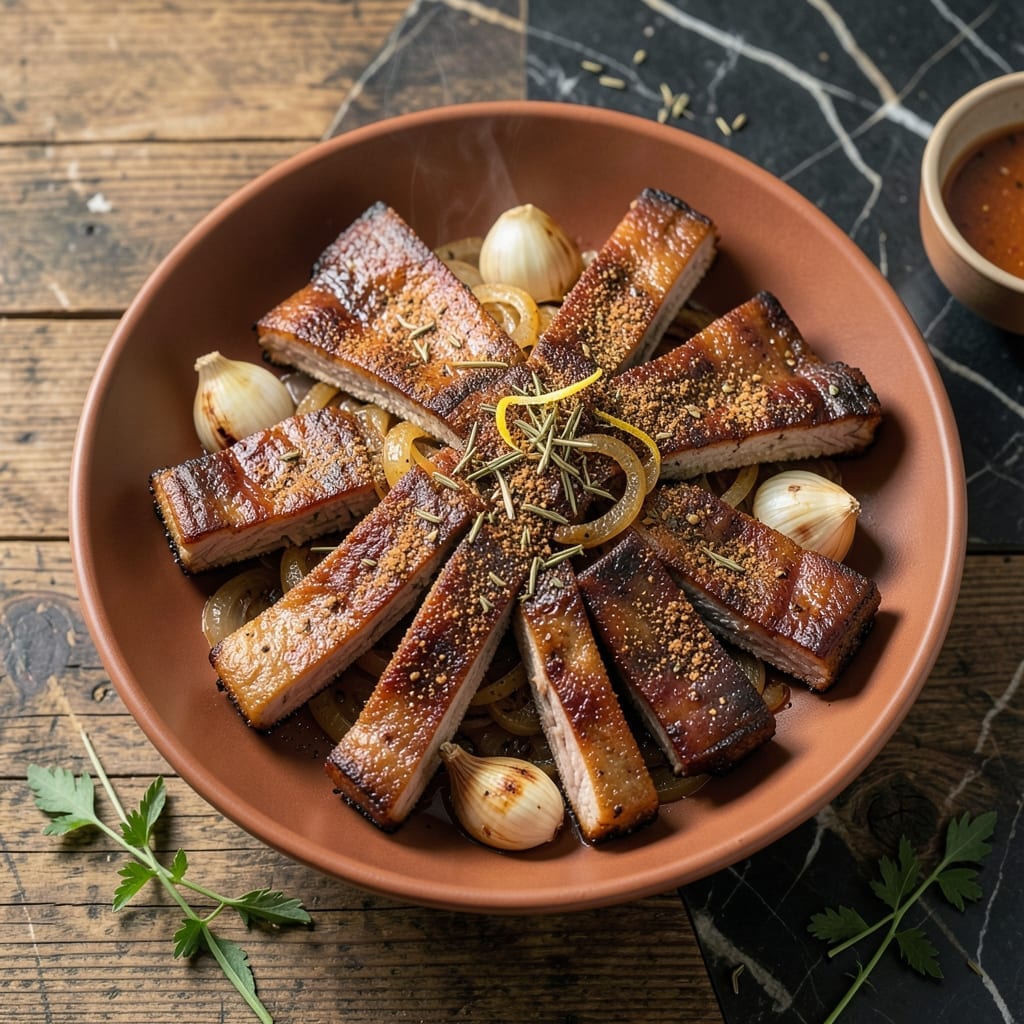
Forget the smoker—this method delivers fall-off-the-bone pork spare ribs using just your oven. Slow-braised to perfection, this technique transforms tough cuts into melting tenderness.
I developed this approach after years of backyard cookouts, focusing on tender results without the smoke. The secret lies in low heat and a flavorful braising liquid that works its magic over time.
Ingredients for Pork Spare Ribs Recipe Not Bbq
These quality ingredients create meltingly tender oven-braised pork spare ribs without smoke.
| Ingredient | Amount | Notes |
|---|---|---|
| Pork Spare Ribs 🥩 | 3 lb | Full slab, membrane removed |
| Kosher Salt 🧂 | 2 tbsp | Diamond Crystal preferred |
| Black Pepper 🌶️ | 1 tbsp | Freshly cracked preferred |
| Smoked Paprika 🌶️ | 2 tsp | For depth of flavor |
| Garlic Powder 🧄 | 2 tsp | Not garlic salt |
| Onion Powder 🧅 | 2 tsp | Fresh ground preferred |
| Dried Thyme 🌿 | 1 tsp | Rubbed between fingers |
| Dried Rosemary 🌿 | 1 tsp | Crushed before adding |
| Olive Oil 🫒 | 2 tbsp | For searing ribs |
| Apple Cider Vinegar 🍏 | ½ cup | For braising liquid |
| Low-Sodium Chicken Broth 🥣 | 2 cups | Homemade or quality boxed |
| Brown Sugar 🍚 | ¼ cup | Light or dark variety |
| Tomato Paste 🍅 | 2 tbsp | For richness in sauce |
| Yellow Onion 🧅 | 1 whole | Medium, thinly sliced |
| Carrots 🥕 | 2 whole | Medium, chopped into chunks |
[recipe_ingredient_scaler]
The pork spare ribs are paramount here. Look for well-marbled slabs at your butcher or Costco—avoid pre-trimmed cuts, as the fat renders down beautifully during braising. Diamond Crystal kosher salt is ideal for even seasoning. The spices should be fresh; if your paprika has lost its vibrant color, replace it. Professional kitchens always toast their spices, but this recipe skips that step for simplicity.
No apple cider vinegar? White wine vinegar or lemon juice works in a pinch. Brown sugar can be swapped for honey or maple syrup, though the flavor profile will shift slightly. If you lack tomato paste, 1/4 cup ketchup adds similar depth. The chicken broth can be vegetable broth for a lighter touch. Always use low-sodium to control seasoning—reducing the liquid concentrates the saltiness.
Braised ribs taste even better the next day. Store leftovers in an airtight container for up to 4 days. The ribs can also be frozen for 3 months—vacuum-seal for best results. Reheat gently in the oven to maintain tenderness, adding a splash of broth if needed.
Why You’ll Love This Recipe
- One Pan Wonder: I toss the ribs with salt, pepper, smoked paprika, and garlic powder, then let the oven do the work—no flipping, no fuss.
- Smoky Depth: The smoked paprika and garlic powder give these ribs a rich, savory crust that’s anything but bland.
- Feeds a Crowd: I make a big batch for Sunday dinner, and the leftovers disappear by Tuesday.
- Budget Winner: Pork spare ribs are affordable, and a few pantry spices turn them into something special.
Step-by-Step Instructions for Pork Spare Ribs Not BBQ
This oven-braising method transforms the ribs into fall-off-the-bone perfection with minimal effort.
Step 1: Season and Sear the Pork Spare Ribs
Pat the 3 lb Pork Spare Ribs completely dry with paper towels to ensure proper browning. In a small bowl, combine the 2 tbsp Kosher Salt, 1 tbsp Black Pepper, 2 tsp Smoked Paprika, 2 tsp Garlic Powder, 2 tsp Onion Powder, 1 tsp Dried Thyme, and 1 tsp Dried Rosemary. Rub this mixture evenly over all surfaces of the ribs, pressing it in so it adheres well.
Heat the 2 tbsp Olive Oil in a large Dutch oven over medium-high heat. When the oil shimmers, add the ribs and sear for 4-5 minutes per side until deeply browned. This step builds a flavorful crust and renders some of the fat, which enhances the braising liquid later.
Step 2: Build the Braising Liquid
Remove the ribs and set them aside on a plate. In the same Dutch oven, add the thinly sliced 1 whole Yellow Onion and chopped 2 whole Carrots. Sauté for 3-4 minutes until the vegetables begin to soften and take on some color.
Stir in the 2 tbsp Tomato Paste and cook for 1 minute to deepen its flavor. Pour in the 0.5 cup Apple Cider Vinegar, scraping up any browned bits from the bottom of the pot. Add the 2 cups Low-Sodium Chicken Broth and 0.25 cup Brown Sugar, stirring until the sugar dissolves.
Step 3: Braise to Melting Tenderness
Return the ribs to the Dutch oven, submerging them in the liquid as much as possible. Cover the pot tightly with a lid and transfer it to a preheated 325°F oven. Braise for 2.5 to 3 hours, occasionally turning the ribs to ensure even cooking.
You’ll know the ribs are done when the meat pulls away from the bone easily and a fork slides in with minimal resistance. The braising liquid should be rich and slightly reduced, coating the back of a spoon. If the liquid reduces too much during cooking, add a splash of water or additional chicken broth to maintain the level.
Step 4: Reduce the Sauce and Serve
Carefully transfer the ribs to a serving platter. Skim any excess fat from the surface of the braising liquid, then place the Dutch oven on the stovetop over medium heat. Simmer for 5-7 minutes until the sauce thickens slightly and intensifies in flavor.
Spoon the reduced sauce over the ribs and serve immediately. The meat should be so tender it nearly falls off the bone, with a rich, savory-sweet glaze clinging to every bite. This dish pairs well with mashed potatoes or crusty bread to soak up the sauce.
Pro Tips For Making Pork Spare Ribs Recipe Not Bbq
- Dry the Ribs: Pat the spare ribs thoroughly dry with paper towels before seasoning—this guarantees the spices stick and the meat browns properly instead of steaming.
- Season Overnight: Rub the ribs with kosher salt, black pepper, smoked paprika, and garlic powder at least 12 hours ahead; the salt penetrates deep, giving you flavor all the way through.
- Skip the Boil: I learned this the hard way—parboiling ribs washes away flavor and texture; just roast or braise them low and slow instead.
- Use a Rack: Place the ribs on a wire rack over a baking sheet so air circulates underneath, preventing soggy bottoms and ensuring even cooking.
Pro Cooking Tips for Perfect Results
Perfect Searing
Pat the ribs completely dry before searing to achieve that deep, caramelized crust. I use paper towels and press firmly to remove all moisture. A dry surface ensures the Maillard reaction works its magic, creating complex flavors that define this dish. 🔥
Low and Slow Braising
Maintain a consistent 325°F oven temperature throughout the braise. I check mine with an oven thermometer—many home ovens run hot or cold. This gentle heat breaks down collagen without drying the meat, resulting in that signature tenderness.
Liquid Level Control
Check the braising liquid every 45 minutes and add ½ cup hot broth if it reduces too much. The ribs should be mostly submerged, but not drowning. This prevents the top portions from drying out while the bottom sections braise perfectly.
Sauce Reduction
After removing the ribs, skim the fat with a wide spoon before reducing. I like to tilt the Dutch oven slightly to pool the fat for easier removal. Simmer the sauce until it coats the back of a spoon—about 5-7 minutes at medium heat. 💡
Resting Time
Let the ribs rest for 10-15 minutes before serving. This allows the juices to redistribute throughout the meat. I cover them loosely with foil to keep warm while finishing the sauce.
Serving Temperature
Serve the ribs while still warm, but not piping hot. The flavors are most harmonious at about 140°F. I use a digital probe thermometer to check, ensuring each bite delivers that perfect balance of tenderness and flavor.
Nutrition Facts

Trained in classic French technique but raised on slow-cooked ribs and spicy rubs, she blends culinary skill with smoke and soul.
- Recipe for Boneless Pork Chops in Cast Iron Skillet: Sear and Baste to Juicy Perfection - October 3, 2026
- Recipe for Boneless Cross Rib Roast: Slow-Roasted Beef with Herb Crust - October 3, 2026
- Hamburgers in Sauce Recipe Crock Pot: Slow-Cooked Savory Delight - October 3, 2026