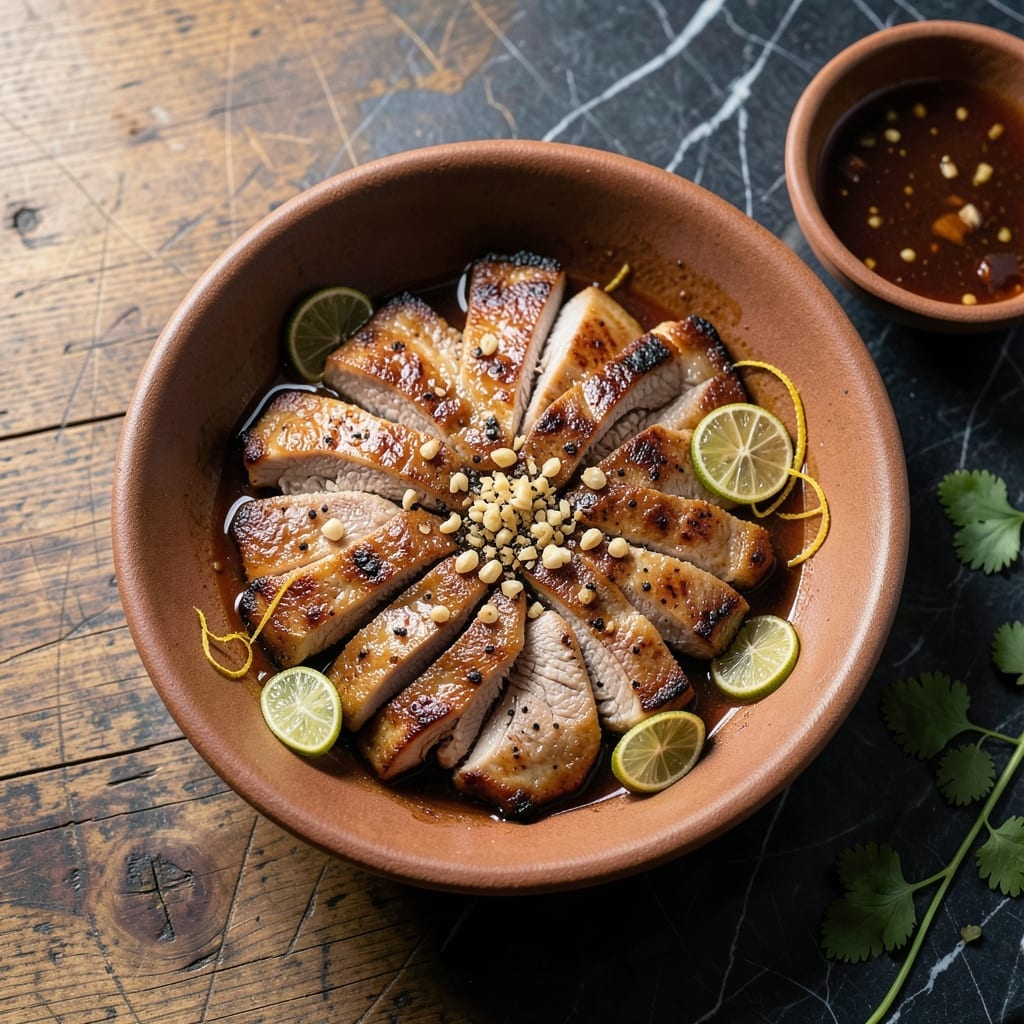
Filipino-style pork steak brings bold, tangy flavors to the dinner table with a marinade that transforms simple ingredients into something extraordinary. This recipe captures the essence of Pinoy home cooking with its perfect balance of savory, sweet, and citrus notes.
The marinade combines soy sauce, calamansi juice, and garlic to create a base that’s both aromatic and deeply flavorful. I’ve tested this method repeatedly in my own kitchen to ensure the pork becomes incredibly tender while absorbing all those rich, complex flavors.
What emerges from the pan is juicy, caramelized pork with a glistening, slightly sticky exterior. Each bite delivers the signature Pinoy taste that’s both comforting and crave-worthy, making this dish a family favorite.
Serve with steamed rice to soak up every drop of the flavorful sauce. Here’s how to make this authentic creation at home.
Ingredients for Pork Steak Recipe Pinoy Style
Thin-cut pork shoulder soaks up a bold soy-calamansi marinade with garlic and brown sugar.
| Ingredient | Amount | Notes |
|---|---|---|
| Pork Shoulder 🥩 | 1 ½ lb | Thinly sliced into steaks |
| Soy Sauce 🫒 | ½ cup | Low-sodium preferred |
| Calamansi Juice 🍊 | ⅓ cup | Freshly squeezed or bottled |
| Garlic Cloves 🧄 | 6 cloves | Minced finely |
| Brown Sugar 🍚 | 2 tbsp | Packed for sweetness |
| Black Pepper 🌶️ | 1 tsp | Freshly ground preferred |
| Onion 🧅 | 1 whole | Thinly sliced into rings |
| Vegetable Oil 🫒 | 2 tbsp | For pan-frying |
| Water 💧 | ¼ cup | To thin marinade if needed |
| Bay Leaves 🍃 | 2 pieces | Dried, for marinade |
| Lime 🍈 | 1 whole | As calamansi substitute |
| Green Onions 🌱 | 3 whole | Chopped, for garnish |
[recipe_ingredient_scaler]
The pork shoulder is ideal here—look for well-marbled cuts at your butcher or Costco. Thin slicing (about 1/4-inch thick) ensures maximum flavor absorption and quick cooking. Calamansi juice is traditional, but lime juice makes an excellent substitute. For the soy sauce, Silver Swan or Datu Puti brands are authentic Filipino choices that deliver the right balance of salt and umami.
Need to swap calamansi? Fresh lemon or lime juice works perfectly at a 1:1 ratio. No brown sugar? Coconut sugar or white sugar can replace it, though brown sugar adds depth. If you skip the bay leaves, add a pinch of ground allspice for similar aromatic complexity. The onions can be red or white, whichever you have on hand.
Marinate the pork for at least 2 hours (overnight for best results). Cooked pork keeps in the fridge for 3-4 days and freezes well for up to 3 months. Reheat gently to preserve the caramelized crust.
Why You’ll Love This Recipe
- One Pan Wonder: I just toss the pork shoulder in soy sauce, calamansi, and garlic, then let it work its magic in a single pan.
- Sweet-Savory Magic: The brown sugar caramelizes with the soy and calamansi for that sticky, tangy-sweet glaze I can’t resist.
- Weeknight Hero: Honestly, it’s my go-to when I need something quick but still packed with flavor for the family.
- Stretches Far: A kilo of pork shoulder feeds us for two meals, and the leftovers taste even better the next day.
Step-by-Step Instructions for Pork Steak Pinoy Style
Master the technique behind this Filipino classic with precise timing and sensory cues.
Step 1: Prepare the Soy-Calamansi Marinade
In a large bowl, combine the 0.5 cup Soy Sauce, 0.33 cup Calamansi Juice, minced 6 cloves Garlic Cloves, 2 tbsp Brown Sugar, and 1 tsp Black Pepper. Whisk vigorously until the brown sugar dissolves completely—this ensures even flavor distribution.
Add the 2 pieces Bay Leaves and 0.25 cup Water, then stir to incorporate. The marinade should have a balanced sweet-savory aroma with a slight tang from the calamansi. If using lime as a substitute, juice it fresh for the best results.
Step 2: Marinate the Pork Shoulder
Place the thinly sliced 1.5 lb Pork Shoulder into the marinade, ensuring each piece is fully submerged. Cover the bowl with plastic wrap and refrigerate. For optimal flavor penetration, marinate for at least 2 hours, but preferably overnight.
I recommend flipping the pork steaks halfway through the marinating time to guarantee even exposure. The meat should absorb the liquid, turning slightly darker in color, and the onion slices will soften as they soak up the soy-calamansi mixture.
Step 3: Pan-Fry the Pork Steaks
Heat 2 tbsp Vegetable Oil in a large skillet over medium-high heat until shimmering. Remove the pork from the marinade, reserving the liquid, and pat the steaks dry with paper towels—this prevents steaming and promotes proper browning.
Cook the pork steaks in batches for 3-4 minutes per side until deep golden brown and cooked through. The edges should develop a slight crust while the interior remains juicy. Avoid overcrowding the pan to maintain consistent heat.
Step 4: Reduce the Marinade into a Sauce
In the same skillet, add the thinly sliced 1 whole Onion and sauté for 2-3 minutes until translucent. Pour in the reserved marinade and bring to a gentle simmer. Cook for 5-7 minutes until the liquid reduces by half, creating a glossy, slightly thickened sauce.
Taste and adjust seasoning if needed, though the soy-calamansi balance should already be well-developed. The sauce will intensify in flavor as it reduces, coating the back of a spoon when ready.
Step 5: Serve with Fresh Garnish
Return the cooked pork steaks to the skillet, spooning the reduced sauce over them. Simmer for an additional 1-2 minutes to allow the flavors to meld. Transfer to a serving platter and garnish with chopped 3 whole Green Onions for a fresh, vibrant finish.
Serve immediately while the pork is still tender and the sauce is at its peak consistency. The dish should have a harmonious blend of savory, tangy, and slightly sweet notes with each bite.
Pro Tips For Making Pork Steak Recipe Pinoy Style
- Score the Meat: Cut shallow slits into the pork shoulder before marinating so the calamansi and soy sauce penetrate deeper—I learned this the hard way after my first few steaks tasted bland on the inside.
- Balance the Marinade: Use a 1:1 ratio of soy sauce to calamansi juice, then add brown sugar to taste—my grandmother swore by this, and it keeps the flavors bright without being too salty or sour.
- Skip Overcrowding: Cook the pork steaks in batches if needed, or they’ll steam instead of sear. After burning three batches, I finally figured out that patience is what gets that caramelized crust.
- Rest Before Slicing: Let the steaks rest for 5-10 minutes after cooking, tented with foil, so the juices redistribute. Sounds weird, but it works: your pork stays tender instead of drying out on the plate.
Creative Variations of This Recipe
Sweet Pineapple Glaze
I love adding a tropical twist by mixing ½ cup pineapple juice and 2 tbsp brown sugar to the marinade. Simmer the pork in this mixture for 5 minutes at the end for a sticky, sweet glaze that pairs perfectly with the soy-calamansi base. 🌟
Spicy Adobo Kick
For heat lovers, stir in 1 tbsp chili flakes or 2 chopped siling labuyo (Filipino bird’s eye chili) into the marinade. The spice cuts through the richness beautifully. I often add a dash of vinegar for extra tang.
Coconut Milk Braise
Replace the water with ½ cup coconut milk for a creamier, more mellow flavor. The coconut softens the acidity while adding richness. Simmer the pork in this mixture for 10 minutes until the sauce thickens.
Lemon-Grass Infusion
Add 2 stalks bruised lemongrass to the marinade for a citrusy, floral note. Remove before cooking. This variation reminds me of the aromatic dishes from my Nonna’s kitchen, though with a distinctly Pinoy flair.
Honey-Soy Variation
Swap the brown sugar for 3 tbsp honey for a smoother, more floral sweetness. The honey caramelizes beautifully, giving the pork a glossy finish. Drizzle extra on top just before serving.
This works especially well when grilling the pork steaks instead of pan-frying.
Nutrition Facts
Frequently Asked Questions
Can I use other pork cuts for this recipe?
Yes! While pork shoulder is ideal, you can use pork loin or tenderloin. Just slice them thinly and reduce cooking time to 2-3 minutes per side to prevent dryness.
What if I can’t find calamansi?
No problem—lime or lemon juice work perfectly at a 1:1 ratio. The flavor will be slightly different but still delicious.
How do I prevent the pork from being tough?
Slice the pork into ¼-inch thick pieces and marinate for at least 2 hours. Overcooking can make it tough, so stick to 3-4 minutes per side.
Can I make this ahead?
Marinate the pork overnight for deeper flavor. Cooked steaks keep in the fridge for 3-4 days and reheat well.

Trained in classic French technique but raised on slow-cooked ribs and spicy rubs, she blends culinary skill with smoke and soul.
- Best Smoked Oxtail Recipe: Deep-Rich Flavor After Low-and-Slow Cooking - October 14, 2026
- Pit Boss Smoked Prime Rib Roast Recipe: Bark-to-Bone Crispness in 4 Hours - October 14, 2026
- Smoked Tuna Steak Recipe: Seared Crust Meets Silky Centers - October 14, 2026