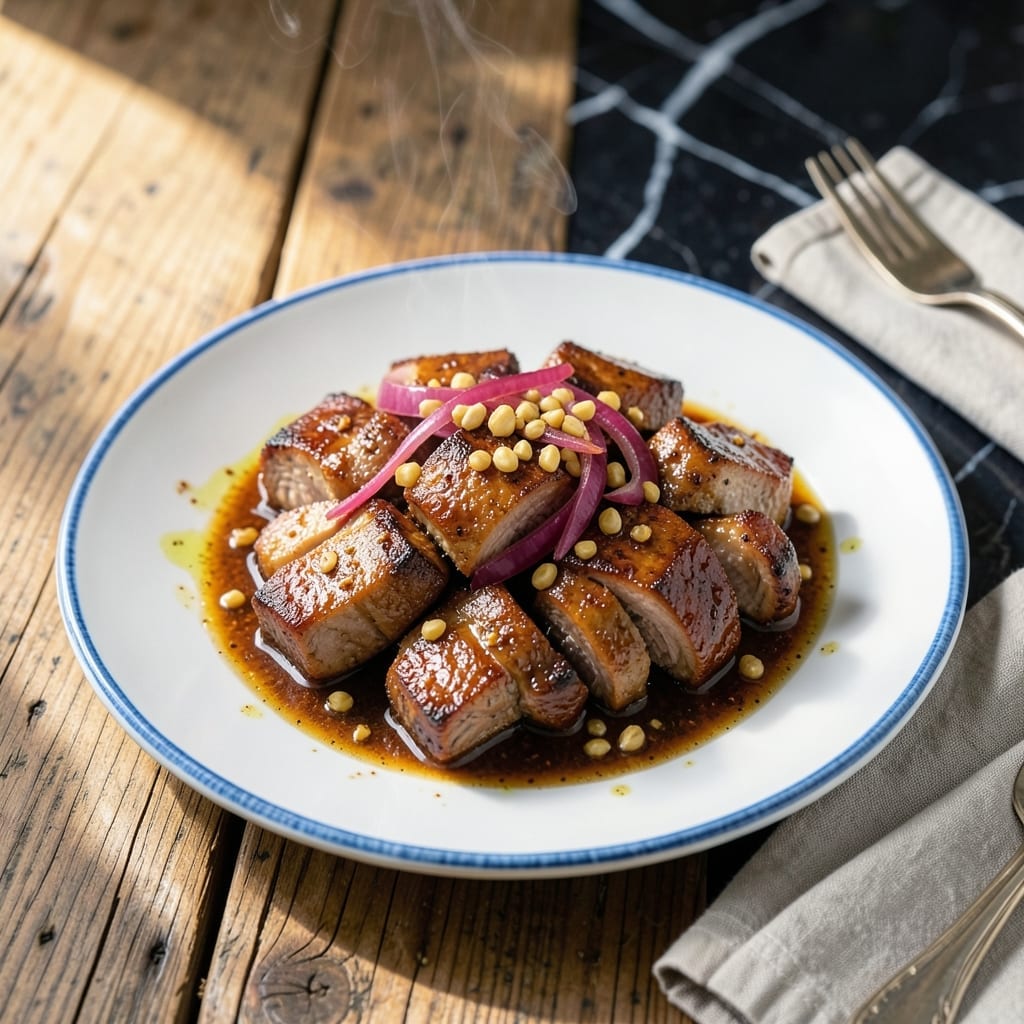
This Filipino-style pork stir fry brings bold, savory flavors to your table with minimal effort. The combination of garlic, soy sauce, and a touch of sweetness creates a dish that’s both comforting and deeply satisfying.
The key lies in the quick cooking process, which keeps the pork tender while allowing the sauce to caramelize slightly. Traditional techniques ensure every bite is packed with rich, umami depth and a perfect balance of salty and sweet.
What results is a sizzling, aromatic creation with juicy pork pieces coated in a glossy, flavorful glaze. It’s a dish that captures the essence of Filipino home cooking—simple, hearty, and full of character.
Serve it hot over steamed rice for an authentic, complete meal that’s ready in under 30 minutes.
Ingredients for Pork Stir Fry Recipe Panlasang Pinoy
Simple ingredients deliver bold Filipino flavors in this quick, satisfying stir fry.
| Ingredient | Amount | Notes |
|---|---|---|
| Pork Shoulder 🥩 | 1 ½ lb | Thinly sliced for quick cooking |
| Garlic Cloves 🧄 | 8 cloves | Minced for maximum flavor |
| Soy Sauce 💧 | ½ cup | Use low-sodium if preferred |
| Calamansi Juice 🍋 | 3 tbsp | Or substitute lime juice |
| Brown Sugar 🍚 | 2 tbsp | For balanced sweetness |
| Onion 🧅 | 1 whole | Medium, thinly sliced |
| Bell Pepper 🌶️ | 1 whole | Red or green, sliced |
| Ground Black Pepper 🌶️ | ½ tsp | Freshly ground preferred |
| Vegetable Oil 🫒 | 3 tbsp | For high-heat stir-frying |
| Bay Leaf 🍃 | 2 pieces | Dried, optional for depth |
| Steamed Rice 🍚 | 4 cups | Cooked, for serving |
| Green Onions 🧅 | 3 whole | Chopped, for garnish |
[recipe_ingredient_scaler]
The pork is the foundation here. Pork shoulder gives you the right fat-to-meat ratio for juiciness—avoid lean cuts like tenderloin. Most Asian markets will slice it thin for you if you ask. Look for pieces with visible marbling, which renders down during cooking. The soy sauce should be Filipino brands like Silver Swan or Datu Puti if available—they’re slightly sweeter than Chinese or Japanese varieties.
No calamansi? Lime or lemon juice works in a pinch (use slightly less). Brown sugar can be swapped for coconut sugar for a deeper flavor. If you’re missing bell peppers, carrots or snap peas add a nice crunch. The bay leaf is optional but adds subtle depth—dried is fine. For extra umami, a dash of fish sauce or oyster sauce complements the soy perfectly.
Leftovers keep well in the fridge for 3-4 days and reheat beautifully. The flavors actually deepen overnight. Freeze cooked portions for up to 2 months—thaw in the fridge before reheating. Always store in airtight containers to prevent drying out.
Why You’ll Love This Recipe
- One Pan Wonder: I toss everything in a single pan—pork, garlic, soy sauce, and calamansi—and it’s ready before I finish setting the table.
- Sweet-Savory Magic: The brown sugar caramelizes with the soy sauce, while calamansi juice cuts through the richness. Honestly, it’s the balance I crave every time.
- Feeds a Crowd: Between us, this stretches for lunch and dinner, and my picky nephew even asks for seconds.
- Budget Keeper: Pork shoulder stays cheap, and a little goes a long way. I’ll be real: it’s my go-to when the wallet’s feeling light.
Step-by-Step Instructions for Pork Stir Fry Panlasang Pinoy
This method ensures tender meat and a perfectly balanced sauce with every bite.
Step 1: Sear the Pork Shoulder
Heat 3 tbsp vegetable oil in a large wok or skillet over medium-high heat until it shimmers. Add the 1.5 lb pork shoulder slices in a single layer, working in batches if needed to avoid crowding. Let them cook undisturbed for 2-3 minutes until the edges turn light golden brown.
Stir-fry the pork for another 2-3 minutes until all pieces are evenly browned. The meat should be just cooked through but still tender. Remove the pork from the wok and set it aside on a plate.
Step 2: Sauté the Aromatics
In the same wok, add the 8 cloves garlic and sauté for 30 seconds until fragrant. Be careful not to burn the garlic—it should turn just light golden and smell aromatic. Add the thinly sliced onion and sliced bell pepper, stirring constantly for 3-4 minutes until the onion softens and the bell pepper brightens in color.
This step builds the flavor base for your dish. The garlic should perfume the air, while the onion and bell pepper develop a slight sweetness as they cook down.
Step 3: Create the Sauce and Combine
Pour in the 0.5 cup soy sauce, 3 tbsp calamansi juice, and 2 tbsp brown sugar. Stir well to dissolve the sugar and combine the liquids. Add the 0.5 tsp ground black pepper and 2 pieces bay leaf, then return the cooked pork to the wok.
Simmer the mixture over medium heat for 5-7 minutes, stirring occasionally, until the sauce thickens slightly and coats the pork evenly. The sauce should reduce just enough to cling to the meat without being watery.
Step 4: Finish and Serve
Discard the bay leaves, then taste and adjust the seasoning if needed. Transfer the pork stir fry to a serving dish and garnish with the chopped green onions. The green onions add a fresh, vibrant finish to the dish.
Serve immediately over 4 cups steamed rice while hot. The rice soaks up the rich, savory sauce, creating the perfect balance of flavors and textures in every bite.
Pro Tips For Making Pork Stir Fry Recipe Panlasang Pinoy
- Sear the Pork First: I learned this the hard way—browning the pork shoulder in small batches over high heat before adding sauces locks in juices and adds that deep, caramelized flavor Panlasang Pinoy dishes are known for.
- Mince Garlic Finely: Sounds tedious, but finely minced garlic (almost paste-like) disperses better in the stir fry and prevents those awkward bites of raw garlic that can overpower the calamansi and soy sauce.
- Reduce the Sauce: After adding soy sauce, calamansi juice, and brown sugar, let it simmer for 2-3 minutes until slightly thickened—this prevents a watery stir fry and helps the flavors cling to the pork.
- Slice Pork Thinly: Cut the pork shoulder into ¼-inch strips against the grain; it cooks faster and stays tender, and you won’t end up with chewy pieces even if you overcook slightly.
Essential Equipment for Great pork stir fry recipe panlasang pinoy
Wok Essentials
A high-quality carbon steel wok is my top recommendation for this dish. It heats quickly and evenly, which is crucial for stir-frying. I personally use a 14-inch Joyce Chen wok—it’s durable and has a flat base that works well on most stovetops. 🔥
Skillet Alternative
If you don’t have a wok, a large, heavy-bottomed skillet works too. Look for one with high sides to prevent splattering. A 12-inch cast iron skillet is a great choice because it retains heat exceptionally well.
High-Heat Tools
Use a wooden spatula or wok spatula to stir and toss the ingredients without scratching your pan. I also keep a splash guard handy—it’s a lifesaver when things get sizzling hot.
Precision Thermometer
While not strictly necessary, a instant-read thermometer helps ensure your pork reaches a safe 145°F without overcooking. I like the ThermoWorks ThermoPop for its speed and accuracy.
This tool is especially helpful for beginners who are still getting a feel for doneness.
Serving Bowls
For an authentic touch, serve your stir fry in a large, shallow bowl to showcase the vibrant colors and textures. I use a ceramic serving dish that keeps the meal warm at the table. ✨
Nutrition Facts
Frequently Asked Questions
Can I use a different cut of pork?
Yes! While shoulder is ideal, pork loin or belly work too. Loin cooks faster (2-3 minutes less) but can dry out. Belly adds richness but needs extra draining. Shoulder remains the most forgiving choice.
What if I don’t have calamansi?
Substitute with lime or lemon juice (use 1 tbsp less). The acidity brightens the dish similarly, though calamansi has a unique sweet-tart balance. A splash of vinegar works in a pinch.
How do I prevent the sauce from being too salty?
Use low-sodium soy sauce and taste before adding extra. If it’s still too strong, add 1-2 tbsp water or a pinch of sugar to balance. Always simmer the sauce for 5-7 minutes to mellow flavors.
Can I make this ahead of time?
The flavors deepen overnight. Store in an airtight container for up to 3-4 days. Reheat gently with a splash of water to revive the sauce.

Trained in classic French technique but raised on slow-cooked ribs and spicy rubs, she blends culinary skill with smoke and soul.
- Best Smoked Oxtail Recipe: Deep-Rich Flavor After Low-and-Slow Cooking - October 14, 2026
- Pit Boss Smoked Prime Rib Roast Recipe: Bark-to-Bone Crispness in 4 Hours - October 14, 2026
- Smoked Tuna Steak Recipe: Seared Crust Meets Silky Centers - October 14, 2026