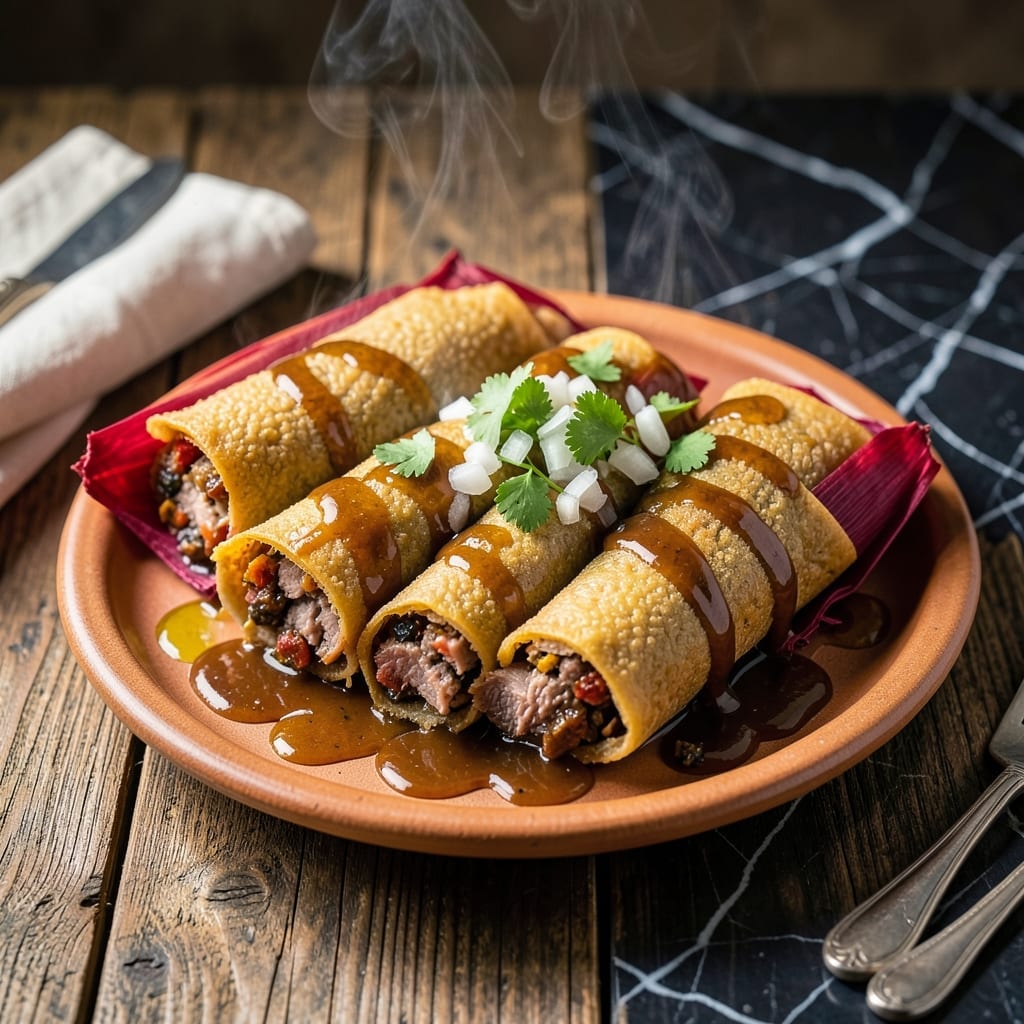
This recipe brings traditional Mexican flavors to your kitchen with a method passed down through generations.
The pork filling slow-cooks for 3 hours in a rich blend of spices, while the masa achieves its signature texture through proper preparation. Every bite delivers the authentic taste of tamales as they’re meant to be.
Steaming is the final step that transforms these into tender, flavorful packages. The process requires patience but rewards with results that honor the dish’s heritage.
The aroma alone will transport you to a Mexican abuela’s kitchen. This is tamale-making at its most traditional.
Ingredients for Pork Tamale Recipe Authentic Mexican
Traditional ingredients for masa-wrapped pork tamales with rich, spiced authenticity in every bite.
| Ingredient | Amount | Notes |
|---|---|---|
| Pork Shoulder 🐖 | 2 lb | Boneless, cut into chunks |
| Dried Guajillo Chile Peppers 🌶️ | 6 whole | Stems and seeds removed |
| Dried Ancho Chile Peppers 🌶️ | 3 whole | Stems and seeds removed |
| Masa Harina 🌾 | 4 cups | Corn flour for tamales |
| Pork Lard 🧈 | 1 ½ cups | Or vegetable shortening |
| Chicken Broth 🥣 | 2 cups | Low-sodium preferred |
| Yellow Onion 🧅 | 1 whole | Medium, finely chopped |
| Garlic Cloves 🧄 | 6 cloves | Peeled and minced |
| Ground Cumin 🌿 | 1 tbsp | Toasted for deeper flavor |
| Dried Oregano 🍃 | 1 tbsp | Mexican oregano preferred |
| Bay Leaves 🍂 | 2 whole | For sauce infusion |
| Salt 🧂 | 2 tsp | Divided, to taste |
| Dried Corn Husks 🌽 | 1 package | For steaming tamales |
| Baking Powder 🧂 | 2 tsp | For masa lightness |
[recipe_ingredient_scaler]
The pork shoulder is non-negotiable for tender, fall-apart texture. Source from a trusted butcher or Mexican grocery stores for the best marbling. Guajillo and ancho chiles—look for vibrant color and flexibility (brittle ones are old). Masa harina must be a dedicated tamale flour like Maseca for tamales; regular cornmeal won’t work. Lard is traditional, but vegetable shortening keeps it vegetarian.
No guajillo chiles? Use New Mexico red chiles as a backup. Short on ancho? Pasilla chiles add similar depth. Masa too thick? Thin with warm broth, a tablespoon at a time. The corn husks need soaking—30 minutes in hot water makes them pliable. If you can’t find dried husks, fresh corn husks (in season) work too, just blanch them first.
Tamales freeze beautifully—3 months in airtight bags. Reheat by steaming 10-15 minutes. The filling keeps 4 days in the fridge, but the masa is best used fresh. For make-ahead, prep filling and masa separately, then assemble and steam the day of serving.
Why You’ll Love This Recipe
- Minimal Chopping Required: I just toss the dried guajillo and ancho chiles into hot water to soften while I sear the pork shoulder—no fancy knife work here.
- Deep, Smoky Flavor: The guajillo and ancho chiles blend into this rich, slightly sweet sauce that makes the pork taste like it’s been slow-cooked all day.
- Feeds a Crowd: I make a big batch on Sunday and freeze half—they reheat beautifully for quick dinners or last-minute potlucks.
Step-by-Step Instructions for Pork Tamales
Authentic technique ensures traditional flavors shine through in every bite.
Step 1: Prepare the Filling with Pork and Chile Sauce
Combine the 2 lb Pork Shoulder with the 1 whole Yellow Onion, 6 cloves Garlic Cloves, 1 tbsp Ground Cumin, 1 tbsp Dried Oregano, 2 whole Bay Leaves, and 1 tsp Salt in a Dutch oven. Cover with the 2 cups Chicken Broth and simmer over medium-low heat for 1.5-2 hours until the pork is fork-tender.
Meanwhile, toast the 6 whole Dried Guajillo Chile Peppers and 3 whole Dried Ancho Chile Peppers in a dry skillet over medium heat for 1-2 minutes per side until fragrant. Soak them in hot water for 15 minutes to soften, then blend with 1 cup of the pork cooking liquid until smooth. Strain this sauce into the pork and simmer for 10 minutes to meld the flavors.
Step 2: Make the Masa Dough
In a large bowl, beat the 1.5 cups Pork Lard with a hand mixer on high speed for 2-3 minutes until light and fluffy. This step is crucial—it incorporates air, which makes the tamales tender. Gradually add the 4 cups Masa Harina, 2 tsp Baking Powder, and remaining 1 tsp Salt.
Slowly pour in 1.5 cups of the reserved pork cooking liquid, mixing until the dough resembles a thick, spreadable batter. To test for doneness, drop a small ball into a glass of water—if it floats, the dough is ready. If it sinks, beat in another ¼ cup of liquid and test again.
Step 3: Assemble the Tamales
Soak the 1 package Dried Corn Husks in warm water for 30 minutes to soften. Drain and pat dry. Lay a husk flat, smooth side up, and spread ¼ cup of the masa dough in the center, leaving a 1-inch border on the sides and 2 inches at the top and bottom.
Place 2 tablespoons of the shredded pork filling down the center of the dough. Fold the long sides of the husk inward to enclose the filling, then fold up the bottom. Leave the top open. This method ensures the tamales hold their shape during steaming.
Step 4: Steam to Perfection
Arrange the tamales upright in a steamer basket, open-end up. If your steamer isn’t tall enough, layer a few husks on the bottom to create a platform. Cover with a damp towel and the steamer lid to trap moisture. Bring the water to a boil over high heat, then reduce to medium.
Steam for 1 hour to 1 hour 15 minutes. Check the water level halfway through and replenish with hot water if needed. The tamales are done when the husk peels away easily and the masa is firm to the touch. Let them rest for 10 minutes before serving to set the texture.
Pro Tips For Making Pork Tamale Recipe Authentic Mexican
- Soak the Chiles: Cover dried guajillo and ancho chiles in hot water for 15-20 minutes—I learned this the hard way after ending up with bitter, gritty sauce. Discard the soaking water to avoid bitterness.
- Render the Lard Slow: Melt the pork lard on low heat until just liquid, about 5-7 minutes. After burning a batch, I finally figured out that high heat makes it smoke and turns the masa greasy.
- Beat the Masa Long: Whip the masa harina and lard mixture for a full 5 minutes until it’s light and fluffy—yes, even if your arm gets tired. My grandmother swore by this, and she was right.
- Steam Evenly: Arrange tamales upright in the steamer with the open end up, and rotate them halfway through cooking. I used to skip this and wondered why some were dry while others were undercooked.
Storing and Reheating This Recipe
Refrigerator Storage
Let tamales cool completely before storing. Place in an airtight container with parchment between layers to prevent sticking. They’ll keep in the fridge for up to 5 days. The flavors deepen overnight as the masa absorbs more of the pork’s rich sauce. ❄️
Freezer Storage
For longer storage, wrap each tamale individually in plastic wrap, then place in a freezer-safe bag. They’ll stay fresh for up to 3 months. I label mine with the date to keep track. Freezing preserves the texture surprisingly well.
Steam Reheating
This is the best method for restoring that fresh-steamed texture. Place tamales upright in a steamer basket with 1 inch of water. Cover and steam over medium heat for 10-15 minutes until heated through. 🔥
Microwave Reheating
For a quick option, wrap a tamale in a damp paper towel and microwave on high for 1-2 minutes. Let it rest for 1 minute before unwrapping. The masa may be slightly denser, but the flavor remains true.
Oven Reheating
Preheat oven to 350°F and wrap tamales in aluminum foil with a splash of water. Bake for 15-20 minutes until warmed. This works well for larger batches.
Serving After Storage
Always let tamales rest for 5 minutes after reheating. This allows the masa to reabsorb moisture. I serve mine with extra sauce from the filling on the side for dipping.
Nutrition Facts
Frequently Asked Questions
Can I use chicken broth instead of pork broth?
Yes, low-sodium chicken broth works well as a substitute. It won’t alter the flavor significantly. Just ensure it’s unsalted so you can control the seasoning.
Why do my tamales come out dense?
This usually means the masa wasn’t beaten enough. Beat the lard until light and fluffy, then test with the float test. If the dough is too thick, add more liquid.
Can I make these without a steamer?
Use a large pot with a rack or upturned bowl to keep tamales above boiling water. Cover with a damp towel to trap steam. Check water levels often.
How do I know when they’re done steaming?
The husk will peel away easily, and the masa will be firm. If unsure, open one to check. They need 1 hour to 1 hour 15 minutes.

Trained in classic French technique but raised on slow-cooked ribs and spicy rubs, she blends culinary skill with smoke and soul.
- Best Smoked Oxtail Recipe: Deep-Rich Flavor After Low-and-Slow Cooking - October 14, 2026
- Pit Boss Smoked Prime Rib Roast Recipe: Bark-to-Bone Crispness in 4 Hours - October 14, 2026
- Smoked Tuna Steak Recipe: Seared Crust Meets Silky Centers - October 14, 2026