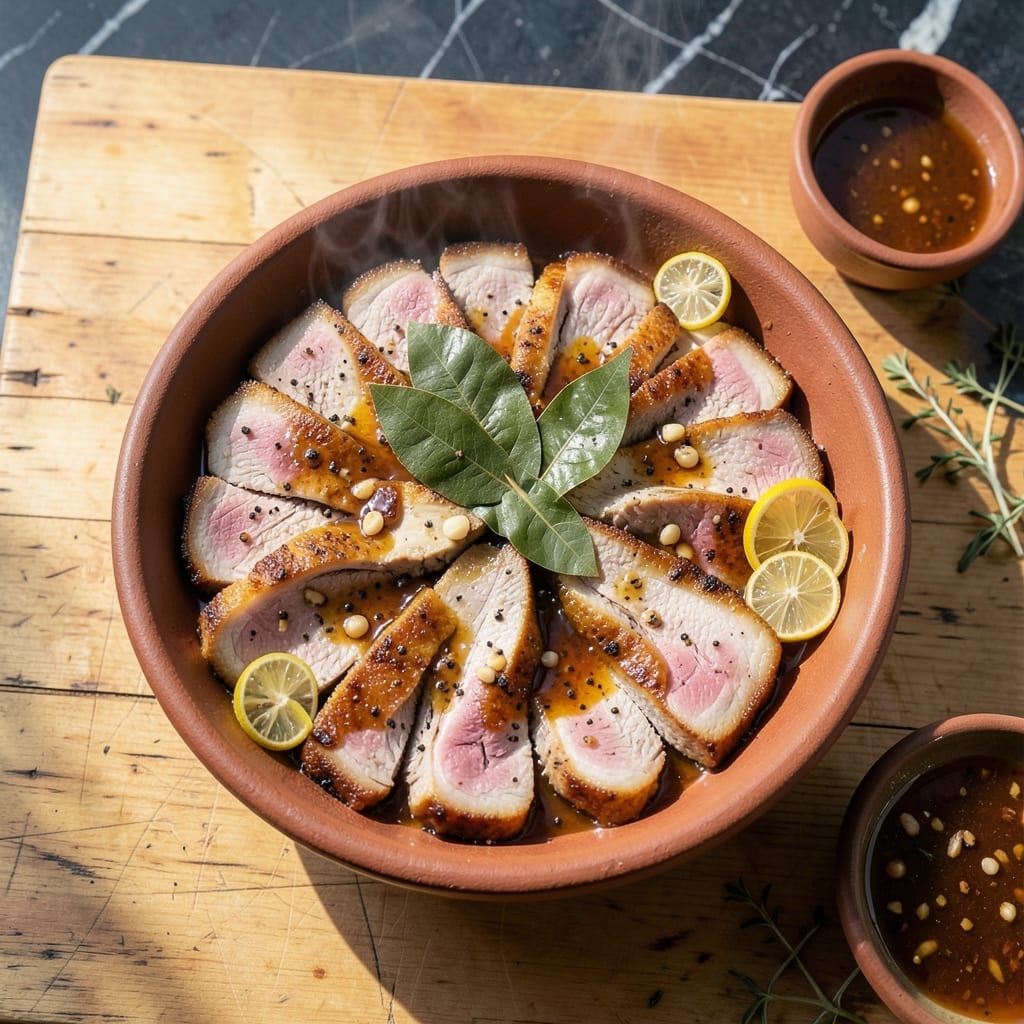
There’s nothing like waking up to the smell of sizzling pork tapa cooking in the kitchen. This Filipino breakfast classic brings sweet and savory together in the most satisfying way, and it’s ready in minutes.
I’ve been making tapa for years, and the secret is in the marinade—soy sauce, calamansi, and a touch of sugar create that signature flavor. Thinly sliced pork soaks up every bit of that sweet-savory sauce.
When it hits the hot pan, the edges caramelize while the inside stays juicy. Serve it with garlic rice and a fried egg, and you’ve got a breakfast that’ll keep you full until lunch.
It’s fast, flavorful, and the perfect way to start your day the Filipino way.
Ingredients for Pork Tapa Recipe Panlasang Pinoy
Simple ingredients for a breakfast that tastes like home. Sweet, savory, and ready fast.
| Ingredient | Amount | Notes |
|---|---|---|
| Pork Shoulder 🥩 | 1 ½ lb | Thinly sliced, 1/4-inch thick |
| Soy Sauce 🫒 | ½ cup | Regular or all-purpose variety |
| Calamansi Juice 🍋 | ¼ cup | Or substitute lime juice |
| Brown Sugar 🍯 | 3 tbsp | Packed, for sweetness |
| Garlic Cloves 🧄 | 6 cloves | Minced for marinade |
| Black Pepper 🌶️ | 1 tsp | Freshly ground preferred |
| Bay Leaves 🌿 | 2 whole | Dried, for marinade |
| Vegetable Oil 🫒 | 2 tbsp | For frying pork |
| White Onion 🧅 | 1 whole | Thinly sliced, optional |
| Water 💧 | ¼ cup | For marinade consistency |
| Salt 🧂 | ½ tsp | Adjust to taste |
[recipe_ingredient_scaler]
The pork is everything here. Pork shoulder (or butt) gives you the best texture—lean cuts dry out. Most Asian markets sell it pre-sliced for tapa (the good stuff, not the pre-shredded kind), but any grocery store pork works if you slice it thin yourself. Look for good marbling—that fat equals flavor and keeps it juicy while cooking.
No calamansi? Lime or lemon juice works great—just use a little less since it’s more tart. Brown sugar can be swapped for white (or even honey if that’s what you’ve got). Out of soy sauce? Tamari or coconut aminos in a pinch. The garlic is non-negotiable though—freshly minced makes all the difference. Don’t skip the marinating time (worth the extra minute).
Marinate overnight if you can—flavor gets deeper. Leftovers keep 3-4 days in the fridge or freeze for 2 months. Reheat in a pan to keep the edges crispy (don’t skip this part).
Why You’ll Love This Recipe
- 5-Minute Marinade: I just toss pork shoulder with soy sauce, calamansi, sugar, and garlic the night before—no fancy prep.
- Sweet-Salty Bite: The brown sugar caramelizes with the soy and calamansi, giving that sticky, tangy-sweet crust I crave.
- Breakfast to Baon: Honestly, I fry a batch Sunday and it fuels my week—breakfast plates, rice bowls, even stuffed in pandesal.
- Stretches Far: A kilo of shoulder feeds my family of five twice, and the leftovers taste even better the next day.
Step-by-Step Instructions for Pork Tapa
Here’s the method I use to get perfectly caramelized pork tapa with minimal effort.
Step 1: Marinate the Pork Shoulder
In a large bowl, combine the 1.5 lb Pork Shoulder, 0.5 cup Soy Sauce, 0.25 cup Calamansi Juice, 3 tbsp Brown Sugar, minced 6 cloves Garlic Cloves, 1 tsp Black Pepper, 2 whole Bay Leaves, and 0.25 cup Water.
Mix everything thoroughly until the pork is fully coated. I like to use my hands for this—it ensures every piece gets evenly covered with the marinade. The sugar should start dissolving into the liquid, creating a slightly sticky mixture.
Cover the bowl and refrigerate for at least 2 hours, but overnight works best. This gives the flavors time to penetrate the meat deeply. You’ll notice the pork absorbs the marinade, turning a deeper color as it sits.
Step 2: Thinly Slice the Marinated Pork
Remove the pork from the marinade (reserve the marinade) and slice it into ¼-inch thick pieces. I’ve found that partially freezing the pork for 30 minutes before slicing makes it easier to cut thin, even slices without tearing the meat.
The slices should be uniform in thickness to ensure even cooking. If the pork is too thick, it won’t cook through properly; if too thin, it might burn before the inside is done. Return the sliced pork to the reserved marinade until you’re ready to cook.
Step 3: Pan-Fry to Caramelized Perfection
Heat the 2 tbsp Vegetable Oil in a large skillet over medium-high heat. When the oil shimmers, add the pork slices in a single layer, being careful not to overcrowd the pan. You’ll need to work in batches if your skillet isn’t large enough.
Cook for 3-4 minutes per side until the edges start to caramelize and the pork turns a rich, dark brown. The sugar in the marinade will create beautiful caramelization—this is what gives pork tapa its signature sweet-savory flavor. Pour in 2-3 tablespoons of the reserved marinade between batches to keep the flavor consistent.
If using the optional 1 whole White Onion, thinly slice it and add to the pan during the last 2 minutes of cooking. The onion should soften and absorb some of the caramelized flavors from the pork.
Step 4: Season and Serve Immediately
Once all the pork is cooked, taste a piece and adjust the seasoning with 0.5 tsp Salt if needed. The soy sauce in the marinade provides most of the saltiness, but a little extra often enhances the flavors.
Transfer the pork tapa to a serving plate while it’s still hot. The slices should be glistening with a slightly sticky glaze and have dark, caramelized edges. Serve immediately with garlic fried rice and a fried egg for the classic Filipino breakfast combination.
This dish is best enjoyed fresh off the pan when the caramelized crust is at its crispest. The pork should be tender on the inside with a slightly crispy exterior from the sugar caramelization.
Pro Tips For Making Pork Tapa Recipe Panlasang Pinoy
- Marinate Overnight: I learned this the hard way—pork shoulder needs at least 12 hours in the soy-calamansi-garlic mix to absorb the flavors deeply. Anything less and you’ll taste the difference.
- Dry the Meat First: Pat the pork slices completely dry before marinating. Sounds tedious, but it helps the sugar caramelize better when cooking.
- Watch the Sugar: Brown sugar burns fast over high heat. Cook the tapa on medium-low and flip often—after ruining a batch, I now keep a close eye on it.
- Slice Against Grain: Cut the pork shoulder thinly against the grain for tender bites. My grandmother swore by this, and she was right: it makes chewing effortless.
Troubleshooting Great pork tapa recipe panlasang pinoy
Marinade Too Thin
If your marinade looks watery, add 1-2 tbsp more brown sugar to thicken it. The sugar helps create that perfect sticky consistency for maximum flavor absorption. I always taste the marinade first—it should be sweet-savory balanced.
Pork Not Caramelizing
Increase heat to medium-high and cook undisturbed for 4-5 minutes per side. The sugar needs high heat to caramelize properly. If the pan cools, the pork will steam instead of sear. Use a cast iron skillet for best results. 🔥
Overcrowded Pan
Cook in batches if needed—overcrowding lowers pan temperature, causing pork to boil in its juices. Leave 1-inch space between pieces for proper browning. I learned this the hard way with my first attempt at tapa.
Dry or Tough Pork
Slice pork against the grain into ¼-inch thickness and don’t overcook. Remove from pan when internal temp reaches 145°F. The residual heat will finish the cooking. Marinating overnight also prevents dryness.
Bitter Marinade
If using lime instead of calamansi, reduce to 3 tbsp and add 1 tsp honey to balance. Calamansi is less acidic than lime. Taste the marinade before adding pork—adjust sweetness as needed.
Uneven Cooking
Partially freeze pork for 30 minutes before slicing for uniform thickness. Use a meat mallet to even out pieces. This ensures every bite has that perfect crispy edge and juicy center. 💡
Nutrition Facts
Frequently Asked Questions
Can I use a different cut of pork?
Yes! While pork shoulder is traditional, you can use pork loin or tenderloin. Shoulder has more fat for flavor, but loin cooks faster. Freeze for 30 minutes before slicing for easier handling.
How long can I store leftover tapa?
Leftover tapa keeps in the fridge for 3-4 days in an airtight container. To reheat, warm in a pan over medium heat to restore crispiness. Avoid microwaving as it makes the meat soggy.
Can I make this ahead of time?
Marinate the pork overnight for deeper flavor. Slice and store in the marinade for up to 24 hours before cooking. This makes breakfast prep a breeze.
Why is my tapa not caramelizing?
Your pan might not be hot enough. Use medium-high heat and avoid overcrowding. Cook in batches if needed, and don’t stir too often—let the sugar caramelize undisturbed.

Trained in classic French technique but raised on slow-cooked ribs and spicy rubs, she blends culinary skill with smoke and soul.
- Recipe for Boneless Pork Chops in Cast Iron Skillet: Sear and Baste to Juicy Perfection - October 3, 2026
- Recipe for Boneless Cross Rib Roast: Slow-Roasted Beef with Herb Crust - October 3, 2026
- Hamburgers in Sauce Recipe Crock Pot: Slow-Cooked Savory Delight - October 3, 2026