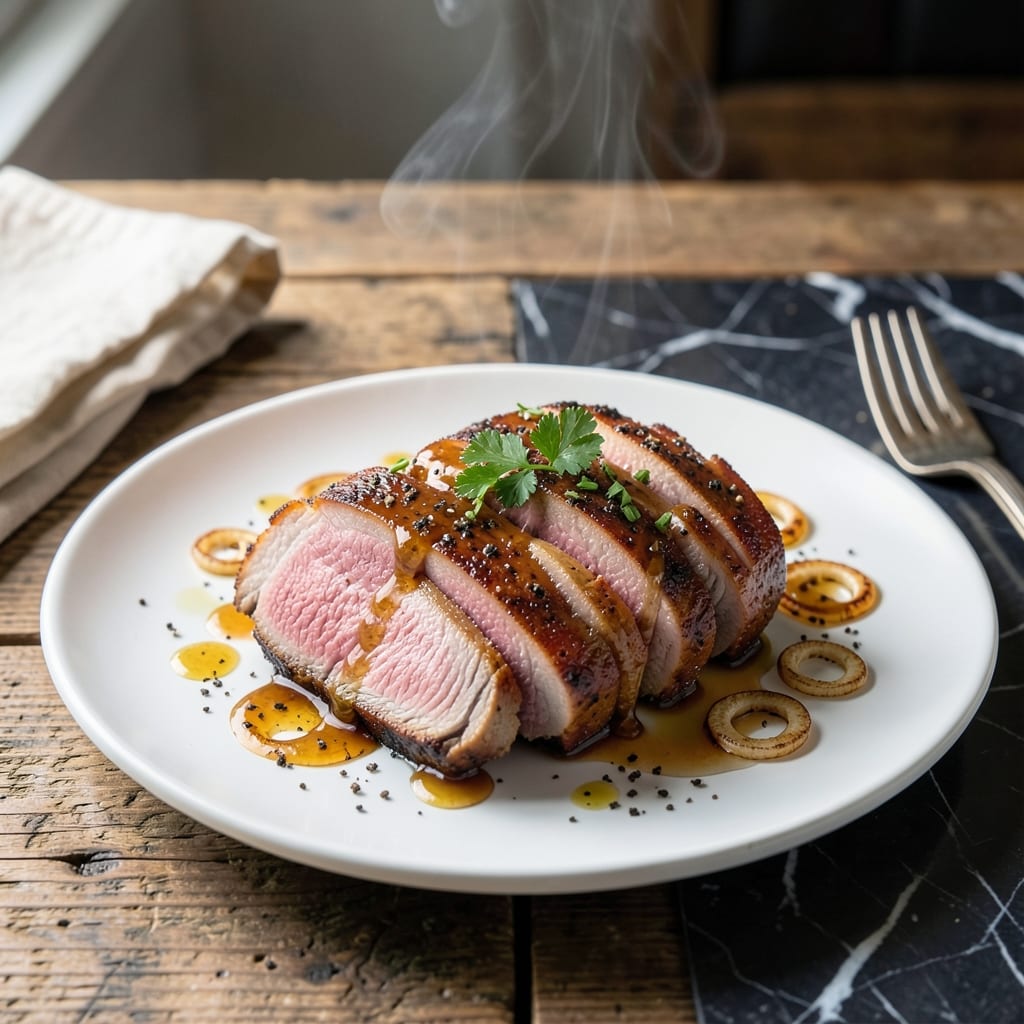
This pork tenderloin achieves tender, juicy results through a simple yet powerful technique: apple cider vinegar. The acidity breaks down proteins while adding bright, tangy depth to the glaze.
I developed this method after years of testing marinades, discovering that vinegar not only enhances flavor but also helps retain moisture. The glaze caramelizes beautifully in the oven, creating a sticky, savory-sweet coating.
What emerges is pork so succulent it nearly falls apart, with a glossy finish that balances rich and tangy notes. The vinegar works its magic without overpowering the natural pork flavor.
Serve with roasted vegetables or mashed potatoes to soak up every drop of that irresistible glaze. This dish proves simple ingredients can deliver extraordinary results.
Ingredients for Pork Tenderloin Recipe Apple Cider Vinegar
A few pantry staples transform pork tenderloin into a juicy, glaze-coated masterpiece.
| Ingredient | Amount | Notes |
|---|---|---|
| Pork Tenderloin 🥩 | 1 ½ lb | Trimmed of silver skin |
| Apple Cider Vinegar 🍏 | ½ cup | For acidity and glaze base |
| Brown Sugar 🍚 | ¼ cup | Light or dark variety |
| Honey 🍯 | 2 tbsp | For natural sweetness |
| Dijon Mustard 🟡 | 1 tbsp | Smooth, not whole grain |
| Garlic Cloves 🧄 | 4 cloves | Minced for glaze infusion |
| Soy Sauce 🫒 | 2 tbsp | Low-sodium preferred |
| Olive Oil 🫒 | 2 tbsp | For searing and moisture |
| Kosher Salt 🧂 | 1 tsp | Plus more to taste |
| Black Pepper 🌶️ | ½ tsp | Freshly ground preferred |
| Dried Thyme 🌿 | ½ tsp | Or substitute fresh thyme |
| Dried Rosemary 🌿 | ½ tsp | Crushed to release oils |
| Red Pepper Flakes 🔥 | ¼ tsp | Optional for heat |
[recipe_ingredient_scaler]
The pork tenderloin quality is non-negotiable here. Look for a piece with even marbling—this ensures juiciness. Most supermarkets carry it pre-trimmed, but check for any remaining silver skin and remove it yourself. Whole Foods and Costco have reliable options. The apple cider vinegar should be raw and unfiltered for maximum acidity and depth (Bragg is a solid choice).
Need to swap honey? Maple syrup or agave nectar work in a 1:1 ratio. No Dijon? Whole grain mustard at one-third less to avoid overpowering. The soy sauce can be tamari for gluten-free or coconut aminos for a milder taste. Fresh herbs can replace dried at a 3:1 ratio, but dried are perfectly acceptable here.
The glaze keeps beautifully in an airtight container for up to 1 week in the fridge. The cooked pork is best served immediately but reheats well for 3-4 days. Freeze the raw tenderloin (unmarinated) for up to 6 months if you won’t use it right away.
Why You’ll Love This Recipe
- One Pan Wonder: I toss the tenderloin with the apple cider vinegar glaze and roast it—no marinating, no flipping, just easy oven magic.
- Sweet-Tangy Crave: The honey and brown sugar caramelize while the vinegar cuts through with this bright, lip-smacking balance.
- Feeds a Crowd: I’ve served this at Sunday suppers and weeknight dinners alike—always disappears fast.
- Leftovers Rock: The pork slices reheat beautifully for sandwiches or salads, so I actually make extra on purpose.
Step-by-Step Instructions for Pork Tenderloin with Apple Cider Vinegar Glaze
This method delivers perfectly tender meat with a glossy, tangy-sweet finish every time.
Step 1: Prepare and Season the Pork Tenderloin
Pat the 1.5 lb Pork Tenderloin dry with paper towels, ensuring all moisture is removed for proper searing. Trim any remaining silver skin if not already done. I always let the meat sit at room temperature for 15-20 minutes before cooking to ensure even doneness throughout.
Rub the pork with 2 tbsp Olive Oil, then season uniformly with 1 tsp Kosher Salt, 0.5 tsp Black Pepper, 0.5 tsp Dried Thyme, and 0.5 tsp Dried Rosemary. The herbs should adhere to the oil-coated surface. This seasoning layer creates a flavorful crust while the tenderloin cooks.
Step 2: Sear the Pork Tenderloin
Heat a large oven-safe skillet over medium-high heat until very hot. Add the seasoned pork tenderloin and sear for 3-4 minutes per side until deeply browned on all surfaces. You’ll know it’s ready to turn when it releases easily from the pan—don’t force it.
This high-heat sear develops a beautiful crust that locks in juices. The internal temperature should reach about 120°F at this stage, perfect for finishing in the oven. Transfer the skillet to a preheated 375°F oven for even cooking.
Step 3: Create the Apple Cider Vinegar Glaze
While the pork roasts, combine 0.5 cup Apple Cider Vinegar, 0.25 cup Brown Sugar, 2 tbsp Honey, 1 tbsp Dijon Mustard, 2 tbsp Soy Sauce, minced 4 cloves Garlic Cloves, and 0.25 tsp Red Pepper Flakes in a small saucepan. The vinegar’s acidity will balance the sweetness perfectly.
Simmer the mixture over medium heat for 8-10 minutes, stirring occasionally, until reduced by about half and thickened to a syrupy consistency. The glaze should coat the back of a spoon and have a deep amber color. Remove from heat and set aside.
Step 4: Glaze and Rest the Pork
After 15-20 minutes in the oven, when the pork reaches an internal temperature of 145°F, remove it from the oven. Brush the apple cider vinegar glaze generously over the top and sides of the tenderloin, reserving some for serving.
Return the pork to the oven for 2-3 minutes to set the glaze. Then transfer to a cutting board, tent loosely with foil, and let rest for 10 minutes. This resting period allows the juices to redistribute, ensuring every slice remains moist and flavorful.
Slice the pork into ½-inch thick medallions and drizzle with the remaining glaze before serving. The meat should be tender with a slight pink center, and the glaze should create a glossy, caramelized finish.
Pro Tips For Making Pork Tenderloin Recipe Apple Cider Vinegar
- Sear It Hot: Use high heat to sear the pork tenderloin first—this locks in the juices and creates a perfect crust before adding the apple cider vinegar glaze. I learned this the hard way after ending up with pale, dry meat.
- Trim the Silver Skin: Always remove the silver skin from the tenderloin before cooking. It doesn’t soften like fat and can make the finished dish tough, no matter how well you cook it.
- Balance the Glaze: Taste your apple cider vinegar, brown sugar, and honey mix before glazing. If it’s too sharp, add a teaspoon more honey—sounds weird, but it works.
- Rest Before Slicing: Let the pork rest for 5-10 minutes under foil after cooking. This keeps the juices inside the meat instead of all over your cutting board—I skip this when I’m lazy, but the dish is noticeably better when I don’t.
Essential Equipment for pork tenderloin recipe apple cider vinegar
Oven-Safe Skillet
An oven-safe skillet is non-negotiable for this recipe. I swear by my 12-inch Lodge cast iron—it sears beautifully on the stovetop and transitions seamlessly to the oven. A heavy stainless steel skillet also works well. Avoid nonstick unless it’s labeled oven-safe to 400°F. 🔥
Instant-Read Thermometer
Precision matters with pork tenderloin. I use a ThermoWorks ThermoPop for instant readings. Look for 145°F internal temperature for perfect doneness. Digital thermometers with thin probes give the most accurate readings in the thickest part of the meat.
Small Saucepan
You’ll need a 1-2 quart saucepan for the glaze. I prefer All-Clad stainless steel for even heat distribution. The glaze reduces quickly, so a smaller pan with a heavy bottom prevents scorching. A light-colored interior helps monitor the caramelization process.
Heat-Resistant Spatula
A silicone or wooden spatula is essential for stirring the glaze and scraping up browned bits. I keep a OXO silicone spatula handy—it won’t scratch your pans and handles high heat beautifully. The flat edge helps coat the pork evenly with glaze.
Resting Surface
After cooking, the pork needs to rest on a cutting board or platter. I use a bamboo board with a groove to catch juices. Tent with foil to keep warm. This 10-minute rest is crucial for juicy results. Pickles often supervises this part from her perch on the counter. 💛
Basting Brush
A silicone basting brush makes glaze application easy. I prefer the OXO Good Grips version—it’s heat-resistant and easy to clean. The long handle keeps your hands safe from the hot pan. Brush on a thick, even layer for maximum flavor impact.
Nutrition Facts
Frequently Asked Questions
Can I substitute balsamic vinegar for apple cider?
Balsamic works but will give a deeper, sweeter flavor. Reduce it by 1 tablespoon and add a splash of water to balance the thickness.
How long should I marinate the pork?
With vinegar’s acidity, 30 minutes to 2 hours is ideal. Any longer may start to “cook” the meat, making it mushy. Always refrigerate during marinating.
Why does my glaze turn out thin?
Simmer it longer—it needs to reduce by half. Use medium heat and stir frequently. If still thin, mix in 1 tsp cornstarch slurry at the end.
Can I grill this instead of using the oven?
Sear over direct heat for 3-4 minutes per side, then move to indirect heat to finish. Brush with glaze during the last 5 minutes.

Trained in classic French technique but raised on slow-cooked ribs and spicy rubs, she blends culinary skill with smoke and soul.
- Best Smoked Oxtail Recipe: Deep-Rich Flavor After Low-and-Slow Cooking - October 14, 2026
- Pit Boss Smoked Prime Rib Roast Recipe: Bark-to-Bone Crispness in 4 Hours - October 14, 2026
- Smoked Tuna Steak Recipe: Seared Crust Meets Silky Centers - October 14, 2026