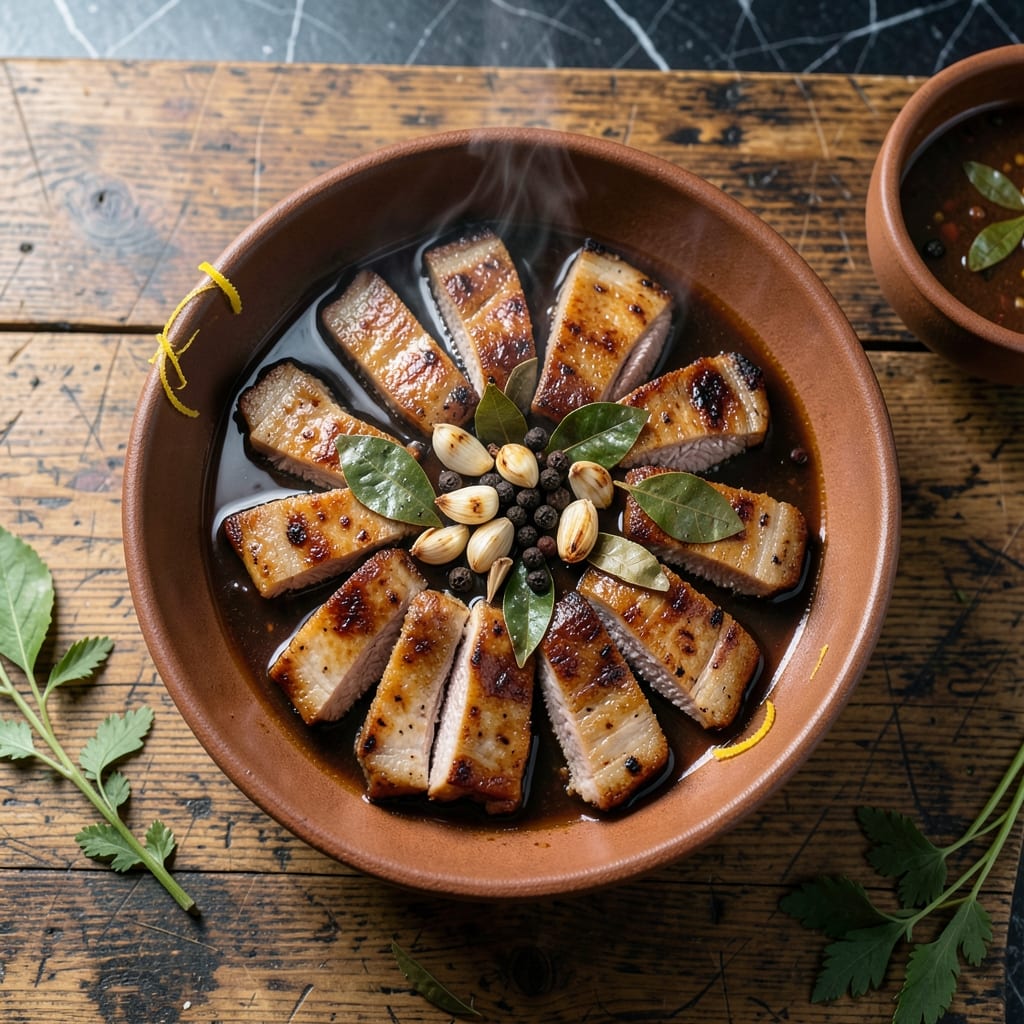
This Filipino-style pork tenderloin delivers tender, juicy results with a bold adobo marinade that defines home cooking at its best.
I’ve streamlined the traditional method to ensure maximum flavor with minimal effort. The marinade combines soy sauce, vinegar, garlic, and black peppercorns for that signature tangy-savory balance.
The secret is letting the pork soak up the marinade before searing and simmering to perfection. Every bite carries the deep, aromatic richness of Filipino adobo.
Serve it with steamed rice to soak up every drop of the flavorful sauce. This dish brings restaurant-quality results to your table.
Ingredients for Pork Tenderloin Recipe Filipino Style
Simple ingredients deliver that signature tangy-savory Filipino adobo flavor in every bite.
| Ingredient | Amount | Notes |
|---|---|---|
| Pork Tenderloin 🥩 | 1 ½ lb | Trimmed of excess fat |
| Soy Sauce 🥫 | ½ cup | Low-sodium preferred for balance |
| White Vinegar 💧 | ½ cup | Distilled or cane vinegar works |
| Garlic Cloves 🧄 | 8 cloves | Peeled and smashed for maximum infusion |
| Black Peppercorns 🌶️ | 2 tsp | Whole, lightly crushed |
| Bay Leaves 🍃 | 3 whole | Dried, whole leaves preferred |
| Brown Sugar 🍚 | 2 tbsp | Light or dark, for caramelization |
| Olive Oil 🫒 | 2 tbsp | For searing pork evenly |
| Yellow Onion 🧅 | 1 whole | Thinly sliced for layering |
| Water 💧 | ½ cup | For adjusting sauce consistency |
| Salt 🧂 | ½ tsp | Kosher or sea salt for seasoning |
[recipe_ingredient_scaler]
The pork tenderloin is the foundation here—look for uniform thickness to ensure even cooking. Costco and Whole Foods carry high-quality options, but any reputable butcher will have it. For the soy sauce, Silver Swan or Datu Puti (Filipino brands) provide authentic flavor, though Kikkoman low-sodium works in a pinch. Black peppercorns should be freshly crushed for maximum aroma.
No white vinegar? Apple cider vinegar at equal parts works, though it adds a fruity note. Short on garlic? Garlic powder at one-third the amount, but fresh is non-negotiable for true adobo depth. The brown sugar can be swapped for coconut sugar (same quantity). Skip pre-crushed peppercorns—they lose potency quickly.
Marinate the pork for at least 4 hours (overnight for best results). Store raw marinated pork in the fridge for up to 2 days. Leftovers keep 5 days refrigerated or freeze for 3 months—the sauce thickens beautifully upon reheating.
Why You’ll Love This Recipe
- One Pan Wonder: I just toss the pork tenderloin with soy sauce, vinegar, garlic, and peppercorns, then let the oven do the work.
- Garlic Soy Magic: The mix of soy sauce and vinegar soaks into the meat so every bite is packed with that tangy, garlicky punch.
- Feeds the Fam: It’s my go-to for Sunday dinner—enough to serve six, with leftovers that taste even better the next day.
- Budget Hero: Pork tenderloin is lean and affordable, and this recipe stretches it into a meal that feels anything but cheap.
Step-by-Step Instructions for Pork Tenderloin Filipino Style
This method ensures tender, juicy results with the signature adobo flavor profile.
Step 1: Prepare the Adobo Marinade
In a large bowl, combine the 0.5 cup soy sauce, 0.5 cup white vinegar, 8 cloves garlic cloves, 2 tsp black peppercorns, 3 whole bay leaves, 2 tbsp brown sugar, and 0.5 tsp salt. Stir until the brown sugar fully dissolves into the liquid mixture.
I recommend lightly crushing the black peppercorns with the flat side of a knife before adding them—this releases their aromatic oils more effectively. The vinegar’s acidity will begin to tenderize the pork as it marinates.
Step 2: Marinate the Pork Tenderloin
Add the 1.5 lb pork tenderloin to the marinade, turning to coat completely. Add the 1 whole yellow onion, thinly sliced, distributing it around the pork. Cover the bowl with plastic wrap and refrigerate for at least 4 hours, or ideally overnight.
For maximum flavor penetration, I turn the pork tenderloin in the marinade every few hours. The longer marinating time allows the adobo flavors to deeply infuse the meat, ensuring every bite is packed with that characteristic tangy, savory profile.
Step 3: Sear and Braise the Pork
Remove the pork from the marinade (reserve the marinade) and pat dry with paper towels. Heat the 2 tbsp olive oil in a large skillet over medium-high heat until shimmering. Sear the pork tenderloin on all sides for 2-3 minutes per side until deep golden brown.
This searing step creates a flavorful crust while locking in the juices. The reserved marinade will become your braising liquid, so don’t discard it.
Step 4: Finish with Braising Liquid
Pour the reserved marinade into the skillet with the seared pork. Add the 0.5 cup water to adjust the liquid level—it should come about halfway up the pork. Reduce heat to medium-low, cover, and simmer for 25-30 minutes.
Turn the pork occasionally during cooking. The dish is done when the internal temperature reaches 145°F and the pork is fork-tender. The braising liquid will reduce slightly, creating a rich, glossy sauce.
Step 5: Rest and Serve
Transfer the pork to a cutting board and let it rest for 10 minutes before slicing. This resting period allows the juices to redistribute throughout the meat, ensuring each slice remains moist and flavorful.
Slice the pork against the grain into ½-inch thick pieces. Spoon the reduced braising liquid over the top and serve immediately with steamed rice to soak up the delicious adobo sauce.
Pro Tips For Making Pork Tenderloin Recipe Filipino Style
- Marinate Overnight: Let the pork tenderloin soak in the soy sauce, vinegar, and crushed garlic for at least 4 hours—ideally overnight. I learned this the hard way: skipping this step leaves the flavor shallow and the meat dry. —
- Pat It Dry: Before searing, blot the marinated pork with paper towels to remove excess moisture. Sounds tedious, but it’s the only way to get that golden crust instead of steamed meat. —
- Skip the Overcrowding: If pan-frying, give each piece of pork tenderloin at least an inch of space in the pan—otherwise, they’ll steam instead of brown. After ruining two batches, I now cook in shifts if needed. —
- Rest Before Slicing: Cover the cooked tenderloin with foil and let it rest for 8-10 minutes before slicing. My grandmother swore by this, and she was right: it keeps the juices inside where they belong.
Dietary Considerations for This Dish
Gluten-Free Friendly
This recipe is naturally gluten-free when using tamari or certified gluten-free soy sauce. I recommend San-J gluten-free tamari—it delivers the same depth without wheat. Always check labels, as some soy sauces contain wheat as a thickener. 💪
Lower Sodium Option
To reduce sodium, use low-sodium soy sauce and cut the added salt entirely. The marinade’s vinegar and garlic still pack plenty of flavor. I’ve tested this with Kikkoman Low-Sodium Soy Sauce and it works beautifully.
Dairy-Free and Nut-Free
This dish is inherently dairy-free and nut-free, making it safe for most allergies. The adobo marinade relies on soy, vinegar, and spices—no dairy or nuts involved. Double-check your soy sauce brand for hidden allergens.
Sugar Alternatives
For a sugar-free version, replace the 2 tbsp brown sugar with 1 tbsp erythritol or a sugar-free sweetener like Swerve. The caramelization won’t be as deep, but the flavor remains balanced. I’ve had success with coconut sugar too.
Paleo Adaptation
Substitute coconut aminos for soy sauce to make this paleo-friendly. Use apple cider vinegar and coconut sugar to stay within paleo guidelines. The taste will be slightly sweeter but still delicious.
Meal Prep Friendly
Cook a double batch and store in airtight containers for up to 5 days. Reheat gently to preserve moisture. This dish actually tastes better the next day as the flavors meld. ❄️
Nutrition Facts
Frequently Asked Questions
Can I use a different cut of pork?
Pork shoulder works well but needs 1 hour more cooking. Avoid lean cuts like tenderloin substitutes—they dry out. Stick to fatty cuts for best results.
What if I don’t have white vinegar?
Apple cider or rice vinegar work in a pinch. Use equal amounts but note apple cider adds slight sweetness. Avoid balsamic—it’s too strong.
How do I know when it’s done?
The pork should reach 145°F internally and feel tender when pierced. The sauce will thicken slightly. Overcooking makes it dry, so check early.
Can I make this in a slow cooker?
Yes! Sear first, then cook on low for 6-8 hours. Add ½ cup extra water to prevent drying. The flavors deepen beautifully.

Trained in classic French technique but raised on slow-cooked ribs and spicy rubs, she blends culinary skill with smoke and soul.
- Recipe for Boneless Pork Chops in Cast Iron Skillet: Sear and Baste to Juicy Perfection - October 3, 2026
- Recipe for Boneless Cross Rib Roast: Slow-Roasted Beef with Herb Crust - October 3, 2026
- Hamburgers in Sauce Recipe Crock Pot: Slow-Cooked Savory Delight - October 3, 2026