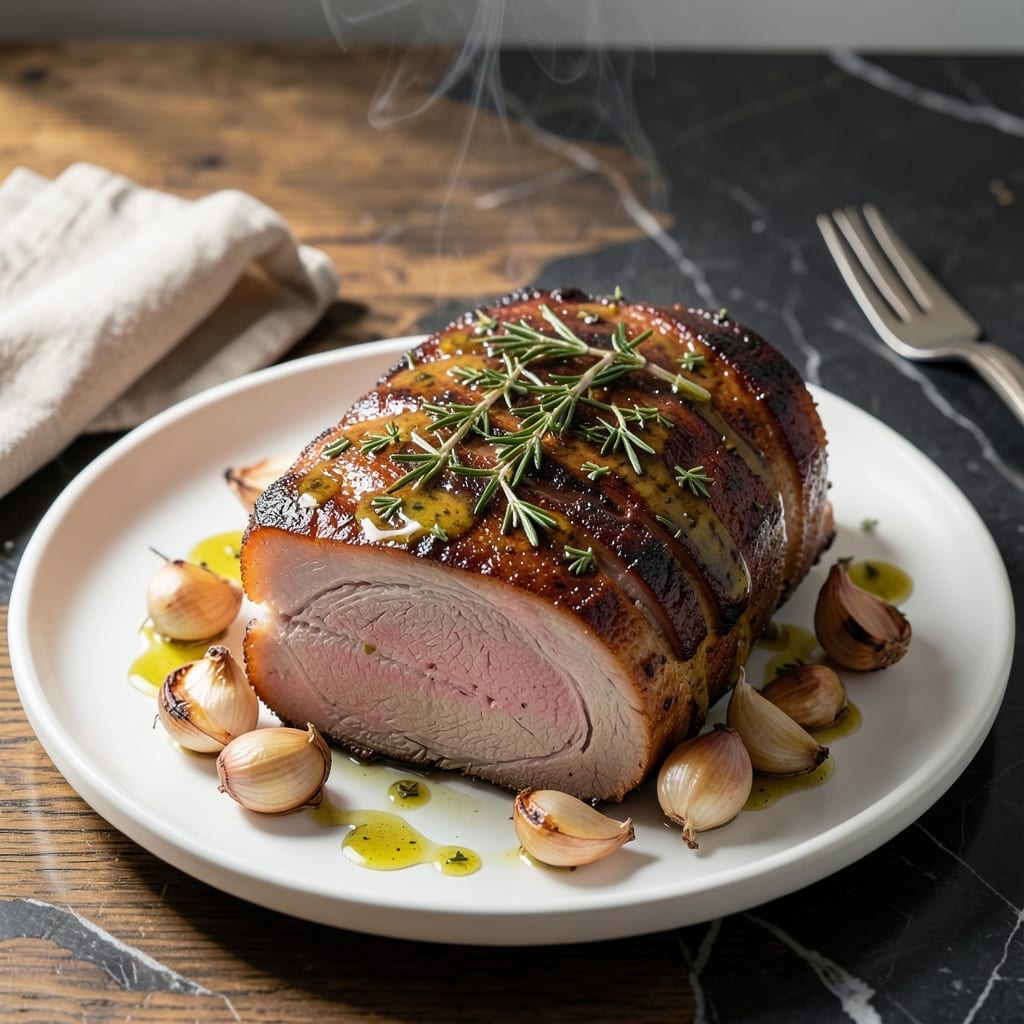
This oven-baked pork tenderloin delivers tender, juicy results with almost no effort. A simple herb crust and precise cooking time transform an affordable cut into a centerpiece-worthy dish.
I developed this method after years of overcooking pork, learning that a meat thermometer is your best tool. The herb crust adds flavor without overwhelming the natural taste of the meat.
The result is consistently tender pork with a golden crust, ready in under an hour. Perfect for weeknight dinners or Sunday suppers.
Serve with roasted vegetables or mashed potatoes for a complete meal. Here’s how to make it right every time.
Ingredients for Pork Tenderloin Recipe Oven Baked
Simple ingredients, big flavor impact for this herb-crusted centerpiece.
| Ingredient | Amount | Notes |
|---|---|---|
| Pork Tenderloin 🥩 | 1 ½ lb | Trimmed of excess fat |
| Olive Oil 🫒 | 2 tbsp | Extra-virgin preferred |
| Dijon Mustard 🟡 | 2 tbsp | Smooth variety for coating |
| Garlic Cloves 🧄 | 4 cloves | Minced for herb crust |
| Fresh Rosemary 🌿 | 2 tbsp | Finely chopped leaves |
| Fresh Thyme 🍃 | 2 tbsp | Leaves stripped from stems |
| Breadcrumbs 🍞 | ¾ cup | Panko for extra crunch |
| Kosher Salt 🧂 | 1 ½ tsp | Diamond Crystal preferred |
| Black Pepper 🌶️ | 1 tsp | Freshly ground for best flavor |
| Dried Oregano 🌿 | 1 tsp | Mediterranean blend ideal |
| Paprika 🌶️ | 1 tsp | Sweet or smoked variety |
| Butter 🧈 | 1 tbsp | Melted for crust binding |
[recipe_ingredient_scaler]
The pork tenderloin itself should be about 1.5 pounds—look for one with even thickness so it cooks uniformly. Whole Foods or Costco have great options (the good stuff, not the pre-marinated kind). Don’t skip trimming the silver skin—it’s tough and doesn’t soften. For the herbs, fresh rosemary and thyme make all the difference here. Grab them from the produce section, not those sad little jars of dried.
No Dijon? Whole-grain mustard works in a pinch (just not yellow mustard—too mild). Fresh out of panko? Crushed melba toast or saltines give a similar crunch. If you’re missing fresh herbs, dried at one-third the amount gets you close. The olive oil can be swapped for avocado oil if that’s what you’ve got (don’t waste the expensive stuff on this).
The tenderloin can marinate in the crust mixture for up to 24 hours if you want to prep ahead. Store raw pork in the fridge for no more than 2 days. Leftovers? They’ll keep for about 4 days refrigerated or freeze for 3 months.
Why You’ll Love This Recipe
- Set and Forget: I just mix olive oil, Dijon, garlic, and rosemary, rub it on the tenderloin, and let the oven do the rest.
- Flavor Bomb: The rosemary and garlic crust forms this insane savory seal that makes every bite ridiculously good.
- Crowd Pleaser: Honestly, it works for Sunday dinner with the in-laws or a random Tuesday when I need something reliable.
- Lunch for Days: Leftovers slice cold for sandwiches or reheat beautifully—my secret weapon for busy weeks.
Step-by-Step Instructions for Herb-Crusted Pork Tenderloin
Here’s the method that delivers perfectly tender results with crispy herb crust every time.
Step 1: Prep and Season the Pork Tenderloin
Pat the 1.5 lb Pork Tenderloin dry with paper towels. This is crucial—moisture prevents the crust from adhering properly. Trim any remaining silver skin with a sharp knife. Season all over with the 1.5 tsp Kosher Salt and 1 tsp Black Pepper, pressing gently so the seasoning sticks to the surface.
I always let the seasoned tenderloin sit at room temperature for 20-30 minutes before cooking. This ensures even cooking throughout and prevents the center from being underdone while the outside overcooks. You’ll notice the meat takes on the seasoning more effectively this way.
Step 2: Create the Herb Crust Mixture
In a small bowl, combine the 0.75 cup Breadcrumbs, 2 tbsp Fresh Rosemary, 2 tbsp Fresh Thyme, 1 tsp Dried Oregano, and 1 tsp Paprika. I like to crush the dried herbs between my fingers to release their oils for maximum flavor. Stir in the 2 tbsp Dijon Mustard and 1 tbsp Butter (melted) until the mixture resembles wet sand.
The butter helps bind the crust while the Dijon adds a subtle tang that cuts through the richness of the pork. If the mixture seems too dry, add another ½ tsp of melted butter, but don’t make it soggy—it needs to adhere to the pork without sliding off.
Step 3: Sear and Crust the Tenderloin
Heat the 2 tbsp Olive Oil in a large oven-safe skillet over medium-high heat until shimmering. Sear the pork on all sides for about 2 minutes per side until you achieve a golden brown color. Don’t rush this step—the sear creates a flavorful foundation for your crust.
Once seared, brush the entire surface of the pork with the herb crust mixture, pressing gently to ensure it sticks. The residual heat from the pan will help the crust adhere. You’ll see the herbs start to sizzle—that’s how you know it’s working.
Step 4: Bake to Perfect Tenderness
Transfer the skillet to a preheated 400°F oven and bake for 20-25 minutes, or until the internal temperature reaches 145°F. I recommend using an instant-read thermometer for accuracy. The crust should be deep golden brown and crispy to the touch.
Real talk: pork tenderloin can dry out quickly, so start checking at 15 minutes. If the crust begins to darken too much before the pork is done, tent loosely with foil. The meat will continue cooking as it rests, so pull it out when it hits 140°F for medium-rare perfection.
Step 5: Rest and Serve
Transfer the pork to a cutting board and let it rest for 10 minutes. This allows the juices to redistribute, ensuring every slice is moist and tender. I know it’s hard to wait, but skipping this step means dry pork—and nobody wants that.
Slice the tenderloin into ½-inch thick medallions and serve immediately. The herb crust should be crispy on the outside with a perfect crumb texture, while the pork inside remains juicy and tender. Any leftover crust mixture can be sprinkled over the slices for extra flavor.
Pro Tips For Making Pork Tenderloin Recipe Oven Baked
- Preheat the Pan: I learned this the hard way—sear the tenderloin in a screaming-hot oven-safe pan for 2 minutes per side before transferring to the oven. It locks in juices and gives that golden crust the Dijon mustard glaze clings to.
- Slice the Garlic: Sounds weird, but slicing the garlic cloves instead of mincing them prevents burning in the oven. You get all the flavor without the bitterness, and they’re easier to remove if someone’s picky.
- Don’t Overcook: Pull it at 145°F internal temp—pork tenderloin goes from perfect to dry in minutes. I use a meat thermometer now after ruining two dinners by guessing.
- Rest Before Carving: Give it a solid 5-10 minutes under foil after baking. I skip this when I’m lazy, but the meat stays juicier and the rosemary-infused olive oil settles into every bite.
Pro Cooking Tips for This Recipe
Thermometer Accuracy
Invest in a quality instant-read thermometer like ThermoWorks Classic—it’s the only way to ensure perfect doneness every time. I pull the pork at 140°F since it’ll rise to 145°F while resting. This prevents dryness that ruins so many pork dishes. 🌡️
Even Cooking Trick
Tuck the thinner end of the tenderloin under itself and secure with kitchen twine before cooking. This creates uniform thickness for even cooking. I learned this trick from my local butcher in Portland—game changer for consistent results.
Crust Adhesion
Press the herb mixture firmly onto the seared pork surface. The heat from the pan helps the crust stick better. If it’s not adhering, your pork might still be too wet—pat it very dry before seasoning and searing.
Sear Perfection
Use a cast iron skillet for the best sear—it retains heat beautifully. Get it ripping hot before adding the oil, then wait until the oil shimmers. Don’t move the pork for the full 2 minutes per side to develop that golden crust.
Resting Matters
Let the pork rest for the full 10 minutes under loose foil. This lets juices redistribute. I know it’s tempting to slice early, but you’ll lose 30% of the moisture if you cut too soon. 💡
Oven Calibration
Check your oven temperature with an oven thermometer—many run 25-50°F off. For this recipe, 400°F is ideal. If your oven runs hot, reduce to 375°F and add 5 minutes to cooking time.
Nutrition Facts
Frequently Asked Questions
What internal temperature should I aim for?
Pull the pork at 140°F—it will rise to 145°F while resting. This ensures juicy, tender meat without overcooking. Use an instant-read thermometer for accuracy.
Can I use dried herbs instead of fresh?
Yes, use 1/3 the amount of dried herbs. For example, 2 tsp dried rosemary replaces 2 tbsp fresh. Crush them between your fingers to release more flavor.
Why does my crust fall off during baking?
Pat the pork very dry before searing and pressing the crust on firmly. Excess moisture prevents adhesion. Also, avoid moving the pork too soon after crusting.
How do I prevent dry pork?
Don’t overcook! Remove at 140°F, tent with foil if crust browns too fast, and rest for 10 minutes before slicing. This keeps it moist and tender.

Trained in classic French technique but raised on slow-cooked ribs and spicy rubs, she blends culinary skill with smoke and soul.