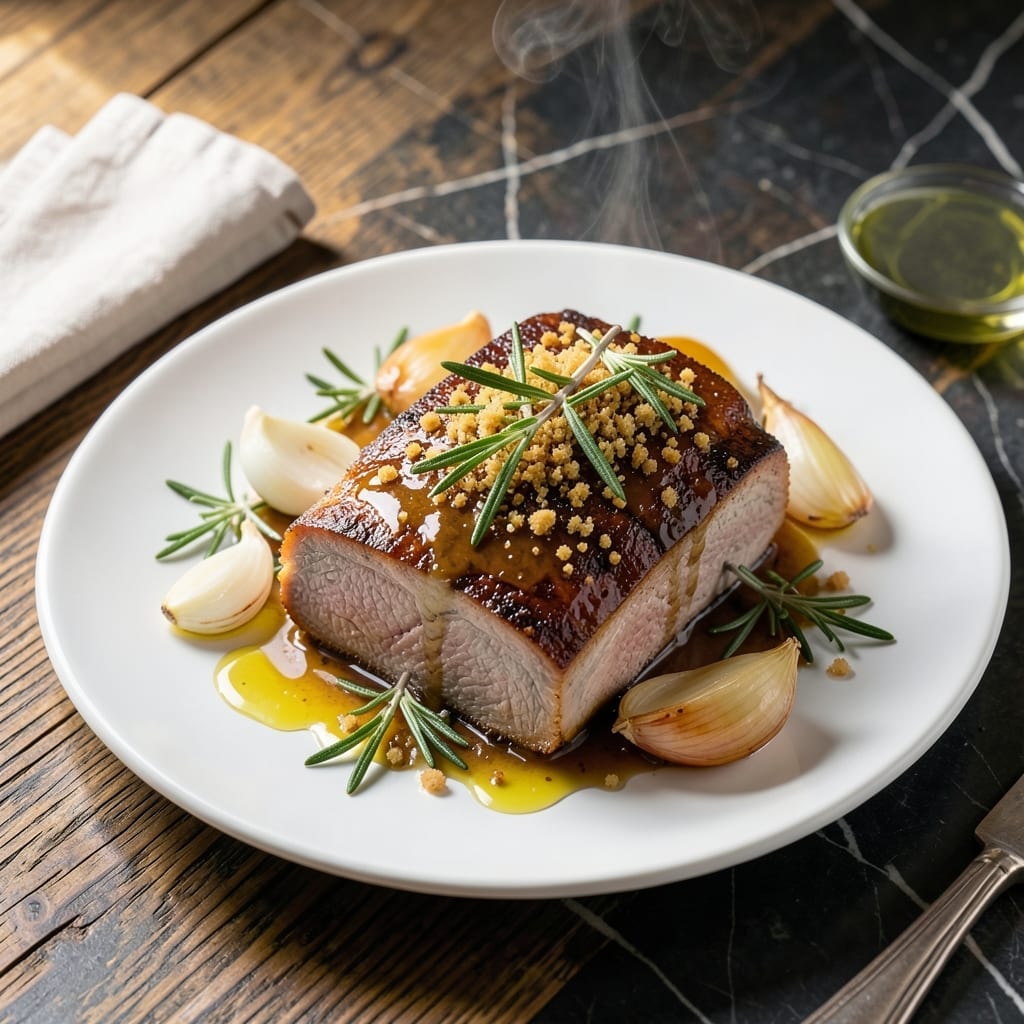
I’ve spent years perfecting pork tenderloin, and this garlic-herb crust delivers a tender bite with every slice. The secret lies in a simple but precise method that locks in moisture while creating a fragrant, golden crust.
With just a handful of pantry staples and 15 minutes of prep, this dish comes together effortlessly. The herb blend infuses the meat with bold flavor, while a high-heat sear ensures the centers stay juicy and succulent.
What you’ll serve is a centerpiece worthy of any dinner table—golden, aromatic, and resting in its own flavorful pan juices. It’s a foolproof way to elevate a lean cut into something extraordinary.
Pair with roasted vegetables or mashed potatoes for a complete, impressive meal.
Ingredients for Pork Tenderloin Recipe Tin Eats
Lean pork meets bold herbs and garlic for a crust that carries every bite.
| Ingredient | Amount | Notes |
|---|---|---|
| Pork Tenderloin 🥩 | 1 ½ lb | Trimmed of silver skin |
| Garlic Cloves 🧄 | 6 cloves | Minced finely for crust |
| Fresh Rosemary 🌿 | 2 tbsp | Chopped, stems discarded |
| Fresh Thyme 🍃 | 2 tbsp | Leaves stripped from stems |
| Dijon Mustard 🟡 | 2 tbsp | For crust adhesion |
| Breadcrumbs 🍞 | ¾ cup | Panko for extra crunch |
| Olive Oil 🫒 | 3 tbsp | Divided for searing and crust |
| Kosher Salt 🧂 | 1 ½ tsp | Diamond Crystal preferred |
| Black Pepper 🌶️ | 1 tsp | Freshly ground coarse |
| Butter 🧈 | 2 tbsp | Unsalted, for basting |
| Fresh Parsley 🌿 | ¼ cup | Chopped, for garnish |
| Lemon 🍋 | 1 whole | Zest and juice for brightness |
| Shallot 🧅 | 1 whole | Finely minced for depth |
[recipe_ingredient_scaler]
The pork tenderloin is the star here—look for 1.5 lb pieces with even thickness at Whole Foods or your local butcher. Avoid anything with excessive fat streaks (that’s not marbling, that’s waste). The herbs need to be fresh—dried won’t give you that vibrant crust. I grab mine from Trader Joe’s when I’m in a rush, but farmers market bunches have more punch.
No fresh herbs? Dried at one-third the amount works in a pinch, but the texture won’t be the same. Swap panko for regular breadcrumbs if needed (the crust just won’t be as crispy). Out of Dijon? Whole-grain mustard adds great texture. The butter can be olive oil for a dairy-free take—just don’t skip the basting step (that’s what builds the crust).
Pork keeps 3-4 days in the fridge—cook it sooner rather than later. Leftovers? Carve and store in pan juices for up to 4 days. The crust softens but the flavor deepens. Freezing isn’t ideal (tenderloin dries out), but if you must, wrap tightly and use within 2 months.
Why You’ll Love This Recipe
- One Pan Wonder: I love that this comes together on a single sheet pan—just sear the pork, toss in the garlic and herbs, and let the oven do the work.
- Herb-Crusted Perfection: The rosemary and thyme with that Dijon mustard rub create a crust so flavorful, I skip the sauce every time.
- Weeknight Hero: Honestly, it’s my go-to for busy evenings—fancy enough for guests but fast enough for a Tuesday.
- Leftovers That Shine: The pork slices up beautifully for sandwiches or salads the next day, and the flavors only get better overnight.
Step-by-Step Instructions for Garlic-Herb Crusted Pork Tenderloin
Here’s the method for perfectly tender, juicy pork with a crispy herb crust every time.
Step 1: Prep the Pork and Make the Herb Crust
Pat the 1.5 lb Pork Tenderloin dry with paper towels, then season all over with 1.5 tsp Kosher Salt and 1 tsp Black Pepper. I press the seasoning into the meat so it adheres well. Meanwhile, combine the 6 cloves Garlic Cloves, 2 tbsp Fresh Rosemary, 2 tbsp Fresh Thyme, 1 whole Shallot, 2 tbsp Dijon Mustard, and 0.75 cup Breadcrumbs in a bowl.
The texture should resemble wet sand. I use Panko for extra crunch, but regular breadcrumbs work too. The Dijon mustard not only binds the crust but also adds a subtle tang that cuts through the richness of the pork.
Step 2: Sear the Pork Tenderloin to Golden Perfection
Heat 2 tbsp Olive Oil in a large oven-safe skillet over medium-high heat until shimmering. Sear the pork on all sides for 2-3 minutes per side until deep golden brown. Don’t rush this step—you want a good crust to form before the pork goes into the oven.
I like to hold the tenderloin with tongs to sear the rounded edges. Once all sides are browned, transfer the pork to a plate and let it rest for 2 minutes. This brief rest helps the juices redistribute slightly before the crust goes on.
Step 3: Apply the Crust and Roast
Brush the seared pork all over with the remaining 1 tbsp Olive Oil, then press the herb-breadcrumb mixture onto the top and sides, creating a thick, even layer. The crust should stick easily thanks to the Dijon mustard in the mix.
Return the pork to the skillet and add 2 tbsp Butter to the pan. As the butter melts, spoon it over the crust to help it brown. Transfer the skillet to a preheated 400°F oven and roast for 15-20 minutes until the internal temperature reaches 145°F.
Step 4: Rest, Slice, and Garnish
Remove the pork from the oven and transfer it to a cutting board. Tent loosely with foil and let it rest for 10 minutes. This resting period is crucial for keeping the meat juicy—it allows the muscle fibers to relax and the juices to redistribute.
Slice the pork into 1-inch thick medallions and arrange on a platter. Garnish with 0.25 cup Fresh Parsley and a squeeze of 1 whole Lemon for brightness. The lemon adds a zesty contrast to the rich, herby crust. Serve immediately while the crust is still crispy.
Pro Tips For Making Pork Tenderloin Recipe Tin Eats
- Pat It Dry: Blot the pork tenderloin with paper towels before seasoning—this guarantees a better sear and helps the Dijon mustard cling properly.
- Sear Then Roast: Start with a hot pan for 2-3 minutes per side to lock in juices, then finish in the oven at 400°F until it hits 145°F internal.
- Mince Herbs Finely: Chop the rosemary and thyme as small as possible so they distribute evenly and don’t overpower any single bite.
- Rest Before Slicing: Let the pork rest under foil for 8-10 minutes after cooking—I learned this the hard way when my first few attempts bled all over the cutting board.
Dietary Considerations for This Recipe
Gluten-Free Option
To make this dish gluten-free, simply swap the 0.75 cup Breadcrumbs for gluten-free panko or crushed gluten-free cornflakes. I’ve had great success with Ian’s brand—their texture mimics traditional panko beautifully. The crust will still crisp up nicely in the 400°F oven.
Dairy-Free Adaptation
Skip the 2 tbsp Butter and use an additional 1 tbsp Olive Oil for basting. The herb crust will still brown and develop flavor without dairy. I’ve tested this with avocado oil too, which has a high smoke point for searing.
Low-Carb Version
Replace the breadcrumbs with ½ cup almond flour and ¼ cup grated Parmesan for a low-carb crust. Press the mixture firmly onto the pork, as it won’t bind as tightly as traditional breadcrumbs. Roast as directed until 145°F. 💪
Nut Allergy Note
For nut-free cooking, avoid almond flour and stick to standard breadcrumbs. If cross-contamination is a concern, check labels on all ingredients, including the Dijon Mustard—some brands process in facilities with nuts. I always use Annie’s Organic for peace of mind.
Sodium Considerations
To reduce sodium, cut the 1.5 tsp Kosher Salt in half and use low-sodium Dijon mustard. The herbs and garlic will still provide plenty of flavor. Taste the crust mixture before applying—adjust with a pinch more salt if needed.
Paleo Adjustments
Use crushed pork rinds instead of breadcrumbs and coconut aminos in place of Dijon. The pork rinds create a crispy, savory crust that’s perfect for paleo diets. I find 4505 Chicharrones work wonderfully here. 🌟
Nutrition Facts
Frequently Asked Questions
Can I use a different cut of pork?
Stick with tenderloin for best results—it cooks quickly and stays tender. Pork loin works but needs more time at 400°F. Avoid tougher cuts like shoulder.
How do I know when it’s done?
Use a meat thermometer! Pull it from the oven at 145°F internal temperature. The juices should run clear, not pink. Let it rest 10 minutes before slicing.
Can I make this ahead of time?
Prep the crust mixture a day ahead, but apply it just before cooking. Cooked tenderloin keeps 3-4 days refrigerated—reheat gently to preserve moisture.
Why did my crust fall off?
Press the crust firmly onto the seared pork and let it set for 2 minutes before roasting. Using Dijon mustard in the mixture helps it adhere better.

Trained in classic French technique but raised on slow-cooked ribs and spicy rubs, she blends culinary skill with smoke and soul.
- Recipe for Boneless Pork Chops in Cast Iron Skillet: Sear and Baste to Juicy Perfection - October 3, 2026
- Recipe for Boneless Cross Rib Roast: Slow-Roasted Beef with Herb Crust - October 3, 2026
- Hamburgers in Sauce Recipe Crock Pot: Slow-Cooked Savory Delight - October 3, 2026