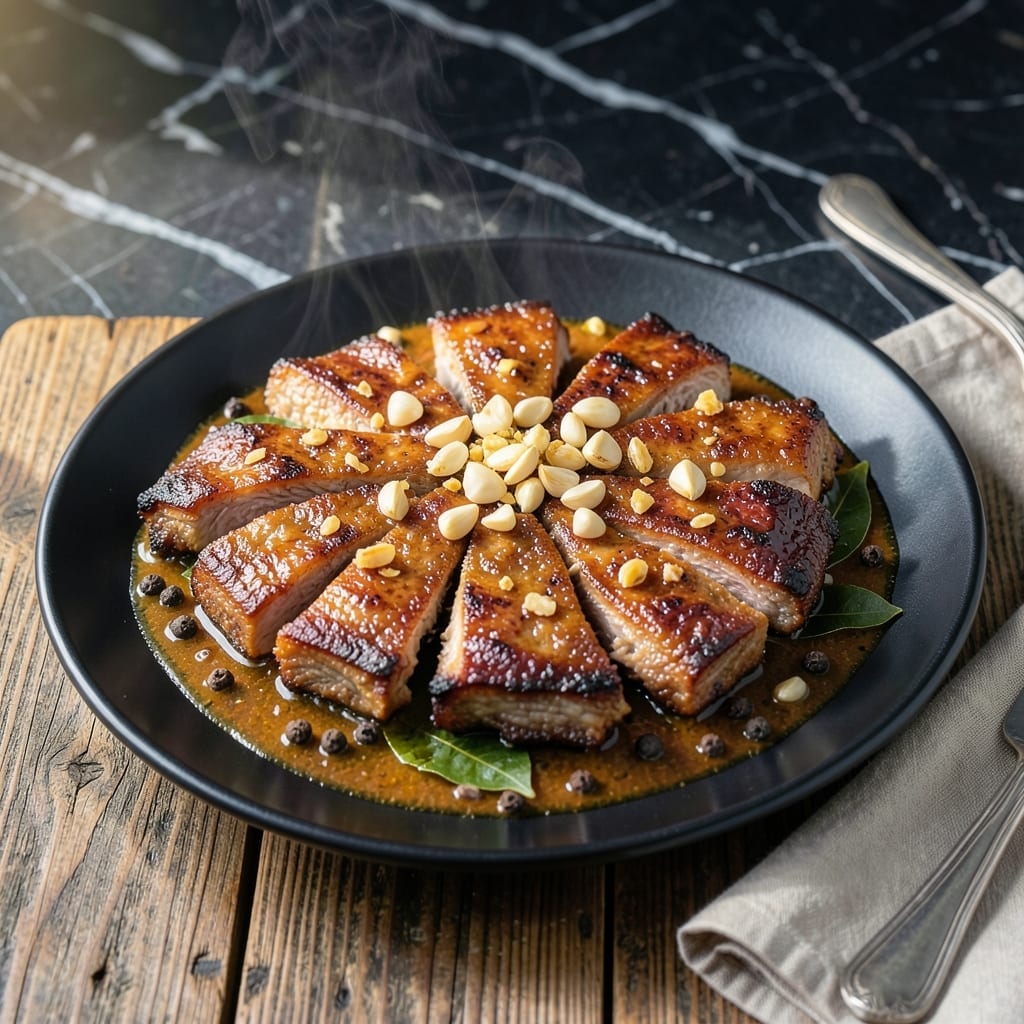
This Filipino-style pork spare ribs recipe delivers the tender results you’d find in a Manila kitchen. The adobo braising method transforms tough cuts into melt-in-your-mouth perfection.
I’ve streamlined the technique without compromising authenticity—just soy sauce, vinegar, garlic, and time. The ribs absorb every layer of flavor as they simmer low and slow.
What emerges is fall-off-the-bone meat with a rich, tangy glaze that clings to every bite. It’s the kind of dish that makes weeknight dinners feel like a celebration.
Serve with steamed rice to soak up the sauce. This method guarantees tender ribs every time.
Ingredients for Pork Spare Ribs Recipe Filipino Style
These authentic ingredients deliver Manila-style adobo-braised ribs with melt-in-your-mouth tenderness and rich tangy depth.
| Ingredient | Amount | Notes |
|---|---|---|
| Pork Spare Ribs 🥩 | 2 ½ lb | Cut into individual ribs |
| Soy Sauce 🫒 | ¾ cup | Use Filipino brands like Silver Swan |
| White Vinegar 💧 | ½ cup | Cane vinegar preferred |
| Garlic Cloves 🧄 | 10 cloves | Peeled and smashed |
| Bay Leaves 🍃 | 4 whole | Dried or fresh |
| Black Peppercorns 🌶️ | 1 tsp | Whole, lightly crushed |
| Brown Sugar 🍚 | 2 tbsp | Light or dark variety |
| Onion 🧅 | 1 whole | Medium-sized, sliced |
| Water 💧 | 1 ½ cups | For braising liquid |
| Vegetable Oil 🫒 | 2 tbsp | For searing ribs |
| Salt 🧂 | 1 tsp | Adjust to taste |
| Green Onions 🧅 | ½ cup | Chopped, for garnish |
[recipe_ingredient_scaler]
The spare ribs are the foundation here. Look for meaty, well-marbled cuts at your butcher or Asian market—Costco also carries quality pork ribs in bulk. Filipino soy sauce (like Silver Swan or Datu Puti) has a distinct sweet-salty balance that’s essential for authentic flavor. The vinegar should be white cane vinegar, which has a sharper acidity than standard white vinegar.
No Filipino soy sauce? Regular soy sauce plus a pinch of sugar gets you close. Out of cane vinegar? White vinegar with a splash of rice vinegar works. Bay leaves are non-negotiable for the adobo profile, but if you’re stuck, a pinch of dried thyme can fill in. The brown sugar can be swapped for coconut sugar if you prefer a deeper caramel note.
The braising liquid develops more depth overnight. Store leftovers in an airtight container for up to 4 days in the fridge or freeze for 3 months. The ribs reheat beautifully—just warm gently in the sauce to keep them tender.
Why You’ll Love This Recipe
- One Pot Wonder: I toss everything—ribs, soy sauce, vinegar, garlic—in one pot and let it simmer. Honestly, cleanup is just a single dish.
- Garlic Soy Magic: The soy sauce and garlic create this deep, savory-sweet glaze that clings to every rib. I’ll be real: I could drink the sauce.
- Feeds the Gang: Between us, this is my go-to for family dinners or potlucks. It stretches easily and everyone always asks for seconds.
- Budget Stretcher: Pork spare ribs are affordable, and the simple pantry staples keep costs low. Leftovers taste even better the next day.
Step-by-Step Instructions for Filipino Style Pork Spare Ribs
Master this technique for perfectly tender ribs with the classic adobo flavor profile every time.
Step 1: Sear the Ribs to Build Flavor
Heat the 2 tbsp vegetable oil in a large, heavy pot over medium-high heat. When the oil shimmers, working in batches if needed, add the 2.5 lb pork spare ribs and sear until deeply browned on all sides, about 3-4 minutes per side.
Don’t overcrowd the pot—this steams the meat instead of searing it. The Maillard reaction here creates complex flavors that will infuse the braising liquid. Transfer the seared ribs to a plate and set aside.
Step 2: Build the Adobo Braising Liquid
In the same pot, reduce heat to medium and add the sliced 1 whole onion. Sauté for 2-3 minutes until softened and translucent. Add the 10 cloves garlic cloves, 4 whole bay leaves, and 1 tsp black peppercorns, stirring for 30 seconds until fragrant.
Pour in the 0.75 cup soy sauce, 0.5 cup white vinegar, 2 tbsp brown sugar, 1.5 cups water, and 1 tsp salt. Stir to dissolve the sugar and combine all ingredients. This liquid forms the classic Filipino adobo base that will transform the ribs.
Step 3: Braise Until Fall-Off-The-Bone Tender
Return the seared ribs to the pot, ensuring they’re mostly submerged in the braising liquid. Bring to a boil, then reduce heat to low, cover, and simmer gently for 1.5 to 2 hours.
Check occasionally and turn the ribs for even cooking. The ribs are done when the meat pulls away from the bone easily with a fork and reaches 195-200°F internally. The liquid should reduce slightly, creating a rich, flavorful sauce.
Step 4: Reduce and Glaze the Ribs
Once the ribs are tender, remove the lid and increase the heat to medium. Simmer uncovered for an additional 10-15 minutes to reduce the sauce slightly and allow it to thicken into a glaze.
Baste the ribs occasionally with the sauce during this process. The sauce should coat the back of a spoon and have a balanced sweet-savory-tangy flavor. This final step intensifies all the adobo flavors.
Step 5: Garnish and Serve
Transfer the ribs to a serving platter and spoon the thickened sauce over them. Sprinkle with the 0.5 cup green onions for a fresh contrast to the rich, braised ribs.
Serve immediately with steamed rice to soak up the incredible sauce. The ribs should be so tender that the meat nearly falls off the bone with minimal pressure, delivering the promised melt-in-your-mouth texture.
Pro Tips For Making Pork Spare Ribs Recipe Filipino Style
- Parboil First: Simmer the ribs in water with bay leaves for 20 minutes before marinating—I learned this the hard way after my first batch turned out tough.
- Crush the Garlic: Smash the garlic cloves lightly before mincing so they release more flavor into the soy-vinegar marinade.
- Skip the Overcrowding: Leave space between ribs when browning or they’ll steam instead of caramelize, and nobody wants sad, pale ribs.
- Reduce the Sauce: After braising, pull the ribs out and boil the sauce down for 5-7 minutes until thick enough to coat the back of a spoon—this makes a real difference in the final glaze.
Common Mistakes When Making Great pork spare ribs recipe filipino style
Skipping the Sear
I know it’s tempting to skip searing to save time, but this step builds the foundation of flavor through the Maillard reaction. Without searing, your ribs will lack depth, even after hours of braising. Take the 3-4 minutes per side—it’s worth it. 🔥
Overcrowding the Pot
When searing the 2.5 lb pork spare ribs, resist the urge to fit them all at once. Overcrowding steams the meat instead of browning it. Work in batches if needed—this ensures each rib gets properly caramelized.
Using Wrong Vinegar
Filipino adobo requires cane vinegar for its distinct sharpness. Regular white vinegar works in a pinch, but the flavor profile won’t be as authentic. I always keep Datu Puti cane vinegar in my pantry for this reason.
Boiling Instead of Simmering
A rolling boil makes ribs tough. Maintain a gentle simmer at low heat for 1.5 to 2 hours. You’ll know it’s right when small bubbles occasionally break the surface. This slow cook transforms the meat into fall-off-the-bone perfection.
Discarding Bay Leaves
Those 4 bay leaves are essential for authentic adobo flavor. They infuse the braising liquid with subtle earthiness. Don’t skip them, and don’t remove them early—let them work their magic throughout the entire cooking process.
I learned this the hard way when I once omitted them. The dish tasted flat. 💡
Nutrition Facts
Frequently Asked Questions
Can I substitute regular soy sauce for Filipino soy sauce?
Yes, but add a pinch of sugar to mimic the sweetness of Filipino brands like Silver Swan. The flavor will be close, though slightly less complex.
How long can I store leftover ribs?
Store in an airtight container in the fridge for up to 4 days or freeze for 3 months. Reheat gently in the sauce to maintain tenderness.
Why do the ribs need to reach 195-200°F?
At this temperature, collagen in the ribs breaks down into gelatin, creating that signature fall-off-the-bone texture. Lower temps won’t achieve the same melt-in-your-mouth result.

Trained in classic French technique but raised on slow-cooked ribs and spicy rubs, she blends culinary skill with smoke and soul.
- Recipe for Boneless Pork Chops in Cast Iron Skillet: Sear and Baste to Juicy Perfection - October 3, 2026
- Recipe for Boneless Cross Rib Roast: Slow-Roasted Beef with Herb Crust - October 3, 2026
- Hamburgers in Sauce Recipe Crock Pot: Slow-Cooked Savory Delight - October 3, 2026