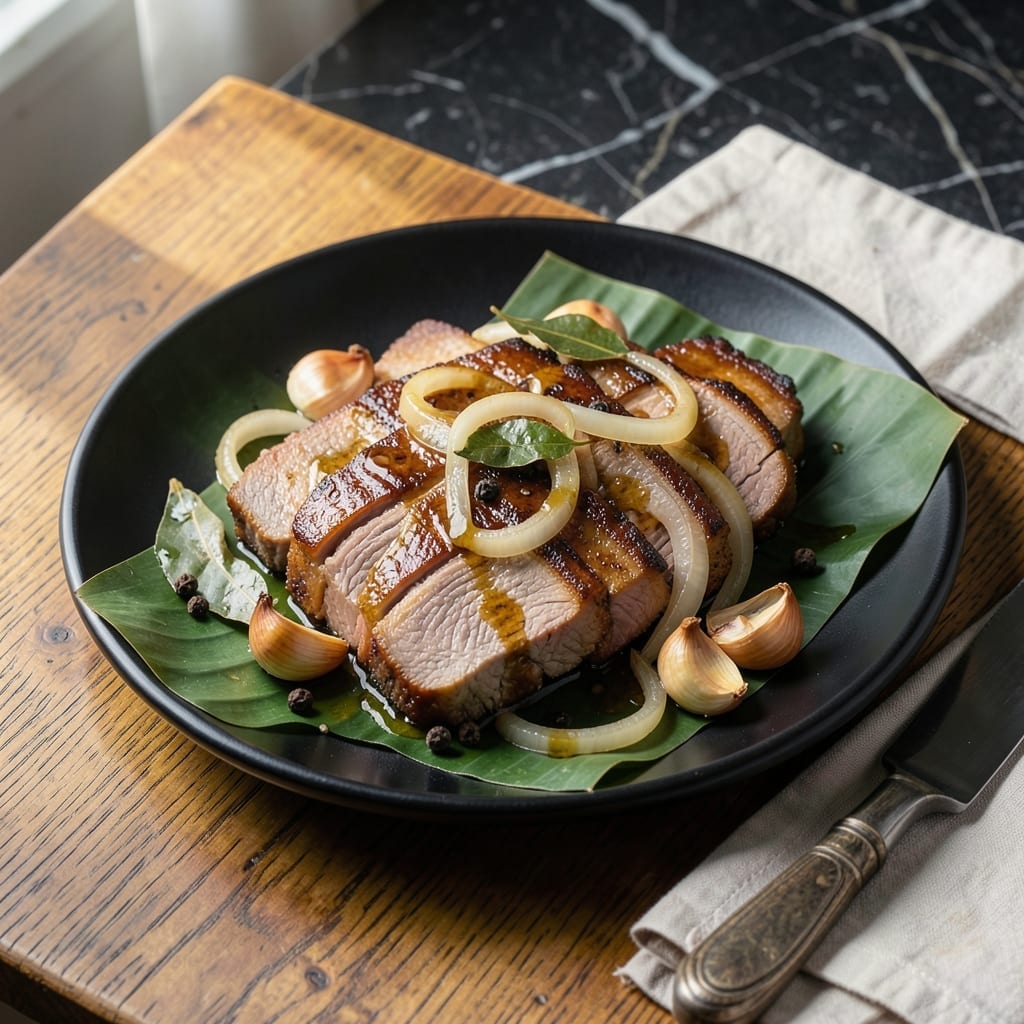
This slow-braised pork tongue recipe delivers tender results that melt in your mouth, showcasing authentic Filipino flavors in every bite.
The secret lies in the patient cooking process, allowing the meat to become incredibly supple while absorbing the rich, aromatic sauce. This method transforms a humble ingredient into a dish worthy of special occasions.
Traditional Pinoy techniques ensure maximum flavor infusion, with each step carefully designed to enhance tenderness and depth. The sauce becomes a perfect complement to the meat’s natural richness.
You’ll achieve restaurant-quality results with this proven approach, creating a dish that’s both comforting and impressive.
Ingredients for Pork Tongue Recipe Pinoy
These authentic Filipino ingredients create a richly layered dish with melt-in-your-mouth tenderness.
| Ingredient | Amount | Notes |
|---|---|---|
| Pork Tongue 🍖 | 2 lb | Fresh, cleaned, skin removed |
| White Vinegar 💧 | ½ cup | For initial boiling to remove impurities |
| Bay Leaves 🍃 | 3 pieces | Dried, for braising liquid |
| Black Peppercorns 🌶️ | 1 tsp | Whole, for braising aroma |
| Garlic Cloves 🧄 | 8 cloves | Peeled, smashed for flavor infusion |
| Yellow Onion 🧅 | 1 whole | Quartered, for aromatic base |
| Soy Sauce 🫒 | ½ cup | Filipino brand preferred for authenticity |
| Calamansi Juice 🍋 | ¼ cup | Freshly squeezed for tangy brightness |
| Brown Sugar 🧈 | ¼ cup | Packed, for caramelized depth |
| Tomato Sauce 🍅 | 1 cup | For rich sauce base |
| Carrots 🥕 | 2 whole | Peeled, cut into chunks for braising |
| Potatoes 🥔 | 2 whole | Peeled, cubed for hearty addition |
| Green Bell Pepper 🌶️ | 1 whole | Seeded, sliced for color and texture |
| Fish Sauce 🐟 | 2 tbsp | Filipino patis for umami depth |
| Water 💧 | 4 cups | For braising liquid to cover meat |
[recipe_ingredient_scaler]
The pork tongue quality is paramount—source from a trusted butcher or Asian grocery store that specializes in offal. Look for fresh, pink tongues without gray discoloration. Some markets sell them pre-trimmed (skin removed), but you can do this yourself with a sharp knife. The vinegar in the initial boil removes any gamey taste, so don’t skip this step (worth the extra minute).
No calamansi? Lime juice at a 1:1 ratio works in a pinch, though the flavor won’t be identical. Filipino soy sauce brands like Silver Swan or Datu Puti are ideal, but any dark soy sauce adds depth. For the fish sauce, Thai Tiparos is a good substitute if Filipino patis isn’t available. The vegetables can be adjusted—try adding green beans or cabbage for variation.
This dish tastes even better the next day as the flavors meld. Store in an airtight container in the fridge for up to 5 days, or freeze for 3 months. Reheat gently on the stovetop with a splash of water to restore the sauce’s consistency.
Why You’ll Love This Recipe
- One Pot Wonder: I just toss the pork tongue, vinegar, garlic, and spices in a pot and let it simmer—minimal fuss, maximum flavor.
- Garlic-Pepper Punch: The garlic cloves and black peppercorns infuse the tongue with a deep, savory kick that’s hard to resist.
- Feeds the Crowd: I serve this at family gatherings, and it’s always a hit—great for potlucks or Sunday lunch with rice.
- Budget Stretch: Pork tongue is affordable, and the leftovers taste even better the next day—saves me money and time.
Step-by-Step Instructions for Slow-Braised Filipino-Style Pork Tongue
Master this traditional technique for fall-off-the-bone tenderness with balanced sweet-savory flavors.
Step 1: Initial Boil to Cleanse the Pork Tongue
Place the 2 lb Pork Tongue in a large pot and cover with the 4 cups Water. Add the 0.5 cup White Vinegar, then bring to a rolling boil over high heat. This initial step is crucial for removing any impurities and eliminating the strong odor often associated with offal.
Allow it to boil vigorously for 10-12 minutes, skimming off any foam that rises to the surface. You’ll notice the water becomes cloudy as it draws out impurities. After this time, drain the pork tongue and rinse it under cold water to remove any remaining residue. This preparation ensures a clean, neutral base for the braising process.
Step 2: Build the Aromatic Braising Liquid
In the same pot, combine the cleaned pork tongue with the 0.5 cup Soy Sauce, 0.25 cup Calamansi Juice, 0.25 cup Brown Sugar, 1 cup Tomato Sauce, 3 pieces Bay Leaves, 1 tsp Black Peppercorns, 8 cloves Garlic Cloves, and 1 whole Yellow Onion.
Add enough fresh water to just cover the pork tongue—about 4 cups total liquid including the other wet ingredients. Bring to a gentle simmer over medium heat. The liquid should be fragrant with the garlic and onion, and the brown sugar should be fully dissolved before proceeding. This aromatic base infuses the meat with complex, layered flavors.
Step 3: Slow-Braise the Pork Tongue with Vegetables
Once simmering, reduce heat to low and add the 2 whole Carrots, 2 whole Potatoes, and 1 whole Green Bell Pepper. Cover the pot and let it braise undisturbed for 2 to 2.5 hours. The pork tongue should become fork-tender, and the potatoes should be easily pierced with a knife.
Resist the urge to stir frequently—this allows the meat to cook evenly and the vegetables to absorb the rich braising liquid. You’ll know it’s ready when the pork tongue yields effortlessly to a fork and the sauce has reduced slightly, coating the back of a spoon with a glossy sheen.
Step 4: Finish with Fish Sauce and Reduce
Stir in the 2 tbsp Fish Sauce and simmer uncovered for an additional 10-15 minutes. This step intensifies the flavors and allows the sauce to thicken slightly. The fish sauce adds a deep umami note that balances the sweetness from the brown sugar and the acidity from the calamansi juice.
Taste and adjust the seasoning if needed, though the combination of soy sauce, fish sauce, and calamansi typically provides a well-balanced flavor profile. The final sauce should be rich, slightly tangy, and deeply savory, clinging to the tender pork tongue and vegetables.
Pro Tips For Making Pork Tongue Recipe Pinoy
- Score the Skin: Use a sharp knife to make shallow crosshatches on the pork tongue before boiling—this helps the flavors penetrate deeper and prevents curling during cooking.
- Double Boil First: Parboil the tongue in plain water for 10 minutes first to remove impurities, then drain and start fresh with your vinegar, garlic, and spices. I learned this the hard way after a few bitter batches.
- Don’t Rush the Simmer: Keep the heat low and steady for at least 1.5 hours—pork tongue turns tender slowly, and cranking the heat just makes it tough.
- Add Vinegar Late: Stir in the white vinegar during the last 20 minutes of cooking to brighten the flavor without making the meat dry or stringy.
Best Sauces and Condiments for This pork tongue recipe pinoy
Classic SawSawan Dip
This traditional Filipino vinegar dipping sauce is a must with tender pork tongue. Combine ½ cup white vinegar, ¼ cup calamansi juice, 1 minced garlic clove, 1 tsp black pepper, and 1 tbsp soy sauce. The acidity cuts through the richness beautifully. 💛
Spicy Calamansi Sauce
For heat lovers, mix ¼ cup calamansi juice with 2 tbsp soy sauce, 1 tbsp brown sugar, 1 tsp chili flakes, and 1 minced siling labuyo. The sweet-spicy-tangy combo elevates every bite.
Gravy Enhancement
Reduce the braising liquid further by simmering for 10 extra minutes until thickened. Add 1 tbsp cornstarch slurry for glossy consistency. Drizzle this concentrated sauce over the meat and vegetables.
Garlic Butter Glaze
Melt 4 tbsp butter with 3 minced garlic cloves and 1 tbsp fish sauce. Brush over sliced pork tongue before serving. This adds a rich, savory layer that complements the dish perfectly.
Pickled Vegetables
Serve with atchara (Filipino pickled papaya) for a refreshing contrast. The vinegar tang and crunch balance the meat’s richness. Store-bought versions work, but homemade is always better.
Nutrition Facts
Frequently Asked Questions
How do I clean pork tongue before cooking?
Rinse under cold water, then trim off any fat or skin. Soak in water with vinegar for 10 minutes before the initial boil to remove impurities. This removes odor and ensures a clean taste.
Can I use a pressure cooker to speed up cooking?
Yes! After the initial boil, cook on high pressure for 45-50 minutes. Natural release ensures tenderness. Adjust liquid amounts as pressure cookers require less water than braising.
Why is my sauce too thin?
Simmer uncovered for 10-15 extra minutes to reduce. For quicker results, mix 1 tbsp cornstarch with 2 tbsp cold water and stir in. The sauce should coat the back of a spoon.
What can I substitute for calamansi?
Use lime or lemon juice at a 1:1 ratio. While the flavor differs slightly, the acidity balances the dish well. Avoid bottled juice for best results.

Trained in classic French technique but raised on slow-cooked ribs and spicy rubs, she blends culinary skill with smoke and soul.
- Recipe for Boneless Pork Chops in Cast Iron Skillet: Sear and Baste to Juicy Perfection - October 3, 2026
- Recipe for Boneless Cross Rib Roast: Slow-Roasted Beef with Herb Crust - October 3, 2026
- Hamburgers in Sauce Recipe Crock Pot: Slow-Cooked Savory Delight - October 3, 2026