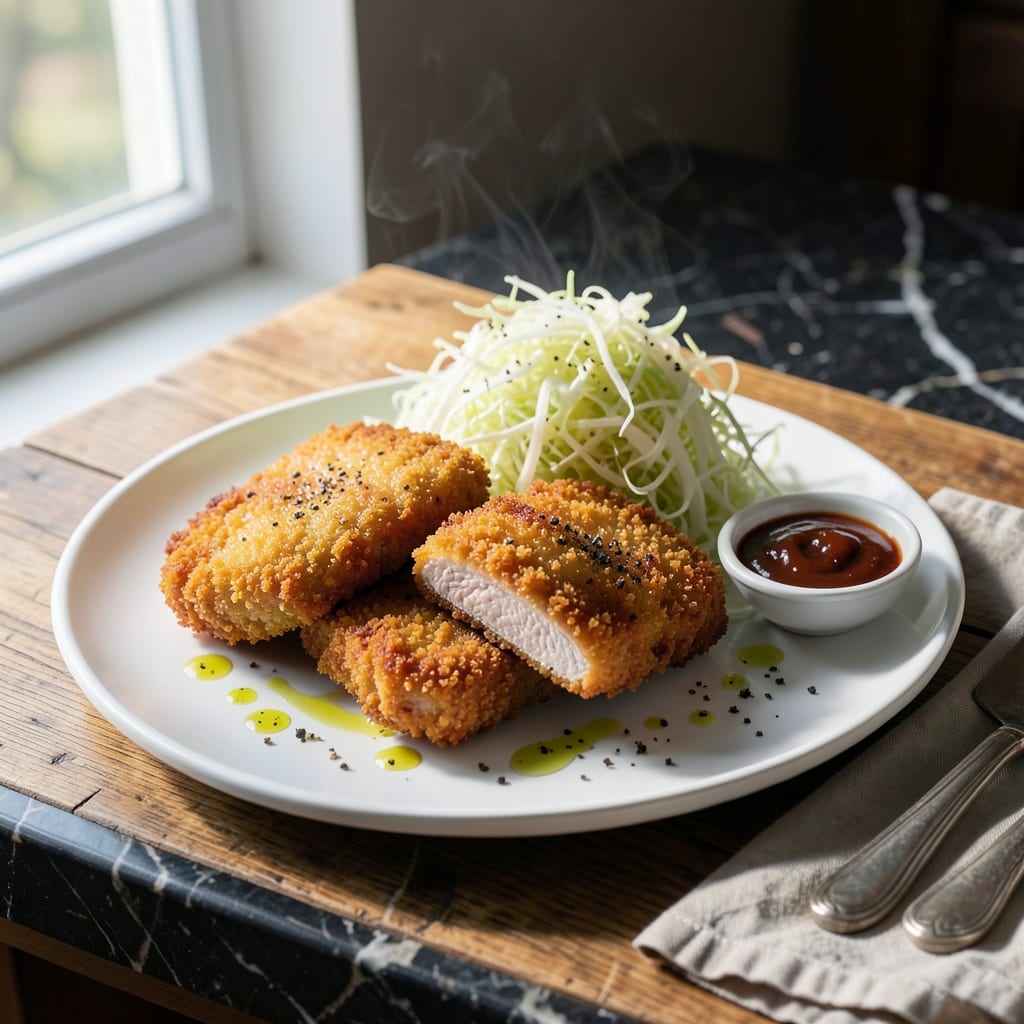
This Filipino-inspired pork tonkatsu delivers crispy, golden-brown cutlets that shatter at the first bite. The secret lies in a double breading technique and precise frying temperature to ensure every piece stays perfectly crispy without absorbing excess oil.
I’ve refined this method to maintain the traditional Japanese tonkatsu texture while adapting it to local tastes. The panko breadcrumbs create an extra-crunchy exterior, while the pork remains juicy and tender inside.
The sweet and tangy tonkatsu sauce ties everything together, balancing the richness of the fried pork. Serve with steamed rice and shredded cabbage for a complete, satisfying meal.
This recipe stays true to its roots while offering a familiar, comforting twist. Here’s how to make it at home.
Ingredients for Pork Tonkatsu Recipe Panlasang Pinoy
Crispy pork cutlets require quality pork loin, panko breadcrumbs, and a few pantry staples for the sauce.
| Ingredient | Amount | Notes |
|---|---|---|
| Pork Loin 🥩 | 1 ½ lb | Cut into 1/2-inch thick slices |
| Salt 🧂 | 1 tsp | Divided for seasoning pork |
| Ground Black Pepper 🌶️ | ½ tsp | Freshly ground preferred |
| All-Purpose Flour 🌾 | ½ cup | For initial dredging |
| Large Eggs 🥚 | 2 whole | Beaten for breading |
| Panko Breadcrumbs 🍞 | 2 cups | Japanese-style for extra crunch |
| Neutral-Frying Oil 🫒 | 4 cups | Canola or vegetable oil |
| Green Cabbage 🥬 | ½ whole | Thinly shredded for serving |
| Ketchup 🍅 | ½ cup | For tonkatsu sauce base |
| Worcestershire Sauce 💧 | 2 tbsp | Adds umami depth |
| Soy Sauce 🫙 | 2 tbsp | Low-sodium preferred |
| Granulated Sugar 🍚 | 2 tbsp | Balances sauce sweetness |
| Garlic Cloves 🧄 | 2 cloves | Minced for sauce |
| Steamed Rice 🍚 | 3 cups | Cooked, for serving |
[recipe_ingredient_scaler]
The pork loin should have visible marbling for juiciness—ask your butcher for center-cut pieces. Panko breadcrumbs are non-negotiable for that signature crunch; find them in the Asian aisle at Kroger or Walmart. For the oil, peanut oil has the highest smoke point, but canola or vegetable work just as well. Always check the expiration date on your breadcrumbs—they go stale faster than you think.
No pork loin? Pork shoulder cut thin works in a pinch, though it’s slightly fattier. Swapping panko for regular breadcrumbs will sacrifice texture, but it’s doable. For the sauce, oyster sauce at half the amount can replace Worcestershire in a bind. If you’re avoiding gluten, use tamari instead of soy sauce and gluten-free panko. The eggs can be replaced with a cornstarch slurry for a vegan twist (though this isn’t vegan by default).
Fry the cutlets in batches to avoid crowding the pan (this lowers oil temperature). Store leftover tonkatsu in the fridge for up to 3 days—reheat in an air fryer or oven to revive the crispiness. The sauce keeps for 1 week refrigerated, so make extra for next time.
Why You’ll Love This Recipe
- Minimal Effort: I just coat, fry, and serve—no fancy techniques, just pork loin, flour, and eggs doing the work.
- Crispy Perfection: That golden crust with tender meat inside? The salt and pepper in the flour make every bite ridiculously good.
- Weeknight Hero: Honestly, it’s my go-to for busy evenings when I need something satisfying fast.
- Budget Friendly: Pork loin stretches far, and the pantry staples keep costs low without skimping on flavor.
Step-by-Step Instructions for Pork Tonkatsu With Sweet Sauce
Master the technique for achieving golden, crispy cutlets with a perfect crunch every time.
Step 1: Prepare and Season the Pork Loin
Slice the 1.5 lb Pork Loin into ½-inch thick cutlets. Place each piece between plastic wrap and gently pound to an even thickness using a meat mallet. This ensures uniform cooking and prevents curling during frying.
Season both sides of the cutlets with ½ tsp Salt and all of the ½ tsp Ground Black Pepper. I always use freshly ground pepper for maximum flavor impact. Let the seasoned pork rest for 10 minutes at room temperature—this allows the salt to penetrate slightly before breading.
Step 2: Create the Breading Station and Coat the Pork
Set up your breading station with three shallow dishes. Place the ½ cup All-Purpose Flour in the first, beat the 2 whole Large Eggs in the second, and put the 2 cups Panko Breadcrumbs in the third. This three-step process guarantees a thick, crispy crust that won’t fall off during frying.
Dredge each cutlet in the flour, shaking off the excess, then dip into the beaten eggs, allowing any excess to drip off. Finally, press firmly into the panko, ensuring complete coverage on all sides. The pressure helps the breadcrumbs adhere better. Place the breaded cutlets on a wire rack to rest for 5 minutes while you heat the oil.
Step 3: Fry to Golden Perfection
Heat the 4 cups Neutral-Frying Oil in a deep, heavy-bottomed pot to 340-350°F. Use a thermometer for accuracy—oil temperature is crucial for achieving that ideal crispy texture without burning. The oil should be deep enough to submerge the cutlets completely.
Carefully lower 1-2 cutlets into the hot oil (don’t overcrowd the pan). Fry for 4-5 minutes per side until the breading turns a deep golden brown and the internal temperature reaches 145°F. The panko should create an audible sizzle when it hits the oil. Transfer to a paper towel-lined plate to drain excess oil.
Step 4: Prepare the Tonkatsu Sauce
While the cutlets fry, make the signature sweet-savory sauce. In a small saucepan, combine the ½ cup Ketchup, 2 tbsp Worcestershire Sauce, 2 tbsp Soy Sauce, 2 tbsp Granulated Sugar, and minced 2 cloves Garlic Cloves. Simmer over medium-low heat for 5-7 minutes, stirring occasionally.
The sauce is ready when it thickens slightly and coats the back of a spoon. The sugar should dissolve completely, and the garlic should mellow into the background. Taste and adjust seasoning if needed, though the combination of ingredients should provide a perfect balance of sweet, tangy, and umami flavors.
Step 5: Serve with Traditional Accompaniments
Slice the fried cutlets into ½-inch strips just before serving to maintain crispiness. Arrange over a bed of thinly shredded ½ whole Green Cabbage—its mild crunch and slight bitterness perfectly complement the rich pork.
Drizzle generously with the warm tonkatsu sauce or serve it on the side for dipping. Accompany with 3 cups Steamed Rice to complete the meal. The contrast of the crispy pork, soft rice, and fresh cabbage creates the authentic tonkatsu experience that defines this classic dish.
Pro Tips For Making Pork Tonkatsu Recipe Panlasang Pinoy
- Pound the Pork: Use a meat mallet to flatten the pork loin to an even 1/2-inch thickness—this guarantees even cooking and a crispier crust. I learned this the hard way after pulling out dry, overcooked edges from thicker cuts. —
- Chill Before Frying: After breading, let the pork rest in the fridge for 15-20 minutes. This keeps the coating from sliding off in the oil and gives it that perfect crunch. —
- Double Fry for Crisp: Fry once at 325°F (160°C) until golden, then again at 375°F (190°C) for 1-2 minutes. Sounds like extra work, but it’s the only way to get that shatteringly crisp exterior without drying out the meat. —
- Drain on a Rack: Skip the paper towels—place fried tonkatsu on a wire rack instead. This stops steam from making the bottom soggy while you finish the batch.
Health Benefits of This Recipe
Protein Powerhouse
This dish delivers high-quality protein from pork loin, with each 4-ounce serving providing about 25 grams of protein. That’s essential for muscle repair and growth, making it a satisfying main course. I love that it keeps me full for hours after eating. 💪
Rich in B Vitamins
Pork is an excellent source of B vitamins, particularly B1, B6, and B12, which support energy metabolism and brain function. A single serving covers a significant portion of your daily needs for these nutrients.
Iron and Zinc Boost
You’ll get a healthy dose of iron and zinc from the pork loin, both crucial for immune function and overall health. These minerals are especially important for maintaining energy levels and supporting your body’s natural defenses.
Healthy Fats
While pork loin is lean, it still contains healthy fats that contribute to satiety and flavor. The breading adds a bit of indulgence, but the pork itself is a great source of monounsaturated fats when trimmed properly.
Balanced Meal
When served with steamed rice and shredded cabbage, this dish becomes a well-rounded meal. The cabbage adds fiber and vitamins, while the rice provides long-lasting energy. Together, they create a nutritious, balanced plate. 💛
Nutrition Facts
Frequently Asked Questions
Can I use pork shoulder instead of loin?
Yes, pork shoulder works but is fattier. For best results, trim excess fat and cut into ½-inch thick pieces. The texture will be slightly different but still delicious!
What if my breading falls off during frying?
This usually means the oil wasn’t hot enough or the cutlets weren’t pressed firmly into the panko. Ensure oil reaches 340-350°F and let breaded pork rest for 5 minutes before frying.
How do I keep the cutlets crispy after frying?
Place fried cutlets on a wire rack, not paper towels, to prevent steam from making them soggy. Keep warm in a 200°F oven until serving. Serve immediately for maximum crunch!

Trained in classic French technique but raised on slow-cooked ribs and spicy rubs, she blends culinary skill with smoke and soul.
- Recipe for Boneless Pork Chops in Cast Iron Skillet: Sear and Baste to Juicy Perfection - October 3, 2026
- Recipe for Boneless Cross Rib Roast: Slow-Roasted Beef with Herb Crust - October 3, 2026
- Hamburgers in Sauce Recipe Crock Pot: Slow-Cooked Savory Delight - October 3, 2026