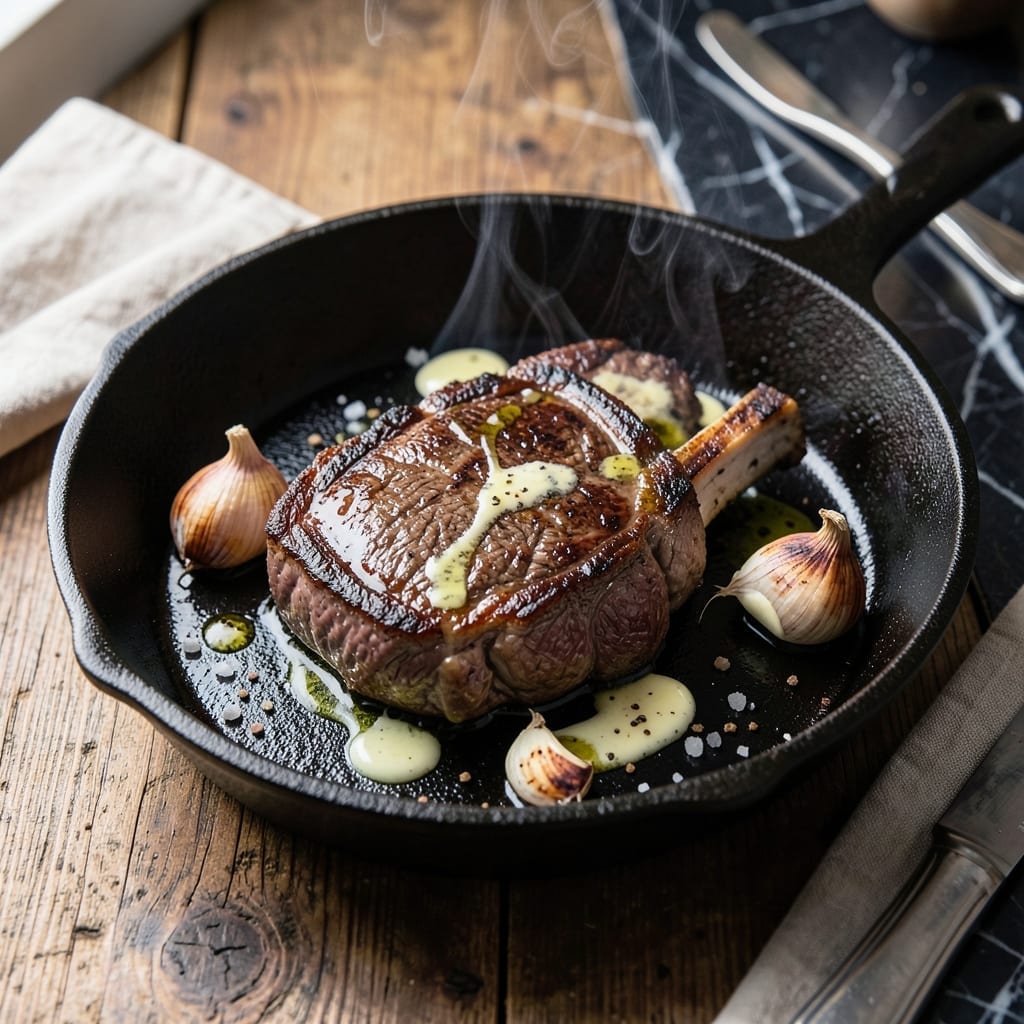
Mastering porterhouse steak in cast iron is a game of precision and patience. The thick cut demands proper technique to achieve that coveted juicy interior with a deeply seared crust.
My grandmother always said great steak starts with a screaming hot pan and dry meat. In cast iron, you control the sear while keeping the center perfectly medium-rare through careful temperature management.
This method delivers restaurant-quality results with simple tools and techniques. The cast iron creates an unmatched crust while the thick cut ensures a gradient from crispy exterior to tender center.
With proper resting, the juices redistribute for a final result that’s worth every minute of effort. Here’s how to execute this perfectly.
Ingredients for Porterhouse Steak Recipe Cast Iron
Pantry staples and a single premium cut elevate this cast iron masterpiece to perfection.
| Ingredient | Amount | Notes |
|---|---|---|
| Porterhouse Steak 🥩 | 2 whole | 1.5 to 2 inches thick, bone-in |
| Kosher Salt 🧂 | 2 tsp | Diamond Crystal preferred for even seasoning |
| Freshly Ground Black Pepper 🌶️ | 1 tsp | Coarse grind for texture |
| Extra-Virgin Olive Oil 🫒 | 2 tbsp | High smoke point for searing |
| Unsalted Butter 🧈 | 4 tbsp | For basting during cooking |
| Garlic Cloves 🧄 | 4 cloves | Lightly crushed for aroma |
| Fresh Rosemary Sprigs 🌿 | 2 whole | Optional for aromatic basting |
| Fresh Thyme Sprigs 🍃 | 2 whole | Optional for aromatic basting |
| Vegetable Oil 💧 | 1 tbsp | High smoke point for initial sear |
| Flaky Sea Salt 🧂 | ½ tsp | For finishing after resting |
[recipe_ingredient_scaler]
The porterhouse is non-negotiable here. USDA Prime or Choice grade ensures optimal marbling and tenderness. Source from a trusted butcher or Whole Foods for consistent quality. Dry-brine the steak 24 hours ahead (salt only) for deeper seasoning. The thickness is critical—1.5 to 2 inches allows for a perfect medium-rare center while achieving a deep crust. Pat the steak meticulously dry before cooking; moisture is the enemy of a proper sear.
No fresh herbs? Dried rosemary and thyme work at one-third the amount, but fresh delivers superior aroma. Ghee can replace butter for a higher smoke point, though it lacks the same richness. If using salted butter, reduce the kosher salt by half. For oil, avocado oil is an excellent high-smoke-point alternative. The garlic can be omitted, but it adds a subtle depth that complements the beef beautifully.
Rest the steak uncovered on a wire rack for 10-15 minutes before and after cooking. Leftover steak? Slice thinly against the grain and store in an airtight container for up to 4 days. Reheat gently in a skillet or enjoy cold in sandwiches. The butter can be stored in the fridge for 3 months if unused.
Why You’ll Love This Recipe
- One Pan Wonder: I love that I only need a cast iron skillet and five ingredients to make this steak.
- Crispy & Buttery: The combination of olive oil, butter, and a screaming-hot pan gives it that restaurant-quality crust.
- Impresses Every Time: Honestly, it’s my go-to for date nights or when I want to feel fancy without the fuss.
- Leftovers? No Chance: Between us, this never lasts past one meal—but if it did, sliced thin over a salad the next day is pure gold.
Step-by-Step Instructions for Porterhouse Steak Cast Iron
Master the perfect sear and even doneness with this precise cast iron method.
Step 1: Season and Temper the Steaks
Pat the porterhouse steaks thoroughly dry with paper towels to ensure a proper sear. Season both sides aggressively with the 2 tsp Kosher Salt and 1 tsp Freshly Ground Black Pepper, pressing the seasoning into the meat so it adheres well during cooking.
Let the seasoned steaks sit at room temperature for 45-60 minutes before cooking. This step is crucial for even cooking—cold steaks sear poorly on the outside while remaining raw inside. The thick cut (1.5-2 inches) needs this time to lose its chill.
Step 2: Preheat the Cast Iron and Initial Sear
Place your cast iron skillet over medium-high heat and add the 1 tbsp Vegetable Oil. Once the oil begins to shimmer and you see the first wisp of smoke (3-4 minutes of preheating), carefully add the steaks to the pan.
Sear undisturbed for 3-4 minutes per side until a deep, mahogany crust forms. The steaks should release easily from the pan when properly seared—if they stick, they’re not ready to flip. For the porterhouse, I start with the bone side down first to render some fat.
Step 3: Baste with Aromatics
Reduce heat to medium and add the 2 tbsp Extra-Virgin Olive Oil, 4 tbsp Unsalted Butter, 4 cloves Garlic Cloves, 2 whole Fresh Rosemary Sprigs, and 2 whole Fresh Thyme Sprigs to the pan. Tilt the skillet slightly and use a spoon to continuously baste the steaks with the melted butter and oil mixture.
Baste for 2-3 minutes, spooning the hot butter over the steaks every 10-15 seconds. The garlic should become golden brown and fragrant, and the herbs will release their aromatic oils into the basting liquid. This step builds flavor and helps cook the steaks evenly.
Step 4: Finish and Rest
For medium-rare, cook until the internal temperature reaches 125-130°F on an instant-read thermometer inserted into the thickest part of the meat, avoiding the bone. The total cooking time will be 12-16 minutes depending on thickness and your stove’s heat.
Transfer the steaks to a cutting board and let them rest for 10 minutes before slicing. This resting period allows the juices to redistribute throughout the meat. Slice the meat against the grain on both sides of the T-bone, then finish with a pinch of 0.5 tsp Flaky Sea Salt for texture and final seasoning.
Pro Tips For Making Porterhouse Steak Recipe Cast Iron
- Dry the Steak: Pat the porterhouse completely dry with paper towels before seasoning—any moisture will steam the steak instead of searing it, and I learned this the hard way with a sad, gray crust.
- Start Ripping Hot: Get your cast iron screaming hot, almost smoking, before adding the oil and steak; a lukewarm pan guarantees a weak crust and uneven cooking.
- Skip the Cold Butter: Take the butter out of the fridge 10 minutes before basting so it melts evenly over the steak instead of pooling in one spot like it did the first three times I tried this.
- Rest Under Foil: After cooking, tent the steak loosely with foil and let it rest for 5-10 minutes—this keeps it warm while the juices redistribute, and yes, it actually changes the outcome.
Pro Cooking Tips for Great porterhouse steak recipe cast iron
Pan Temperature Control
Your cast iron needs to be screaming hot—I preheat mine for 5 minutes over medium-high heat until the oil just starts to smoke. This creates the Maillard reaction that gives you that coveted crust. A ThermoWorks infrared thermometer helps me hit the sweet spot every time. 🌡️
Dry Meat is Key
I learned from my grandmother: pat the steak bone-dry with paper towels before seasoning. Even a drop of moisture creates steam, which prevents a proper sear. I press the Kosher Salt and black pepper into the meat so it adheres during cooking.
The Bone Side First
Start searing the porterhouse with the bone side down for 1-2 minutes. This renders some fat into the pan, adding flavor to your basting butter later. The bone also acts as an insulator, helping the meat cook more evenly.
Basting Technique
Tilt your skillet to pool the butter and olive oil, then spoon it continuously over the steak. I crush the garlic cloves lightly and add the rosemary and thyme for aromatic basting. This adds layers of flavor while cooking. 💡
Resting Matters
Let your steak rest for the full 10 minutes before slicing. I place mine on a wire rack set over a plate to keep the crust crisp. Slicing too soon causes all those precious juices to end up on your cutting board instead of in your steak.
Slicing Strategy
Slice perpendicular to the grain on both sides of the T-bone. For the strip side, look for the long muscle fibers and cut across them. This shortens the fibers, making each bite more tender. I use a 12-inch chef’s knife for clean cuts.
Nutrition Facts
Frequently Asked Questions
How long should I preheat the cast iron pan?
Preheat your cast iron for 5 minutes over medium-high heat until the oil just starts to smoke. This ensures a proper sear and prevents sticking.
Why start searing with the bone side down?
Starting bone-side down for 1-2 minutes renders fat into the pan, adding flavor. The bone also insulates the meat for more even cooking.
Can I skip resting the steak?
Never skip resting! Let it rest for the full 10 minutes to allow juices to redistribute. Slicing too soon results in dry meat.
What’s the ideal internal temperature for medium-rare?
Aim for 125-130°F in the thickest part, avoiding the bone. Use an instant-read thermometer for accuracy.

Trained in classic French technique but raised on slow-cooked ribs and spicy rubs, she blends culinary skill with smoke and soul.
- Recipe For Fried Pork Chops In An Iron Skillet: Crispy Crust With Juicy Centers - October 3, 2026
- Recipe for Fully Cooked Spiral Ham: Sweet Glaze and Effortless Elegance - October 3, 2026
- Recipe for Cream of Rice: Silky Smooth Breakfast Comfort - October 3, 2026