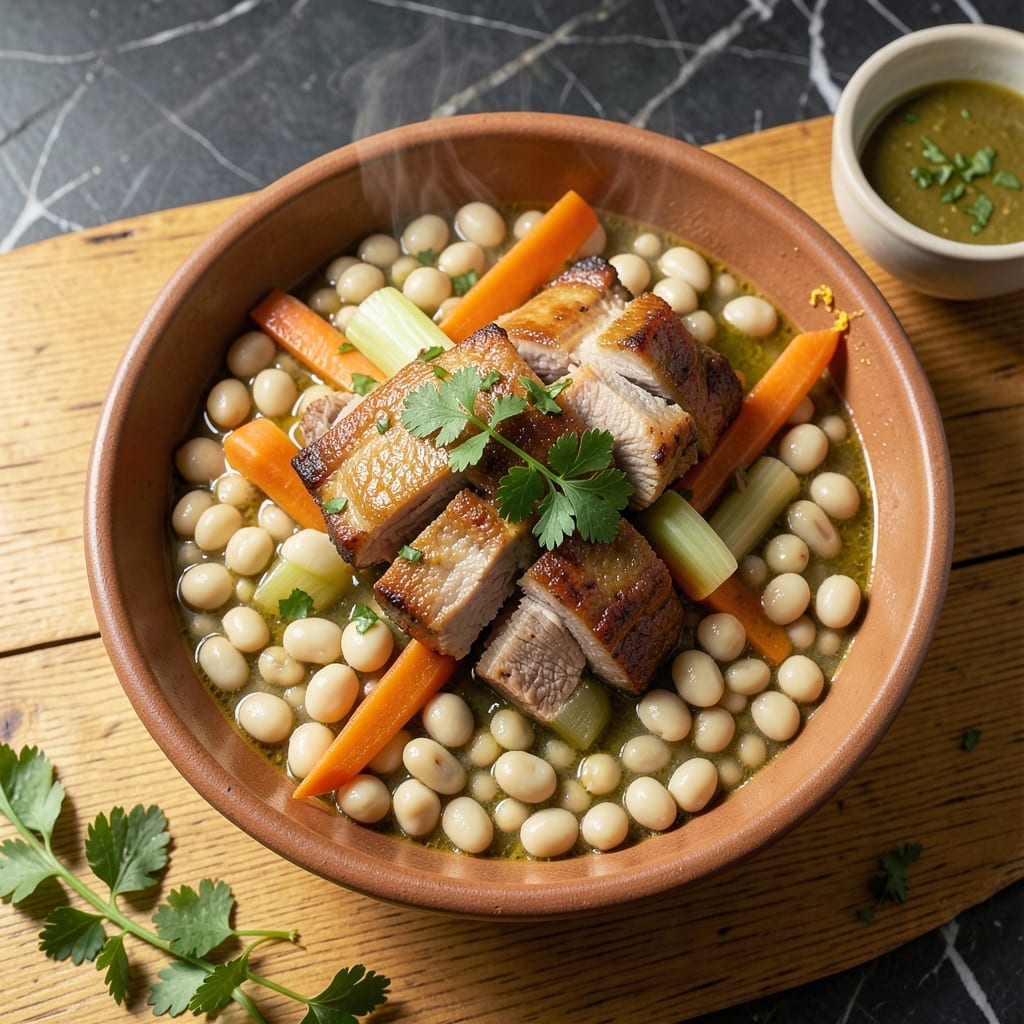
This stew brings Portuguese comfort food to your table with traditional flavors that have fed generations. The combination of white beans and pork creates a hearty dish that’s both rustic and deeply satisfying.
What makes this version special is the slow cooking method, which allows the beans to absorb the rich, savory broth while the pork becomes fall-apart tender. It’s a meal that rewards patience with every spoonful.
By the time it’s done, you’ll have a thick, flavorful stew with tender beans and melt-in-your-mouth pork. The aroma alone will draw everyone to the kitchen.
Serve it with crusty bread to soak up every last bite. This is home cooking at its most authentic.
Ingredients for Portuguese Favas
Simple ingredients for a hearty stew with traditional Portuguese flavors and tender beans.
| Ingredient | Amount | Notes |
|---|---|---|
| Dried White Beans 🌱 | 1 lb | Great Northern or cannellini |
| Pork Shoulder 🥩 | 1 lb | Boneless, cut into chunks |
| Onion 🧅 | 1 whole | Yellow or white, diced |
| Garlic Cloves 🧄 | 4 cloves | Minced for depth of flavor |
| Carrots 🥕 | 2 whole | Peeled and chopped |
| Celery Stalks 🥬 | 2 pieces | Diced, for aromatic base |
| Tomato Paste 🍅 | 2 tbsp | For rich umami flavor |
| Olive Oil 🫒 | ¼ cup | Extra-virgin preferred |
| Bay Leaves 🍃 | 2 pieces | Dried, whole leaves |
| Dried Oregano 🌿 | 1 tsp | Mediterranean variety preferred |
| Salt 🧂 | 1 ½ tsp | Kosher or sea salt |
| Black Pepper 🌶️ | ½ tsp | Freshly ground preferred |
| Vegetable Broth 💧 | 4 cups | Low-sodium for control |
| Red Wine Vinegar 🍷 | 1 tbsp | For bright acidity |
[recipe_ingredient_scaler]
The beans are the foundation here. Great Northern or cannellini hold their shape best after slow cooking. I grab mine from the bulk bins at Whole Foods—cheaper and you can get exactly what you need. The pork shoulder should have good marbling (that fat keeps it moist during the long cook). Most supermarkets sell it pre-cubed, but ask the butcher to cut it into 1-inch chunks if not.
No pork shoulder? Pork butt works just as well. Fresh out of white beans? Navy beans are a decent backup (they soften faster, so add them 30 minutes later). The tomato paste adds depth—those squeeze tubes at Trader Joe’s are perfect for avoiding waste. If you don’t drink wine, extra broth with a splash of lemon juice mimics the acidity.
This stew tastes even better the next day. Keeps in the fridge for 4-5 days or freezes for 3 months. I like to portion leftovers into containers for easy lunches—just reheat with a splash of water.
Why You’ll Love This Recipe
- Set and Forget: I toss everything into one pot, and the slow cooker does the rest while I handle my day.
- Rich, Hearty Flavor: The pork shoulder and garlic infuse the white beans with a depth that’s pure comfort in every bite.
- Feeds a Crowd: This makes a big batch, so it’s my go-to for family gatherings or meal prepping for the week.
- Budget Stretcher: Dried beans and pork shoulder are affordable, and this dish fills us up without breaking the bank.
Step-by-Step Instructions for Portuguese White Bean and Pork Stew
This traditional method delivers rich, hearty flavor with every spoonful.
Step 1: Soak and Prepare the Beans
Rinse the 1 lb Dried White Beans under cold water to remove any debris. Place them in a large bowl and cover with water by at least 2 inches. Let soak overnight or for at least 8 hours at room temperature.
You’ll know they’re ready when the beans have nearly doubled in size and feel slightly softer when pressed between your fingers. Drain and rinse again before using—this removes excess starch and prevents a cloudy cooking liquid.
Step 2: Brown the Pork and Aromatics
Heat the 0.25 cup Olive Oil in a large, heavy pot over medium-high heat. Add the 1 lb Pork Shoulder chunks and sear for 5-7 minutes until browned on all sides. Remove the pork with a slotted spoon and set aside.
In the same pot, add the 1 whole Onion, 2 whole Carrots, and 2 pieces Celery Stalks. Sauté for 5 minutes until the vegetables soften and the onion becomes translucent. Stir in the 4 cloves Garlic Cloves and cook for 30 seconds until fragrant.
Step 3: Build the Stew Base
Add the 2 tbsp Tomato Paste to the pot and cook for 1-2 minutes, stirring constantly to prevent burning. This step deepens the flavor and removes the raw taste from the tomato paste.
Return the pork to the pot along with the drained beans, 4 cups Vegetable Broth, 2 pieces Bay Leaves, 1 tsp Dried Oregano, 1.5 tsp Salt, and 0.5 tsp Black Pepper. Stir well to combine and bring to a gentle boil.
Step 4: Simmer to Perfection
Reduce the heat to low, cover the pot, and let the stew simmer gently for 1.5 to 2 hours. Stir occasionally to prevent sticking, and check that the liquid level remains consistent.
You’ll know it’s done when the beans are tender but not mushy and the pork falls apart easily with a fork. The stew should have a thick, hearty consistency with the beans absorbing much of the liquid.
Step 5: Finish and Serve
Once the stew is done, stir in the 1 tbsp Red Wine Vinegar. This adds a bright, tangy note that balances the richness of the pork and beans. Let the stew sit for 10 minutes off the heat to allow the flavors to meld together.
Taste and adjust seasoning if needed, though the flavors will deepen further as it rests. Serve hot in bowls, garnished with a drizzle of olive oil and crusty bread on the side to soak up every last bit of the delicious broth.
Pro Tips For Making Portuguese Favas
- Soak Overnight: Dried white beans need at least 8 hours in cold water—skip this and they’ll stay tough no matter how long you simmer. I learned this the hard way after serving crunchy favas to guests.
- Brown the Pork: Sear the pork shoulder in batches until deeply browned; it adds a layer of flavor that makes a real difference in the final dish. About 4-5 minutes per side on medium-high heat.
- Skip the Salt Early: Adding salt to the beans before they’re fully tender can make them stay firm. Wait until the last 30 minutes of cooking to season.
- Use the Pork Fat: After browning the pork, use the rendered fat to sauté the onions, garlic, and carrots—it’s free flavor and it works. Sounds weird, but it’s what my grandmother always did.
Dietary Considerations for This Dish
Vegetarian Adaptation
For a meat-free version, replace the pork with 1 lb mushrooms or 14 oz extra-firm tofu. Sear the mushrooms until golden brown—they’ll absorb the stew’s flavors beautifully. Tofu should be pressed and cubed first for the best texture.
Gluten-Free Status
This recipe is naturally gluten-free as written. Just double-check your vegetable broth and tomato paste labels to ensure no hidden wheat. I always grab San Marzano tomato paste for peace of mind. 💪
Lower Sodium Option
Cut the salt by half and use low-sodium vegetable broth. The red wine vinegar and tomato paste still provide plenty of flavor. Taste and adjust at the end—you can always add more salt if needed.
Dairy-Free Friendly
No dairy here, so this stew is safe for lactose-intolerant diners. If you want to add creaminess, stir in ½ cup coconut milk at the end. It won’t overpower the dish’s rustic character.
Nut Allergy Note
This dish contains no nuts, but be cautious with store-bought broths—some brands process them in facilities that handle nuts. I recommend Imagine Foods for their dedicated allergy-friendly facility. 🥗
High-Protein Boost
Add 1 cup cooked lentils along with the beans for extra protein. They’ll soften during the simmer and blend right in. This is a great way to stretch the meal for hungry crowds.
Nutrition Facts
Frequently Asked Questions
Do I need to soak the beans overnight?
Soaking for 8 hours or overnight is ideal for even cooking. In a pinch, use the quick-soak method: cover beans with water, boil for 2 minutes, then let sit for 1 hour.
Can I use canned beans instead?
Yes, but drain and rinse them first. Add canned beans during the last 30 minutes of cooking to prevent mushiness. Fresh beans give the best texture though.
What if my stew is too thin?
Simmer uncovered for 10-15 minutes to thicken. Mashing a few beans against the pot side also helps create a creamier consistency.
How do I store leftovers?
Cool completely, then refrigerate in airtight containers for up to 4 days. Freeze for longer storage, up to 3 months.

Trained in classic French technique but raised on slow-cooked ribs and spicy rubs, she blends culinary skill with smoke and soul.
- Recipe for Boneless Pork Chops in Cast Iron Skillet: Sear and Baste to Juicy Perfection - October 3, 2026
- Recipe for Boneless Cross Rib Roast: Slow-Roasted Beef with Herb Crust - October 3, 2026
- Hamburgers in Sauce Recipe Crock Pot: Slow-Cooked Savory Delight - October 3, 2026