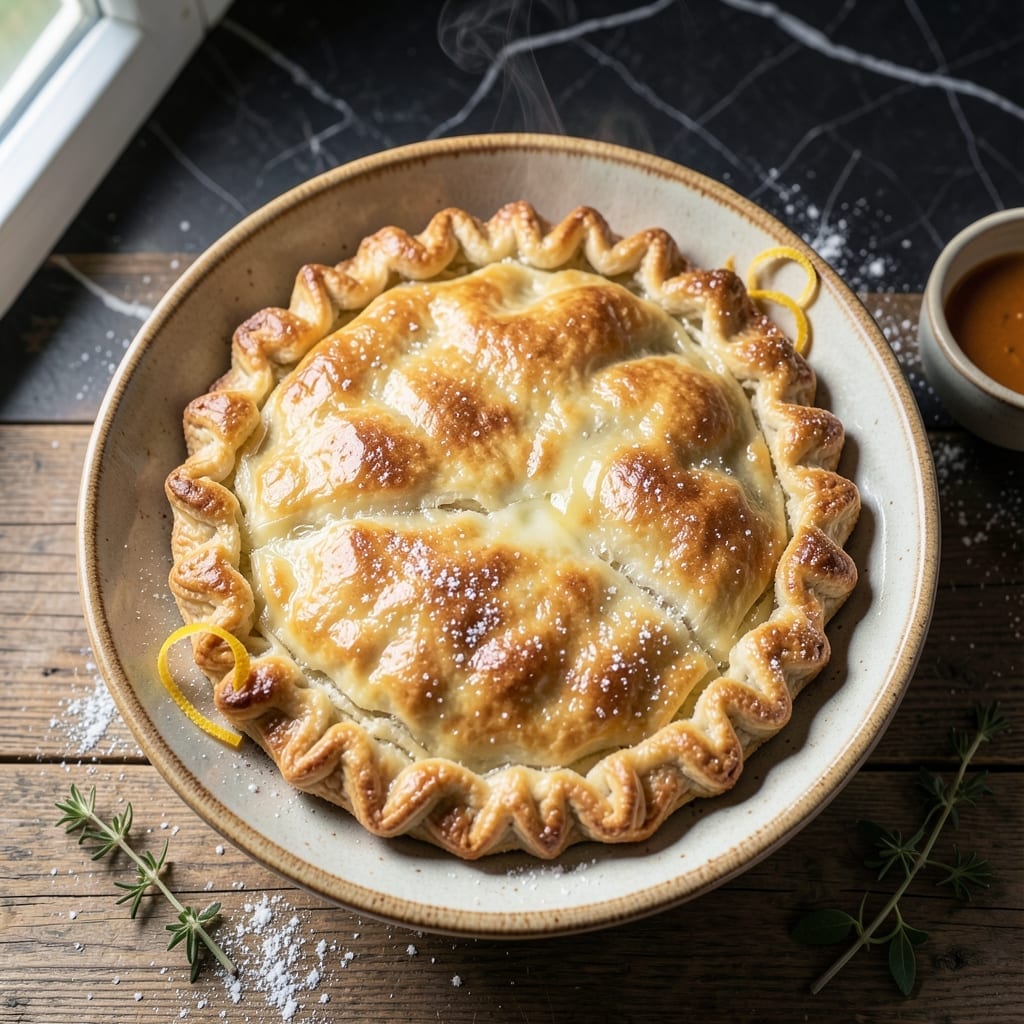
There’s a reason classic pot pie crust stands the test of time—it delivers flaky, golden layers that hold their own against rich fillings. This method relies on cold butter and precise handling to create that signature texture.
The key is working quickly to prevent the butter from melting into the flour, which would compromise the flaky structure. A light touch and minimal handling ensure the dough stays tender, not tough.
This crust doesn’t just look impressive—it bakes up sturdy enough to cradle hearty fillings without turning soggy. The butter creates steam during baking, separating the layers for that perfect, airy bite.
Whether you’re making a traditional chicken pot pie or experimenting with other fillings, this crust will elevate your dish. Here’s how to make it right.
Ingredients for Pot Pie Crust Recipe with Butter
Cold butter and precise handling create that signature flaky, golden texture everyone loves.
| Ingredient | Amount | Notes |
|---|---|---|
| All-Purpose Flour 🌾 | 2 ½ cups | Plus extra for dusting surface |
| Unsalted Butter 🧈 | 1 cup | Cold, cut into small cubes |
| Ice Water 💧 | ½ cup | Plus 1 tbsp as needed |
| Salt 🧂 | 1 tsp | Fine sea salt preferred |
| Sugar 🍚 | 1 tsp | Optional for color |
| Large Egg 🥚 | 1 whole | For egg wash finish |
| Heavy Cream 🥛 | 1 tbsp | For richer egg wash |
[recipe_ingredient_scaler]
The butter is critical here—use high-quality unsalted like Plugra or Land O’Lakes. It needs to stay cold, so cut it into small cubes and chill them before starting. The flour should be all-purpose; no need for pastry flour. Keep everything cold, including your hands and work surface. A marble slab helps if you have one, but a regular countertop works fine.
No unsalted butter? Salted works—just skip the added salt in the dough. For a richer egg wash, the heavy cream is optional but recommended (trust me on this). The ice water can be swapped with vodka at the same amount—it creates an even flakier crust. If you’re out of all-purpose flour, half all-purpose and half cake flour gives a tender result.
The dough keeps in the fridge for 2-3 days or freezes for 1 month. Let it warm slightly before rolling. Baked crust stays crisp for 1 day at room temperature. For longer storage, freeze the unbaked crust in the pie dish—just thaw before filling.
Why You’ll Love This Recipe
- One-Bowl Wonder: I mix the flour, cold butter, and ice water right in the same bowl—no extra dishes, no fuss.
- Buttery Layers: The unsalted butter creates flaky layers that shatter with every bite, and the pinch of sugar adds just the right hint of sweetness.
- Freezer Friendly: I’ll make a double batch and freeze the extra dough for next week’s pot pie—it thaws in minutes.
- Pantry Staples: Honestly, I already have all the ingredients: flour, butter, salt, sugar, and water. No special trips to the store.
Step-by-Step Instructions for Pot Pie Crust With Butter
This method delivers the flaky, sturdy crust needed to contain rich pot pie fillings without falling apart.
Step 1: Combine Dry Ingredients and Cut in Cold Butter
In a large bowl, whisk together the 2.5 cups All-Purpose Flour, 1 tsp Salt, and 1 tsp Sugar until evenly distributed. This ensures the seasoning is consistent throughout the crust.
Add the 1 cup Unsalted Butter, cold and cut into small cubes. Using a pastry cutter or your fingertips, work the butter into the flour until the mixture resembles coarse crumbs with pea-sized butter pieces visible. This creates the flaky layers when baked.
Step 2: Incorporate Ice Water to Form the Dough
Gradually add the 0.5 cup Ice Water 1 tablespoon at a time, mixing gently with a fork after each addition. Stop adding water as soon as the dough begins to come together—it should hold when pressed but not be sticky.
Real talk: if the dough feels too dry, add the extra 1 tbsp of ice water. Overworking the dough develops gluten, which makes the crust tough instead of flaky. The visible butter pieces are essential for creating those coveted layers.
Step 3: Shape and Chill the Dough
Turn the dough onto a lightly floured surface and gently shape it into a disk. Wrap it tightly in plastic wrap and refrigerate for at least 1 hour (or up to 2 days). Chilling relaxes the gluten and firms up the butter, which prevents shrinking and maintains flakiness.
This resting period is non-negotiable for a superior crust. The cold butter will melt in the oven, creating steam pockets that separate the dough into flaky layers. Don’t skip this step, even if you’re in a hurry.
Step 4: Roll Out and Prepare for Filling
On a lightly floured surface, roll the chilled dough into a 12-inch circle, about ⅛-inch thick. For a double-crust pot pie, divide the dough in half and roll each portion separately. The dough should be even in thickness to ensure consistent baking.
Transfer the rolled dough to your pie dish or pot pie filling. If making a double-crust, place the second rolled dough over the filling. Trim and crimp the edges to seal, then cut a few small slits in the top crust to allow steam to escape during baking.
Step 5: Apply Egg Wash and Bake to Golden Perfection
In a small bowl, whisk together the 1 whole Large Egg and 1 tbsp Heavy Cream until smooth. Brush this mixture evenly over the crust. The egg wash gives the crust a beautiful golden-brown finish and adds a subtle richness.
Bake according to your pot pie recipe instructions, typically at 375-400°F until the crust is deep golden brown and the filling is bubbling. The egg wash will create a glossy, professional-looking finish that holds up to hearty fillings.
Pro Tips For Making Pot Pie Crust Recipe With Butter
- Chill the Butter: Keep your unsalted butter ice cold until the moment you cut it into the flour—I learned this the hard way after ending up with a tough, flat crust instead of a flaky one.
- Use Ice Water: Fill a glass with water and ice cubes, then measure from that for the coldest possible liquid, which makes a real difference in keeping the dough tender.
- Don’t Overwork It: Mix just until the dough comes together, even if it looks a little shaggy—overworking develops gluten, and that’s how you get a chewy crust instead of a light, crisp one.
- Rest Before Rolling: Give the dough a solid 30 minutes in the fridge after mixing, which relaxes the gluten and makes rolling out much easier—I skip this when I’m in a hurry, but the texture suffers.
Best Sauces and Condiments for These Flavors
Classic Gravy Pairing
Serve with a rich chicken gravy for the ultimate comfort food experience. I make mine with 2 cups pan drippings, 2 tbsp butter, and 2 tbsp flour for a silky texture. The crust soaks up just enough gravy without getting soggy. 💛
Spicy Sriracha Drizzle
For a bold twist, mix ¼ cup Sriracha with 2 tbsp honey and 1 tbsp soy sauce. Drizzle lightly over each serving. The heat cuts through the buttery richness beautifully.
Herb-Infused Butter
Whip ½ cup softened butter with 1 tbsp chopped fresh thyme and 1 minced garlic clove. Serve a small dollop on top of warm pot pie—it melts into the crust for an herby finish.
Creamy Mushroom Sauce
A cream of mushroom sauce adds earthy depth. Sauté 8 oz cremini mushrooms with 2 shallots, then deglaze with ½ cup white wine before adding 1 cup heavy cream. 🍄
Tangy Cranberry Relish
Balance the richness with a homemade cranberry relish. Simmer 12 oz fresh cranberries with ½ cup sugar and zest of 1 orange until thick. The acidity brightens each bite.
Garlic Aioli Dip
Blend ½ cup mayo with 2 minced garlic cloves and 1 tbsp lemon juice. Perfect for dipping the crust edges—this became my family’s favorite addition.
Nutrition Facts
Frequently Asked Questions
Why does the butter need to stay cold?
Cold butter creates steam when baking, which separates the dough into flaky layers. If it melts before baking, the crust becomes dense instead of light and airy.
Can I use salted butter instead?
Yes, but omit the added 1 tsp Salt in the recipe. Salted butter works fine, though unsalted gives you more control over the seasoning.
How do I prevent a soggy bottom crust?
Pre-bake the bottom crust for 10 minutes before adding filling, or brush it with a thin layer of egg wash to create a barrier.
Can the dough be made ahead?
The dough keeps in the fridge for 2-3 days or freezes for 1 month. Let it warm slightly before rolling.

Trained in classic French technique but raised on slow-cooked ribs and spicy rubs, she blends culinary skill with smoke and soul.
- Recipe for Boneless Pork Chops in Cast Iron Skillet: Sear and Baste to Juicy Perfection - October 3, 2026
- Recipe for Boneless Cross Rib Roast: Slow-Roasted Beef with Herb Crust - October 3, 2026
- Hamburgers in Sauce Recipe Crock Pot: Slow-Cooked Savory Delight - October 3, 2026