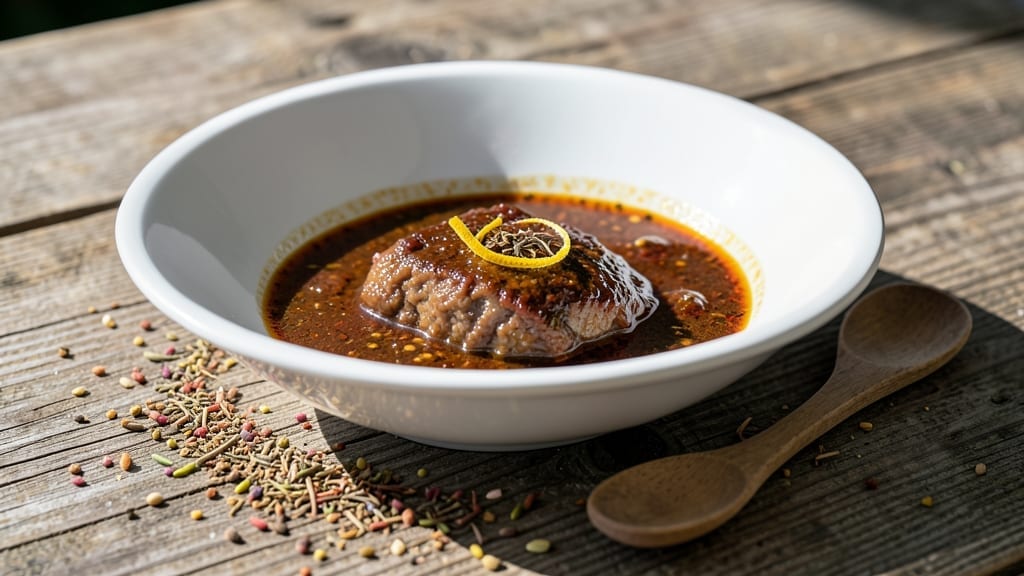
This pot roast marinade recipe transforms tough cuts into melt-in-your-mouth perfection through a carefully balanced blend of aromatics and acidity. The secret lies in the combination of red wine, beef broth, and fresh herbs that penetrate deep into the meat during the marinating process. I developed this marinade after years of testing, and it consistently delivers restaurant-quality tenderness with minimal effort.
What sets this marinade apart is its ability to tenderize while infusing rich, savory flavors that develop further during slow cooking. The ingredients—garlic, thyme, bay leaf, and black pepper—create a complex flavor profile that stands up to hours in the oven or slow cooker.
Unlike dry rubs, this liquid marinade clings to the meat, ensuring every bite is infused with flavor.
By letting the roast sit in this marinade for at least 4 hours (or overnight for maximum tenderness), you’ll achieve a texture that’s impossibly tender while maintaining a rich, caramelized crust.
The marinade also helps prevent the meat from drying out during the long cooking process, guaranteeing juicy, flavorful results every time.
Use this marinade as a base for your slow-cooked masterpiece, then adjust seasonings to taste. The beauty of this recipe is its versatility—it works equally well for beef chuck roast, pork shoulder, or even lamb. Let’s get started on creating your most tender pot roast yet.
Ingredients for pot roast marinade
A few simple ingredients that work magic on tough cuts—just mix and let it do its thing.
| Ingredient | Amount | Notes |
|---|---|---|
| Red Wine 🍷 | 1 cup | Bold, dry variety preferred |
| Beef Broth 🍲 | 1 cup | Low-sodium preferred |
| Extra-Virgin Olive Oil 🫒 | ¼ cup | High quality, fruity |
| Garlic Cloves 🧄 | 6 cloves | Peeled, roughly chopped |
| Fresh Thyme Leaves 🌿 | ¼ cup | Or 1 tbsp dried thyme |
| Bay Leaves 🌿 | 2 whole | Fresh preferred |
| Black Peppercorns 🌶️ | 1 tbsp | Freshly cracked preferred |
| Salt 🧂 | 1 ½ tsp | Kosher or sea salt |
| Brown Sugar 🍚 | 1 tbsp | Light or dark |
| Worcestershire Sauce 🍶 | 1 tbsp | High-quality preferred |
[recipe_ingredient_scaler]
The red wine is non-negotiable here—it’s the secret weapon for both tenderness and depth of flavor. Cabernet Sauvignon or Merlot work best, but whatever bold, dry red you’ve got open will do. Trader Joe’s and CostcoFresh is always better, but if you’re in a pinch, garlic powder at half the amount works. Just don’t skip it—the flavor difference is huge. For the thyme, fresh is ideal, but dried works too (use one-third the amount).
No red wine? Beef broth with a splash of balsamic vinegar gets you 90% there. Short on thyme? Rosemary at half the amount works surprisingly well. The Worcestershire sauce can be swapped for soy sauce or fish sauce if you’re avoiding it, but it adds that umami punch that’s hard to replicate. Brown sugar might seem odd, but it helps caramelize the marinade during cooking—white sugar works too, though it won’t add that subtle molasses note. If you’re making this ahead, store the marinade (without meat) in the fridge for up to 3 days—the flavors actually get better as they meld together.
This marinade keeps in the fridge for 5-7 days once mixed, but the meat should marinate for at least 4 hours (overnight is best). If you’re prepping ahead, store the meat and marinade together in a sealed bag or container. The flavors intensify over time, so don’t rush it. For leftovers, the marinade itself can be used again—just reheat and reuse within 3 days. It’s also fantastic for basting during cooking. Trust me, the extra time is worth it for that fall-apart texture.
Why You’ll Love This Recipe
- I’ve got a secret: this marinade takes five minutes of active time. Just dump the wine, broth, and oil together, mash the garlic, and stir—no fancy prep. The beef broth and Worcestershire sauce do all the heavy lifting while you relax with a glass of that same bold red wine.
- No-Fuss Marinade Magic: I’ve got a secret: this marinade takes five minutes of active time. Just dump the wine, broth, and oil together, mash the garlic, and stir—no fancy prep. The beef broth and Worcestershire sauce do all the heavy lifting while you relax with a glass of that same bold red wine.
- Umami Bomb: That combo of red wine, beef broth, and Worcestershire sauce? It’s like a flavor hug for your pot roast. The brown sugar adds a subtle caramel depth, and the thyme and garlic? They turn a simple cut into something so good, you’ll forget it’s just beef.
- Leftovers? No Problem: Make it ahead—this marinade gets better with time, up to 3 days in the fridge. Use it for roast, stew, or even braised short ribs. My kids even ask for it on sandwiches (yes, really).
Step-by-step instructions for pot roast marinade
Here’s how to blend these ingredients into a marinade that transforms tough cuts into melt-in-your-mouth perfection.
Combine the Liquids for a Rich Base
In a large mixing bowl, pour in the 1 cup red wine and 1 cup beef broth. Stir them together until fully combined—this creates the foundation for your marinade’s depth. The wine adds acidity to tenderize, while the broth provides umami richness that penetrates the meat.
Next, add the ¼ cup extra-virgin olive oil and 1 tbsp Worcestershire sauce. Whisk vigorously for 30 seconds until the oil emulsifies slightly with the liquids. This step ensures even distribution of flavors later. The Worcestershire sauce brings a savory complexity that pairs beautifully with the wine’s acidity.
Add Aromatics and Sweet Balance
To the liquid mixture, add the 6 peeled garlic cloves and ¼ cup fresh thyme leaves. Use a wooden spoon to mash the garlic slightly—this releases more flavor into the marinade. The thyme adds an earthy herbal note that complements the richness of the beef.
Now stir in the 2 bay leaves (keep them whole for easier removal later), 1 tbsp black peppercorns (lightly crush them with the back of your spoon for a more intense flavor), and 1 tbsp brown sugar. The sugar here isn’t just for sweetness—it helps caramelize slightly during cooking, adding depth to the final dish. Mix everything together until the sugar dissolves completely.
Season and Rest for Maximum Flavor
Add the 1½ tsp salt and stir well to dissolve. This seasoning step is critical—it ensures the marinade penetrates the meat evenly. Taste the mixture now (you can skip this if you prefer, but it helps adjust seasoning before marinating). You should notice a balance of acidity, sweetness, and savory notes with a hint of herbal brightness.
Transfer the marinade to a resealable container with a lid. Store it in the refrigerator for at least 4 hours (or up to 24 hours) before using. The longer it rests, the more the flavors meld together, creating a marinade that will transform your pot roast into tender, restaurant-quality meat. When ready to use, simply pour the marinade over your chuck roast and let it sit for at least 2 hours (or overnight for best results) before slow-cooking.
Pro Tips For Making Pot Roast Marinade
- CRUSH THOSE PEPPERCORNS: I used to just toss in whole peppercorns and wonder why my marinade tasted flat. Lightly crush them with the back of a spoon—just enough to break the skins—so their sharp, bright flavor actually infuses the wine and broth. (Yes, even if you’re impatient like me, resist the urge to grind them into dust.)
- WHISK THE OIL HARD: That 30-second whisk with the olive oil isn’t just for show—it’s what makes the marinade cling to the meat instead of pooling at the bottom. Use a proper whisk (not a spoon) and really work it until the oil looks slightly emulsified. I learned this the hard way after my first pot roast turned out dry in spots.
- MASH THE GARLIC RIGHT: Don’t just chop those 6 garlic cloves—give them a quick mash with the flat of your spoon while they’re in the bowl. This releases more allicin (the good stuff) and blends it directly into the wine and oil. I was skeptical until I tried it, and now I never skip it.
- SALT THE MARINADE FIRST: Taste that marinade before you pour it on the meat—add more salt if needed. The 1½ tsp is a starting point, but if your broth is low-sodium, you might need up to double. Trust me, your pot roast will thank you later when it’s perfectly seasoned through and through. (This isn’t the prettiest step, but it’s the tastiest.)
Common mistakes when making this dish
Skipping the Marinating Step
One of the biggest mistakes I see is rushing the marinating process. The marinade needs at least 4 hours to tenderize tough cuts effectively, and overnight is ideal. If you skip this step, your pot roast will lack the depth of flavor and juiciness that make it truly special.
Trust me, the extra time is worth it for that fall-apart texture. 💪
Using the Wrong Wine
Not all red wines work equally well in marinades. I recommend bold, dry varieties like Cabernet Sauvignon or Merlot—they provide the right acidity and depth. Avoid sweet or fruity wines, as they won’t tenderize the meat properly.
If you’re stuck, a splash of balsamic vinegar can mimic the wine’s acidity in a pinch.
Overlooking the Sugar
The 1 tbsp brown sugar in this marinade isn’t just for sweetness—it helps caramelize during cooking, adding complexity. Skipping it means missing out on that subtle depth. If you’re watching sugar, use ½ tsp cinnamon or ¼ tsp nutmeg instead for a warm, aromatic note without the sweetness.
Crushing Peppercorns Too Much
Lightly crushing the 1 tbsp black peppercorns with the back of your spoon releases flavor without turning them into powder. Over-crushing turns them into a paste, which can make the marinade bitter. This small step makes a big difference in the final flavor profile. ⚡
Forgetting to Remove Bay Leaves
Bay leaves add subtle earthiness but should never be eaten. Always remove them before cooking or serving. I often forget this until I’m halfway through cooking, which is a waste of good flavor. Set a reminder or use a small strainer to fish them out after marinating.
Using Stale Ingredients
Fresh herbs and garlic make all the difference. If your thyme leaves or garlic cloves are wilted or dry, the marinade will taste flat. Buy fresh ingredients, or freeze dried thyme in a small bag to keep it vibrant. A little effort upfront ensures your marinade shines. 🌿
Nutrition facts
Frequently asked questions
How long should I marinate my pot roast for best results?
For maximum tenderness, let your pot roast marinate for at least 4 hours, but overnight is ideal. This gives the marinade time to deeply penetrate and tenderize the meat, ensuring that every bite is juicy and flavorful. The longer it sits, the more the flavors meld together!
Can I make this marinade ahead of time?
Store the marinade (without meat) in the fridge for up to 3 days—the flavors actually improve as they meld. If you’re prepping ahead, just pour it over your chuck roast 2 hours before cooking, or marinate overnight for best results. This marinade keeps well and is perfect for meal prep!
What if I don’t have red wine?
No problem! Use 1 cup beef broth with a splash of balsamic vinegar (about 1 tbsp) to mimic the wine’s acidity. The marinade will still tenderize and add rich flavor—just a slightly different profile. This trick works in a pinch and keeps the dish delicious!
Why is the brown sugar in the marinade?
The 1 tbsp brown sugar isn’t just for sweetness—it helps caramelize during cooking, adding depth and complexity. If you’re avoiding sugar, swap it for ½ tsp cinnamon or ¼ tsp nutmeg for a warm, aromatic note without the sweetness. It’s a small tweak that makes a big flavor difference!
Can I reuse the marinade after cooking?
Yes! Once used, the marinade can be reheated and reused for up to 3 days—great for basting during cooking or adding to sauces. Just store it in an airtight container in the fridge. This marinade is versatile and won’t go to waste!

Trained in classic French technique but raised on slow-cooked ribs and spicy rubs, she blends culinary skill with smoke and soul.
- Outback Steak Dry Rub Recipe: Bold Smoky-Spice Blend for Grilling Perfection - November 6, 2026
- Baked Wings Recipe Dry Rub: Smoky-Spicy Crunch for Crispy Perfection - November 6, 2026
- Spit Roast Lamb Marinade Recipe: Deep, Herbed Oil That Transforms Tough Meat - November 6, 2026