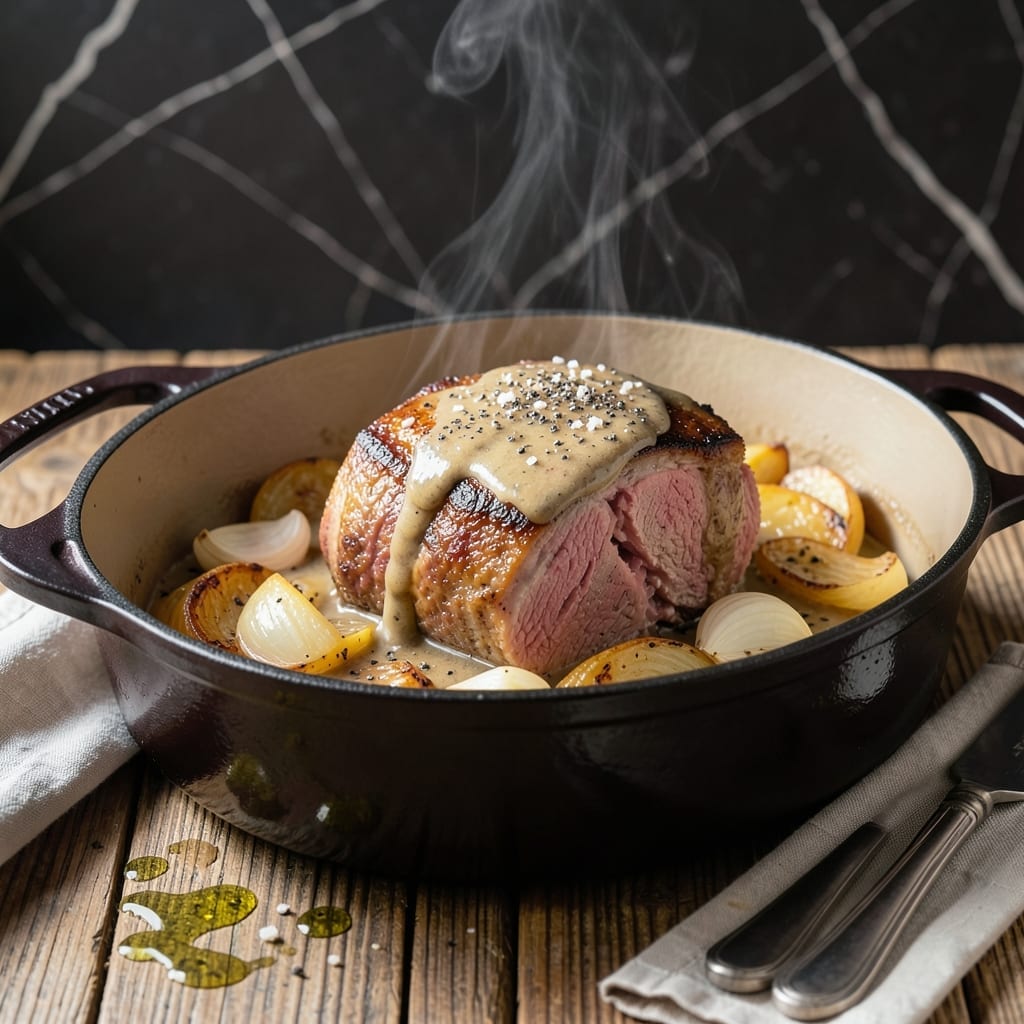
Bottom round transforms into fork-tender perfection through slow braising. This cut rewards patience with deep, rich flavor that falls apart at the touch.
My method ensures the meat stays moist while developing complex layers. The result is a pot roast that delivers tender results every time, with minimal effort for maximum payoff.
Ingredients for Pot Roast Recipe Bottom Round
Slow-braised bottom round with aromatics creates melt-in-your-mouth pot roast with complex depth of flavor.
| Ingredient | Amount | Notes |
|---|---|---|
| Bottom Round Roast 🥩 | 3 lb | Well-marbled for best results |
| Kosher Salt 🧂 | 2 tsp | Diamond Crystal preferred |
| Freshly Ground Black Pepper 🌶️ | 1 tsp | Coarse grind recommended |
| Olive Oil 🫒 | 2 tbsp | Divided for searing and braising |
| Yellow Onion 🧅 | 2 whole | Large, cut into chunks |
| Garlic Cloves 🧄 | 6 cloves | Smashed for robust flavor |
| Carrots 🥕 | 3 whole | Peeled, cut into large pieces |
| Celery Stalks 🌿 | 3 whole | Cut into thick pieces |
| Low-Sodium Beef Broth 🍲 | 3 cups | Homemade or quality store-bought |
| Red Wine Vinegar 🍷 | 2 tbsp | For acidity balance |
| Tomato Paste 🍅 | 2 tbsp | For depth of flavor |
| Dried Thyme 🌿 | 1 tsp | Crushed between fingers |
| Bay Leaves 🍃 | 2 pieces | Fresh or dried |
| Worcestershire Sauce 🥫 | 1 tbsp | Adds umami depth |
| Fresh Rosemary Sprigs 🌿 | 2 whole | For aromatic infusion |
[recipe_ingredient_scaler]
Bottom round requires patience—look for well-marbled pieces at the butcher counter or Whole Foods. The fat content ensures moisture during the long cooking process. For best results, bring the meat to room temperature before searing, which promotes even browning. Costco often carries high-quality chuck that works equally well if bottom round isn’t available.
No red wine vinegar? Balsamic vinegar at half the quantity provides similar acidity. Dried rosemary can replace fresh at one-third the amount. If you lack celery, add an extra carrot for sweetness. The tomato paste is essential for umami, but sun-dried tomato paste in a tube works in a pinch. Always use low-sodium broth to control salt levels.
Leftovers taste even better the next day. Store in an airtight container in the fridge for up to 4 days or freeze for 3 months. The braising liquid makes excellent gravy—strain and reduce if desired. Reheat gently to maintain that fork-tender texture.
Why You’ll Love This Recipe
- Set and Forget: I just season the bottom round with salt, pepper, and a quick sear—then the oven does all the work.
- Rich Depth: That slow-cooked onion melts into the meat, making every bite ridiculously tender and flavorful.
- Feeds the Week: Between us, this makes the best leftovers for sandwiches or tacos the next day.
- Budget Winner: Honestly, bottom round is affordable but tastes like a fancy Sunday dinner.
Step-by-Step Instructions for Bottom Round Pot Roast
This method transforms the lean bottom round into fall-apart tender perfection through patient braising.
Step 1: Sear and Season the Bottom Round Roast
Pat the 3 lb Bottom Round Roast completely dry with paper towels. This ensures a proper sear rather than steaming. Season all sides aggressively with the 2 tsp Kosher Salt and 1 tsp Freshly Ground Black Pepper, pressing the seasoning into the meat so it adheres well.
Heat 1 tbsp Olive Oil in a large Dutch oven over medium-high heat until shimmering. Add the roast and sear for 4-5 minutes per side until deeply browned on all surfaces. The fond created here will build the base of your braising liquid. Transfer the roast to a plate.
Step 2: Build the Aromatic Foundation
In the same pot, add the remaining 1 tbsp Olive Oil. Add the 2 whole Yellow Onion, 3 whole Carrots, and 3 whole Celery Stalks, cooking for 5-6 minutes until the vegetables begin to soften and develop color. Add the 6 cloves Garlic Cloves and cook for 1 minute until fragrant.
Stir in the 2 tbsp Tomato Paste and cook for 2 minutes, allowing it to darken slightly. This concentrates its sweetness and removes the raw flavor. The mixture should be deeply aromatic at this stage.
Step 3: Deglaze and Begin the Braise
Pour in the 2 tbsp Red Wine Vinegar and 1 tbsp Worcestershire Sauce, using a wooden spoon to scrape up all the browned bits from the bottom of the pot. Add the 3 cups Low-Sodium Beef Broth, 1 tsp Dried Thyme, 2 pieces Bay Leaves, and 2 whole Fresh Rosemary Sprigs.
Return the seared roast to the pot, along with any accumulated juices. The liquid should come about halfway up the sides of the meat. Bring to a gentle simmer, then reduce heat to low.
Step 4: Slow-Braise to Fork-Tender Perfection
Cover the pot tightly and maintain a gentle simmer. Cook for 3 to 3½ hours, turning the roast every 45 minutes to ensure even cooking. The meat is done when it shreds easily with a fork and an instant-read thermometer registers 195-200°F.
Resist the urge to check too often—each time you lift the lid, you extend the cooking time. The low and slow method is what transforms this lean cut into a melt-in-your-mouth experience.
Step 5: Rest and Serve
Carefully transfer the roast to a cutting board and tent loosely with foil. Let it rest for 15 minutes before slicing against the grain. This allows the juices to redistribute, ensuring each serving remains moist.
Strain the braising liquid if desired, or serve as-is with the vegetables. The sauce should be rich and deeply flavored from the long cooking process. Slice the roast thickly and arrange on a platter with the vegetables and sauce spooned over the top.
Pro Tips For Making Pot Roast Recipe Bottom Round
- Sear It Hard: Get your pan screaming hot—about 2 tablespoons of olive oil until it shimmers—then sear the bottom round until it develops a deep brown crust. I learned this the hard way: a pale sear means flavor left on the table.
- Salt Generously: Don’t be shy with the kosher salt—coat the roast like you’re seasoning a steak, at least a teaspoon per pound. Bottom round is lean and needs that salt to wake up the flavor.
- Low and Slow: After searing, drop the heat to 300°F or lower and give it 3-4 hours. Resist the urge to rush it—this cut turns tough if you push the temperature.
- Add Onion Late: Toss in the yellow onion after the sear to avoid burning. Sounds weird, but it works: you’ll get sweet, caramelized bits instead of bitter char.
Wine and Beer Pairings for This Dish
Bold Red Wines
This dish cries out for a robust red wine. I love a Cabernet Sauvignon from Napa Valley—its bold tannins and dark fruit notes stand up to the rich, beefy flavors. A 2018 Caymus is my go-to splurge, but Josh Cellars offers excellent value at $15-$20. 🍷
Earthy Alternatives
A Syrah or Shiraz brings smoky, peppery notes that complement the herbs in the pot roast. Look for a 2019 Penfolds Bin 28 from Australia—its plummy depth and spice are perfect. For a budget pick, Apothic Red Blend at $10 delivers surprising complexity.
Craft Beer Options
Dark beers work beautifully here. A stout like Guinness has roasted malt flavors that echo the seared crust. For something hoppier, try a black IPA—Stone Brewing Sublimely Self-Righteous is my favorite. The bitterness cuts through the richness. 🍺
Lighter Pairings
If you prefer white wine, go for a full-bodied Chardonnay with oak aging. Kendall-Jackson Vintner’s Reserve offers buttery notes that match the dish’s richness. Avoid light whites like Pinot Grigio—they’ll get lost against the bold flavors.
Nutrition Facts
Frequently Asked Questions
Can I use a slow cooker instead of a Dutch oven?
Yes! Follow the same searing step first, then transfer everything to your slow cooker. Cook on low for 8-10 hours or high for 5-6 hours until fork-tender.
Why does bottom round need such a long cooking time?
Bottom round is a lean, tough cut with lots of connective tissue. The 3-3½ hour braise breaks down collagen into gelatin, creating that melt-in-your-mouth texture. Rushing it results in chewy meat.
What if my braising liquid reduces too much?
Add 1 cup of warm beef broth or water to maintain the liquid level. The sauce should always come about halfway up the meat. Keep the pot covered tightly.
Can I prepare this the day before?
The flavors deepen overnight. Cool completely, refrigerate, then reheat gently on the stove with a splash of water. The meat stays fork-tender for up to 4 days.

Trained in classic French technique but raised on slow-cooked ribs and spicy rubs, she blends culinary skill with smoke and soul.
- Recipe for Boneless Pork Chops in Cast Iron Skillet: Sear and Baste to Juicy Perfection - October 3, 2026
- Recipe for Boneless Cross Rib Roast: Slow-Roasted Beef with Herb Crust - October 3, 2026
- Hamburgers in Sauce Recipe Crock Pot: Slow-Cooked Savory Delight - October 3, 2026