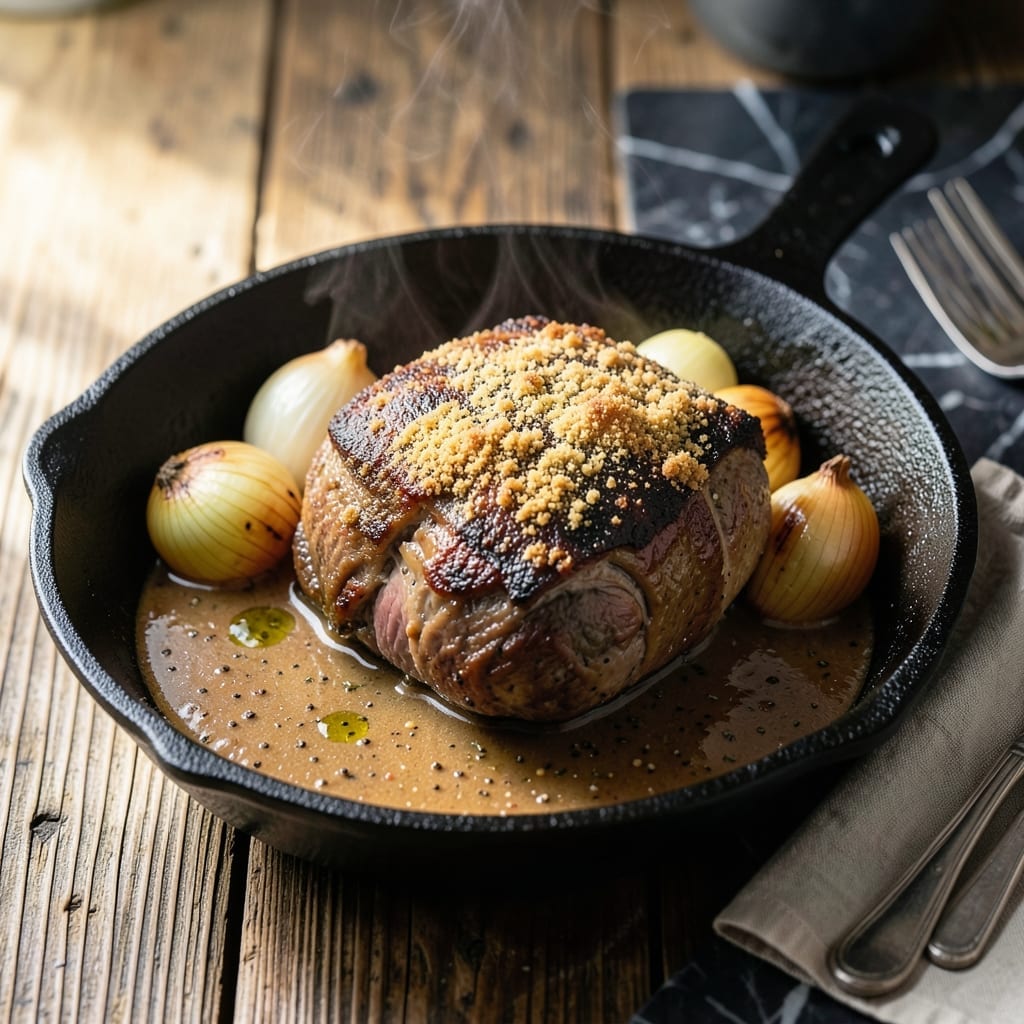
There’s a reason cast iron has been the pot roast vessel of choice for generations—it delivers perfectly caramelized results every time. This method transforms tough cuts into fork-tender meat with a rich, herb-infused gravy that deepens with every bite.
The process begins with a hot sear to lock in juices, then slow braising allows the collagen to break down into silky tenderness. Aromatic vegetables and fresh herbs build layers of flavor that infuse the entire dish.
What emerges is meat so tender it falls apart at the touch of a fork, swimming in a deeply flavored gravy that’s ideal for soaking into mashed potatoes or crusty bread. The cast iron retains heat evenly, ensuring consistent results from edge to center.
This is classic comfort food elevated through precise technique and quality ingredients. The results speak for themselves.
Ingredients for Pot Roast Recipe Cast Iron Skillet
Classic comfort food starts with quality beef and aromatics for that perfect cast iron sear.
| Ingredient | Amount | Notes |
|---|---|---|
| Chuck Roast 🥩 | 3 lb | Boneless, well-marbled preferred |
| Kosher Salt 🧂 | 2 tsp | Divided for seasoning |
| Black Pepper 🌶️ | 1 tsp | Freshly ground preferred |
| All-Purpose Flour 🌾 | ¼ cup | For dusting meat |
| Olive Oil 🫒 | 2 tbsp | High smoke point preferred |
| Yellow Onions 🧅 | 2 whole | Medium-sized, quartered |
| Carrots 🥕 | 4 whole | Peeled, cut into chunks |
| Celery Stalks 🍃 | 3 whole | Cut into large pieces |
| Garlic Cloves 🧄 | 6 cloves | Smashed, peeled |
| Fresh Rosemary 🌿 | 2 tbsp | Chopped, stems removed |
| Fresh Thyme 🍃 | 2 tbsp | Chopped, stems removed |
| Bay Leaves 🌿 | 2 whole | Dried, for gravy |
| Beef Broth 🥣 | 3 cups | Low-sodium preferred |
| Red Wine 🍷 | 1 cup | Dry variety, for deglazing |
| Tomato Paste 🍅 | 2 tbsp | For depth of flavor |
[recipe_ingredient_scaler]
The chuck roast is non-negotiable here. Look for well-marbled pieces—fat equals flavor and tenderness. Most butchers will cube it for you if asked. Costco has excellent pre-cut chuck, or Whole Foods for grass-fed options. The flour for dusting should be all-purpose; no need for specialty types. For the wine, any dry red works—Cabernet, Merlot, whatever you’ve got open.
No red wine? Extra beef broth with a splash of balsamic vinegar mimic the depth. Fresh herbs are ideal, but dried at one-third the amount works in a pinch. The tomato paste can be swapped for 1 tbsp ketchup if desperate. For the broth, Better Than Bouillon makes a rich base. Skip the pre-cut veggies—they lose texture during the long braise.
Leftovers taste even better the next day. Store in the fridge for up to 4 days or freeze for 3 months. The gravy thickens as it cools—just reheat gently with a splash of water. Always use a tight lid to prevent freezer burn.
Why You’ll Love This Recipe
- I’ll be real: the pot roast tastes even better the next day in sandwiches or over mashed potatoes.
- One Pan Magic: I love tossing the chuck roast in flour, salt, and pepper then searing it in the same cast iron skillet—no extra dishes, just easy flavor building.
- Rich and Tender: The olive oil creates the most beautiful crust on the beef, while slow cooking makes it fall-apart delicious.
- Sunday or Wednesday: Honestly, this works just as well for a fancy dinner as it does for a random weeknight when I need comfort food.
Step-by-Step Instructions for Pot Roast in Cast Iron Skillet
This method delivers perfectly tender meat with rich, herb-infused gravy every time.
Step 1: Season and Sear the Chuck Roast
Pat the 3 lb chuck roast dry with paper towels, then season generously with 1 tsp black pepper and 1 tsp kosher salt. Dredge the roast in the 0.25 cup all-purpose flour, shaking off any excess—this creates a flavorful crust and thickens the gravy later.
Heat the 2 tbsp olive oil in a large cast iron skillet over medium-high heat until shimmering. Sear the roast for 4-5 minutes per side until deeply browned. The flour coating should form a rich, golden crust. Remove the roast and set aside.
Step 2: Sauté the Aromatics
In the same skillet, add the 2 whole yellow onions, 4 whole carrots, and 3 whole celery stalks. Cook for 5-6 minutes over medium heat until the vegetables begin to soften and brown slightly around the edges.
Add the 6 cloves garlic cloves, 2 tbsp fresh rosemary, and 2 tbsp fresh thyme, stirring for 1 minute until fragrant. Push the vegetables to the sides of the skillet to create space in the center for the next step.
Step 3: Deglaze and Build the Braising Liquid
Stir in the 2 tbsp tomato paste and cook for 1 minute to deepen its flavor. Pour in the 1 cup red wine, scraping the bottom of the skillet to release all the browned bits—this adds incredible depth to the gravy.
Let the wine reduce by half, about 3-4 minutes. Add the 3 cups beef broth and 2 whole bay leaves, then return the seared chuck roast to the skillet along with any accumulated juices.
Step 4: Braise Until Fork-Tender
Bring the liquid to a simmer, then reduce heat to low. Cover the skillet and let it braise for 2.5 to 3 hours, turning the roast occasionally, until the meat is fork-tender and falls apart easily.
Check the liquid level occasionally—if it reduces too much, add a small amount of water to maintain the braise. The vegetables should be soft and the gravy rich and aromatic.
Step 5: Rest and Serve
Remove the roast from the skillet and transfer it to a cutting board. Tent it loosely with foil and let it rest for 15 minutes before slicing or shredding.
Skim any excess fat from the gravy if desired, then serve the pot roast with the vegetables and gravy spooned over the top. The meat should be incredibly tender, and the gravy deeply flavorful with herbs and wine.
Pro Tips For Making Pot Roast Recipe Cast Iron Skillet
- Sear It Hard: Crank the cast iron to smoking hot before adding the chuck roast—I learned this the hard way after too many pale, sad sears. That high heat is what gives you the deep brown crust that actually changes the outcome.
- Dry the Meat: Pat the chuck roast bone-dry with paper towels before seasoning, or the flour won’t stick and you’ll end up with a gummy coating instead of a proper crust.
- Skip the Crowding: Don’t overcrowd the skillet when searing—if you’re browning in batches, resist the urge to rush. Steaming from too much meat turns your fond into a sad, watery mess.
- Rest Before Serving: Give the pot roast a solid 15 minutes under foil after cooking—my grandmother swore by this, and she was right: it keeps the juices from running all over the cutting board.
Health Benefits of This Dish
Rich Protein Source
This dish delivers high-quality protein—about 60 grams per serving—from the chuck roast. Protein is essential for muscle repair and growth, making this a satisfying meal. The slow cooking preserves all the natural amino acids your body needs. 💪
Iron Boost
Beef is one of the best sources of heme iron, which your body absorbs more efficiently than plant-based iron. A 3-ounce serving provides about 2.5mg, helping prevent fatigue and supporting energy levels.
Vitamin B12 Powerhouse
You’ll get a significant dose of vitamin B12 from this meal, crucial for nerve function and red blood cell production. Just 1 serving covers about 50% of your daily needs. This vitamin is naturally abundant in beef.
Collagen Benefits
The long braising time breaks down collagen in the chuck roast into gelatin, which supports joint and skin health. This process also creates that melt-in-your-mouth texture we all love. I notice my skin feels more supple when I eat this regularly.
Zinc for Immunity
This meal is packed with zinc, with each serving providing about 8mg—nearly your entire daily requirement. Zinc plays a vital role in immune function and wound healing. The cast iron cooking adds a small iron boost too. 🌟
Low-Carb Friendly
With no added sugars and minimal carbs from the vegetables, this is a great option for low-carb diets. The flour dusting adds only 6 grams of carbs per serving, mostly offset by the fiber from the carrots and celery.
Nutrition Facts
Frequently Asked Questions
What’s the best cut of beef for this method?
Chuck roast is ideal for its marbling and connective tissue that breaks down beautifully during the 2.5-3 hour braise. Avoid lean cuts like sirloin—they’ll dry out. Ask your butcher for a well-marbled 3 lb piece for best results.
Can I use a Dutch oven instead?
Yes, but cast iron provides better heat retention and caramelization. If using a Dutch oven, preheat it well and maintain the same low simmer. The technique remains identical—just monitor liquid levels closely.
Why is my gravy too thin?
This usually happens if the flour coating washed off during searing. To fix, mix 1 tbsp cornstarch with 1 tbsp cold water and stir into the gravy at the end. Simmer for 2-3 minutes to thicken.
How do I know when it’s done?
The meat should pull apart easily with a fork. If it resists after 3 hours, continue cooking and check every 30 minutes. The internal temp should reach at least 195°F for perfect tenderness.

Trained in classic French technique but raised on slow-cooked ribs and spicy rubs, she blends culinary skill with smoke and soul.
- Best Smoked Oxtail Recipe: Deep-Rich Flavor After Low-and-Slow Cooking - October 14, 2026
- Pit Boss Smoked Prime Rib Roast Recipe: Bark-to-Bone Crispness in 4 Hours - October 14, 2026
- Smoked Tuna Steak Recipe: Seared Crust Meets Silky Centers - October 14, 2026