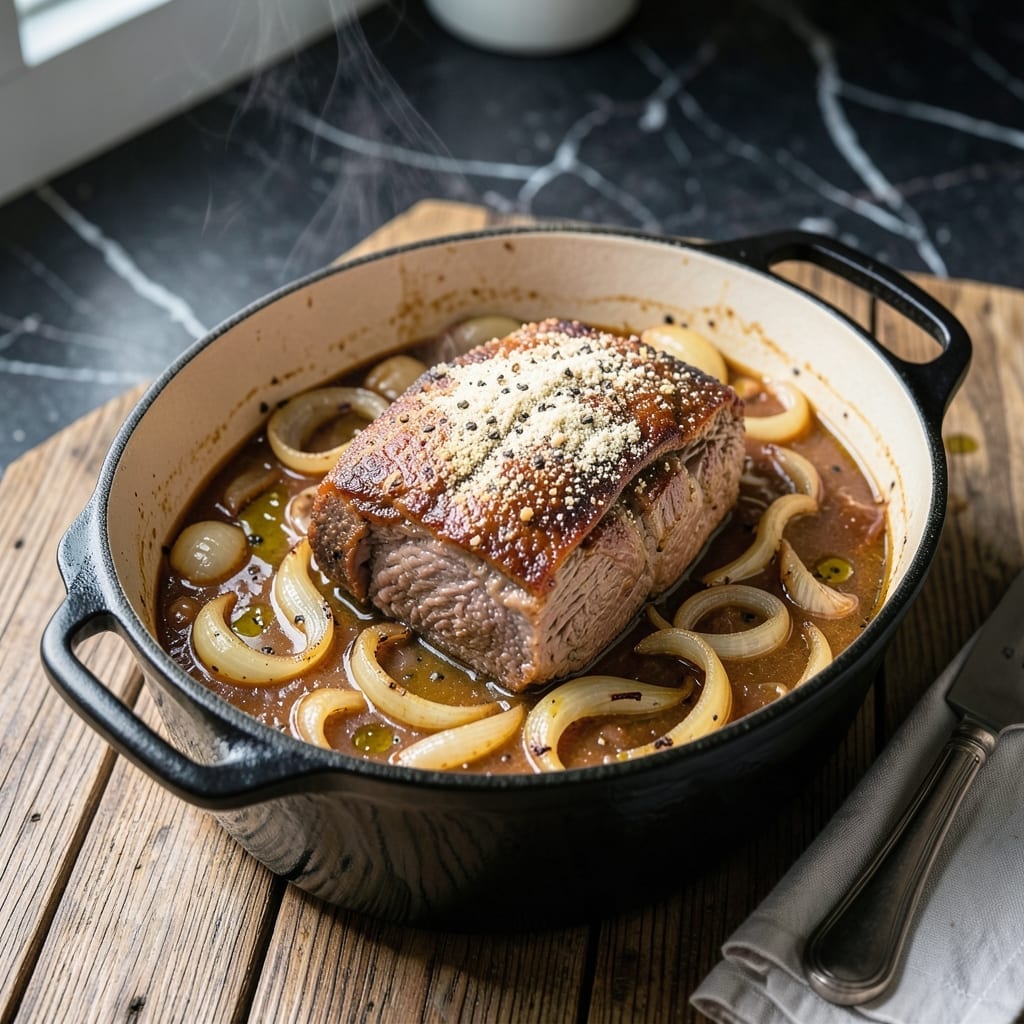
This slow-cooked pot roast turns tough cuts into melt-in-your-mouth perfection. I’ve tested countless methods, and low-and-slow is the only way to achieve that fall-apart texture.
With just a few hours and simple ingredients, you’ll get tender meat and rich gravy. The house will smell incredible, and dinner will be ready when you are.
Ingredients for Pot Roast Recipe Slow
Simple ingredients, slow cooker magic, and that melt-in-your-mouth promise delivered every time.
| Ingredient | Amount | Notes |
|---|---|---|
| Chuck Roast 🥩 | 3 lb | Well-marbled, boneless preferred |
| Kosher Salt 🧂 | 1 ½ tsp | Diamond Crystal brand recommended |
| Ground Black Pepper 🌶️ | 1 tsp | Freshly cracked for best flavor |
| All-Purpose Flour 🌾 | ¼ cup | For thickening gravy |
| Olive Oil 🫒 | 2 tbsp | Extra-virgin for searing |
| Yellow Onion 🧅 | 2 whole | Large, roughly chopped |
| Garlic Cloves 🧄 | 6 cloves | Minced for depth of flavor |
| Carrots 🥕 | 4 whole | Peeled, cut into chunks |
| Celery Stalks 🌿 | 3 whole | Cut into large pieces |
| Russet Potatoes 🥔 | 4 whole | Peeled, quartered |
| Beef Broth 💧 | 2 cups | Low-sodium for better control |
| Red Wine 🍷 | 1 cup | Dry variety like Cabernet Sauvignon |
| Tomato Paste 🍅 | 2 tbsp | For umami richness |
| Fresh Thyme Sprigs 🌿 | 4 whole | Tied with kitchen twine |
| Bay Leaf 🍃 | 1 whole | Dried, for aromatic depth |
[recipe_ingredient_scaler]
The chuck roast is non-negotiable here—Costco or butcher shops have the best marbling. Look for bright red meat with white fat streaks (that’s the good stuff). I always grab a 3-4 lb piece so leftovers are guaranteed. The beef broth matters too—Better Than Bouillon paste is my go-to for rich, concentrated flavor without the watery taste of canned stuff.
No red wine? Beef broth plus a tbsp of balsamic vinegar gets you 90% there. Out of thyme? Dried thyme at one-third the amount works fine. If you’re skipping the potatoes (maybe doing low-carb), parsnips or turnips hold up just as well. The tomato paste can come from those Trader Joe’s squeeze tubes—no can-opening required, and they last forever in the fridge.
This tastes even better the next day—4-5 days in the fridge, or freeze for 3 months. Pro tip: shred the leftovers and pile them on sandwiches (trust me on this). The gravy thickens as it cools, so stir in a splash of broth when reheating.
Why You’ll Love This Recipe
- I’ll be real: a cheap chuck roast turns into a showstopper with just olive oil and a little patience.
- Set It & Forget: I just sear the chuck roast, dust it with flour, and let the slow cooker do the work—no babysitting required.
- Feeds the Whole Crew: Between us, this one pot wonder stretches from Sunday dinner to Tuesday’s sandwiches without a complaint.
- Budget Hero: I’ll be real: a cheap chuck roast turns into a showstopper with just olive oil and a little patience.
Step-by-Step Instructions for Pot Roast
Here’s the method I swear by for fall-apart tender meat every single time.
Step 1: Season and Sear the Chuck Roast
Pat the 3 lb chuck roast completely dry with paper towels—this ensures a good sear. Season both sides generously with the 1.5 tsp kosher salt and 1 tsp ground black pepper, pressing the seasoning into the meat so it adheres well.
Heat the 2 tbsp olive oil in a large Dutch oven over medium-high heat until shimmering. Sear the roast for 4-5 minutes per side until deeply browned. You’ll know it’s ready to flip when it releases easily from the pot. Transfer the roast to a plate and set aside.
Step 2: Build the Flavor Base
In the same pot, add the roughly chopped 2 whole yellow onion, 4 whole carrots, and 3 whole celery stalks. Cook for 5-6 minutes, stirring occasionally, until the onions soften and begin to caramelize at the edges.
Stir in the minced 6 cloves garlic cloves and cook for 30 seconds until fragrant. Add the 2 tbsp tomato paste and cook for another 1-2 minutes, stirring constantly, until it darkens slightly. This step deepens the umami flavor of the sauce.
Step 3: Deglaze and Add Liquids
Pour in the 1 cup red wine, scraping the bottom of the pot to release all the browned bits. Let it simmer for 2-3 minutes until reduced by half. This deglazing step lifts all the concentrated flavors from the searing process.
Add the 2 cups beef broth, 4 whole fresh thyme sprigs, and 1 whole bay leaf. Stir to combine, then return the chuck roast to the pot along with any accumulated juices. The liquid should come about halfway up the roast.
Step 4: Slow Cook to Perfection
Cover the pot and transfer it to a preheated 325°F oven. Cook for 3 to 3.5 hours, turning the roast halfway through, until the meat is fork-tender and nearly falling apart. You’ll know it’s done when a fork slides in with almost no resistance.
About 1 hour into cooking, add the peeled and quartered 4 whole russet potatoes to the pot. They’ll absorb all the rich flavors as they cook alongside the roast. If the liquid level drops too low during cooking, add a splash of water or additional broth.
Step 5: Thicken the Gravy and Serve
Remove the roast and vegetables from the pot and set aside. Skim any excess fat from the surface of the cooking liquid. Place the pot on the stovetop over medium heat and bring the liquid to a simmer.
Whisk in the 0.25 cup all-purpose flour and cook for 2-3 minutes until the gravy thickens enough to coat the back of a spoon. Taste and adjust seasoning with additional salt and pepper if needed. Serve the pot roast with the vegetables and gravy spooned over the top.
Pro Tips For Making Pot Roast Recipe Slow
- Sear It Hard: Get your olive oil smoking hot before adding the chuck roast—this builds a deep crust that locks in flavor. I learned this the hard way after my first few pot roasts tasted bland.
- Dust It Thick: Coat the roast in flour like you’re breading chicken, pressing it in so it sticks. This creates a proper browning layer and thickens the eventual gravy.
- Skip the Crowding: Sear the roast in batches if your pot is small—overcrowding steams the meat instead of browning it. Steer clear of this mistake and you’ll actually see the difference in color and taste.
- Rest Before Slicing: Pull the roast out and let it sit under foil for 15-20 minutes before slicing. Sounds weird, but it keeps all the juices inside the meat instead of on your cutting board.
Common Mistakes When Making This Recipe
Skipping the Sear
The sear creates the Maillard reaction, which builds deep flavor in your pot roast. Skipping this step means missing out on that rich, caramelized crust. I always sear for 4-5 minutes per side in 2 tbsp olive oil over medium-high heat. 🔥
Overcrowding the Pot
Adding all vegetables at once can steam the meat instead of braising it. I add 2 whole yellow onion, 4 whole carrots, and 3 whole celery stalks first, then the 4 whole russet potatoes about 1 hour into cooking. This prevents a soggy result.
Using the Wrong Cut
Lean cuts like sirloin won’t break down properly. Stick with 3 lb chuck roast—it has the marbling needed for that fall-apart texture. I always look for bright red meat with white fat streaks at Costco or butcher shops.
Well-marbled, boneless chuck is non-negotiable for this dish.
Insufficient Liquid
Your braising liquid should come about halfway up the roast. I use 1 cup red wine and 2 cups beef broth. If it reduces too much, add a splash of water or broth to maintain the level. This ensures even cooking and prevents drying.
Not Resting the Meat
Let the roast rest for 15-20 minutes after cooking. This allows juices to redistribute. If you slice too soon, all those delicious juices will end up on your cutting board instead of in your meat. Patience pays off here. 💡
Nutrition Facts
Frequently Asked Questions
What’s the best cut for this method?
Chuck roast is ideal due to its marbling and connective tissue. Look for a 3 lb well-marbled, boneless piece for the most tender results. Brisket or round can work but may require longer cooking.
Can I use a slow cooker instead of an oven?
Yes! Sear the meat first, then cook on low for 8-10 hours or high for 5-6 hours. Add potatoes during the last 2-3 hours to prevent mushiness.
Why is my gravy too thin?
Simmer uncovered for 5-10 minutes after thickening with flour. If still thin, mix 1 tbsp cornstarch with cold water and stir in. Boil for 1-2 minutes until glossy.

Trained in classic French technique but raised on slow-cooked ribs and spicy rubs, she blends culinary skill with smoke and soul.
- Recipe for Boneless Pork Chops in Cast Iron Skillet: Sear and Baste to Juicy Perfection - October 3, 2026
- Recipe for Boneless Cross Rib Roast: Slow-Roasted Beef with Herb Crust - October 3, 2026
- Hamburgers in Sauce Recipe Crock Pot: Slow-Cooked Savory Delight - October 3, 2026